



Anti-Mouse IL-1a Antibody (ALF-161)

Based on 1 Customer Validation
Anti-Mouse IL-1a Antibody (ALF-161) is an anti-mouse IL-1a IgG1 monoclonal antibody. Anti-Mouse IL-1a Antibody (ALF-161) can inhibit CD8+ T cell response by blocking IL-1a signaling. Anti-Mouse IL-1a Antibody (ALF-161) can reversibly transform myeloid cell expansion and improve T cell function. Anti-Mouse IL-1a Antibody (ALF-161) can be used for researches on immune response and cancer such as breast cancer.
For research use only. We do not sell to patients.
- Purity : ≥95.0%
- Molecular Weight:150 kDa
-
Storage:
Please store the product under the recommended conditions in the Certificate of Analysis.

To place orders, for customer services and technical support, please contact: MedChemExpress USA
Tel: 609-228-6898 E-mail: [email protected] [email protected]


-
 Biological Activity
-
Chemical Information
- Protocols
- Purity & Documentation
- References
-
 Help & FAQs




Biological Activity
Description
Isotype
Armenian Hamster IgG
Recommend Isotype Controls
Species Reactivity
Mouse
|
IL-1α |
In Vivo
Anti-Mouse IL-1a Antibody (200 µg, i.p., once every 3 days, until the end of the experiment) can reversibly transform myeloid cell expansion and improve T cell function in wild-type female C57BL/6 mice bearing AT3 tumors[2].
MedChemExpress (MCE) has not independently confirmed the accuracy of these methods. They are for reference only.
-
Animal Model:1×10⁹ vg AAV-OVA injected C57BL/6J mice (6-8 weeks)[1]
-
Dosage:200 μg, combined with IL-1b mAb (HY-P99139) (200 μg)
-
Administration:Intraperitoneal injection (i.p.), twice weekly, for 4 weeks
-
Result:Reduced the response rate from 67 % to 33 % and lowered the frequency by about three times when used alone.
Further reduced the response rate to 19 %-20 % when combined with IL-1b mAb.
Slightly reduced anti OVA IgG2c but did not affect anti capsid antibodies.
-
Animal Model:5×10⁵ AT3 cells injected wild-type female C57BL/6 mice (8-10 weeks)[2]
-
Dosage:200 μg, combined with IL-1R mAb (HY-P99140) (200 μg)
-
Administration:Intraperitoneal injection (i.p.), once every 3 days until the end of the experiment
-
Result:Significantly reduced the expansion of neutrophils and immature CD11b+ myeloid cells in the spleen.
Prevented a decrease in T cell subpopulations, such as initial and central memory CD8+ T cells.
Reduced circulating G-CSF levels.
Effectively restored APC function and T cell response when combined with IL-1R mAb.
Gene ID
Accession
Conjugated
Unconjugated
Reconsititution
The product can be reconstituted/diluted with sterile PBS or saline.
Format
-
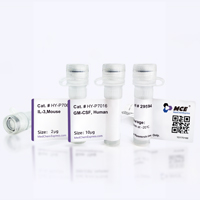
Product Image
Application
in vivo IL-1α neutralization; in vitro IL-1α neutralization


Chemical Information
-
Appearance Liquid
-
Molecular Weight 150 kDa
-
Color Colorless to light yellow
-
SMILES
[Anti-Mouse IL-1a Antibody (ALF-161)]
-
Formulation
Please refer to the lot-specific COA for specific buffer information.
-
Storage
Please store the product under the recommended conditions in the Certificate of Analysis.

Protocols
-
Breast Cancer Modeling
Breast cancer is a heterogeneous cancer, and it has been distinguished into four subtypes: luminal A, luminal B, HER2-positive and basal-like. Molecular mutations, epigenetic alterations, hormone exposure and immune microenvironment are related to the progression of breast cancer.
-
Research Protocol for Cancer Immunology
Cancer immunology studies how the immune system recognizes, suppresses, edits, or fails to eliminate malignant cells through tumor antigen release, antigen presentation, T-cell priming, immune trafficking, tumor-cell killing, and feedback inhibition in the tumor microenvironment. The cancer-immunity cycle links tumor antigenicity, dendritic-cell priming, CD8+ T-cell infiltration, cytotoxic function, and immune-checkpoint regulation to tumor rejection or immune escape. Immune-checkpoint pathways such as PD-1/PD-L1 and CTLA-4 suppress antitumor T-cell activity and can be therapeutically blocked, but many tumors remain resistant because of poor antigen presentation, weak T-cell infiltration, suppressive myeloid cells, regulatory T cells, and tumor-intrinsic immune-exclusion programs. Unresolved questions include which immune-cell states predict response, how tumor-intrinsic pathways exclude immune cells, how myeloid suppression limits checkpoint blockade, and which combination strategies


Purity & Documentation
-
Data Sheet (261 KB)
-
SDS (251 KB)
- English - EN (251 KB)
- Français - FR (251 KB)
- Deutsch - DE (251 KB)
- Norwegian - NO (251 KB)
- Español - ES (251 KB)
- Swedish - SV (251 KB)
- Italian - IT (251 KB)
- Korean - KR (251 KB)
- Portuguese - PT (251 KB)
-
Inhibitory Antibodies User Guide (603 KB)
References
[1]. Kumar SRP, et al. TLR9-independent CD8+ T cell responses in hepatic AAV gene transfer through IL-1R1-MyD88 signaling. Mol Ther. 2024 Feb 7;32(2):325-339. [Content Brief]
[2]. Allen BM, et al. Systemic dysfunction and plasticity of the immune macroenvironment in cancer models. Nat Med. 2020 Jul;26(7):1125-1134. [Content Brief]

Calculators
Concentration (start) × Volume (start) = Concentration (final) × Volume (final)


Anti-Mouse IL-1a Antibody (ALF-161) Related Classifications
HY-P99138 Related Classifications
 Powered by Bioz