



MMP2 Antibody (YA287)
(Synonyms: CLG4A, MMP2, 72 kDa type IV collagenase, 72 kDa gelatinase, Gelatinase A, Matrix metalloproteinase-2, TBE-1, MMP-2)
Based on 1 Customer Validation
MMP2 Antibody (YA287) is a Rabbit-derived and non-conjugated IgG monoclonal antibody, targeting to MMP2.
-
Host:
Rabbit
-
Isotype:
IgG
-
Application:
WB, IHC-P
-
Reactivity :
Human, Mouse
-
Formulation:
Supplied in 1*TBS (pH7.4), 0.05% BSA and 40% Glycerol. Preservative: 0.05% Sodium Azide.
-
Conjugation:
Non-conjugated


To place orders, for customer services and technical support, please contact: MedChemExpress USA
Tel: 609-228-6898 E-mail: [email protected] [email protected]



-

HY-P80425
MMP-9 Antibody (YA285) -
HY-P8001
HRP-conjugated Goat Anti-Rabbit IgG H&L -
HY-P80756
MMP-9 Antibody -
HY-P81227
Collagen I Antibody -
HY-P80246
NLRP3 Antibody (YA266) -
HY-P80493
Fibronectin Antibody (YA436) -
HY-P80371
Vimentin Antibody (YA011) -
HY-P80424
MMP3 Antibody (YA286) -
HY-P80282
Phospho-STAT3 (Tyr705) Antibody (YA146)


Applications
| Application |
WB

WB: Western Blot
|
IHC-P
IHC-P: Immunohistochemistry-Paraffin
|
|---|---|---|
| Dilution Ratio | 1:1000-1:2000 | 1:50-1:200 |


Product Details
MMP2 Antibody (YA287) is a Rabbit-derived and non-conjugated IgG monoclonal antibody, targeting to MMP2.
-
Host Rabbit

-
Clonality Recombinant,Monoclonal

-
Species ReactivityHuman, Mouse
-
Observed Molecular WeightObserved band size: 70 kDa
Note: Due to possible protein modifications or aggregation, the molecular weight should be confirmed by actual measurement, and the predicted value is for reference only.

-
Calculated Molecular Weight Predicted band size: 74 kDa

Entrez Gene: 4313 Human ; 17390 Mouse ; 81686 Rat
SwissProt: P08253 Human ; P33434 Mouse ; P33436 Rat
OMIM: 259600 Human
Synthetic peptide corresponding to Human MMP2.AA range:101-150.
Endogenous
Protein A affinity purified.
Non-conjugated
Unmodified
IgG


Product Properties
-
Appearance
Solution
-
Formulation
Supplied in 1*TBS (pH7.4), 0.05% BSA and 40% Glycerol. Preservative: 0.05% Sodium Azide.
-
Concentration
Batch-dependent, Please check the COA for the concentration of each lot. Check Lot Concentration
-
Storage & Stability
Stored at -20°C for 1 year. Avoid repeated freeze / thaw cycles.
-
Shipping
Shipping with blue ice.


Verification Images
-
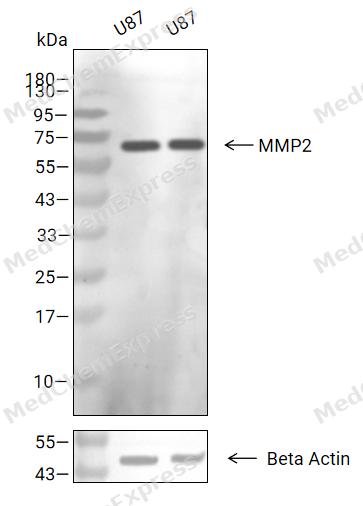 Western blot analysis of extracts from U87(lane 2(20μg), U87 (lane 3(40μg),using MMP2 Antibody. Proteins were transferred to a PVDF membrane and blocked with 5% BSA in TBST for 2 hour at room temperature. The primary antibody and Loading control antibody (Beta Actin, HY-P80438, 1/3000) was used in 5% BSA in TBST at 4°C overnight. Goat Anti-Mouse/Rabbit IgG-HRP Secondary Antibody (HY-P8004/HY-P8001, 1/10,000) was used for 1 hour at room temperature.
 -
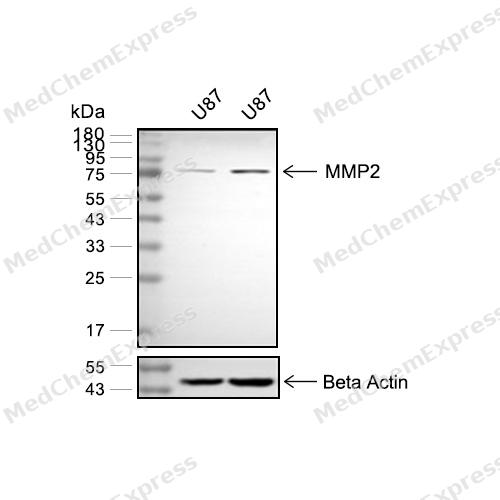 Western blot analysis of extracts from U87 (lane 2(20μg) and U87(lane 3(40μg) using MMP2(HY-P80509) Rabbit mAb. Proteins were transferred to a PVDF membrane and blocked with 5% non-fat milk in TBST for 2 hour at room temperature. The primary antibody (1/1000) and Loading control antibody (Beta Actin, HY-P80438, 1/10000) was used in 5% non-fat milk in TBST at 4°C overnight. Goat Anti-Mouse IgG-HRP Secondary Antibody (1/10000) was used for 1 hour at room temperature.
 -
 Immunohistochemical analysis of paraffin-embedded Mouse liver tissue using MMP2 Antibody. The section was pre-treated using heat mediated antigen retrieval with Tris-EDTA buffer (pH 9.0) for 8 minutes. The tissues were blocked in QuickBlock for 20 minutes at room temperature, washed with ddH2O and PBS, and then probed with the primary antibody (HY-P80509, 1/2000) in 4℃ overnight. The detection was performed using an HRP conjugated compact polymer system. DAB was used as the chromogen. Tissues were counterstained with hematoxylin and mounted with DPX.
 -
 Immunohistochemical analysis of paraffin-embedded Mouse liver tissue using MMP2 Antibody. The section was pre-treated using heat mediated antigen retrieval with Tris-EDTA buffer (pH 9.0) for 8 minutes. The tissues were blocked in QuickBlock for 20 minutes at room temperature, washed with ddH2O and PBS, and then probed with the primary antibody (HY-P80509, 1/2000) in 4℃ overnight. The detection was performed using an HRP conjugated compact polymer system. DAB was used as the chromogen. Tissues were counterstained with hematoxylin and mounted with DPX.
 -
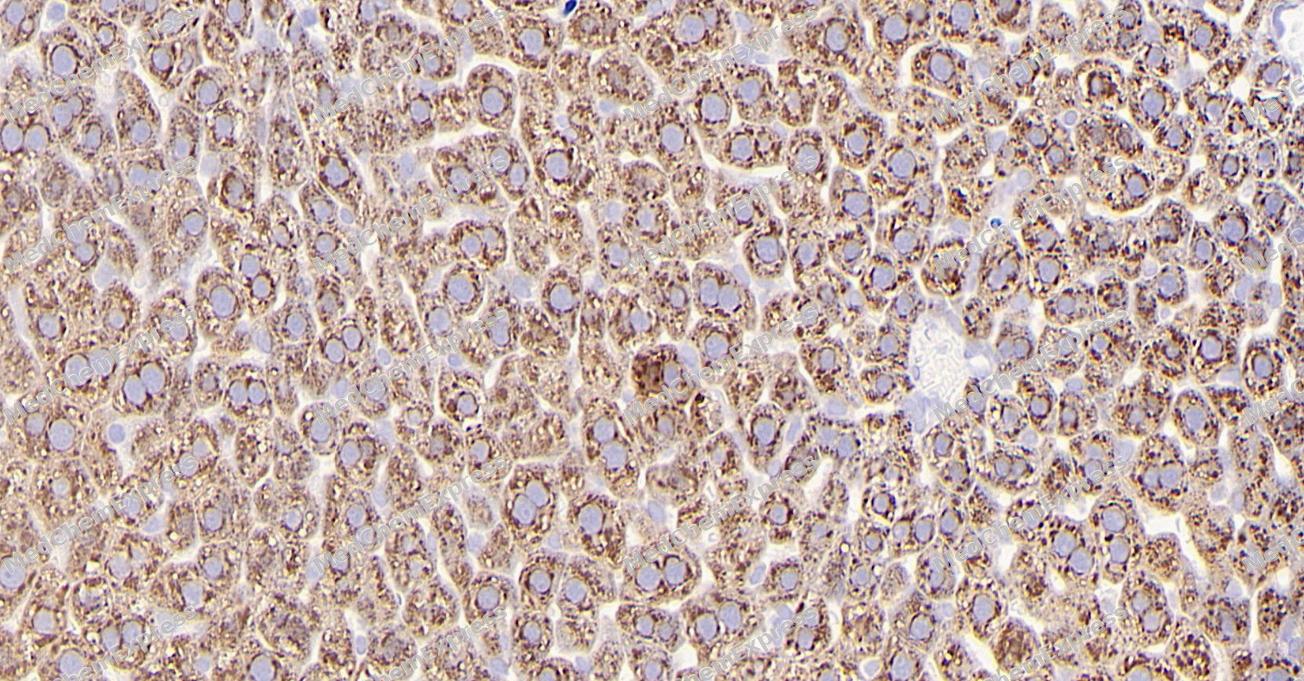 Immunohistochemical analysis of paraffin-embedded Mouse liver tissue using MMP2 Antibody. The section was pre-treated using heat mediated antigen retrieval with Tris-EDTA buffer (pH 9.0) for 8 minutes. The tissues were blocked in QuickBlock for 20 minutes at room temperature, washed with ddH2O and PBS, and then probed with the primary antibody (HY-P80509, 1/2000) in 4℃ overnight. The detection was performed using an HRP conjugated compact polymer system. DAB was used as the chromogen. Tissues were counterstained with hematoxylin and mounted with DPX.
 -
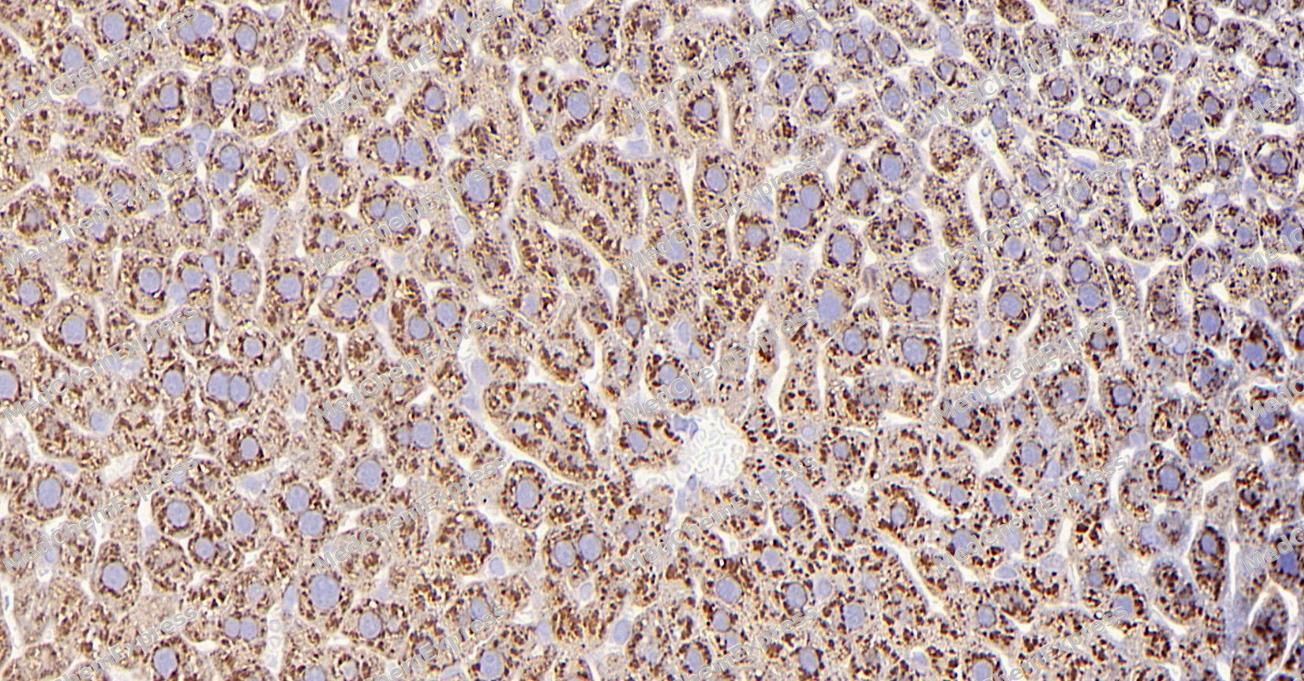 Immunohistochemical analysis of paraffin-embedded Mouse liver tissue using MMP2 Antibody. The section was pre-treated using heat mediated antigen retrieval with Tris-EDTA buffer (pH 9.0) for 8 minutes. The tissues were blocked in QuickBlock for 20 minutes at room temperature, washed with ddH2O and PBS, and then probed with the primary antibody (HY-P80509, 1/2000) in 4℃ overnight. The detection was performed using an HRP conjugated compact polymer system. DAB was used as the chromogen. Tissues were counterstained with hematoxylin and mounted with DPX.


Background
-
Function
MMP-2 (matrix metalloproteinase-2), also known as gelatinase A, is a zinc-dependent extracellular endopeptidase that plays a central role in extracellular matrix remodeling through the degradation of gelatin, type IV collagen, and other basement membrane components[6][7]. Mechanistically, MMP-2 is synthesized as a latent proenzyme and is activated at the cell surface through the MT1-MMP/TIMP-2/pro-MMP-2 activation complex, linking its proteolytic activity to tightly regulated pericellular signaling and matrix turnover[1][2]. Through these functions, MMP-2 contributes to cell migration, tissue remodeling, angiogenesis, and inflammatory regulation, making it an important mediator of both physiological repair processes and pathological tissue remodeling[6][7]. Dysregulated MMP-2 expression or activation has been associated with cancer progression, cardiovascular disorders, kidney disease, diabetic complications, and fibrotic conditions, where excessive extracellular matrix degradation promotes disease development and tissue dysfunction[6]. In tumor models, elevated MMP-2 activity correlates with invasive behavior, metastatic dissemination, and angiogenic remodeling, supporting its widespread use as a biomarker and mechanistic target in cancer research[3][4]. Compared with the closely related gelatinase MMP-9, MMP-2 is constitutively expressed in many tissues and is preferentially regulated through MT1-MMP- and TIMP-2-dependent activation mechanisms, whereas MMP-9 is more commonly induced by inflammatory stimuli and exhibits distinct substrate and regulatory profiles[7]. For experimental applications, broad-spectrum metalloproteinase inhibitors such as batimastat have been widely used to investigate MMP-2-dependent signaling and matrix remodeling, although selective targeting remains an active area of therapeutic development[5].
-
Subcellular Localization
Secreted, extracellular space, extracellular matrix; Membrane; Nucleus; Cytoplasm; Mitochondrion
-
Expression
Tissue_specificity:Produced by normal skin fibroblasts. PEX is expressed in a variety of tumors, including glioma, breast cancer, and prostate cancer.
Induction:Aspirin appears to inhibit expression -
Subunit
Interacts (via the C-terminal hemopexin-like domains-containing region) with the integrin alpha-V/beta-3; the interaction promotes vascular invasion in angiogenic vessels and melamoma cells. Interacts (via the C-terminal PEX domain) with TIMP2 (via the C-terminal); the interaction inhibits the degradation activity. Interacts with GSK3B
-
SwissProt ID
-
Synonyms
CLG4A, MMP2, 72 kDa type IV collagenase, 72 kDa gelatinase, Gelatinase A, Matrix metalloproteinase-2, TBE-1, MMP-2
-
Research Field
Cardiovascular


Documentation
-
Data Sheet (262 KB)
-
SDS (251 KB)
- English - EN (251 KB)
- Français - FR (251 KB)
- Deutsch - DE (251 KB)
- Norwegian - NO (251 KB)
- Español - ES (251 KB)
- Swedish - SV (251 KB)
- Italian - IT (251 KB)
- Korean - KR (251 KB)
- Portuguese - PT (251 KB)
-
User Guide for Antibodies (1077 KB)
References
[1]. Khurana S, et al. MF59 adjuvant enhances diversity and affinity of antibody-mediated immune response to pandemic influenza vaccines. Sci Transl Med. 2011 Jun 1;3(85):85ra48. [Content Brief]
[2]. Heidenfelder BL, et al. Hairpin formation in Friedreich's ataxia triplet repeat expansion. J Biol Chem. 2003 Jan 24;278(4):2425-31. [Content Brief]
[3]. Forsyth PA, et al. Gelatinase-A (MMP-2), gelatinase-B (MMP-9) and membrane type matrix metalloproteinase-1 (MT1-MMP) are involved in different aspects of the pathophysiology of malignant gliomas. Br J Cancer. 1999 Apr;79(11-12):1828-35. [Content Brief]
[4]. Johnson M, et al. Multiple triangulation and collaborative research using qualitative methods to explore decision making in pre-hospital emergency care. BMC Med Res Methodol. 2017 Jan 24;17(1):11. [Content Brief]
[5]. Chang M. Matrix metalloproteinase profiling and their roles in disease. RSC Adv. 2023;13:6304-6316.

 Powered by Bioz
