



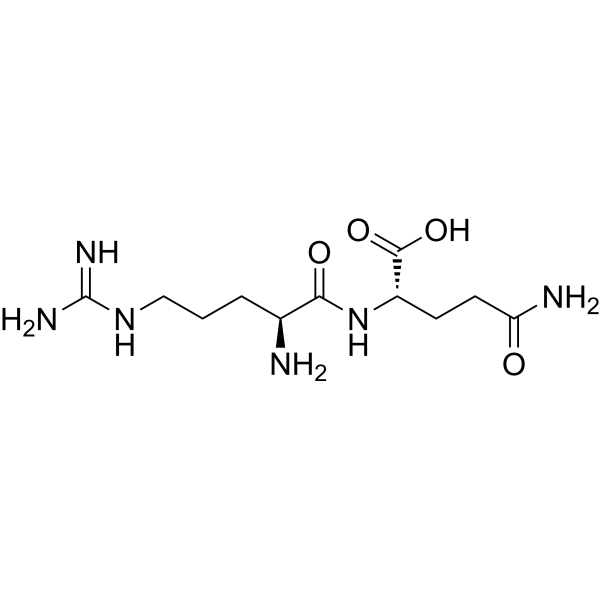
Arginyl-Glutamine
Arginyl-Glutamine is a dipeptide that can decrease VEGF levels and inhibit retinal neovascularization in a mouse model of oxygen-induced retinopathy.
For research use only. We do not sell to patients.
- CAS No.: 2483-17-2
- Formula: C11H22N6O4
- Molecular Weight:302.33
-
Storage:
Please store the product under the recommended conditions in the Certificate of Analysis.

To place orders, for customer services and technical support, please contact: MedChemExpress USA
Tel: 609-228-6898 E-mail: [email protected] [email protected]


-
 Biological Activity
-
Chemical Information
- Protocols
- Purity & Documentation
- References
-
 Help & FAQs


All VEGFR Isoforms
More

Biological Activity
Description
IC50 & Target
VEGF[1]
In Vitro
In Vivo
MedChemExpress (MCE) has not independently confirmed the accuracy of these methods. They are for reference only.
-
Animal Model:C57BL6/J mouse pups, oxygen-induced retinopathy (OIR) model[1]
-
Dosage:1.0, 2.5, or 5 g/kg per day
-
Administration:Intraperitoneal injection, twice daily
-
Result:Significantly decreased preretinal nuclei. Reduced neovascular tufts and vascular leakage in retinal vessels. Reduced preretinal neovascularization by 82% ± 7% and reduced VEGF mRNA by 64% ± 9% at 5 g/kg per day.


Chemical Information
-
CAS No. 2483-17-2
-
Molecular Weight 302.33
-
Formula C11H22N6O4
-
Synonyms
H-Arg-Gln-OH
-
Sequence
Arg-Gln
-
Sequence Shortening
RQ
-
Shipping
Room temperature in continental US; may vary elsewhere.
-
Storage
Please store the product under the recommended conditions in the Certificate of Analysis.


Purity & Documentation
References

Calculators
Concentration (start) × Volume (start) = Concentration (final) × Volume (final)


Arginyl-Glutamine Related Classifications
HY-P4253 Related Classifications
 Powered by Bioz