



Levcromakalim
Based on 4 publication(s) in Google Scholar
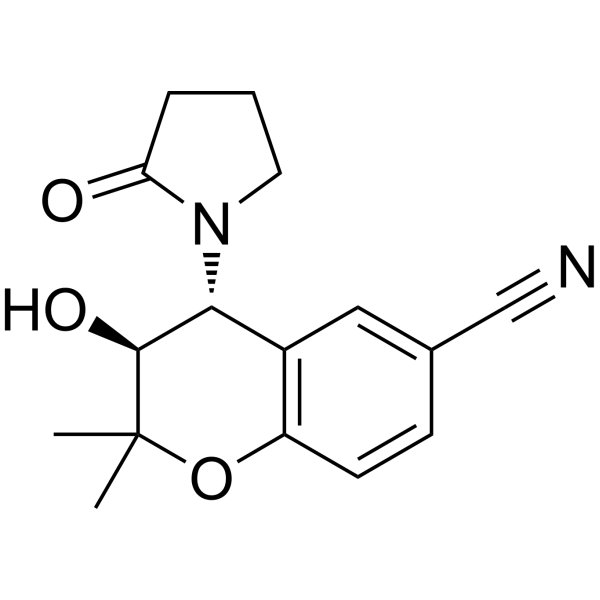
Levcromakalim ((-)-Cromakalim) is an ATP-sensitive K+ channel (KATP) activator.
Nur für Forschungszwecke. Wir verkaufen nicht an Patienten.
- Reinheit : 99.83%
- CAS. Nr.: 94535-50-9
- Formel: C16H18N2O3
- Molecular Weight:286.33
-
Speicherung:Powder -20°C, 3 years , 4°C, 2 years ; In solvent -80°C, 2 years , -20°C, 1 year

To place orders, for customer services and technical support, please contact: MedChemExpress USA
Tel: 609-228-6898 E-mail: [email protected] [email protected]


-
 Biologische Aktivität
-
Chemical Information
-
Lösungsmittel & Löslichkeit
- Reinheit & Dokumentation
- Verweise
-
 Help & FAQs


-
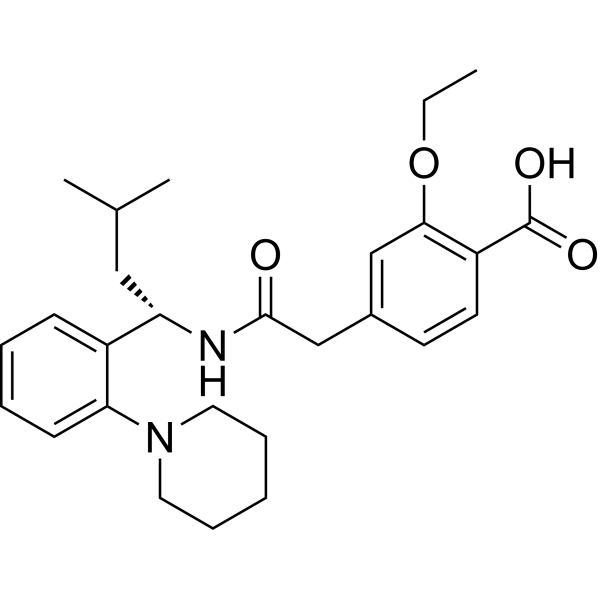
HY-15209
RepaglinideInsulin Secretagogue -
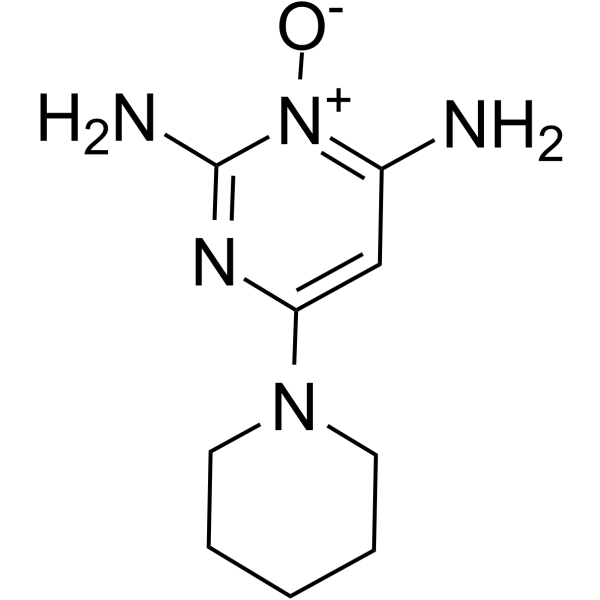
HY-B0112
MinoxidilEndogenous Metabolite -
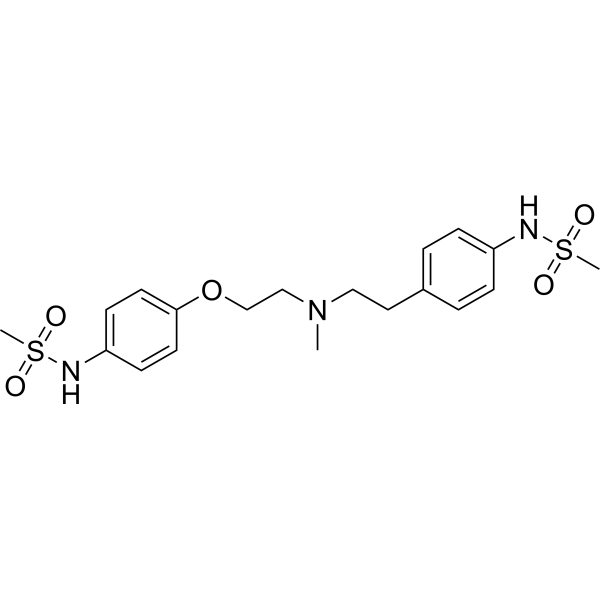
HY-B0232
DofetilideIKr Blocker -
HY-N6691
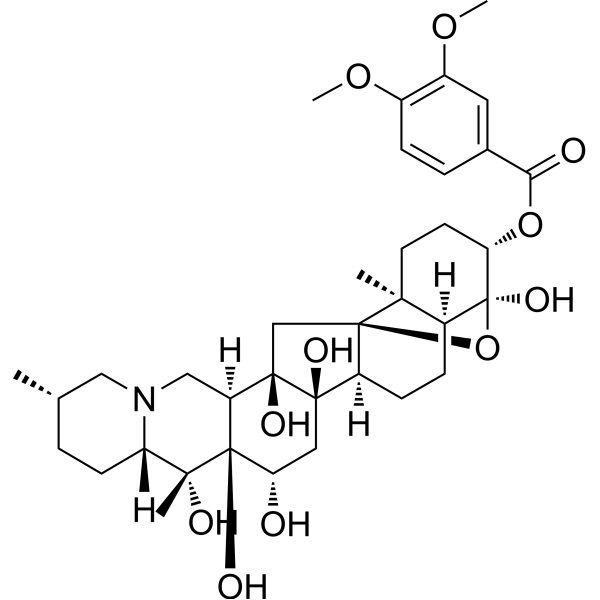
VeratridineVGSCs Agonist -
HY-108573
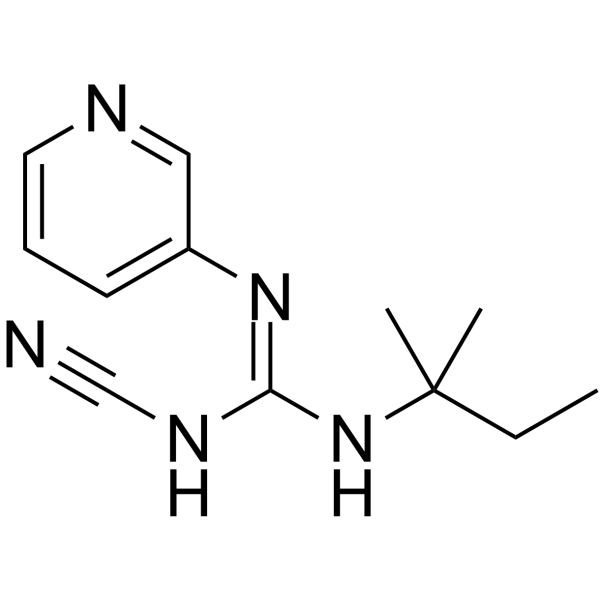
P-1075Potassium Channel Activator -
HY-108589
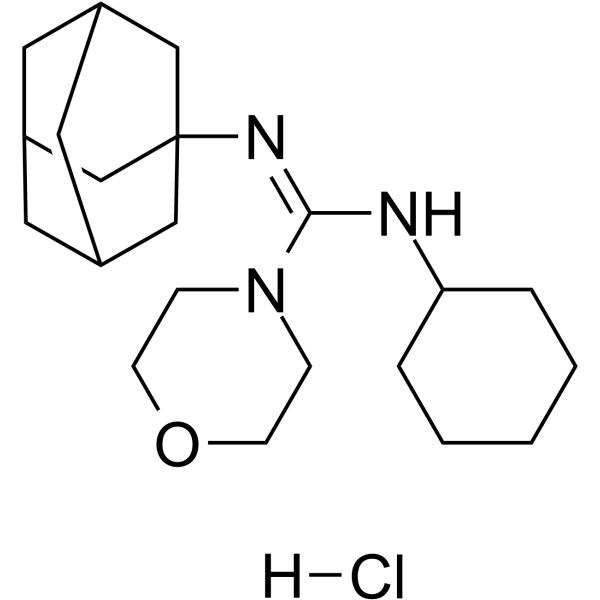
PNU 37883 hydrochlorideKATP Channels Blocker -
HY-15551
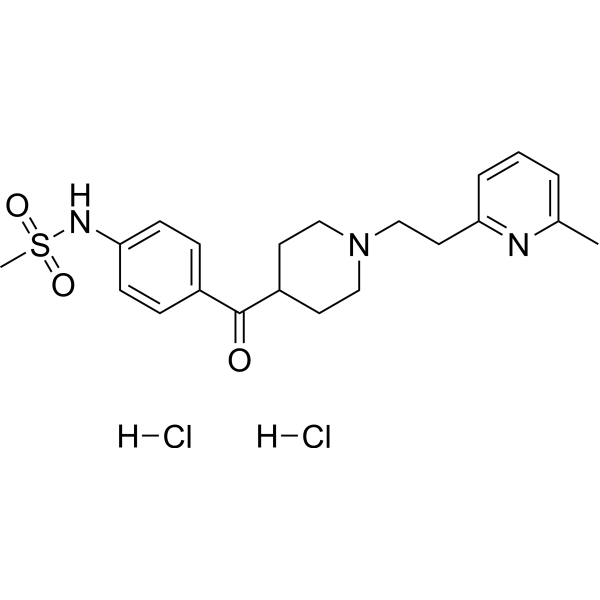
E-4031hERG Channels Blocker -
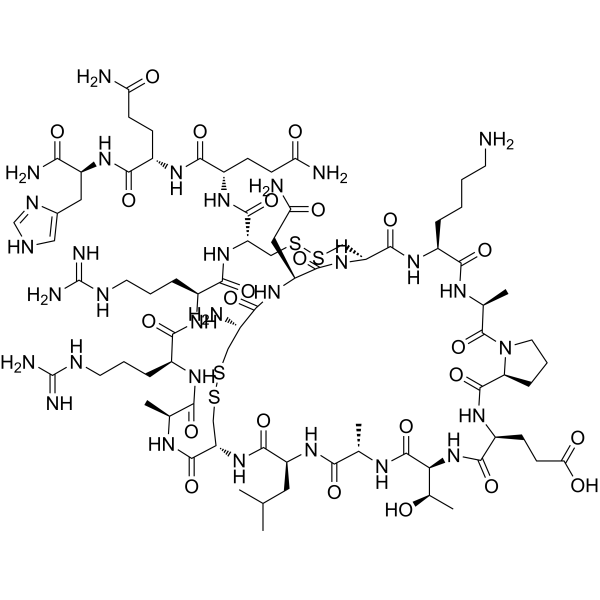
HY-P0256
ApaminPotassium Channel Inhibitor -
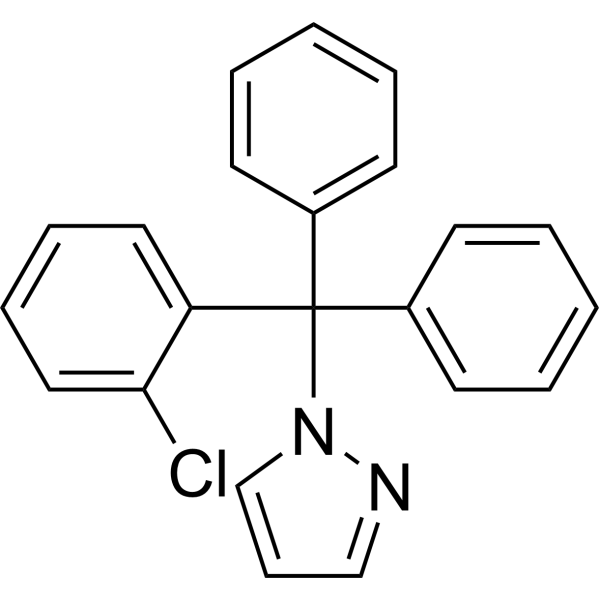
HY-13519
TRAM-34Potassium Channel Inhibitor -
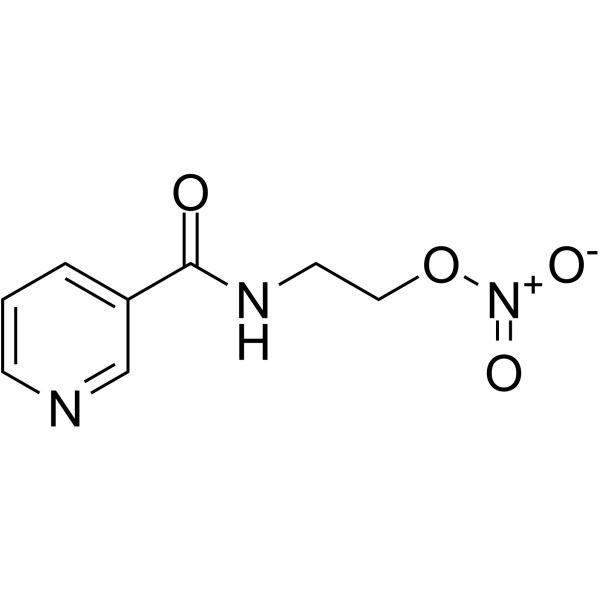
HY-B0341
NicorandilPotassium Channel Activator -
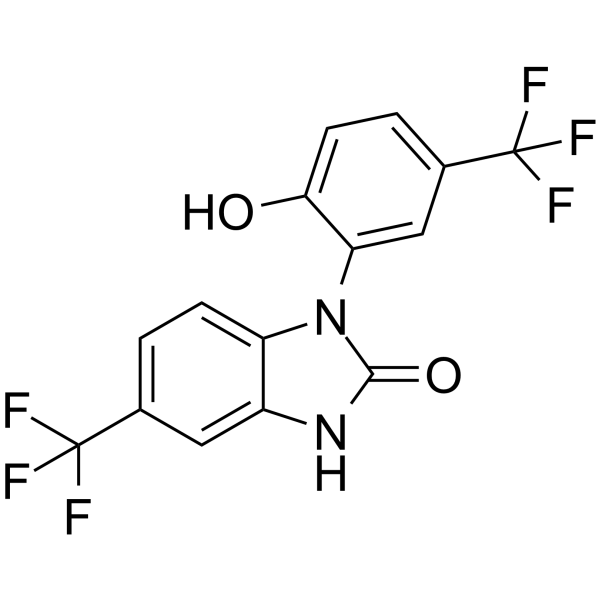
HY-12496
NS-1619BK Channel Opener -
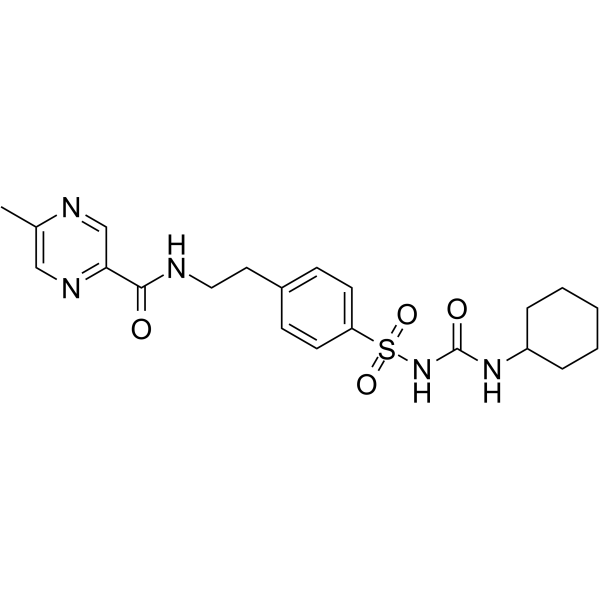
HY-B0254
GlipizideAnti-diabetic Agent
Publications Citing Use of MedChemExpress (MCE) Levcromakalim
More

Biologische Aktivität
Beschreibung
IC50 & Target
K+ channel[1]
In Vitro
Levcromakalim ((-)-Cromakalim) inhibits spontaneous contractions completely in a glibenclamide-sensitive manner. LevCromakalim (5 μM) inhibits spontaneous contractions, which are recovered by glibenclamide. Levcromakalim (1, 5 and 10 μM) inhibits phasic contractions to 34±21.1%, 20.1±20.0% and 0% of the control (n=5, respectively; P<0.05). Glibenclamide reverses the inhibition of spontaneous isometric contractions caused by LevCromakalim (5 μM) to 84±1.5% of the control (n=5; P<0.05). Levcromakalim (20 and 100 μM) also inhibits oxytocin (OXT) (10 nM)-induced phasic contractions to 34±21.4% and 14±12.6% of the control (n=6 and 4, respectively; P<0.05). Glibenclamide reverses the inhibition of spontaneous isometric contractions by LevCromakalim (100 μM) to 79±3.5% of the control (n=4; P<0.05). Tonic contraction by OXT is also suppressed by Cromakalim in a glibenclamide-sensitive manner[2].The function of the KATP channels is examined with the specific channel opener LevCromakalim (Cromakalim). LevCromakalim induces dose-dependent relaxation in both the young and old mesenteric artery (MAs); and there is no difference in relaxation with age. However, the relaxation is markedly reduced in response to the high-salt (HS) diet in the old MAs (P<0.05)[3].
MedChemExpress (MCE) has not independently confirmed the accuracy of these methods. They are for reference only.
Clinical Trial
| NCT Number | Sponsor | Condition | Start Date |
Phase

|
|---|---|---|---|---|
| NCT01329991 | Plexxikon| | 2011-05 | PHASE1 |


Chemical Information
-
CAS. Nr. 94535-50-9
-
Appearance Solid
-
Molecular Weight 286.33
-
Formel C16H18N2O3
-
Color White to off-white
-
SMILES
CC(O1)(C)[C@@H](O)[C@H](N2CCCC2=O)C3=C1C=CC(C#N)=C3
-
Synonyms
(-)-Cromakalim; BRL 38227
-
Versand
Room temperature in continental US; may vary elsewhere.
-
Speicherung
Powder -20°C 3 years 4°C 2 years In solvent -80°C 2 years -20°C 1 year


Publications (4)
-
Journal Impact Factor
-
Most Recent
-
Nat Commun
2022 May 13;13(1):2675. PMID: 35562524 -
J Headache Pain
2022 Sep 30;23(1):128. PMID: 36180824 -
Cephalalgia
CGRP-dependent signalling pathways involved in mouse models of GTN- cilostazol- and levcromakalim-induced migraine. [Abstract]2021 Dec;41(14):1413-1426. PMID: 34407650 -


Lösungsmittel & Löslichkeit
In Vitro:
DMSO : ≥ 50 mg/mL (174.62 mM; Hygroscopic DMSO has a significant impact on the solubility of product, please use newly opened DMSO)
* "≥" means soluble, but saturation unknown.
Please refer to the solubility information to select the appropriate solvent. Once prepared, please aliquot and store the solution to prevent product inactivation from repeated freeze-thaw cycles.
Storage method and period of stock solution: -80°C, 2 years; -20°C, 1 year. When stored at -80°C, please use it within 2 years. When stored at -20°C, please use it within 1 year.
Please refer to the solubility information to select the appropriate solvent. Once prepared, please aliquot and store the solution to prevent product inactivation from repeated freeze-thaw cycles.
Storage method and period of stock solution: -80°C, 2 years; -20°C, 1 year. When stored at -80°C, please use it within 2 years. When stored at -20°C, please use it within 1 year.
Konzentration (Stammlösung) × Volumen (Stammlösung) = Konzentration (Ziellösung) × Volumen (Ziellösung)
In Vivo:
Select the appropriate dissolution method based on your experimental animal and administration route.
- For the following dissolution methods, please ensure to first prepare a clear stock solution using an In Vitro approach and then sequentially add co-solvents:
- To ensure reliable experimental results, the clarified stock solution can be appropriately stored based on storage conditions. As for the working solution for In Vivo experiments, it is recommended to prepare freshly and use it on the same day.
- The percentages shown for the solvents indicate their volumetric ratio in the final prepared solution. If precipitation or phase separation occurs during preparation, heat and/or sonication can be used to aid dissolution.
Add each solvent one by one: 10% DMSO 40% PEG300 5% Tween-80 45% Saline
Solubility: ≥ 2.5 mg/mL (8.73 mM); Clear solution
This protocol yields a clear solution of ≥ 2.5 mg/mL (saturation unknown).
Taking 1 mL working solution as an example, add 100 μL DMSO stock solution (25.0 mg/mL) to 400 μL PEG300, and mix evenly; then add 50 μL Tween-80 and mix evenly; then add 450 μL Saline to adjust the volume to 1 mL.
Preparation of Saline: Dissolve 0.9 g sodium chloride in ddH₂O and dilute to 100 mL to obtain a clear Saline solution.
In Vivo Dissolution Calculator
Please enter the basic information of animal experiments:
-
-
-
-
Recommended: Prepare an additional quantity of animals to account for potential losses during experiments.
Please enter your animal formula composition:
-
%DMSO +
Recommended: Keep the proportion of DMSO in working solution below 2% if your animal is weak.
-
%+
-
+%Tween-80 + +
-
%Saline +
The co-solvents required include: DMSO, . All of co-solvents are available by MedChemExpress (MCE). , Tween 80. All of co-solvents are available by MedChemExpress (MCE).
Working solution concentration: 0.22 mg/mL
Method for preparing stock solution: mg drug dissolved in μL DMSO. Stock solution concentration: mg/mL.
1. Take μL DMSO stock solution;
2. Add μL .
μL , mix evenly;
3. Then add μL Tween 80, mix evenly;
4. Then add μL
Please ensure that the stock solution in the first step is dissolved to a clear state, and add co-solvents in sequence. You can use ultrasonic heating (ultrasonic cleaner, recommended frequency 20-40 kHz), vortexing, etc. to assist dissolution.


Reinheit & Dokumentation
-
Data Sheet (279 KB)
-
SDS (252 KB)
- English - EN (252 KB)
- Français - FR (252 KB)
- Deutsch - DE (252 KB)
- Norwegian - NO (252 KB)
- Español - ES (252 KB)
- Swedish - SV (252 KB)
- Italian - IT (252 KB)
- Korean - KR (252 KB)
- Portuguese - PT (252 KB)
-
Handling Instructions (2659 KB)
Verweise
[1]. Matsumoto T, et al. Tunicamycin-Induced Alterations in the Vasorelaxant Response in Organ-Cultured Superior Mesenteric Arteries of Rats. Biol Pharm Bull. 2016;39(9):1475-81. [Content Brief]
[2]. Hong SH, et al. Regulation of myometrial contraction by ATP-sensitive potassium (KATP) channel via activation of SUR2B and Kir 6.2 in mouse. J Vet Med Sci. 2016 Aug 1;78(7):1153-9. [Content Brief]
[3]. Whidden MA, Altered potassium ATP channel signaling in mesenteric arteries of old high salt-fed rats. J Exerc Nutrition Biochem. 2016 Jun;20(2):58-64. [Content Brief]


Complete Stock Solution Preparation Table
Please refer to the solubility information to select the appropriate solvent. Once prepared, please aliquot and store the solution to prevent product inactivation from repeated freeze-thaw cycles.
Storage method and period of stock solution: -80°C, 2 years; -20°C, 1 year. When stored at -80°C, please use it within 2 years. When stored at -20°C, please use it within 1 year.
| Optional Solvent | Concentration Solvent Mass | 1 mg | 5 mg | 10 mg | 25 mg |
|---|---|---|---|---|---|
| DMSO | 1 mM | 3.4925 mL | 17.4624 mL | 34.9247 mL | 87.3118 mL |
| 5 mM | 0.6985 mL | 3.4925 mL | 6.9849 mL | 17.4624 mL | |
| 10 mM | 0.3492 mL | 1.7462 mL | 3.4925 mL | 8.7312 mL | |
| 15 mM | 0.2328 mL | 1.1642 mL | 2.3283 mL | 5.8208 mL | |
| 20 mM | 0.1746 mL | 0.8731 mL | 1.7462 mL | 4.3656 mL | |
| 25 mM | 0.1397 mL | 0.6985 mL | 1.3970 mL | 3.4925 mL | |
| 30 mM | 0.1164 mL | 0.5821 mL | 1.1642 mL | 2.9104 mL | |
| 40 mM | 0.0873 mL | 0.4366 mL | 0.8731 mL | 2.1828 mL | |
| 50 mM | 0.0698 mL | 0.3492 mL | 0.6985 mL | 1.7462 mL | |
| 60 mM | 0.0582 mL | 0.2910 mL | 0.5821 mL | 1.4552 mL | |
| 80 mM | 0.0437 mL | 0.2183 mL | 0.4366 mL | 1.0914 mL | |
| 100 mM | 0.0349 mL | 0.1746 mL | 0.3492 mL | 0.8731 mL |


Levcromakalim Related Classifications
HY-14255 Related Classifications
 Powered by Bioz