



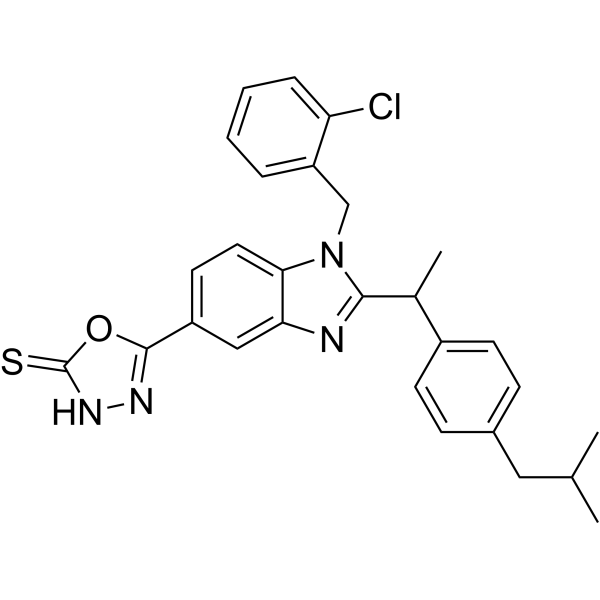
BRP-201
Brp-201 is considered as a promising therapeutic target for the next generation of anti-inflammatory drugs in the research of inflammatory diseases. It is a new, effective and selective inhibitor of mPGES-1 with an IC50 value of 0.42 μM.
Nur für Forschungszwecke. Wir verkaufen nicht an Patienten.
- CAS. Nr.: 2227434-74-2
- Formel: C28H27ClN4OS
- Molecular Weight:503.06
-
Speicherung:
Please store the product under the recommended conditions in the Certificate of Analysis.

To place orders, for customer services and technical support, please contact: MedChemExpress USA
Tel: 609-228-6898 E-mail: [email protected] [email protected]


-
 Biologische Aktivität
-
Chemical Information
- Protokoll
- Reinheit & Dokumentation
- Verweise
-
 Help & FAQs


-
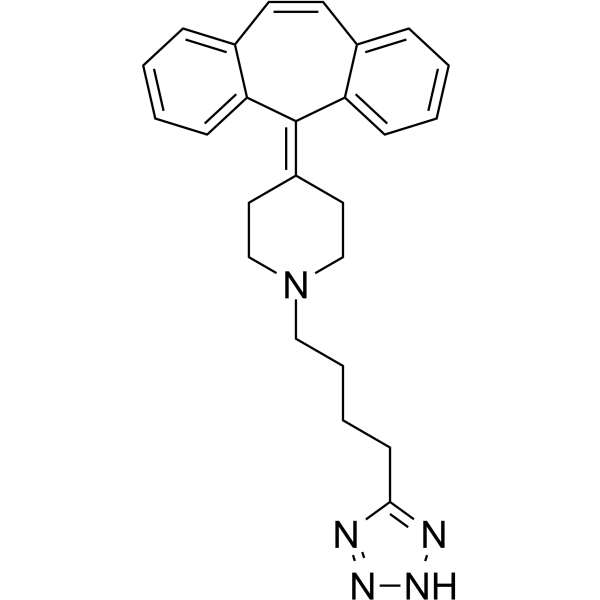
HY-13988
AT-56L-PGDS Inhibitor -
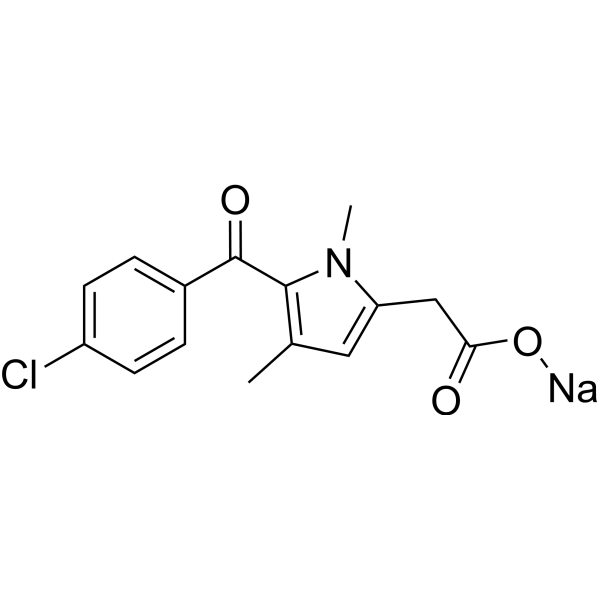
HY-B0890
Zomepirac sodium saltProstaglandin Synthetase Inhibitor -
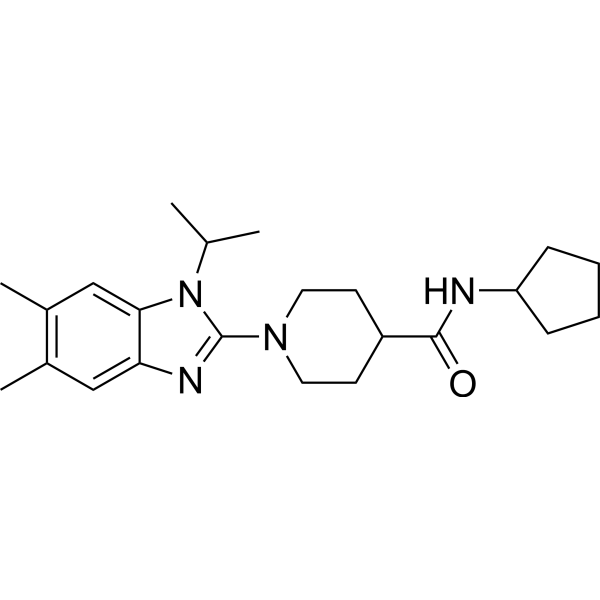
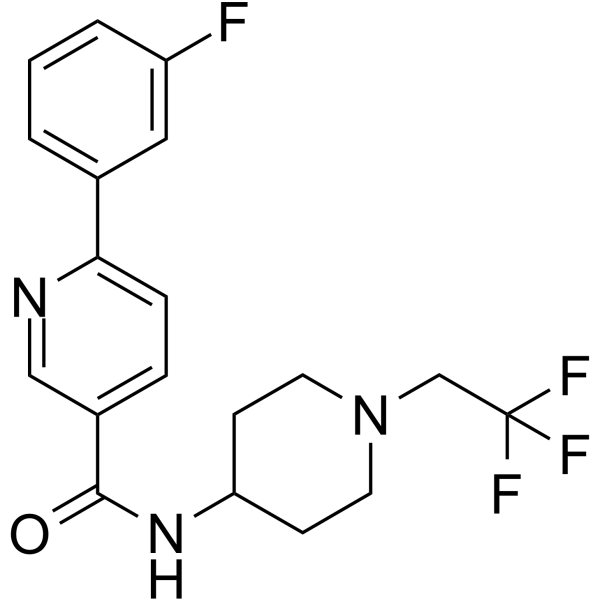
HY-118282
mPGES1-IN-7mPGES-1 Inhibitor -
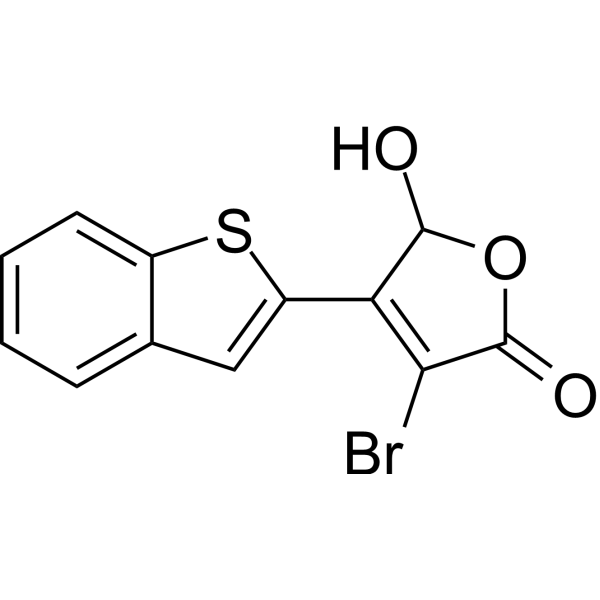
HY-10439
HPGDS inhibitor 1HPGDS Inhibitor -
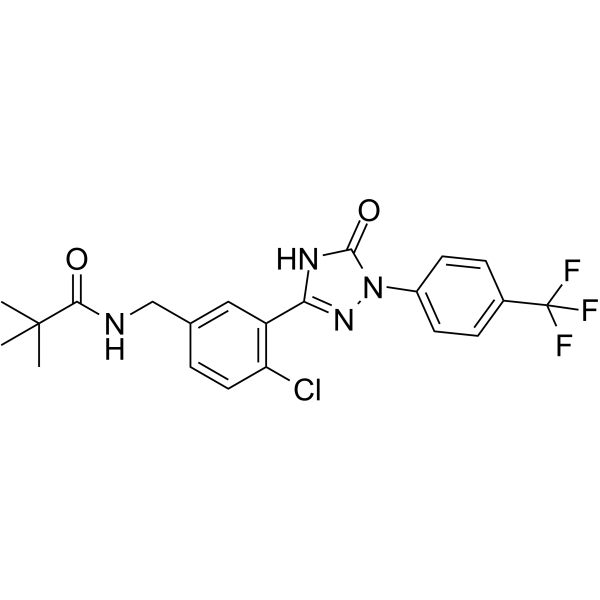
HY-118119
CAY10526YB-1/mPGES1 Inhibitor -
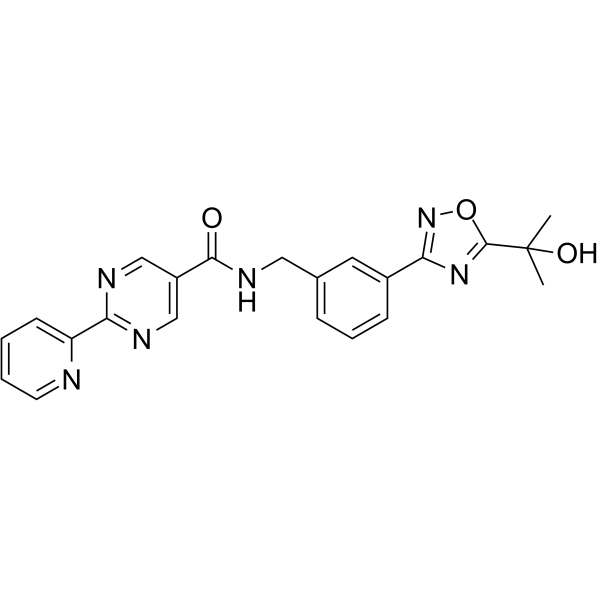
HY-139589
ZaloglanstatmPGES-1 Inhibitor -
HY-12791
hPGDS-IN-1hPGDS Inhibitor -
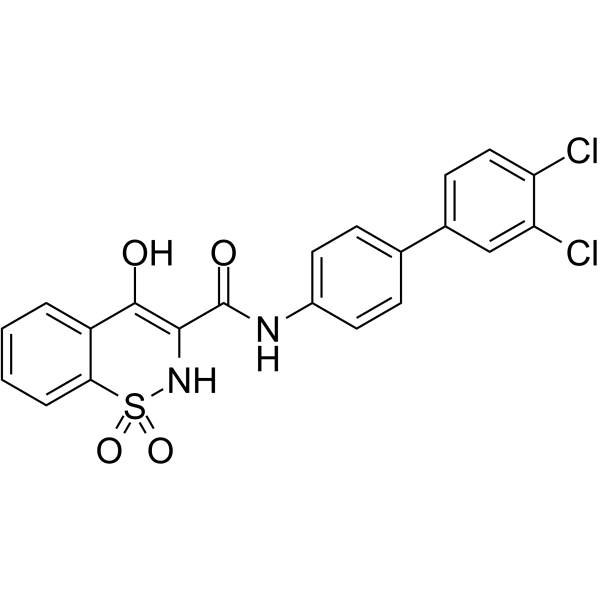
HY-19622
PF-9184mPGES-1 Inhibitor -
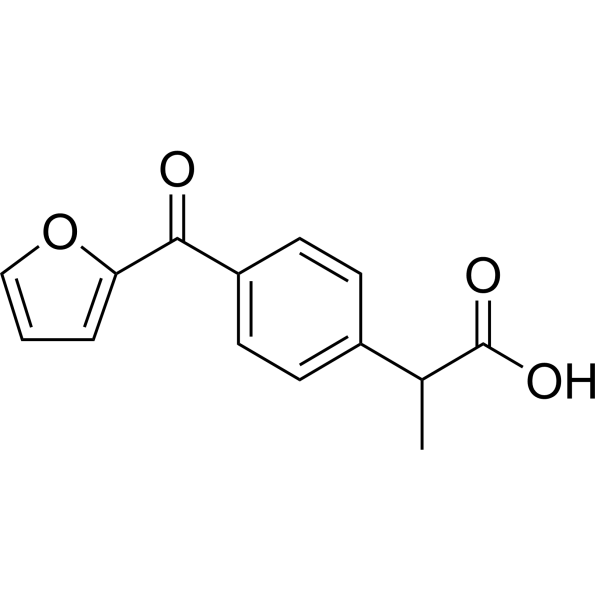
HY-106907
FurprofenAnti-Inflammatory Drug -

HY-13988R
AT-56 (Standard)L-PGDS Inhibitor -

HY-B0890R
Zomepirac sodium salt (Standard)Reference Standard -

HY-106907R
Furprofen (Standard)Reference Standard


Biologische Aktivität
Beschreibung
IC50 & Target
|
mPGES-1 0.42 μM (IC50) |


Chemical Information
-
CAS. Nr. 2227434-74-2
-
Molecular Weight 503.06
-
Formel C28H27ClN4OS
-
SMILES
S=C1OC(C2=CC=C3C(N=C(C(C4=CC=C(CC(C)C)C=C4)C)N3CC5=CC=CC=C5Cl)=C2)=NN1
-
Versand
Room temperature in continental US; may vary elsewhere.
-
Speicherung
Please store the product under the recommended conditions in the Certificate of Analysis.

Protokoll
-
Research Protocol for Inflammation-related Diseases
The NLRP3 inflammasome is a cytosolic innate immune signaling platform that integrates priming signals and danger-signal activation to promote caspase-1 activation, maturation of IL-1β and IL-18, and gasdermin D-mediated pyroptotic cell death. The core experimental logic is to determine whether inflammatory disease phenotypes are driven by increased NLRP3 expression, ASC-containing inflammasome assembly, caspase-1 cleavage, GSDMD cleavage, and extracellular release of IL-1β/IL-18 rather than by nonspecific cell injury alone. The pathway is strongly linked to inflammation-related disease phenotypes because monosodium urate crystals activate NALP3/NLRP3 inflammasome signaling in gout-like crystal inflammation, cholesterol crystals activate NLRP3 inflammasomes in atherogenesis models, and DSS-induced intestinal inflammation has been reported to involve NLRP3 inflammasome activity. However, experimental colitis studies also show context-dependent protective effects of NLRP3 inflammasome co


Reinheit & Dokumentation
Verweise

Calculators
Konzentration (Stammlösung) × Volumen (Stammlösung) = Konzentration (Ziellösung) × Volumen (Ziellösung)


BRP-201 Related Classifications
HY-144237 Related Classifications
 Powered by Bioz