



2-Hydroxyestradiol
Based on 2 publication(s) in Google Scholar
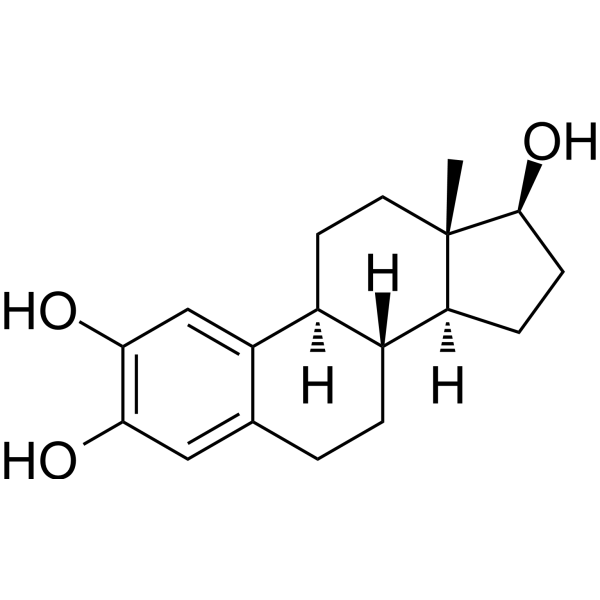
2-Hydroxyestradiol, a metabolite of 17β-estradiol with minimal estrogenic activity, possesses antioxidant effects and reacts with DNA to form stable adducts and exerts genotoxicity.
For research use only. We do not sell to patients.
- Purity: 98.05%
- CAS No.: 362-05-0
- Formula: C18H24O3
- Molecular Weight:288.38
-
Storage:Powder -20°C, 3 years ; In solvent -80°C, 6 months , -20°C, 1 month

To place orders, for customer services and technical support, please contact: MedChemExpress USA
Tel: 609-228-6898 E-mail: [email protected] [email protected]


-
 Biological Activity
-
Chemical Information
-
Solvent & Solubility
- Purity & Documentation
- References
-
 Help & FAQs


-
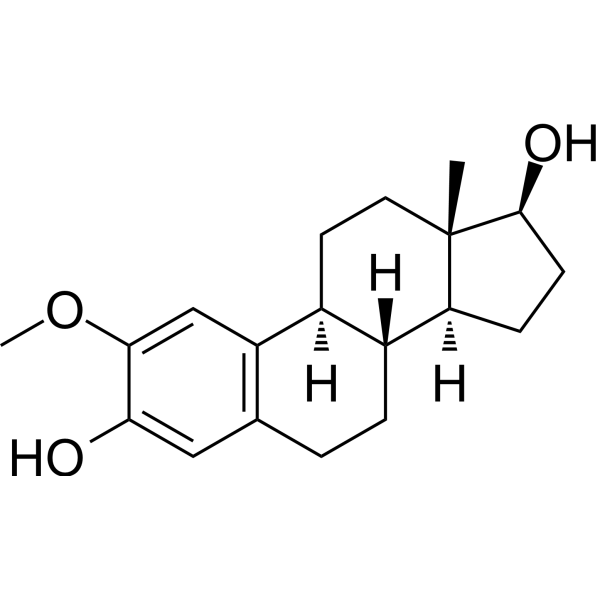
HY-12033
2-Methoxyestradiol -
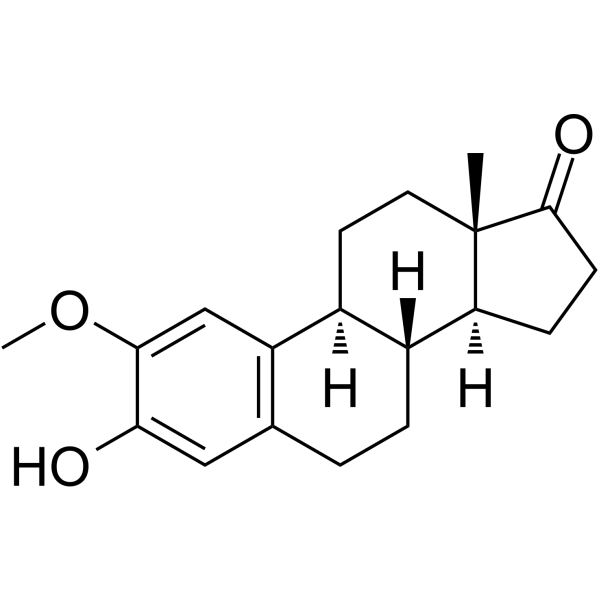
HY-113252
2-Methoxyestrone -
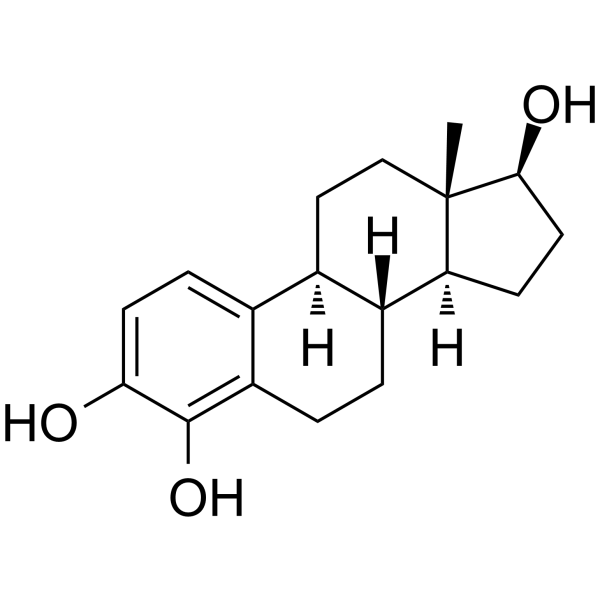
HY-N10403
4-Hydroxyestradiol -
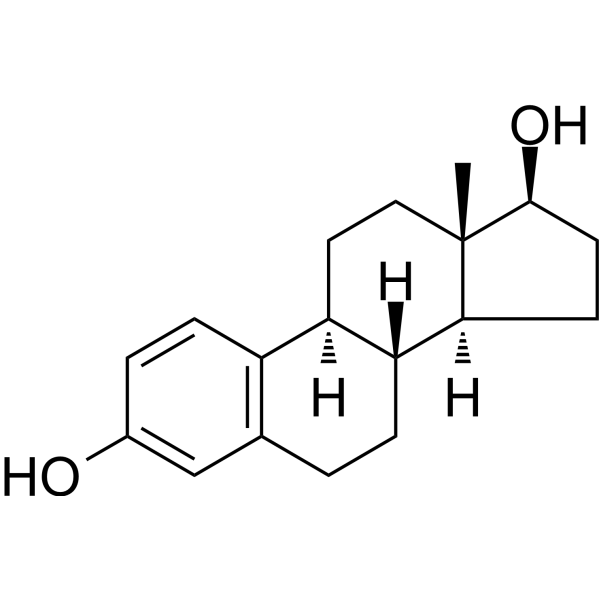
HY-B0141
Estradiol -
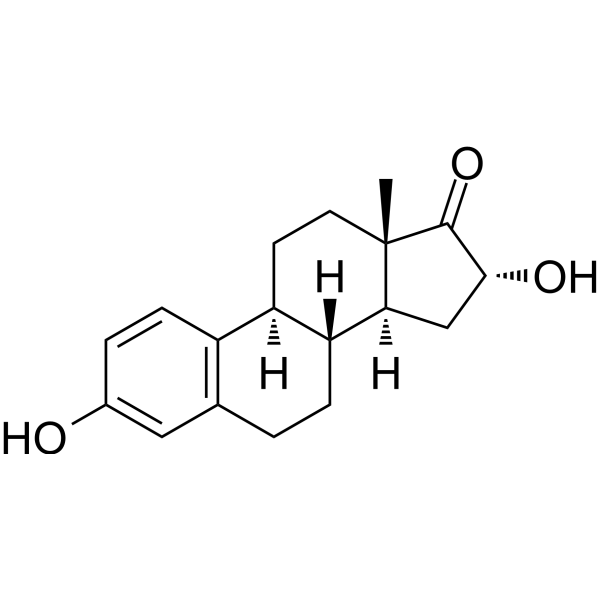
HY-113344
16α-Hydroxyestrone -
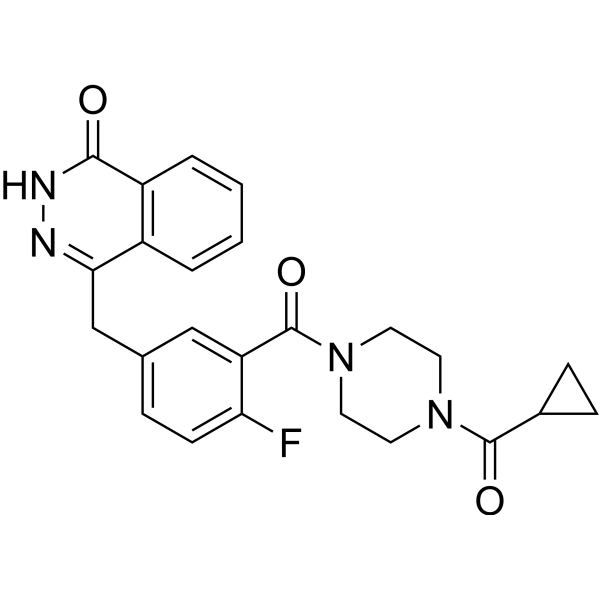
HY-10162
Olaparib -
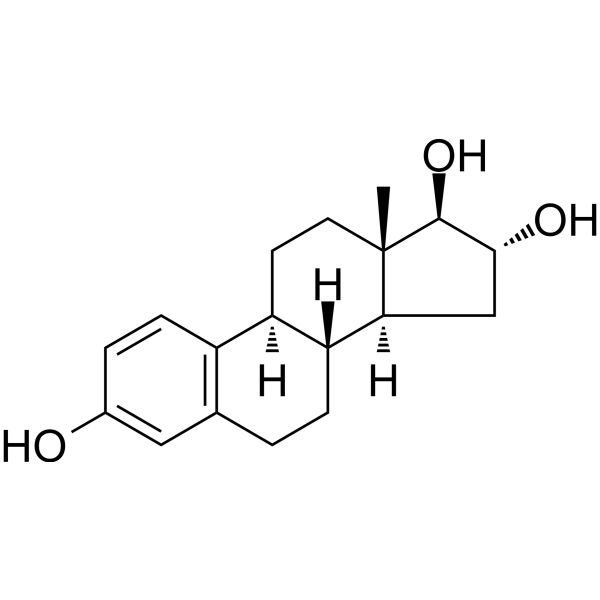
HY-B0412
Estriol -

HY-168374
DSPE-PEG2000-Mannose -
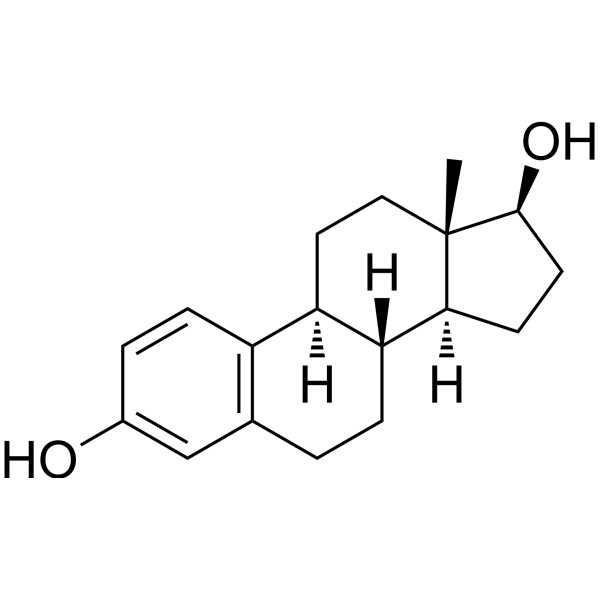
HY-B0141R
Estradiol (Standard) -
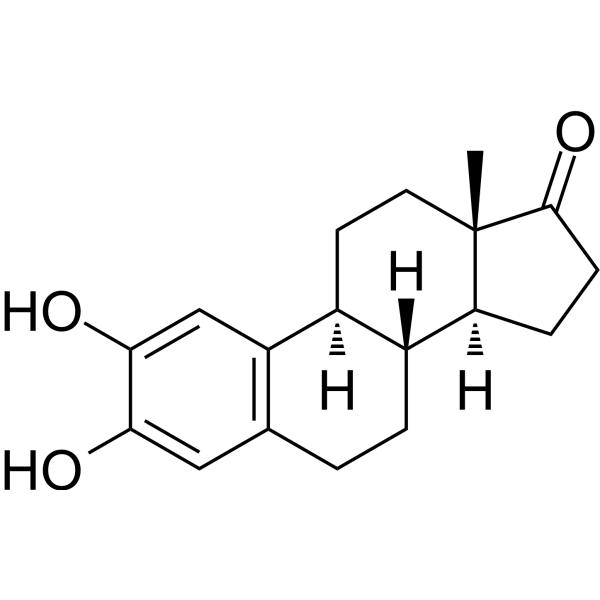
HY-113251
2-Hydroxyestrone -
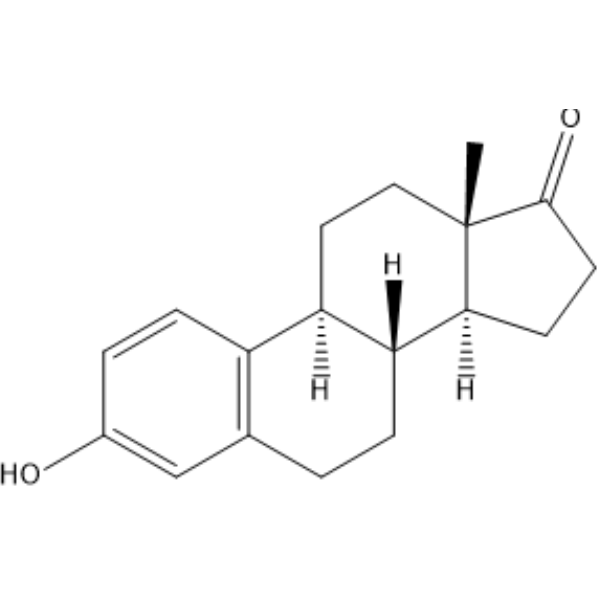
HY-B0234R
Estrone (Standard) -
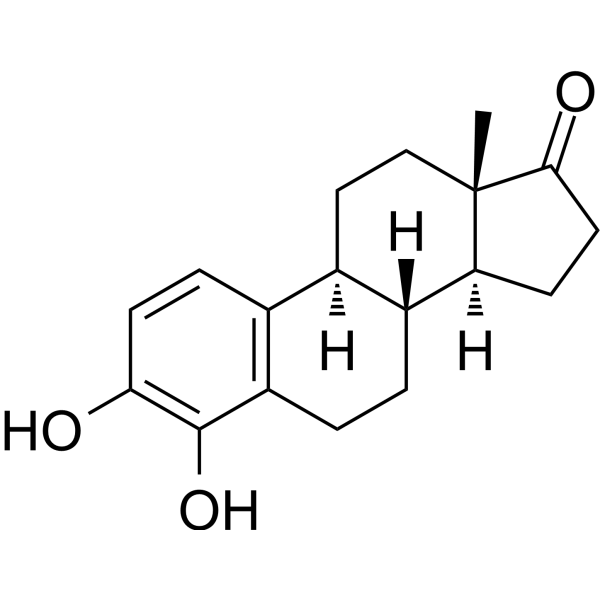
HY-W009300
4-Hydroxyestrone
Publications Citing Use of MedChemExpress (MCE) 2-Hydroxyestradiol
MoreAll Endogenous Metabolite Isoforms
More

Biological Activity
Description
IC50 & Target
|
Human Endogenous Metabolite |
Cellular Effect
|
Cell Line

|
Type | Value | Description | References |
|---|---|---|---|---|
| MCF7 | EC50 |
1.66 M
Compound: 2-Hydroxy-estradiol
|
Affinity estrogen receptor of MCF-7 human mammary cancer cells
Affinity estrogen receptor of MCF-7 human mammary cancer cells
|
[PMID: 8627615] |
| MCF7 | EC50 |
1.66 x 10⁻⁶M
Compound: 2-Hydroxy-estradiol
|
Affinity estrogen receptor of MCF-7 human mammary cancer cells
Affinity estrogen receptor of MCF-7 human mammary cancer cells
|
[PMID: 8627615] |
| MCF7 | EC50 |
5.04 M
Compound: 2-Hydroxy-estradiol
|
Induction of pS2 mRNA expression in human MCF-7 mammary carcinoma cells
Induction of pS2 mRNA expression in human MCF-7 mammary carcinoma cells
|
[PMID: 8627615] |
| MCF7 | EC50 |
5.04 x 10⁻⁷M
Compound: 2-Hydroxy-estradiol
|
Induction of pS2 mRNA expression in human MCF-7 mammary carcinoma cells
Induction of pS2 mRNA expression in human MCF-7 mammary carcinoma cells
|
[PMID: 8627615] |
In Vitro
2-Hydroxyestradiol induces phenotypical changes indicative of neoplastic transformation[1].
2-Hydroxyestradiol (2-OHE2) is capable of in vitro transforming a HBEC, MCF-10F cell line, that is estrogen receptor-a (ERα) negative and ERβ positive[1].
2-Hydroxyestradiol induces oxidative DNA damage and apoptosis in human mammary epithelial cells[3].
MedChemExpress (MCE) has not independently confirmed the accuracy of these methods. They are for reference only.
In Vivo
MedChemExpress (MCE) has not independently confirmed the accuracy of these methods. They are for reference only.


Chemical Information
-
CAS No. 362-05-0
-
Appearance Solid
-
Molecular Weight 288.38
-
Formula C18H24O3
-
Color White to light yellow
-
SMILES
OC1=C(C=C(C2=C1)CC[C@@]3([C@@]2(CC[C@]4([C@]3(CC[C@@H]4O)[H])C)[H])[H])O
-
Structure Classification
-
Initial Source
-
Shipping
Room temperature in continental US; may vary elsewhere.
-
Storage
Powder -20°C 3 years In solvent -80°C 6 months -20°C 1 month


Publications (2)
-
Journal Impact Factor
-
Most Recent
-
Cell Metab
Sensing steroid hormone 17α-hydroxypregnenolone by GPR56 enables protection from ferroptosis-induced liver injury. [Abstract]2024 Nov 5;36(11):2402-2418.e10. PMID: 39389061 -
Sci Rep
2025 Mar 11;15(1):8409. PMID: 40069295


Solvent & Solubility
In Vitro:
DMSO : 100 mg/mL (346.76 mM; Need ultrasonic; Hygroscopic DMSO has a significant impact on the solubility of product, please use newly opened DMSO)
Please refer to the solubility information to select the appropriate solvent. Once prepared, please aliquot and store the solution to prevent product inactivation from repeated freeze-thaw cycles.
Storage method and period of stock solution: -80°C, 6 months; -20°C, 1 month. When stored at -80°C, please use it within 6 months. When stored at -20°C, please use it within 1 month.
Please refer to the solubility information to select the appropriate solvent. Once prepared, please aliquot and store the solution to prevent product inactivation from repeated freeze-thaw cycles.
Storage method and period of stock solution: -80°C, 6 months; -20°C, 1 month. When stored at -80°C, please use it within 6 months. When stored at -20°C, please use it within 1 month.
Concentration (start) × Volume (start) = Concentration (final) × Volume (final)
In Vivo:
Select the appropriate dissolution method based on your experimental animal and administration route.
- For the following dissolution methods, please ensure to first prepare a clear stock solution using an In Vitro approach and then sequentially add co-solvents:
- To ensure reliable experimental results, the clarified stock solution can be appropriately stored based on storage conditions. As for the working solution for In Vivo experiments, it is recommended to prepare freshly and use it on the same day.
- The percentages shown for the solvents indicate their volumetric ratio in the final prepared solution. If precipitation or phase separation occurs during preparation, heat and/or sonication can be used to aid dissolution.
Add each solvent one by one: 10% DMSO 40% PEG300 5% Tween-80 45% Saline
Solubility: ≥ 2.5 mg/mL (8.67 mM); Clear solution
This protocol yields a clear solution of ≥ 2.5 mg/mL (saturation unknown).
Taking 1 mL working solution as an example, add 100 μL DMSO stock solution (25.0 mg/mL) to 400 μL PEG300, and mix evenly; then add 50 μL Tween-80 and mix evenly; then add 450 μL Saline to adjust the volume to 1 mL.
Preparation of Saline: Dissolve 0.9 g sodium chloride in ddH₂O and dilute to 100 mL to obtain a clear Saline solution.
In Vivo Dissolution Calculator
Please enter the basic information of animal experiments:
-
-
-
-
Recommended: Prepare an additional quantity of animals to account for potential losses during experiments.
Please enter your animal formula composition:
-
%DMSO +
Recommended: Keep the proportion of DMSO in working solution below 2% if your animal is weak.
-
%+
-
+%Tween-80 + +
-
%Saline +
The co-solvents required include: DMSO, . All of co-solvents are available by MedChemExpress (MCE). , Tween 80. All of co-solvents are available by MedChemExpress (MCE).
Working solution concentration: 0.22 mg/mL
Method for preparing stock solution: mg drug dissolved in μL DMSO. Stock solution concentration: mg/mL.
1. Take μL DMSO stock solution;
2. Add μL .
μL , mix evenly;
3. Then add μL Tween 80, mix evenly;
4. Then add μL
Please ensure that the stock solution in the first step is dissolved to a clear state, and add co-solvents in sequence. You can use ultrasonic heating (ultrasonic cleaner, recommended frequency 20-40 kHz), vortexing, etc. to assist dissolution.


Purity & Documentation
-
Data Sheet (277 KB)
-
SDS (419 KB)
- English - EN (419 KB)
- Français - FR (419 KB)
- Deutsch - DE (419 KB)
- Norwegian - NO (419 KB)
- Español - ES (419 KB)
- Swedish - SV (419 KB)
- Italian - IT (419 KB)
- Korean - KR (419 KB)
- Portuguese - PT (419 KB)
-
Handling Instructions (2659 KB)
References
[1]. C H Van Aswegen, et al. Binding of 2-hydroxyestradiol and 4-hydroxyestradiol to estrogen receptors from human breast cancers. J Steroid Biochem. 1989 Apr;32(4):485-92. [Content Brief]
[2]. S P Tofovic, et al. 2-Hydroxyestradiol attenuates the development of obesity, the metabolic syndrome, and vascular and renal dysfunction in obese ZSF1 rats. J Pharmacol Exp Ther. 2001 Dec;299(3):973-7. [Content Brief]
[3]. Yeon-Jin Hurh, et al. 2-Hydroxyestradiol induces oxidative DNA damage and apoptosis in human mammary epithelial cells. J Toxicol Environ Health A. 2004 Dec;67(23-24):1939-53. [Content Brief]


Complete Stock Solution Preparation Table
Please refer to the solubility information to select the appropriate solvent. Once prepared, please aliquot and store the solution to prevent product inactivation from repeated freeze-thaw cycles.
Storage method and period of stock solution: -80°C, 6 months; -20°C, 1 month. When stored at -80°C, please use it within 6 months. When stored at -20°C, please use it within 1 month.
| Optional Solvent | Concentration Solvent Mass | 1 mg | 5 mg | 10 mg | 25 mg |
|---|---|---|---|---|---|
| DMSO | 1 mM | 3.4676 mL | 17.3382 mL | 34.6765 mL | 86.6912 mL |
| 5 mM | 0.6935 mL | 3.4676 mL | 6.9353 mL | 17.3382 mL | |
| 10 mM | 0.3468 mL | 1.7338 mL | 3.4676 mL | 8.6691 mL | |
| 15 mM | 0.2312 mL | 1.1559 mL | 2.3118 mL | 5.7794 mL | |
| 20 mM | 0.1734 mL | 0.8669 mL | 1.7338 mL | 4.3346 mL | |
| 25 mM | 0.1387 mL | 0.6935 mL | 1.3871 mL | 3.4676 mL | |
| 30 mM | 0.1156 mL | 0.5779 mL | 1.1559 mL | 2.8897 mL | |
| 40 mM | 0.0867 mL | 0.4335 mL | 0.8669 mL | 2.1673 mL | |
| 50 mM | 0.0694 mL | 0.3468 mL | 0.6935 mL | 1.7338 mL | |
| 60 mM | 0.0578 mL | 0.2890 mL | 0.5779 mL | 1.4449 mL | |
| 80 mM | 0.0433 mL | 0.2167 mL | 0.4335 mL | 1.0836 mL | |
| 100 mM | 0.0347 mL | 0.1734 mL | 0.3468 mL | 0.8669 mL |


2-Hydroxyestradiol Related Classifications
HY-124489 Related Classifications
 Powered by Bioz