



Pimecrolimus
Based on 6 publication(s) in Google Scholar
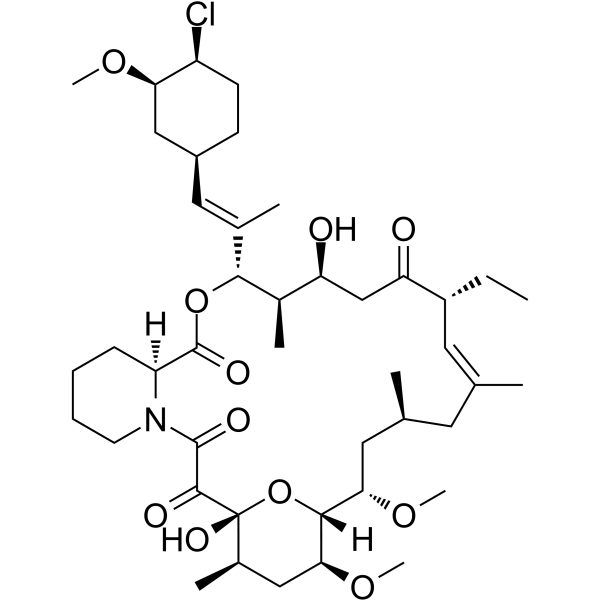
Pimecrolimus (SDZ-ASM 981) is a potent, nonsteroid and orally active calcineurin inhibitor with a Ki of 117 nM. Pimecrolimus shows anti-inflammatory activity.
For research use only. We do not sell to patients.
- Purity : 99.53%
- CAS No.: 137071-32-0
- Formula: C43H68ClNO11
- Molecular Weight:810.45
-
Storage:Powder -20°C, 3 years , 4°C, 2 years ; In solvent -80°C, 2 years , -20°C, 1 year

To place orders, for customer services and technical support, please contact: MedChemExpress USA
Tel: 609-228-6898 E-mail: [email protected] [email protected]


-
 Biological Activity
-
Chemical Information
-
Solvent & Solubility
- Protocols
- Purity & Documentation
- References
-
 Help & FAQs


-
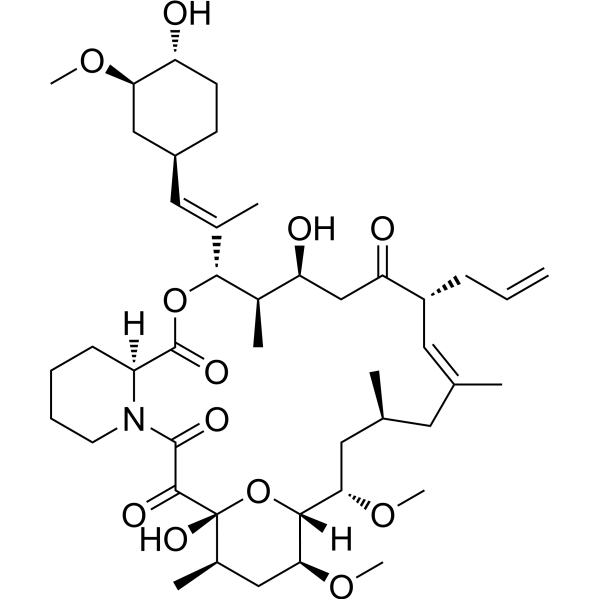
HY-13756
TacrolimusCalcineurin Inhibitor -
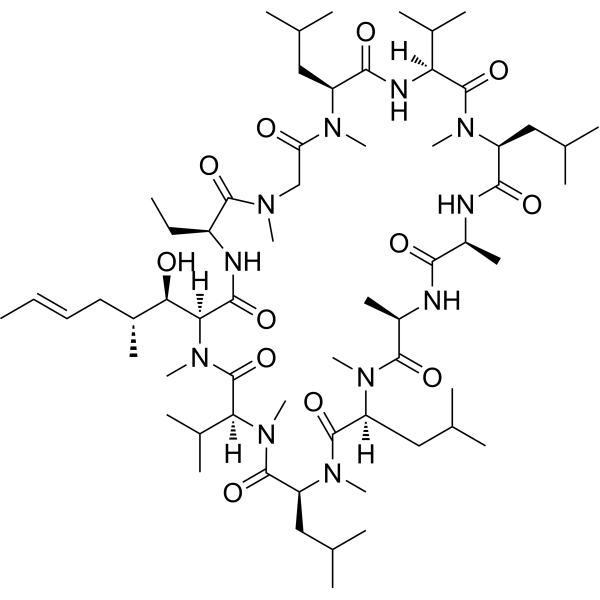
HY-B0579
Cyclosporin ACalcineurin Inhibitor -
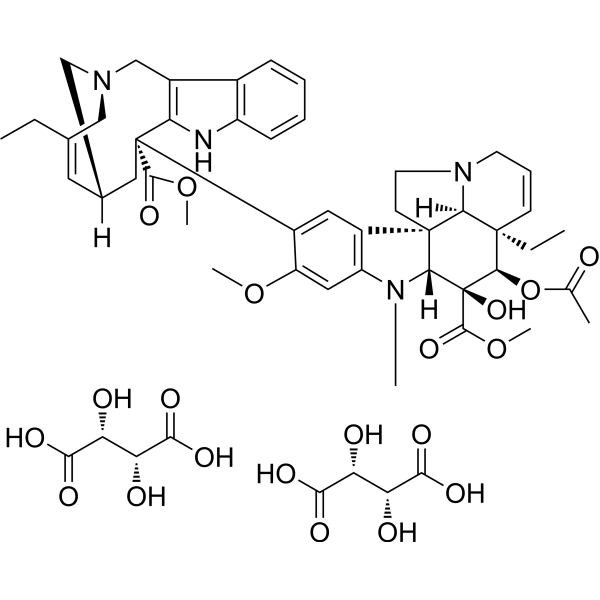
HY-12053A
Vinorelbine ditartrateAnti-mitotic Agent -
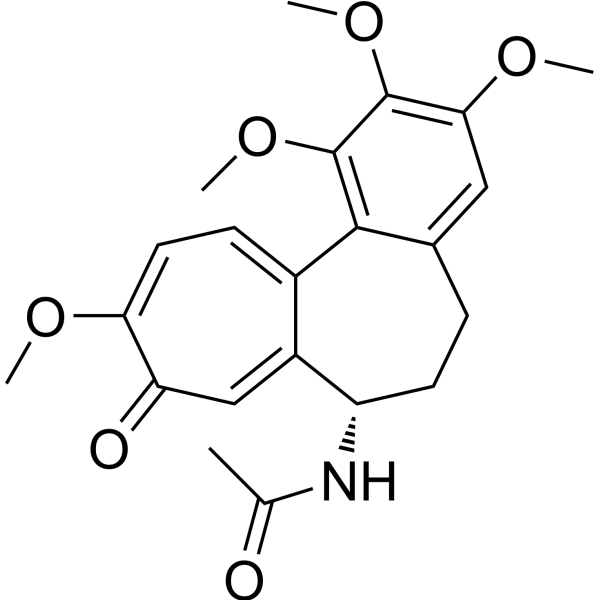
HY-16569
ColchicineTubulin Inhibitor -
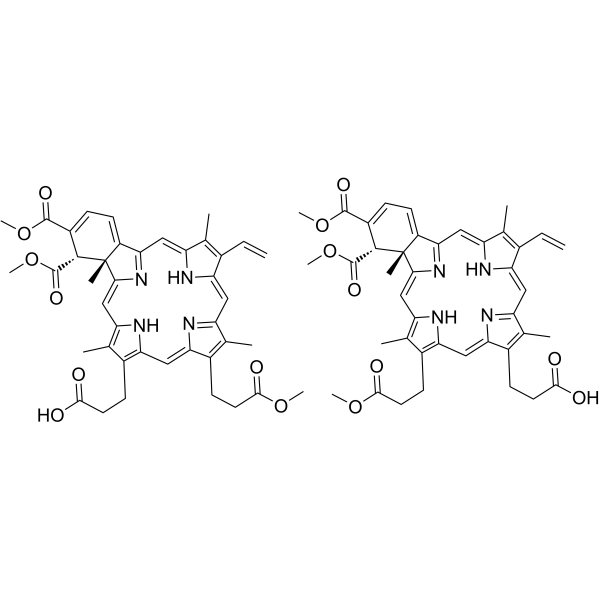
HY-B0146
VerteporfinYAP Inhibitor -
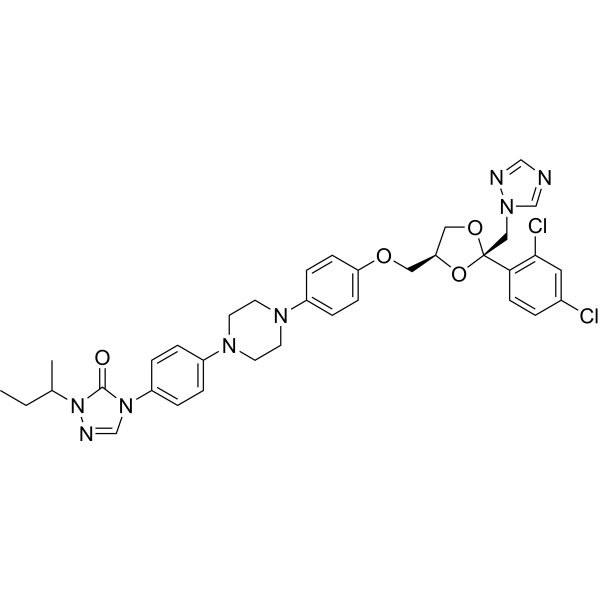
HY-17514
ItraconazoleAntifungal Agent -
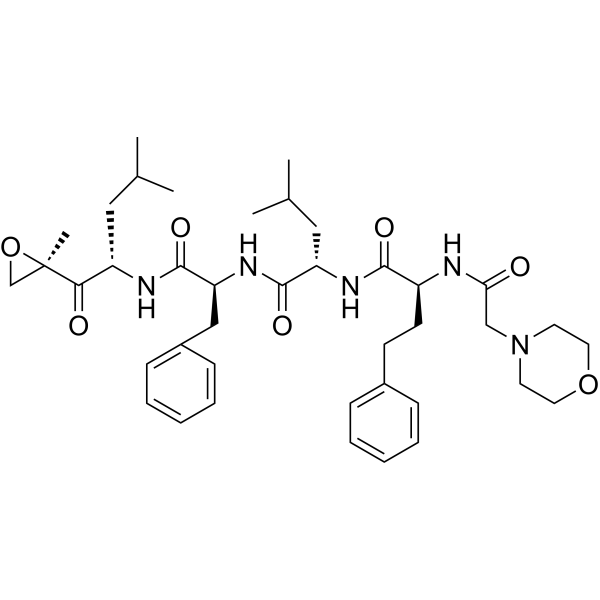
HY-10455
CarfilzomibProteasome Inhibitor -
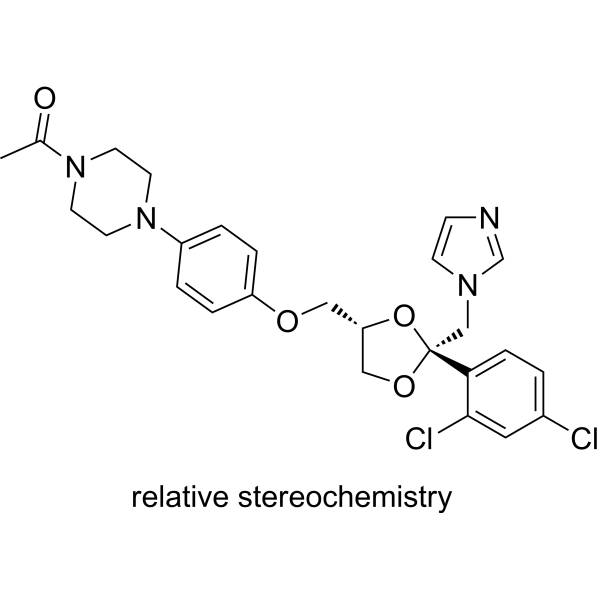
HY-B0105
KetoconazoleCYP3A4 Inhibitor -
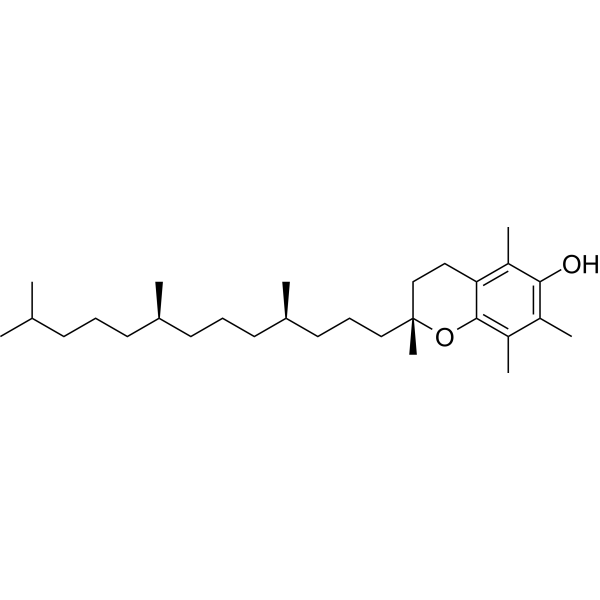
HY-N0683
α-Vitamin EAntioxidant -
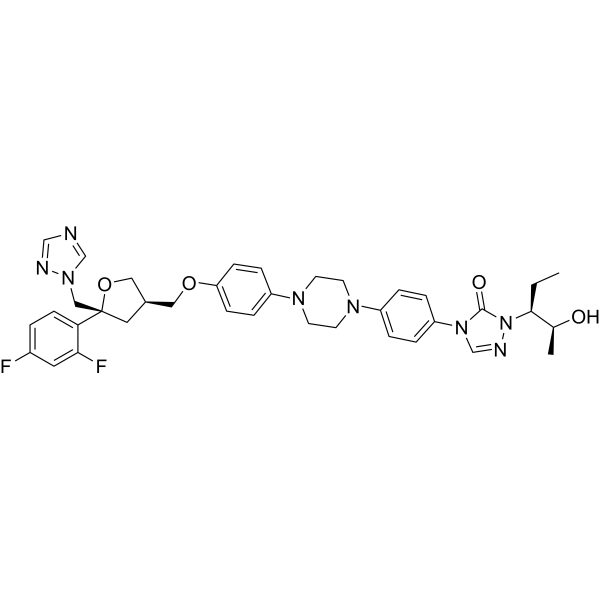
HY-17373
PosaconazoleAnti-fungal Agent -
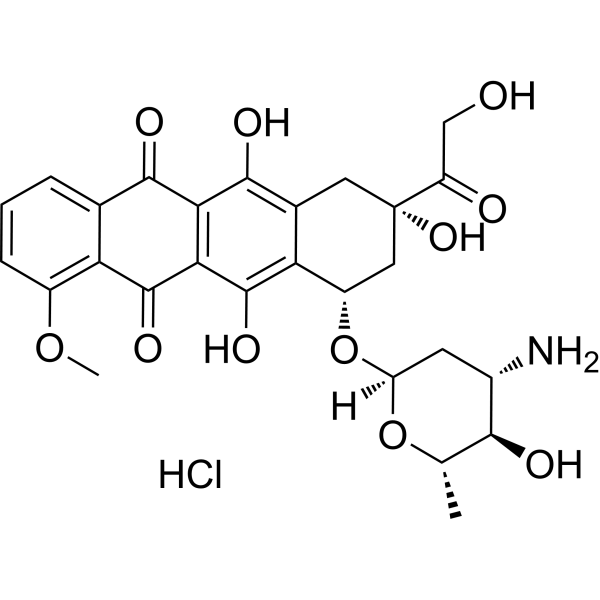
HY-13624A
Epirubicin hydrochlorideDNA/RNA Synthesis Inhibitor -
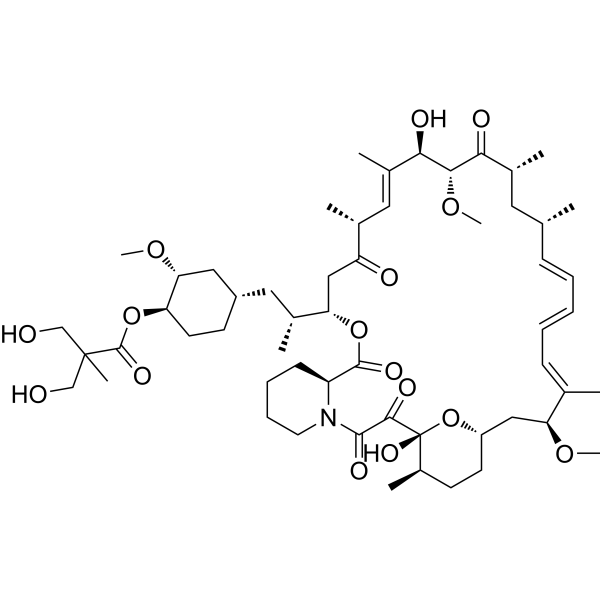
HY-50910
TemsirolimusmTOR Inhibitor
Publications Citing Use of MedChemExpress (MCE) Pimecrolimus
More

Biological Activity
Description
IC50 & Target
Calcineurin[1]
In Vitro
Pimecrolimus (SDZ-ASM 981) (100 nM) targets T-cells and mast cells and inhibits the production and release of cytokines and other inflammatory mediators, as well as the expression of signals essential for the activation of inflammatory T-lymphocytes[1].
Pimecrolimus acts specifically on cells that are crucial for the effector phase of an inflammatory reaction[1].
Pimecrolimus (10 nM; 3 days) inhibits the polyclonal growth of peripheral blood T cells in murine and human mixed lymphocyte reactions[2].
Pimecrolimus inhibits cytokine IL-2, IL-4, IL-10 and interferon-γ release from T-cell clone CFTS4:3.1 with IC50s of 0.28, 0.3, 0.2 and 0.42 nM, respectively after antigen-specific stimulation[2].
MedChemExpress (MCE) has not independently confirmed the accuracy of these methods. They are for reference only.
-
Cell Line:T-cell clone (TCC), murine and human mixed lymphocyte reactions (MLR)
-
Concentration:0-10 nM
-
Incubation Time:3 days
-
Result:Inhibited proliferation of TCC CFTS 4:3.1 with IC50s of 0.78-2.6 nM. Inhibited murine and human MLR with IC50s of both 1.3 nM.
In Vivo
Pimecrolimus (0-90 mg/kg; p.o. or s.c.; twice or once) potently inhibits allergic contact dermatitis in mice and rats[3].
MedChemExpress (MCE) has not independently confirmed the accuracy of these methods. They are for reference only.
-
Animal Model:Female NMRl mice, allergic contact dermatitis model[3]
-
Dosage:0.004%, 0.01%, 0.04%, 0.13% and 0.4% in10 μL ethanolic solution
-
Administration:Topical application, once
-
Result:Inhibited oedema formation by 17% at concentration of 0.004%.
-
Animal Model:Female NMRl mice, allergic contact dermatitis model[3]
-
Dosage:10, 30, 90 mg/kg (oral) or 1.5, 4.5, 13.5 mg/kg (subcutaneous)
-
Administration:Oral (twice) or subcutaneous administration (once)
-
Result:Signiticantiy inhibited inflammatory ear oedema formation.


Chemical Information
-
CAS No. 137071-32-0
-
Appearance Solid
-
Molecular Weight 810.45
-
Formula C43H68ClNO11
-
Color White to light yellow
-
SMILES
O=C([C@@](CCCC1)([H])N1C(C([C@@]2(O)[C@H](C)C[C@H](OC)[C@@](O2)([H])[C@@H](OC)C[C@@H](C)C/C(C)=C/[C@H]3CC)=O)=O)O[C@H](/C(C)=C/[C@H]4C[C@@H](OC)[C@@H](Cl)CC4)[C@H](C)[C@@H](O)CC3=O
-
Synonyms
SDZ-ASM 981
-
Shipping
Room temperature in continental US; may vary elsewhere.
-
Storage
Powder -20°C 3 years 4°C 2 years In solvent -80°C 2 years -20°C 1 year


Publications (6)
-
Journal Impact Factor
-
Most Recent
-
Antioxidants (Basel)
Pitavastatin Calcium Confers Fungicidal Properties to Fluconazole by Inhibiting Ubiquinone Biosynthesis and Generating Reactive Oxygen Species. [Abstract]2024 May 29;13(6):667. PMID: 38929106 -
Biochem Pharmacol
Aloe-emodin, a naturally occurring anthraquinone, is a highly potent mast cell stabilizer through activating mitochondrial calcium uniporter. [Abstract]2021 Apr:186:114476. PMID: 33607072 -
-
J Cell Sci
FKBP12 mediates necroptosis by initiating RIPK1-RIPK3-MLKL signal transduction in response to TNF receptor 1 ligation. [Abstract]2019 May 20;132(10):jcs227777. PMID: 31028177 -
Drug Metab Dispos
Synergistic hepatotoxicity of azithromycin and acetaminophen involves liver X receptor α-mediated metabolic dysregulation and endoplasmic reticulum stress. [Abstract]2026 May 13. PMID: 42263432 -
Mol Carcinog
Pregnane X Receptor Activation Induces Ferroptosis Resistance Through Upregulation of FSP1. [Abstract]2025 Jul 17. PMID: 40674609


Solvent & Solubility
In Vitro:
DMSO : ≥ 32 mg/mL (39.48 mM; Hygroscopic DMSO has a significant impact on the solubility of product, please use newly opened DMSO)
* "≥" means soluble, but saturation unknown.
Please refer to the solubility information to select the appropriate solvent. Once prepared, please aliquot and store the solution to prevent product inactivation from repeated freeze-thaw cycles.
Storage method and period of stock solution: -80°C, 2 years; -20°C, 1 year. When stored at -80°C, please use it within 2 years. When stored at -20°C, please use it within 1 year.
Please refer to the solubility information to select the appropriate solvent. Once prepared, please aliquot and store the solution to prevent product inactivation from repeated freeze-thaw cycles.
Storage method and period of stock solution: -80°C, 2 years; -20°C, 1 year. When stored at -80°C, please use it within 2 years. When stored at -20°C, please use it within 1 year.
Concentration (start) × Volume (start) = Concentration (final) × Volume (final)
In Vivo:
Select the appropriate dissolution method based on your experimental animal and administration route.
- For the following dissolution methods, please ensure to first prepare a clear stock solution using an In Vitro approach and then sequentially add co-solvents:
- To ensure reliable experimental results, the clarified stock solution can be appropriately stored based on storage conditions. As for the working solution for In Vivo experiments, it is recommended to prepare freshly and use it on the same day.
- The percentages shown for the solvents indicate their volumetric ratio in the final prepared solution. If precipitation or phase separation occurs during preparation, heat and/or sonication can be used to aid dissolution.
Add each solvent one by one: 10% DMSO 40% PEG300 5% Tween-80 45% Saline
Solubility: ≥ 2.5 mg/mL (3.08 mM); Clear solution
This protocol yields a clear solution of ≥ 2.5 mg/mL (saturation unknown).
Taking 1 mL working solution as an example, add 100 μL DMSO stock solution (25.0 mg/mL) to 400 μL PEG300, and mix evenly; then add 50 μL Tween-80 and mix evenly; then add 450 μL Saline to adjust the volume to 1 mL.
Preparation of Saline: Dissolve 0.9 g sodium chloride in ddH₂O and dilute to 100 mL to obtain a clear Saline solution.
In Vivo Dissolution Calculator
Please enter the basic information of animal experiments:
-
-
-
-
Recommended: Prepare an additional quantity of animals to account for potential losses during experiments.
Please enter your animal formula composition:
-
%DMSO +
Recommended: Keep the proportion of DMSO in working solution below 2% if your animal is weak.
-
%+
-
+%Tween-80 + +
-
%Saline +
The co-solvents required include: DMSO, . All of co-solvents are available by MedChemExpress (MCE). , Tween 80. All of co-solvents are available by MedChemExpress (MCE).
Working solution concentration: 0.22 mg/mL
Method for preparing stock solution: mg drug dissolved in μL DMSO. Stock solution concentration: mg/mL.
1. Take μL DMSO stock solution;
2. Add μL .
μL , mix evenly;
3. Then add μL Tween 80, mix evenly;
4. Then add μL
Please ensure that the stock solution in the first step is dissolved to a clear state, and add co-solvents in sequence. You can use ultrasonic heating (ultrasonic cleaner, recommended frequency 20-40 kHz), vortexing, etc. to assist dissolution.


Purity & Documentation
-
Data Sheet (285 KB)
-
SDS (419 KB)
- English - EN (419 KB)
- Français - FR (419 KB)
- Deutsch - DE (419 KB)
- Norwegian - NO (419 KB)
- Español - ES (419 KB)
- Swedish - SV (419 KB)
- Italian - IT (419 KB)
- Korean - KR (419 KB)
- Portuguese - PT (419 KB)
-
Handling Instructions (2659 KB)
References
[1]. Grassberger M, et al. Pimecrolimus -- an anti-inflammatory drug targeting the skin. Exp Dermatol. 2004 Dec;13(12):721-30. [Content Brief]
[2]. Grassberger M, et al. A novel anti-inflammatory drug, SDZ ASM 981, for the treatment of skin diseases: in vitro pharmacology. Br J Dermatol. 1999 Aug;141(2):264-73. [Content Brief]
[3]. Meingassner JG, et al. A novel anti-inflammatory drug, SDZ ASM 981, for the topical and oral treatment of skin diseases: in vivo pharmacology. Br J Dermatol. 1997 Oct;137(4):568-76. [Content Brief]


Complete Stock Solution Preparation Table
Please refer to the solubility information to select the appropriate solvent. Once prepared, please aliquot and store the solution to prevent product inactivation from repeated freeze-thaw cycles.
Storage method and period of stock solution: -80°C, 2 years; -20°C, 1 year. When stored at -80°C, please use it within 2 years. When stored at -20°C, please use it within 1 year.
| Optional Solvent | Concentration Solvent Mass | 1 mg | 5 mg | 10 mg | 25 mg |
|---|---|---|---|---|---|
| DMSO | 1 mM | 1.2339 mL | 6.1694 mL | 12.3388 mL | 30.8471 mL |
| 5 mM | 0.2468 mL | 1.2339 mL | 2.4678 mL | 6.1694 mL | |
| 10 mM | 0.1234 mL | 0.6169 mL | 1.2339 mL | 3.0847 mL | |
| 15 mM | 0.0823 mL | 0.4113 mL | 0.8226 mL | 2.0565 mL | |
| 20 mM | 0.0617 mL | 0.3085 mL | 0.6169 mL | 1.5424 mL | |
| 25 mM | 0.0494 mL | 0.2468 mL | 0.4936 mL | 1.2339 mL | |
| 30 mM | 0.0411 mL | 0.2056 mL | 0.4113 mL | 1.0282 mL |


Pimecrolimus Related Classifications
HY-13723 Related Classifications
 Powered by Bioz