



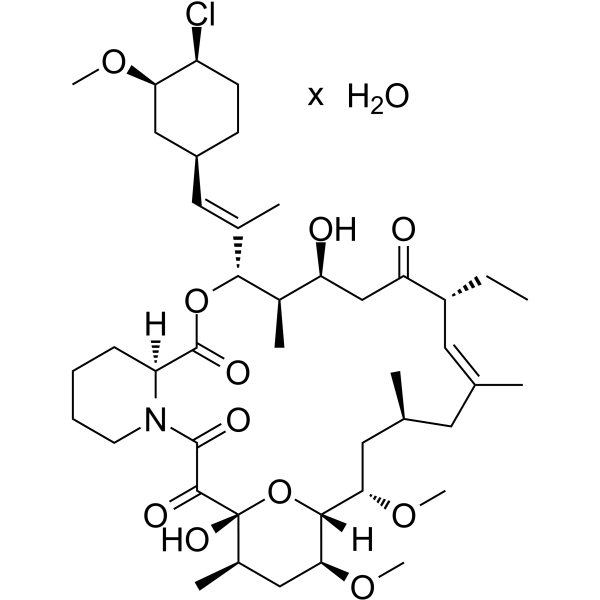
Pimecrolimus hydrate
Based on 6 publication(s) in Google Scholar
Pimecrolimus hydrate (SDZ-ASM 981 hydrate) is a potent, nonsteroid and orally active calcineurin inhibitor. Pimecrolimus hydrate shows anti-inflammatory activity. Pimecrolimus hydrate has the potential for the research of atopic dermatitis and oral erosive lichen planus.
For research use only. We do not sell to patients.
- CAS No.: 1000802-56-1
- Formula: C43H70ClNO12
-
Storage:
4°C, sealed storage, away from moisture
* In solvent : -80°C, 6 months; -20°C, 1 month (sealed storage, away from moisture)

To place orders, for customer services and technical support, please contact: MedChemExpress USA
Tel: 609-228-6898 E-mail: [email protected] [email protected]


-
 Biological Activity
-
Chemical Information
- Protocols
- Purity & Documentation
- References
-
 Help & FAQs


Publications Citing Use of MedChemExpress (MCE) Pimecrolimus hydrate
More

Biological Activity
Description
In Vitro
Pimecrolimus hydrate (100 nM) targets T-cells and mast cells and inhibits the production and release of cytokines and other inflammatory mediators, as well as the expression of signals essential for the activation of inflammatory T-lymphocytes[1].
MedChemExpress (MCE) has not independently confirmed the accuracy of these methods. They are for reference only. Further protocols information, click here.
In Vivo
Clinical Trial
| NCT Number | Sponsor | Condition | Start Date |
Phase

|
|---|---|---|---|---|
| NCT01329991 | Plexxikon| | 2011-05 | PHASE1 |


Chemical Information
-
CAS No. 1000802-56-1
-
Appearance Solid
-
Formula C43H70ClNO12
-
Color White to off-white
-
SMILES
O=C([C@@](CCCC1)([H])N1C(C([C@@]2(O)[C@H](C)C[C@H](OC)[C@@](O2)([H])[C@@H](OC)C[C@@H](C)C/C(C)=C/[C@H]3CC)=O)=O)O[C@H](/C(C)=C/[C@H]4C[C@@H](OC)[C@@H](Cl)CC4)[C@H](C)[C@@H](O)CC3=O.[x].O
-
Synonyms
SDZ-ASM 981 hydrate
-
Shipping
Room temperature in continental US; may vary elsewhere.
-
Storage
4°C, sealed storage, away from moisture
* In solvent : -80°C, 6 months; -20°C, 1 month (sealed storage, away from moisture)


Publications (6)
-
Journal Impact Factor
-
Most Recent
-
Antioxidants (Basel)
Pitavastatin Calcium Confers Fungicidal Properties to Fluconazole by Inhibiting Ubiquinone Biosynthesis and Generating Reactive Oxygen Species. [Abstract]2024 May 29;13(6):667. PMID: 38929106 -
Biochem Pharmacol
Aloe-emodin, a naturally occurring anthraquinone, is a highly potent mast cell stabilizer through activating mitochondrial calcium uniporter. [Abstract]2021 Apr:186:114476. PMID: 33607072 -
-
J Cell Sci
FKBP12 mediates necroptosis by initiating RIPK1-RIPK3-MLKL signal transduction in response to TNF receptor 1 ligation. [Abstract]2019 May 20;132(10):jcs227777. PMID: 31028177 -
Drug Metab Dispos
Synergistic hepatotoxicity of azithromycin and acetaminophen involves liver X receptor α-mediated metabolic dysregulation and endoplasmic reticulum stress. [Abstract]2026 May 13. PMID: 42263432 -
Mol Carcinog
Pregnane X Receptor Activation Induces Ferroptosis Resistance Through Upregulation of FSP1. [Abstract]2025 Jul 17. PMID: 40674609

Protocols
-
Cotton Pellet Granuloma
Cotton pellet granuloma is a classical in vivo chronic inflammation model used to evaluate the anti-inflammatory potential of test substances by measuring their ability to inhibit granuloma tissue formation around an implanted foreign body (cotton pellet) in rodents. The method is based on the biological response to a sterile implanted material, which induces proliferative phase inflammation characterized by fibroblast proliferation and collagen-rich granuloma formation, and the final readout reflects the extent of chronic inflammatory tissue growth surrounding the pellet. In multiple preclinical pharmacological evaluations, inhibition of cotton pellet-induced granuloma formation has been used as an indicator of anti-inflammatory activity in both synthetic and natural product screening contexts.
-
Carrageenan-Induced Paw Edema
Carrageenan-induced paw edema is an acute inflammation model in which intraplantar injection of carrageenan induces localized inflammatory swelling characterized by vascular permeability, leukocyte infiltration, and production of inflammatory mediators such as prostaglandins and cytokines, making it widely used to evaluate anti-inflammatory agents in vivo. The resulting paw volume or thickness increase is quantified over time as a direct readout of inflammatory intensity and drug efficacy, typically reflecting cyclooxygenase-mediated prostaglandin-driven edema formation and immune cell recruitment in peripheral tissue[20].
-
TPA/Croton Oil Ear Edema and Dermatitis
The TPA (12-O-tetradecanoylphorbol-13-acetate) and croton oil-induced mouse ear edema model is a well-established acute cutaneous inflammation system used to evaluate topical anti-inflammatory activity by measuring edema formation, neutrophil infiltration, vascular permeability, and cytokine-mediated skin responses in vivo. The inflammatory response is triggered by topical application of phorbol esters (TPA) or croton oil constituents, leading to rapid activation of protein kinase C signaling, leukocyte recruitment, and increased vascular permeability, which can be quantified by ear thickness, weight, dye extravasation, and biochemical markers such as myeloperoxidase (MPO) activity and pro-inflammatory mediators in ear tissue homogenates. This model is widely used for screening anti-inflammatory agents, where reductions in edema and inflammatory biomarkers reflect suppression of acute dermal inflammation and immune cell infiltration. Histological evaluation typically confirms epidermal
-
Research Protocol for Inflammation-related Diseases
The NLRP3 inflammasome is a cytosolic innate immune signaling platform that integrates priming signals and danger-signal activation to promote caspase-1 activation, maturation of IL-1β and IL-18, and gasdermin D-mediated pyroptotic cell death. The core experimental logic is to determine whether inflammatory disease phenotypes are driven by increased NLRP3 expression, ASC-containing inflammasome assembly, caspase-1 cleavage, GSDMD cleavage, and extracellular release of IL-1β/IL-18 rather than by nonspecific cell injury alone. The pathway is strongly linked to inflammation-related disease phenotypes because monosodium urate crystals activate NALP3/NLRP3 inflammasome signaling in gout-like crystal inflammation, cholesterol crystals activate NLRP3 inflammasomes in atherogenesis models, and DSS-induced intestinal inflammation has been reported to involve NLRP3 inflammasome activity. However, experimental colitis studies also show context-dependent protective effects of NLRP3 inflammasome co


Purity & Documentation
-
Data Sheet (278 KB)
-
SDS (251 KB)
- English - EN (251 KB)
- Français - FR (251 KB)
- Deutsch - DE (251 KB)
- Norwegian - NO (251 KB)
- Español - ES (251 KB)
- Swedish - SV (251 KB)
- Italian - IT (251 KB)
- Korean - KR (251 KB)
- Portuguese - PT (251 KB)
-
Handling Instructions (2659 KB)
References
[1]. Grassberger M, et al. Pimecrolimus -- an anti-inflammatory drug targeting the skin. Exp Dermatol. 2004 Dec;13(12):721-30. [Content Brief]
[2]. Roman D, et al. Determination of the effect of calcineurin inhibitors on the rat's immune system after KLH immunisation. Toxicol Lett. 2004 Apr 1;149(1-3):133-40. [Content Brief]
[3]. Passeron T, et al. Treatment of oral erosive lichen planus with 1% pimecrolimus cream: a double-blind, randomized, prospective trial with measurement of pimecrolimus levels in the blood. Arch Dermatol. 2007 Apr;143(4):472-6. [Content Brief]

Calculators
Concentration (start) × Volume (start) = Concentration (final) × Volume (final)


Pimecrolimus hydrate Related Classifications
HY-13723A Related Classifications
 Powered by Bioz