



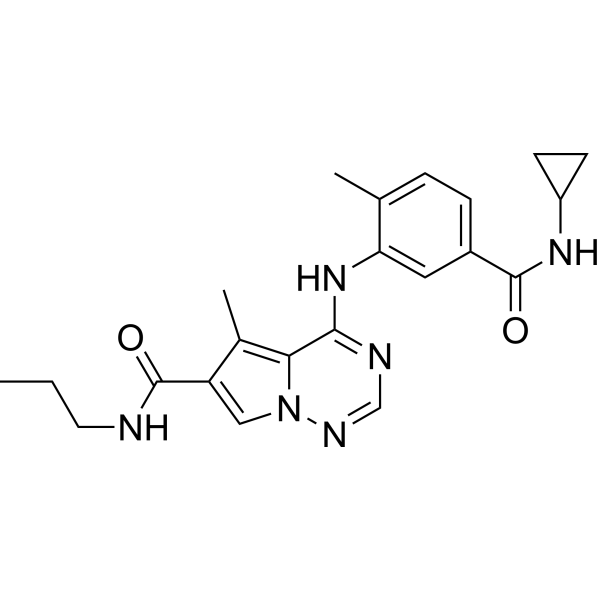
BMS-582949
Based on 2 publication(s) in Google Scholar
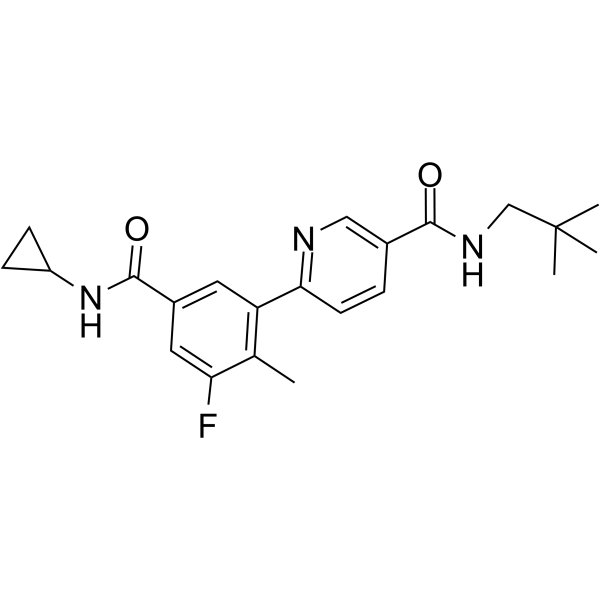
BMS-582949 (compound 7k) is an orally active and highly selective p38α MAP kinase inhibitor, with IC50 values of 13 nM for p38α, and 50 nM for cellular TNFα. BMS-582949 can be used for research on rheumatoid arthritis.
For research use only. We do not sell to patients.
- CAS No.: 623152-17-0
- Formula: C22H26N6O2
- Molecular Weight:406.48
-
Storage:
Please store the product under the recommended conditions in the Certificate of Analysis.

To place orders, for customer services and technical support, please contact: MedChemExpress USA
Tel: 609-228-6898 E-mail: [email protected] [email protected]


-
 Biological Activity
-
Chemical Information
- Protocols
- Purity & Documentation
- References
-
 Help & FAQs


-
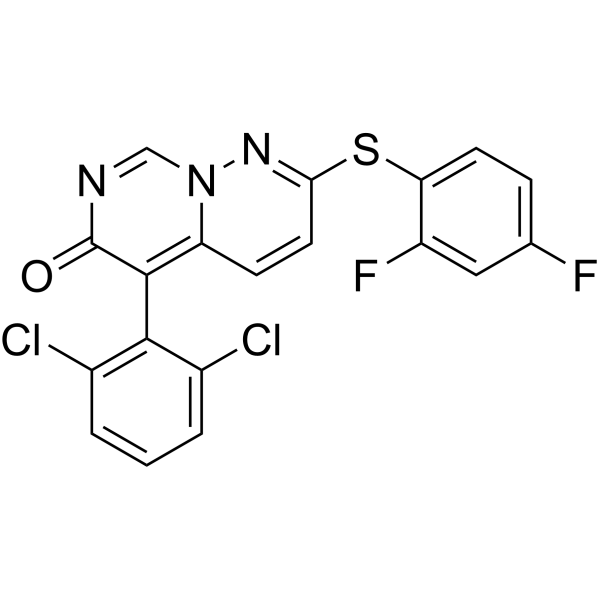
HY-10328
Neflamapimodp38α Inhibitor -
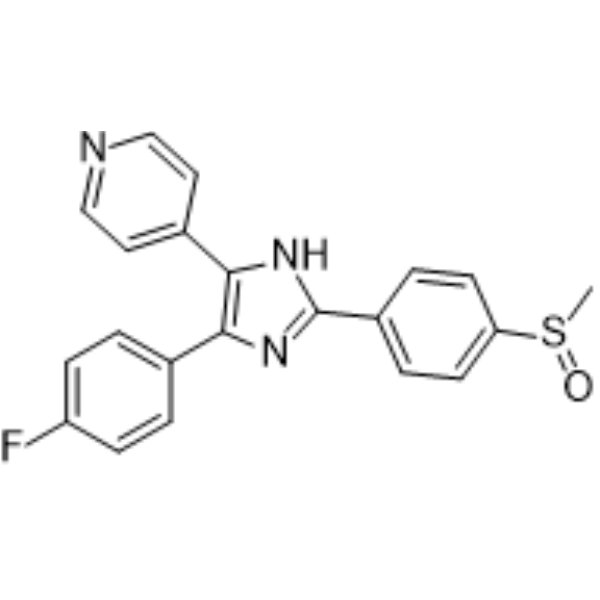
HY-10256
Adezmapimodp38 MAPK Inhibitor -
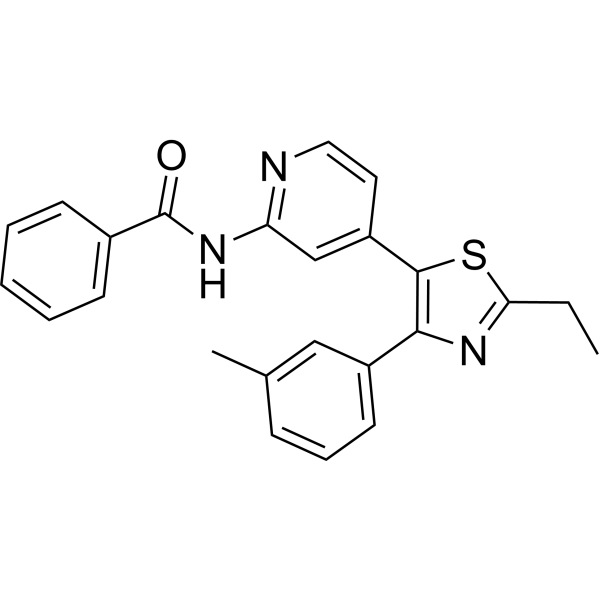
HY-10456
TAK-715p38 MAPK Inhibitor -
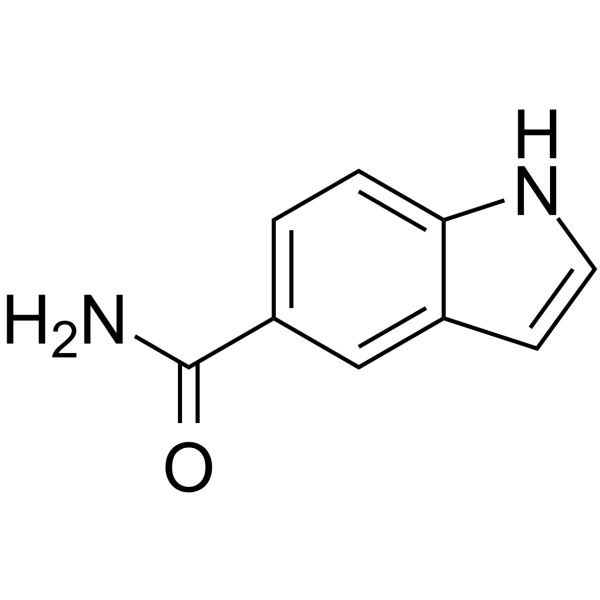
HY-W015445
SD-169p38α Inhibitor -
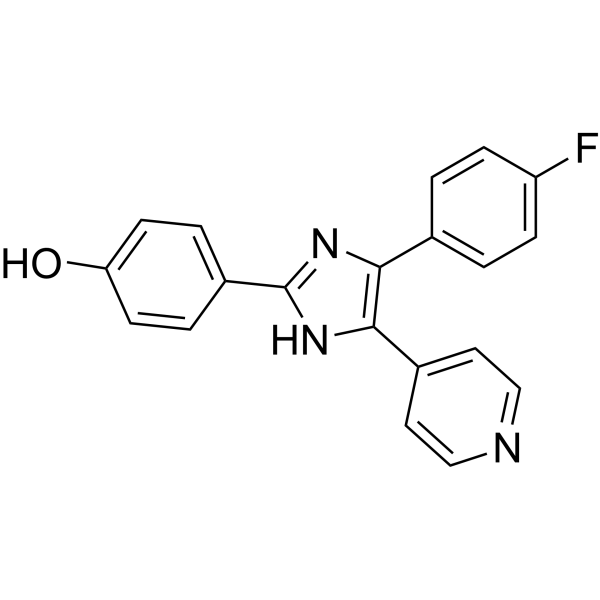
HY-10295
SB 202190p38 MAPK Inhibitor -
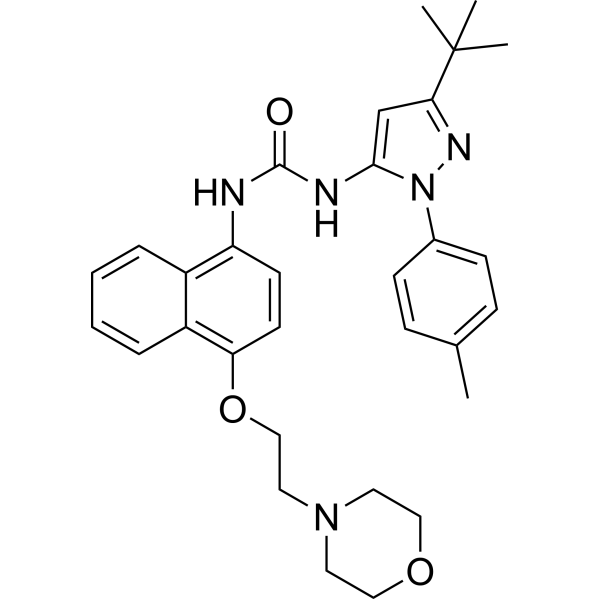
HY-10320
Doramapimodp38 MAPK Inhibitor -
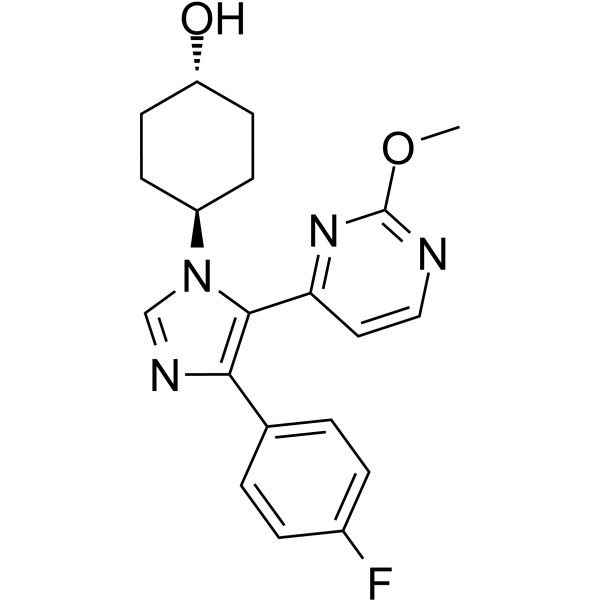
HY-11068
SB 239063p38 MAPK Inhibitor -
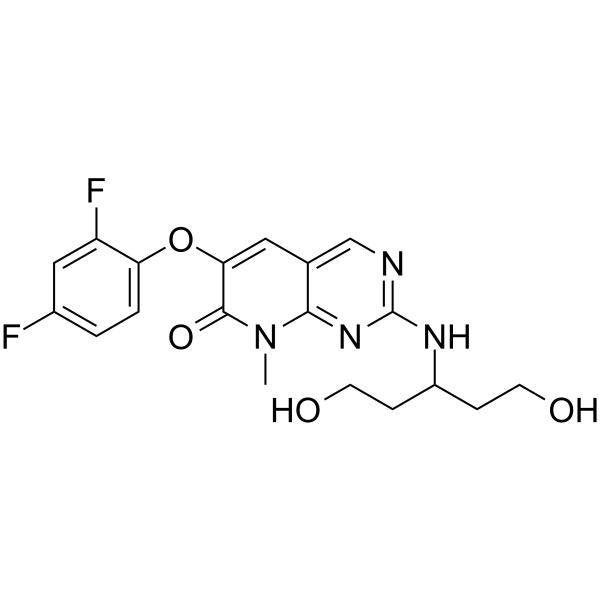
HY-10405
Pamapimodp38α Inhibitor -
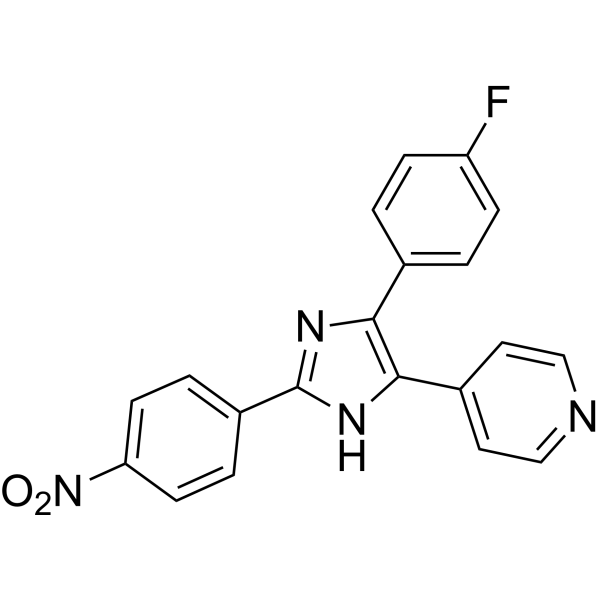
HY-10578
PD 169316p38 MAP Kinase Inhibitor -
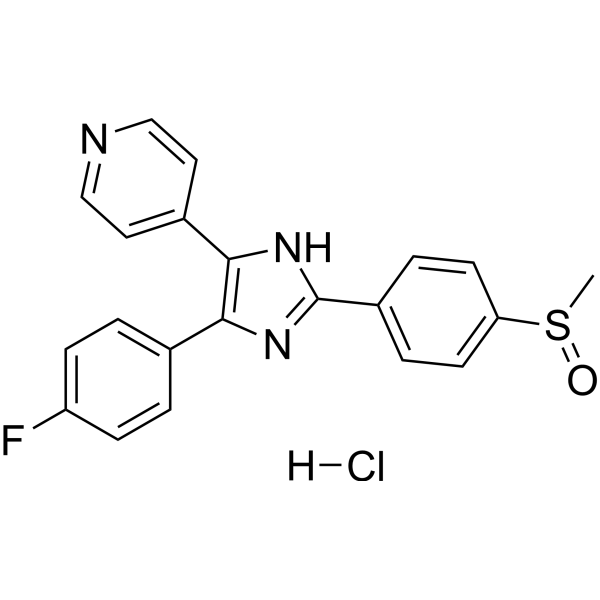
HY-10256A
Adezmapimod hydrochloridep38 MAPK Inhibitor -
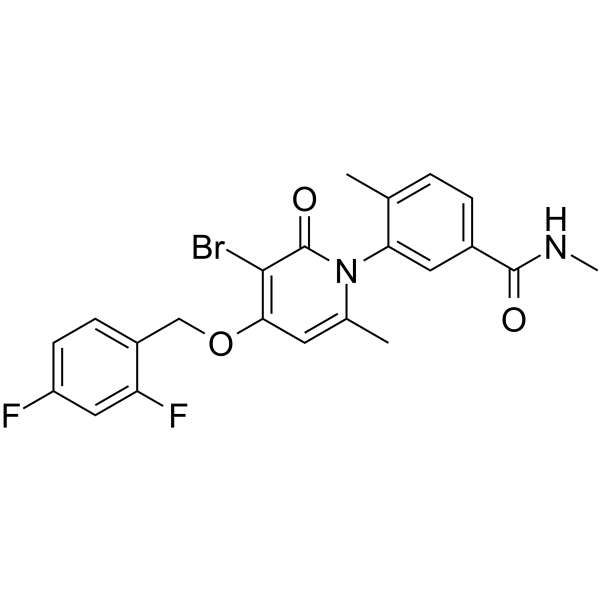
HY-10403
PH-797804p38α/β Inhibitor -
HY-10402
Losmapimodp38α/β MAPK Inhibitor
Publications Citing Use of MedChemExpress (MCE) BMS-582949
More

Biological Activity
Description
IC50 & Target
[1]|
p38α 13 nM (IC50) |
Cellular Effect
|
Cell Line

|
Type | Value | Description | References |
|---|---|---|---|---|
| PBMC | IC50 |
50 nM
Compound: 7k
|
Antiinflammatory activity in human PBMC assessed as inhibition of LPS-induced TNFalpha production treated 30 mins before LPS challenge measured after 6 hrs by ELISA
Antiinflammatory activity in human PBMC assessed as inhibition of LPS-induced TNFalpha production treated 30 mins before LPS challenge measured after 6 hrs by ELISA
|
[PMID: 20804198] |
In Vivo
BMS-582949 (0.3-100 mg/kg, p.o., q.d/b.i.d) reduces paw swelling significantly[1].
BMS-582949 intravenous injection (i.v.) dissolution protocol uses 25% NMP, 33% PEG 400, 9% PG, and 33% water as a vehicle[1].
BMS-582949 oral gavage (p.o.) dissolution protocol uses PEG 400 as a vehicle[1].
Pharmacokinetic Properties of BMS-582949 (Compound 7k) in Mice and Rats[1]
| mouse | rat | |
| %Fpo | 90 | 60 |
| Cmax(μM) | 15.3 | 7.0 |
| Tmax(h) | 1.0 | 1.5 |
| T1/2(h) | 2.6 | 4.0 |
| MRT (h) | 3.3 | 3.4 |
| CL (mL/min/kg) | 4.4 | 5.4 |
| Vss(L/kg) | 0.9 | 1.1 |
| AUC0-8 h(μM h) | 75.5 | |
| AUC0-24 h(μM h) | 45.4 |
In Vitro Profile of 7k[1]
| profiling assays | results |
| liver microsome metabolic rate (nmol/min/mg) | mouse: 0.011 rat: 0.008 human: 0.013 |
| hepatocyte metabolic rate (nmol/min/million cells) | mouse: 0.006 rat: 0.015 human: 0.015 |
| P450 IC50(μM) | >40 for 1A2, 2C9 2C19, and 2D6 18-40 for 3A4 |
| Caco-2 permeability (nm/s) | 121-134 |
| serum protein binding (%) | mouse: 86.3 rat: 89.7 human: 81.5 |
| Ames | negative in T98 and T100±S9 activation |
| SOS chromotest | negative |
| HHA IC50(μM) | >138 |
| hERG inhibition | 16% at 30 μM |
| kinase selectivity | >2000 fold over 57 diverse kinase 450 fold over Jnk2 190 fold over Raf 5 fold over p38α |
MedChemExpress (MCE) has not independently confirmed the accuracy of these methods. They are for reference only.
-
Animal Model:murine models of acute inflammation from BALB/c female mice[1]
-
Dosage:5 mg/kg
-
Administration:Oral gavage (p.o.), detection content at 90 min after LPS injection
-
Result:Reduced the TNFα production by 89% at 2 h, by 78% at 6 h before the LPS challenge.
-
Animal Model:Rat adjuvant arthritis (rat AA) models from Male Lewis rats[1]
-
Dosage:1, 10, 100 mg/kg, once daily (q.d)
-
Administration:Oral gavage (p.o.)
-
Result:Reduced paw swelling with dose-dependent, with efficacy observed at doses of 10 and 100 mg/kg.
-
Animal Model:Rat adjuvant arthritis (rat AA) models from Male Lewis rats[1]
-
Dosage:0-5 mg/kg, b.i.d
-
Administration:Oral gavage (p.o.)
-
Result:Improved efficacy markedly of reduction in paw swelling at doses of 1 and 5 mg/kg.
Reduced paw swelling significantly at doses as low as 0.3 mg/kg.


Chemical Information
-
CAS No. 623152-17-0
-
Molecular Weight 406.48
-
Formula C22H26N6O2
-
SMILES
O=C(NCCC)C1=CN(N=CN=C2NC3=CC(C(NC4CC4)=O)=CC=C3C)C2=C1C
-
Shipping
Room temperature in continental US; may vary elsewhere.
-
Storage
Please store the product under the recommended conditions in the Certificate of Analysis.


Publications (2)
-
Journal Impact Factor
-
Most Recent
-
Cell Rep Methods
RECOVER identifies synergistic drug combinations in vitro through sequential model optimization. [Abstract]2023 Oct 23;3(10):100599. PMID: 37797618 -
Oncol Res
Therapeutic Targeting PLK1 by ON-01910.Na Is Effective in Local Treatment of Retinoblastoma. [Abstract]2021 Sep 7;28(7):745-761. PMID: 33573708

Protocols
-
Collagen-Induced Arthritis
Collagen-induced arthritis (CIA) is an autoimmune murine model of rheumatoid arthritis in which immunization with type II collagen (CII) emulsified in an adjuvant induces a T cell- and autoantibody-driven inflammatory arthritis characterized by synovial hyperplasia, immune cell infiltration, and joint destruction. The model typically relies on genetically susceptible mouse strains (e. g. , DBA/1) and reproduces key features of human rheumatoid arthritis, including anti-collagen immune responses and progressive joint inflammation. Disease onset generally occurs within ~3-4 weeks after immunization, depending on antigen/adjuvant combinations and protocol variation. The immunopathology is driven by adaptive immune activation against CII, leading to systemic and local joint inflammation mediated by pro-inflammatory cytokines and effector immune cells, making CIA a standard preclinical platform for evaluating immunomodulatory and anti-arthritic interventions.
-
Cell Cytotoxicity Assay
Cytotoxicity assays are usually based on the assessment of cell membrane damage, which can also be indirectly detected by measuring cell viability. Detection methods include MTT assay, CKK-8 assay, LDH assay and ATP assay, etc.


Purity & Documentation
References

Calculators
Concentration (start) × Volume (start) = Concentration (final) × Volume (final)


BMS-582949 Related Classifications
HY-14305 Related Classifications
 Powered by Bioz