



Bosakitug

Based on 1 Customer Validation
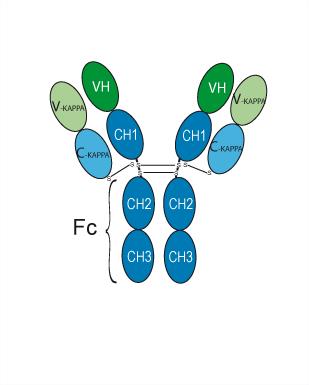
Bosakitug (BSI-045B) is an TSLP-targeting IgG1κ type humanized antibody, the recommed isotype control is Human IgG1 kappa, Isotype Control (HY-P99001). Bosakitug can be used in the research of inflammatory diseases such as moderate to severe atopic dermatitis.
For research use only. We do not sell to patients.
- Purity : 99.00%
- CAS No.: 2762183-23-1
- Molecular Weight:145.507 kDa
-
Storage:
Please store the product under the recommended conditions in the Certificate of Analysis.


To place orders, for customer services and technical support, please contact: MedChemExpress USA
Tel: 609-228-6898 E-mail: [email protected] [email protected]


-
 Biological Activity
-
Chemical Information
- Protocols
- Purity & Documentation
- References
-
 Help & FAQs








Biological Activity
Description
Isotype
Human IgG1 kappa
Recommend Isotype Controls
Species Reactivity
Human
IC50 & Target
TSLP
In Vitro
TSLP is a key regulator of type 2 (Th2) immune responses at the barrier surfaces of the skin, respiratory tract, and gastrointestinal tract. The expression level of TSLP is significantly elevated in models of atopic diseases such as atopic dermatitis[1].
MedChemExpress (MCE) has not independently confirmed the accuracy of these methods. They are for reference only. Further protocols information, click here.
Clinical Trial
| NCT Number | Sponsor | Condition | Start Date |
Phase

|
|---|---|---|---|---|
| NCT01329991 | Plexxikon| | 2011-05 | PHASE1 |
Gene ID
Accession
Q969D9-1
Conjugated
Unconjugated
Reconsititution
The product can be reconstituted/diluted with sterile PBS or saline.
Format
-
IgG1-kappa
Application
ELISA, FACS, Functional assay
Verified Bioactivity
-
 Loaded Bosakitug on AHC2 biosensor, can bind TSLP Protein, Human (HEK293, His, HY-P70818) with an affinity constant of 4.639E-10 M as determined in BLI assay.


Chemical Information
-
CAS No. 2762183-23-1
-
Appearance Liquid
-
Molecular Weight 145.507 kDa
-
Color Colorless to light yellow
-
SMILES
[Bosakitug]
-
Synonyms
BSI-045B; TQC2731
-
Shipping
Shipping with dry ice.
-
Formulation
Please refer to the lot-specific COA for specific buffer information.
-
Storage
Please store the product under the recommended conditions in the Certificate of Analysis.

Protocols
-
TPA/Croton Oil Ear Edema and Dermatitis
The TPA (12-O-tetradecanoylphorbol-13-acetate) and croton oil-induced mouse ear edema model is a well-established acute cutaneous inflammation system used to evaluate topical anti-inflammatory activity by measuring edema formation, neutrophil infiltration, vascular permeability, and cytokine-mediated skin responses in vivo. The inflammatory response is triggered by topical application of phorbol esters (TPA) or croton oil constituents, leading to rapid activation of protein kinase C signaling, leukocyte recruitment, and increased vascular permeability, which can be quantified by ear thickness, weight, dye extravasation, and biochemical markers such as myeloperoxidase (MPO) activity and pro-inflammatory mediators in ear tissue homogenates. This model is widely used for screening anti-inflammatory agents, where reductions in edema and inflammatory biomarkers reflect suppression of acute dermal inflammation and immune cell infiltration. Histological evaluation typically confirms epidermal


Purity & Documentation
-
Data Sheet (256 KB)
-
SDS (252 KB)
- English - EN (252 KB)
- Français - FR (252 KB)
- Deutsch - DE (252 KB)
- Norwegian - NO (252 KB)
- Español - ES (252 KB)
- Swedish - SV (252 KB)
- Italian - IT (252 KB)
- Korean - KR (252 KB)
- Portuguese - PT (252 KB)
-
Inhibitory Antibodies User Guide (603 KB)
References

Calculators
Concentration (start) × Volume (start) = Concentration (final) × Volume (final)


Bosakitug Related Classifications
HY-P990906 Related Classifications
 Powered by Bioz