



GlyH-101
Based on 5 publication(s) in Google Scholar
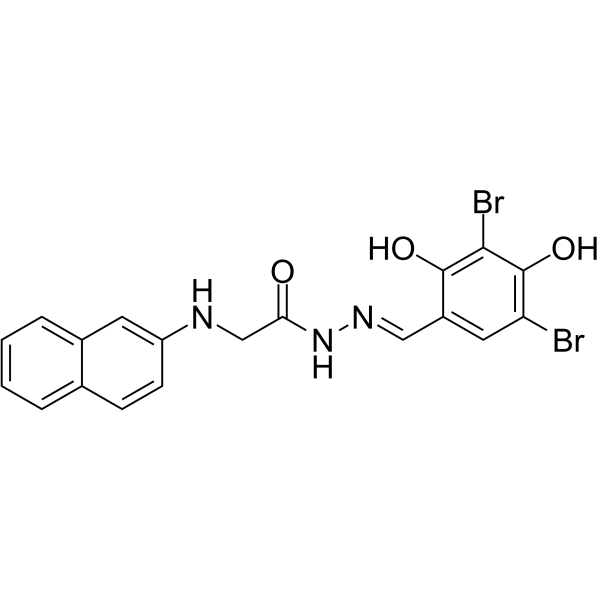
GlyH-101 is a potent CFTR inhibitor. GlyH-101 also is a potent and reversible inhibitor of the VSORC conductance. GlyH-101 shows antiproliferative activity. GlyH-101 inhibits CFTR-like current and VSORC current.
For research use only. We do not sell to patients.
- Purity : 99.68%
- CAS No.: 328541-79-3
- Formula: C19H15Br2N3O3
- Molecular Weight:493.15
-
Storage:Powder -20°C, 3 years , 4°C, 2 years ; In solvent -80°C, 2 years , -20°C, 1 year

To place orders, for customer services and technical support, please contact: MedChemExpress USA
Tel: 609-228-6898 E-mail: [email protected] [email protected]


-
 Biological Activity
-
Chemical Information
-
Solvent & Solubility
- Protocols
- Purity & Documentation
- References
-
 Help & FAQs


-
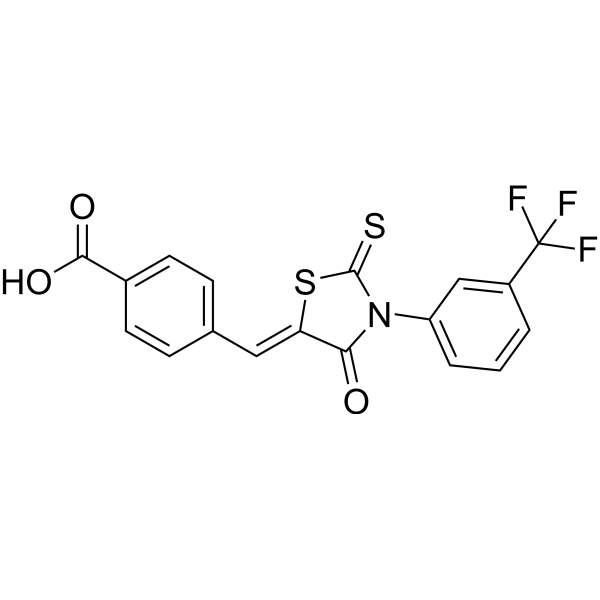
HY-16671
CFTR(inh)-172CFTR Inhibitor -
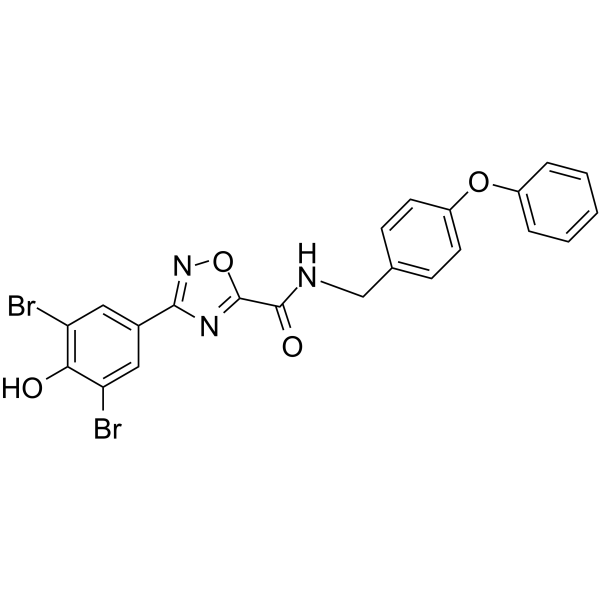
HY-18337
IOWH-032CFTR Inhibitor -
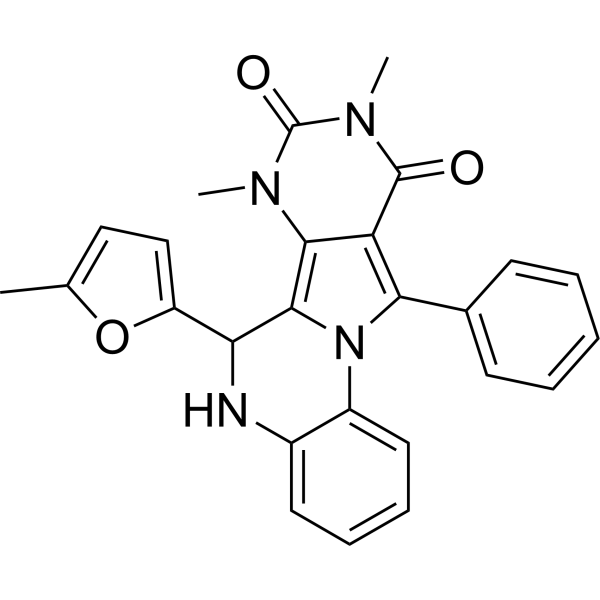
HY-14179
PPQ-102CFTR Inhibitor -
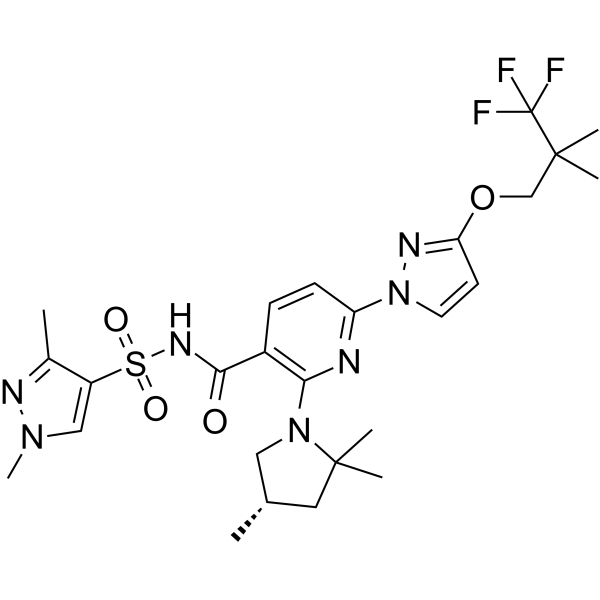
HY-111772
ElexacaftorCFTR Corrector -
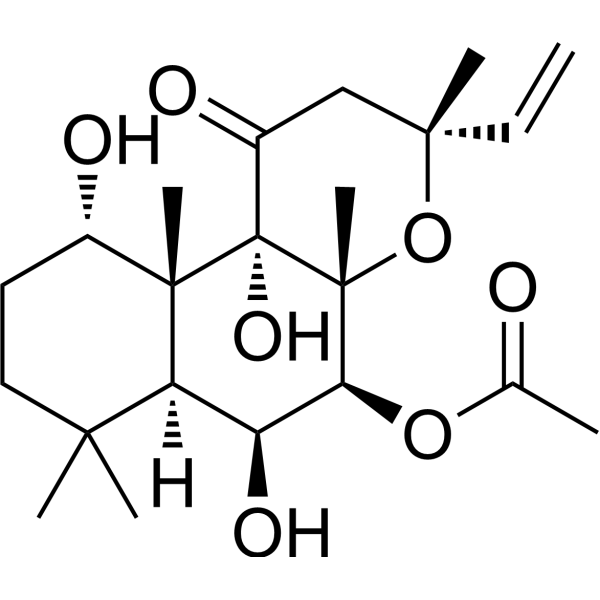
HY-15371
ForskolinAdenylate Cyclase Activator -
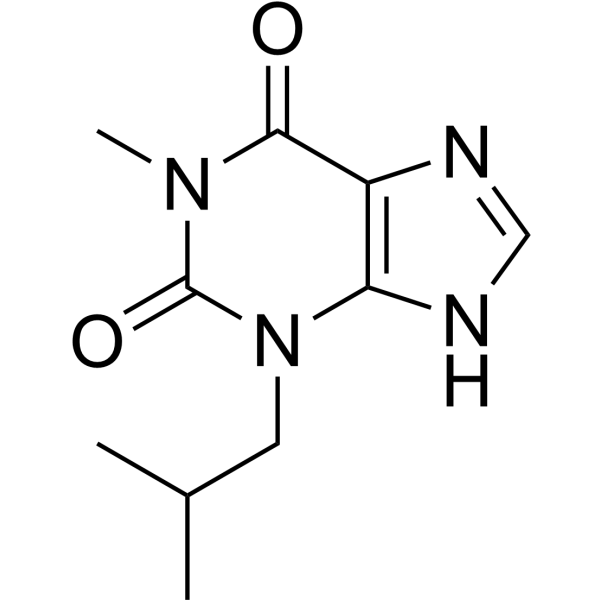
HY-12318
IBMXPDE Inhibitor -
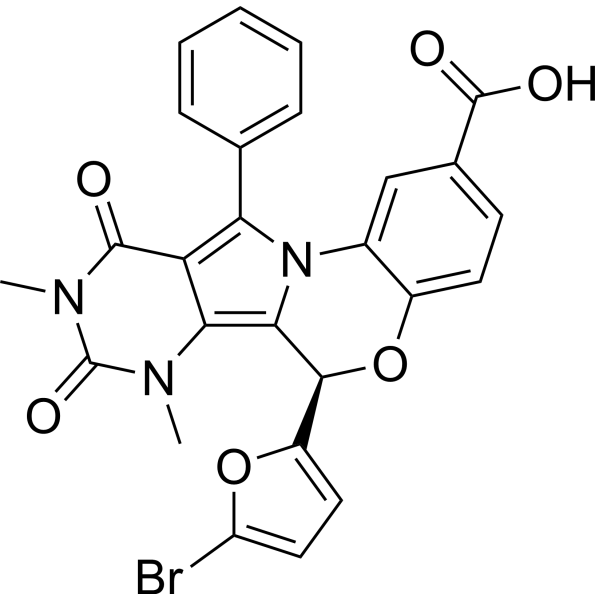
HY-19778
(R)-BPO-27CFTR Inhibitor -
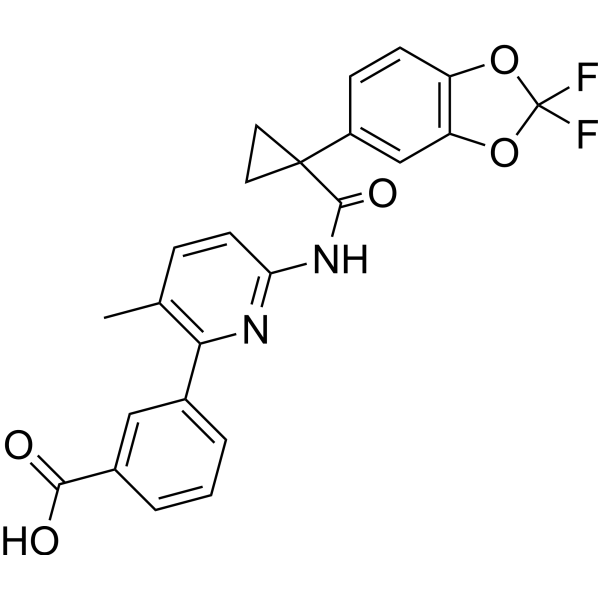
HY-13262
LumacaftorCFTR Modulator -
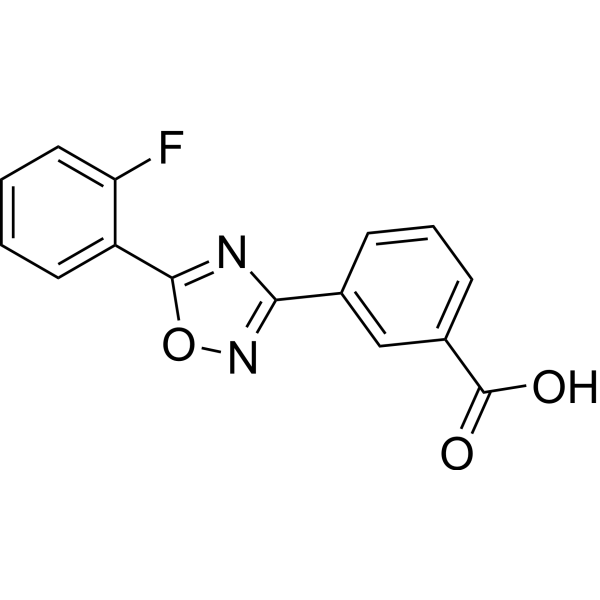
HY-14832
AtalurenCFTR Inhibitor -
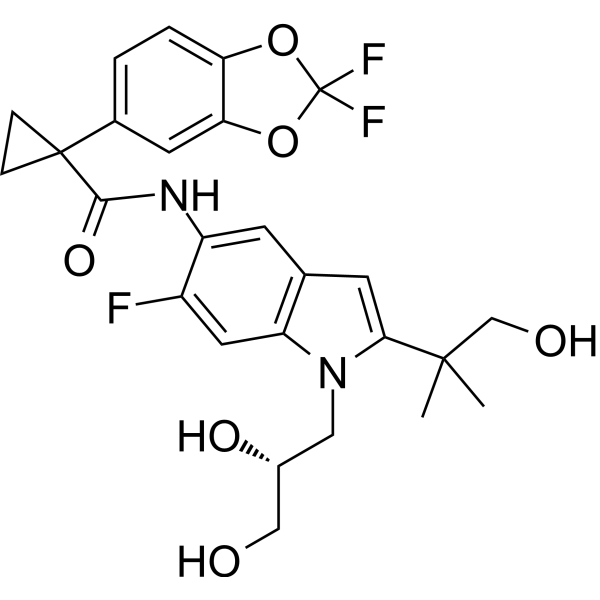
HY-15448
TezacaftorCFTR Corrector -
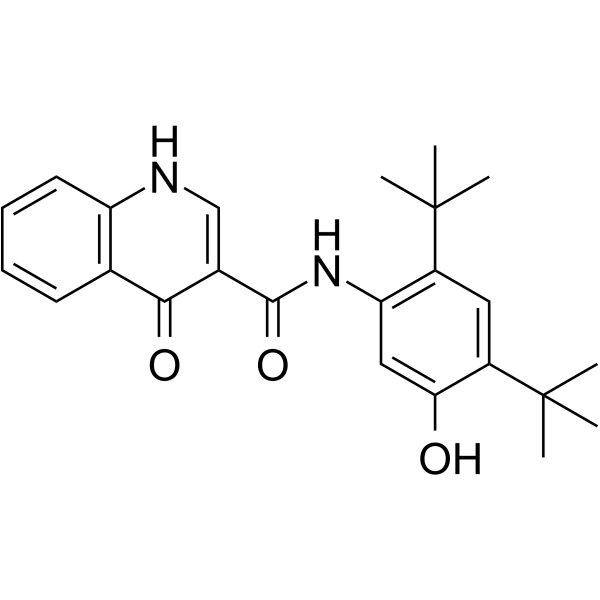
HY-13017
IvacaftorCFTR Potentiator -
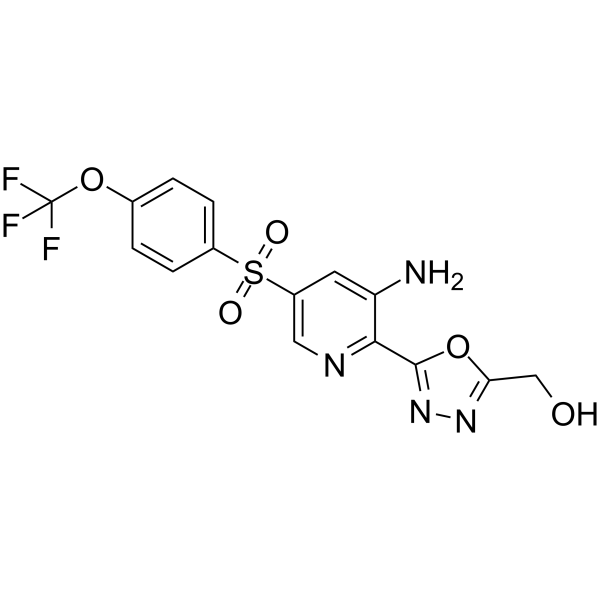
HY-109152
NavocaftorCystic Fibrosis Transmembrane Regulator
Publications Citing Use of MedChemExpress (MCE) GlyH-101
More Customer Validation & Images

-
WB


Biological Activity
Description
In Vitro
GlyH-101 (0-50 μM) shows antiproliferative activity in PCT and PS120 cells[1].
GlyH-101 (0.5, 1, 5, 10 μM) inhibits CFTR-like current in a concentration-dependent manner in PCT cells[1].
GlyH-101 (0.5, 1, 5, 10 μM) inhibits the VSORC current with IC50s of 5.38, 6.26 μM for PS120, PCT cells, respectively[1].
MedChemExpress (MCE) has not independently confirmed the accuracy of these methods. They are for reference only.
-
Cell Line:PCT, PS120 cells
-
Concentration:0, 1, 5, 10, 20, 50 µM
-
Incubation Time:24 h
-
Result:Inhibited the cell growth in a dose-dependent manner.
In Vivo
MedChemExpress (MCE) has not independently confirmed the accuracy of these methods. They are for reference only.


Chemical Information
-
CAS No. 328541-79-3
-
Appearance Solid
-
Molecular Weight 493.15
-
Formula C19H15Br2N3O3
-
Color Light yellow to yellow
-
SMILES
O=C(N/N=C/C1=CC(Br)=C(O)C(Br)=C1O)CNC2=CC3=CC=CC=C3C=C2
-
Shipping
Room temperature in continental US; may vary elsewhere.
-
Storage
Powder -20°C 3 years 4°C 2 years In solvent -80°C 2 years -20°C 1 year


Publications (5)
-
Journal Impact Factor
-
Most Recent
-
Cell Stem Cell
Interferon-responsive intestinal BEST4/CA7+ cells are targets of bacterial diarrheal toxins. [Abstract]2025 Apr 3;32(4):598-612.e5. PMID: 40010349 -
Sci Rep
Involvement of AMP-activated Protein Kinase (AMPK) in Regulation of Cell Membrane Potential in a Gastric Cancer Cell Line. [Abstract]2018 Apr 16;8(1):6028. PMID: 29662080
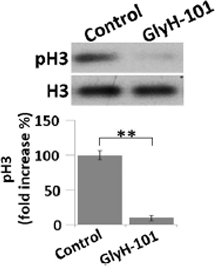
GlyH-101 purchased from MedChemExpress. Usage Cited in: Sci Rep. 2018 Apr 16;8(1):6028. [Abstract]
Western blot analysis of expression and phosphorylation of H3 in GlyH-101 (10 nM for 48 hours)-treated cells.
-
J Biol Chem
The chloride channel cystic fibrosis transmembrane conductance regulator (CFTR) controls cellular quiescence by hyperpolarizing the cell membrane during diapause in the crustacean Artemia. [Abstract]2019 Apr 19;294(16):6598-6611. PMID: 30765604 -
Vet J
Generation of canine gallbladder cholangiocyte organoids from healthy and gallbladder mucocele patient dogs for functional analysis of anion channels. [Abstract]2025 Oct:313:106417. PMID: 40835125 -


Solvent & Solubility
In Vitro:
DMSO : ≥ 58 mg/mL (117.61 mM; Hygroscopic DMSO has a significant impact on the solubility of product, please use newly opened DMSO)
* "≥" means soluble, but saturation unknown.
Please refer to the solubility information to select the appropriate solvent. Once prepared, please aliquot and store the solution to prevent product inactivation from repeated freeze-thaw cycles.
Storage method and period of stock solution: -80°C, 2 years; -20°C, 1 year. When stored at -80°C, please use it within 2 years. When stored at -20°C, please use it within 1 year.
Please refer to the solubility information to select the appropriate solvent. Once prepared, please aliquot and store the solution to prevent product inactivation from repeated freeze-thaw cycles.
Storage method and period of stock solution: -80°C, 2 years; -20°C, 1 year. When stored at -80°C, please use it within 2 years. When stored at -20°C, please use it within 1 year.
Concentration (start) × Volume (start) = Concentration (final) × Volume (final)
In Vivo:
Select the appropriate dissolution method based on your experimental animal and administration route.
- For the following dissolution methods, please ensure to first prepare a clear stock solution using an In Vitro approach and then sequentially add co-solvents:
- To ensure reliable experimental results, the clarified stock solution can be appropriately stored based on storage conditions. As for the working solution for In Vivo experiments, it is recommended to prepare freshly and use it on the same day.
- The percentages shown for the solvents indicate their volumetric ratio in the final prepared solution. If precipitation or phase separation occurs during preparation, heat and/or sonication can be used to aid dissolution.
Add each solvent one by one: 10% DMSO 40% PEG300 5% Tween-80 45% Saline
Solubility: ≥ 2.5 mg/mL (5.07 mM); Clear solution
This protocol yields a clear solution of ≥ 2.5 mg/mL (saturation unknown).
Taking 1 mL working solution as an example, add 100 μL DMSO stock solution (25.0 mg/mL) to 400 μL PEG300, and mix evenly; then add 50 μL Tween-80 and mix evenly; then add 450 μL Saline to adjust the volume to 1 mL.
Preparation of Saline: Dissolve 0.9 g sodium chloride in ddH₂O and dilute to 100 mL to obtain a clear Saline solution.
In Vivo Dissolution Calculator
Please enter the basic information of animal experiments:
-
-
-
-
Recommended: Prepare an additional quantity of animals to account for potential losses during experiments.
Please enter your animal formula composition:
-
%DMSO +
Recommended: Keep the proportion of DMSO in working solution below 2% if your animal is weak.
-
%+
-
+%Tween-80 + +
-
%Saline +
The co-solvents required include: DMSO, . All of co-solvents are available by MedChemExpress (MCE). , Tween 80. All of co-solvents are available by MedChemExpress (MCE).
Working solution concentration: 0.22 mg/mL
Method for preparing stock solution: mg drug dissolved in μL DMSO. Stock solution concentration: mg/mL.
1. Take μL DMSO stock solution;
2. Add μL .
μL , mix evenly;
3. Then add μL Tween 80, mix evenly;
4. Then add μL
Please ensure that the stock solution in the first step is dissolved to a clear state, and add co-solvents in sequence. You can use ultrasonic heating (ultrasonic cleaner, recommended frequency 20-40 kHz), vortexing, etc. to assist dissolution.


Purity & Documentation
-
Data Sheet (273 KB)
-
SDS (393 KB)
- English - EN (393 KB)
- Français - FR (393 KB)
- Deutsch - DE (393 KB)
- Norwegian - NO (393 KB)
- Español - ES (393 KB)
- Swedish - SV (393 KB)
- Italian - IT (393 KB)
- Korean - KR (393 KB)
- Portuguese - PT (393 KB)
-
Handling Instructions (2659 KB)
References
[1]. Muanprasat C, et al. Discovery of glycine hydrazide pore-occluding CFTR inhibitors: mechanism, structure-activity analysis, and in vivo efficacy. J Gen Physiol. 2004 Aug;124(2):125-37. [Content Brief]
[2]. Kelly M, et al. Cystic fibrosis transmembrane regulator inhibitors CFTR(inh)-172 and GlyH-101 target mitochondrial functions, independently of chloride channel inhibition. J Pharmacol Exp Ther. 2010 Apr;333(1):60-9. [Content Brief]
[3]. Barman PP, et al. Cardiac ion channel current modulation by the CFTR inhibitor GlyH-101. Biochem Biophys Res Commun. 2011 Apr 29;408(1):12-7. [Content Brief]
[4]. Melis N, et al. Revisiting CFTR inhibition: a comparative study of CFTRinh -172 and GlyH-101 inhibitors. Br J Pharmacol. 2014 Aug;171(15):3716-27. [Content Brief]
[5]. Muanprasat C, et al. Discovery of glycine hydrazide pore-occluding CFTR inhibitors: mechanism, structure-activity analysis, and in vivo efficacy. J Gen Physiol. 2004 Aug;124(2):125-37. [Content Brief]


Complete Stock Solution Preparation Table
Please refer to the solubility information to select the appropriate solvent. Once prepared, please aliquot and store the solution to prevent product inactivation from repeated freeze-thaw cycles.
Storage method and period of stock solution: -80°C, 2 years; -20°C, 1 year. When stored at -80°C, please use it within 2 years. When stored at -20°C, please use it within 1 year.
| Optional Solvent | Concentration Solvent Mass | 1 mg | 5 mg | 10 mg | 25 mg |
|---|---|---|---|---|---|
| DMSO | 1 mM | 2.0278 mL | 10.1389 mL | 20.2778 mL | 50.6945 mL |
| 5 mM | 0.4056 mL | 2.0278 mL | 4.0556 mL | 10.1389 mL | |
| 10 mM | 0.2028 mL | 1.0139 mL | 2.0278 mL | 5.0695 mL | |
| 15 mM | 0.1352 mL | 0.6759 mL | 1.3519 mL | 3.3796 mL | |
| 20 mM | 0.1014 mL | 0.5069 mL | 1.0139 mL | 2.5347 mL | |
| 25 mM | 0.0811 mL | 0.4056 mL | 0.8111 mL | 2.0278 mL | |
| 30 mM | 0.0676 mL | 0.3380 mL | 0.6759 mL | 1.6898 mL | |
| 40 mM | 0.0507 mL | 0.2535 mL | 0.5069 mL | 1.2674 mL | |
| 50 mM | 0.0406 mL | 0.2028 mL | 0.4056 mL | 1.0139 mL | |
| 60 mM | 0.0338 mL | 0.1690 mL | 0.3380 mL | 0.8449 mL | |
| 80 mM | 0.0253 mL | 0.1267 mL | 0.2535 mL | 0.6337 mL | |
| 100 mM | 0.0203 mL | 0.1014 mL | 0.2028 mL | 0.5069 mL |


GlyH-101 Related Classifications
HY-18336 Related Classifications
 Powered by Bioz