



URB-597
Based on 5 publication(s) in Google Scholar
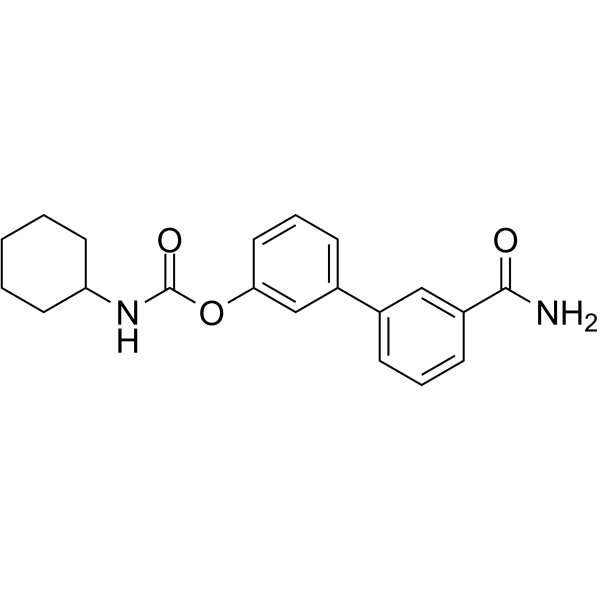
URB-597 (KDS-4103) is an orally bioavailable and selective FAAH inhibitor. URB-597 inhibits FAAH activity with an IC50s of approximately 5 nM in rat brain membranes, 0.5 nM in intact rat neurons, 3 nM in human liver microsomes. Antidepressant-like effects. Analgesic activity.
For research use only. We do not sell to patients.
- Purity : 98.53%
- CAS No.: 546141-08-6
- Formula: C20H22N2O3
- Molecular Weight:338.40
-
Storage:Powder -20°C, 3 years , 4°C, 2 years ; In solvent -80°C, 2 years , -20°C, 1 year

To place orders, for customer services and technical support, please contact: MedChemExpress USA
Tel: 609-228-6898 E-mail: [email protected] [email protected]


-
 Biological Activity
-
Chemical Information
-
Solvent & Solubility
- Purity & Documentation
- References
-
 Help & FAQs


-
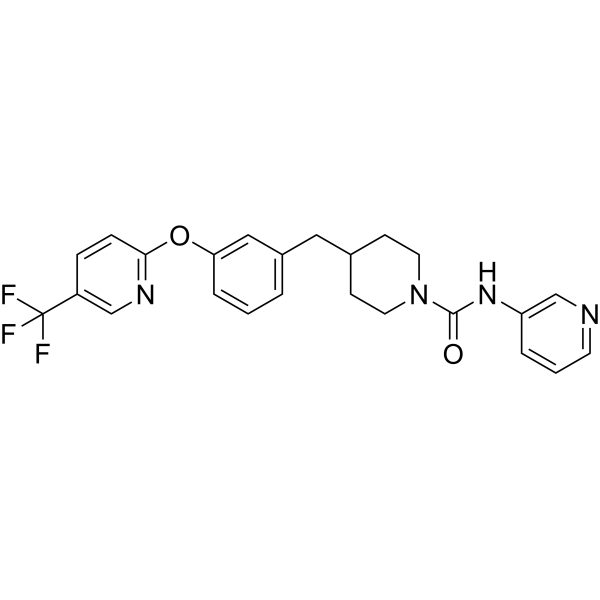
HY-14380
PF-3845FAAH Inhibitor -
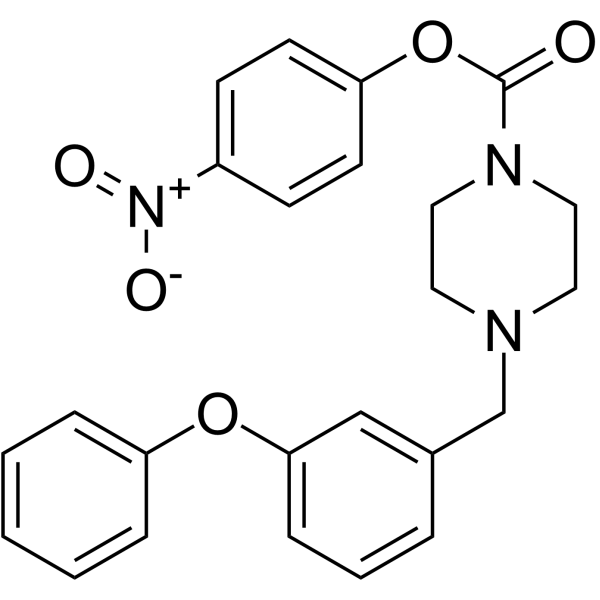
HY-15250
JZL195Dual FAAH/MAGL Inhibitor -
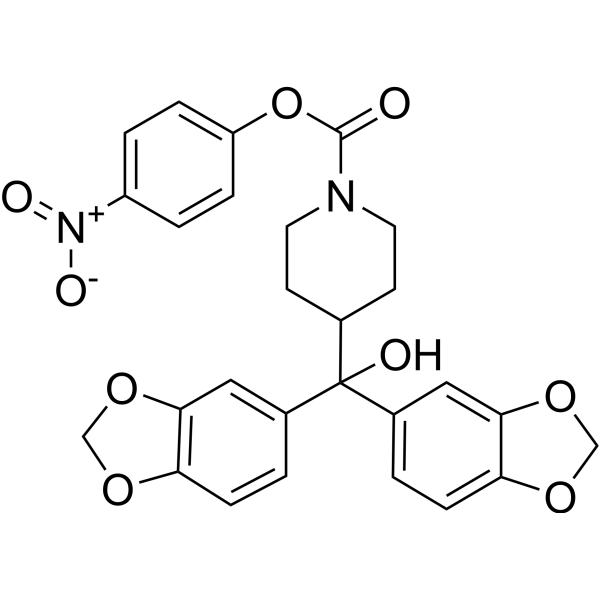
HY-15249
JZL 184MAGL Inhibitor -
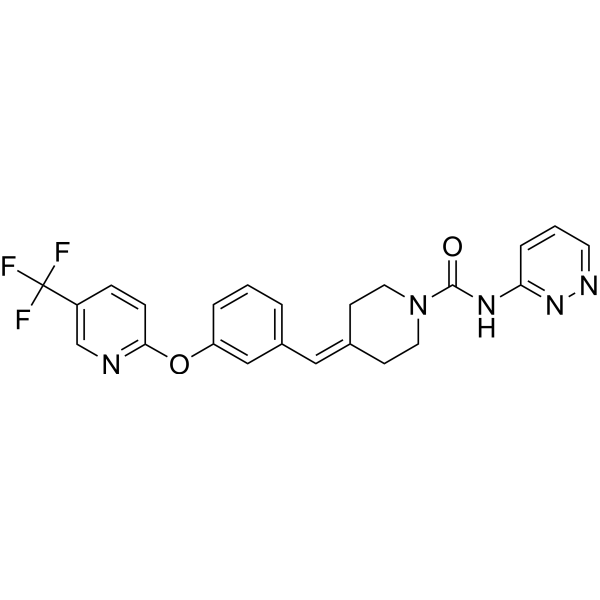
HY-14376
RedafamdastatFAAH Inhibitor -
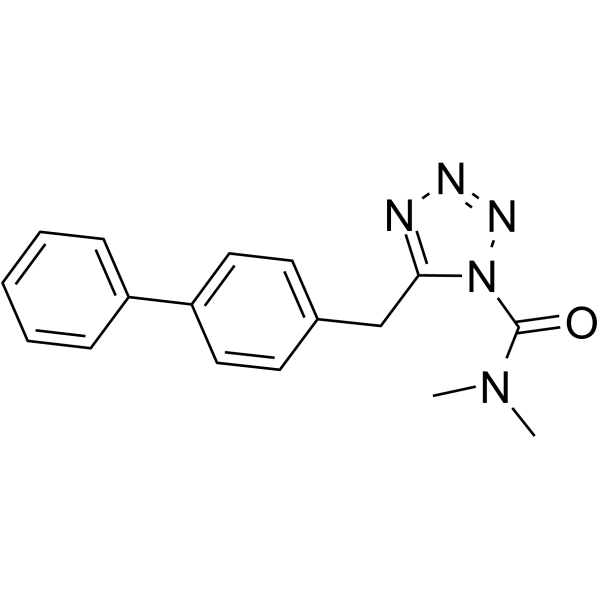
HY-10865
LY2183240Anandamide Uptake/FAAH Inhibitor -
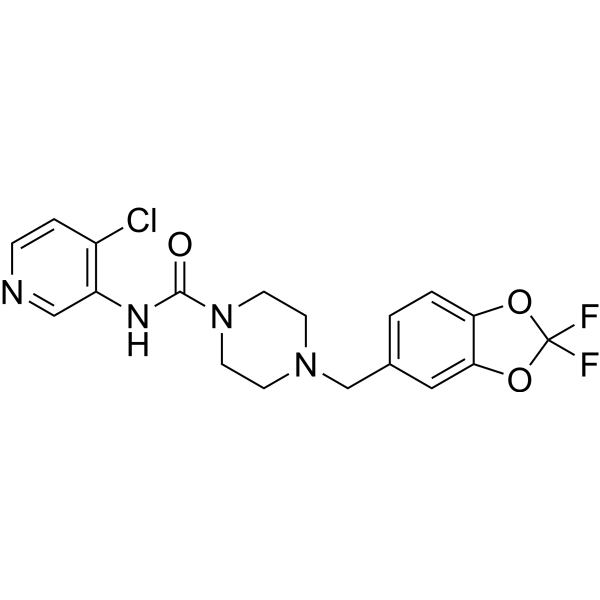
HY-19636
JNJ-42165279FAAH Inhibitor -
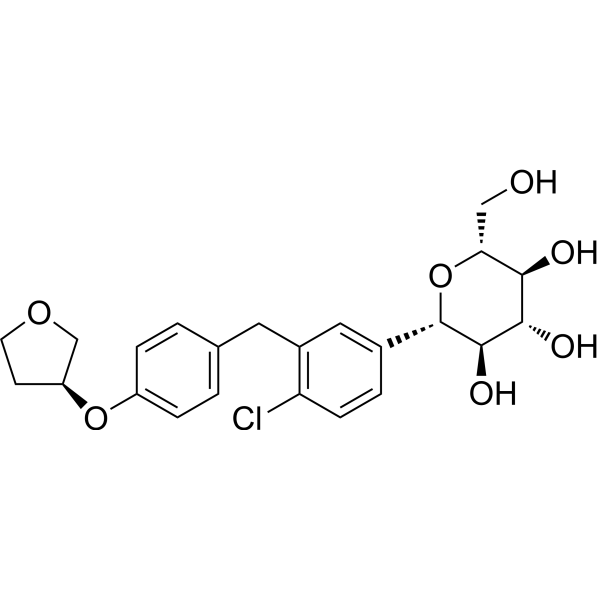
HY-15409
EmpagliflozinSGLT2 Inhibitor -
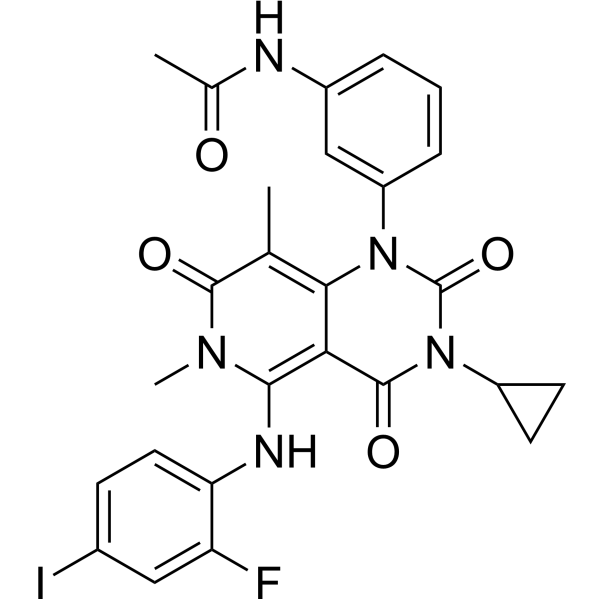
HY-10999
TrametinibMEK Inhibitor -
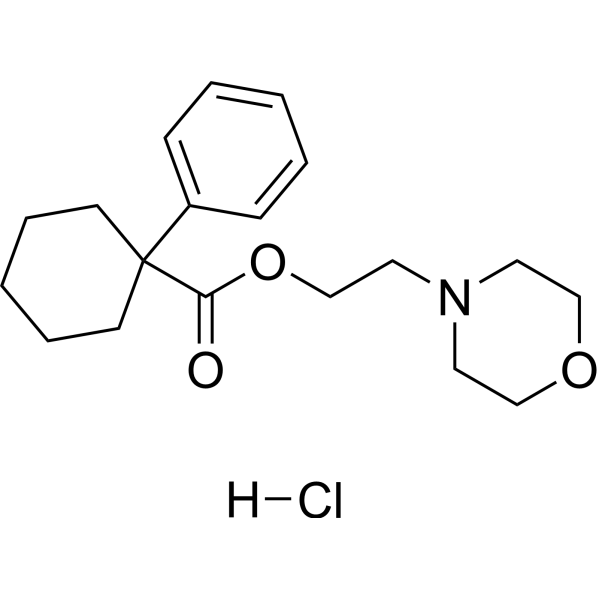
HY-18100A
PRE-084 hydrochlorideS1R Agonist -
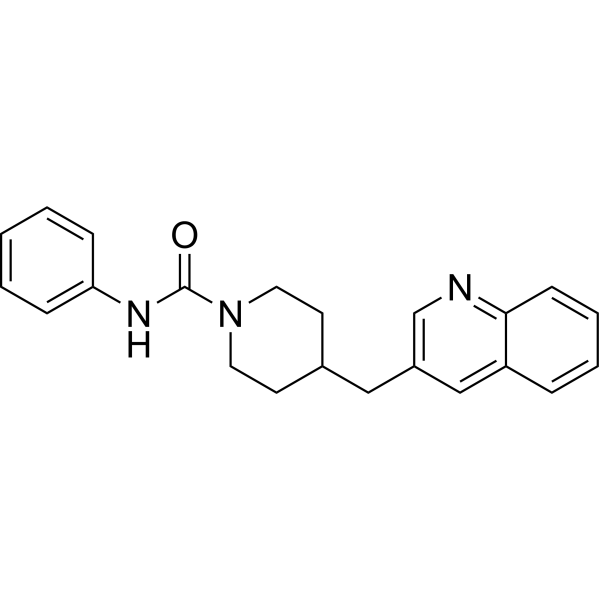
HY-18081
PF 750FAAH Inhibitor -
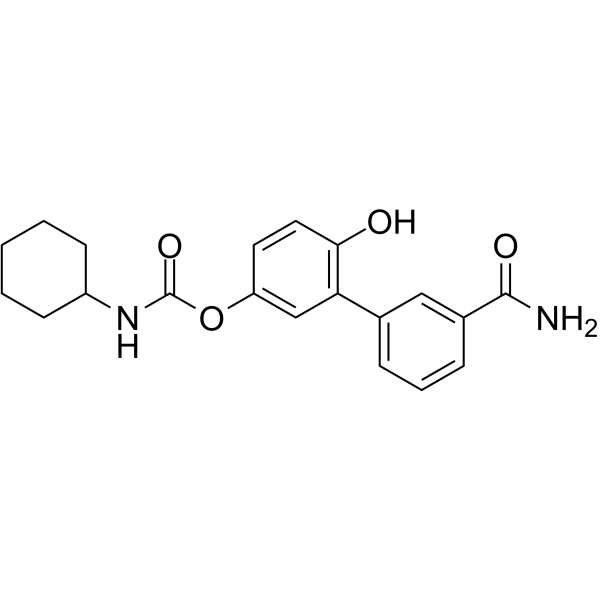
HY-116477
URB937FAAH Inhibitor -

HY-10864R
URB-597 (Standard)FAAH Inhibitor
Publications Citing Use of MedChemExpress (MCE) URB-597
More Customer Validation & Images

-
Cell Proliferation/Viability Assay

-
IF

-
WB

-
Flow Cytometry

-
RT-PCR


Biological Activity
Description
Cellular Effect
|
Cell Line

|
Type | Value | Description | References |
|---|---|---|---|---|
| COS-7 | IC50 |
0.17 μM
Compound: 1, URB597
|
Inhibition of human recombinant FAAH overexpressed in African green monkey COS7 cells using [3H]-anandamide as substrate preincubated for 10 mins before substrate addition measured after 10 mins by liquid scintillation counting analysis
Inhibition of human recombinant FAAH overexpressed in African green monkey COS7 cells using [3H]-anandamide as substrate preincubated for 10 mins before substrate addition measured after 10 mins by liquid scintillation counting analysis
|
[PMID: 24083878] |
| HEK293 | EC50 |
0.1 μM
Compound: URB597
|
Agonist activity at human TRPA1 expressed in HEK293 cells assessed as increase in calcium influx by Fluo-4-AM dye based fluorescence assay
Agonist activity at human TRPA1 expressed in HEK293 cells assessed as increase in calcium influx by Fluo-4-AM dye based fluorescence assay
|
[PMID: 30878828] |
| HEK293 | EC50 |
24.5 μM
Compound: 50
|
Agonist activity at human TRPA1 channel expressed in HEK293 cells assessed as increase in intracellular calcium influx
Agonist activity at human TRPA1 channel expressed in HEK293 cells assessed as increase in intracellular calcium influx
|
[PMID: 20356305] |
| HEK293 | IC50 |
0.7 nM
Compound: 3, URB-597
|
Inhibition of rat FAAH expressed in HEK293 cells using arachadonyl 7-amino 4-methyl coumarin amide as substrate by fluorimetric assay
Inhibition of rat FAAH expressed in HEK293 cells using arachadonyl 7-amino 4-methyl coumarin amide as substrate by fluorimetric assay
|
10.1039/C2MD00307D |
| HEK293 | IC50 |
11 nM
Compound: 1a, URB-597
|
Inhibition of human recombinant FAAH expressed in HEK293 cells preincubated for 60 mins before substrate addition by [3H]anandamide carbon filtration assay
Inhibition of human recombinant FAAH expressed in HEK293 cells preincubated for 60 mins before substrate addition by [3H]anandamide carbon filtration assay
|
[PMID: 19072118] |
| HEK293 | IC50 |
16 nM
Compound: 1a, URB-597
|
Inhibition of human recombinant FAAH expressed in HEK293 cells preincubated for 30 mins before substrate addition by [3H]anandamide carbon filtration assay
Inhibition of human recombinant FAAH expressed in HEK293 cells preincubated for 30 mins before substrate addition by [3H]anandamide carbon filtration assay
|
[PMID: 19072118] |
| HEK293 | IC50 |
2.3 nM
Compound: 3, URB-597
|
Inhibition of human FAAH expressed in HEK293 cells using arachadonyl 7-amino 4-methyl coumarin amide as substrate by fluorimetric assay
Inhibition of human FAAH expressed in HEK293 cells using arachadonyl 7-amino 4-methyl coumarin amide as substrate by fluorimetric assay
|
10.1039/C2MD00307D |
| HEK293 | IC50 |
2187 nM
Compound: 1a, URB-597
|
Inhibition of human recombinant FAAH expressed in HEK293 cells by [3H]anandamide carbon filtration assay
Inhibition of human recombinant FAAH expressed in HEK293 cells by [3H]anandamide carbon filtration assay
|
[PMID: 19072118] |
| HEK293 | IC50 |
47 nM
Compound: 1a, URB-597
|
Inhibition of human recombinant FAAH expressed in HEK293 cells preincubated for 5 mins before substrate addition by [3H]anandamide carbon filtration assay
Inhibition of human recombinant FAAH expressed in HEK293 cells preincubated for 5 mins before substrate addition by [3H]anandamide carbon filtration assay
|
[PMID: 19072118] |
| Sf21 | IC50 |
0.26 μM
Compound: URB597
|
Inhibition of human recombinant FAAH expressed in sf21 cells using AMC-AA as substrate preincubated for 15 mins followed by substrate addition measured after 2 hrs by spectrophotometric analysis
Inhibition of human recombinant FAAH expressed in sf21 cells using AMC-AA as substrate preincubated for 15 mins followed by substrate addition measured after 2 hrs by spectrophotometric analysis
|
[PMID: 27117424] |
In Vitro
URB-597 (KDS-4103) prevents the FAAH-catalyzed hydrolysis of [3H]anandamide by primary cultures of rat cortical neurons with an IC50 value of ~0.50 nM[1].
MedChemExpress (MCE) has not independently confirmed the accuracy of these methods. They are for reference only.
In Vivo
KDS-4103 (0.1-0.3 mg/kg, i.p.) elicits significant, anxiolytic-like, antidepressant-like and analgesic effects, which are prevented by treatment with CB1 receptor antagonists in rats and mice[1].
KDS-4103 is orally available in rats and cynomolgus monkeys[1].
URB-597 inhibits FAAH in the brain rapidly (1 h), sustains at >90% through 12 h and >60% through 24 h after an oral dose of 10 mg/kg.
MedChemExpress (MCE) has not independently confirmed the accuracy of these methods. They are for reference only.
-
Animal Model:Wistar rats[1]
-
Dosage:250, 500, 750, 1000, 1250 mg/kg (Pharmacokinetic Analysis)
-
Administration:Oral administration
-
Result:Absorbed at a moderate rate with peak plasma concentrations (Cmax) achieved at 1.2 h after treatment. The oral elimination half-life was approximately 2 h.
Clinical Trial
| NCT Number | Sponsor | Condition | Start Date |
Phase
|
|---|---|---|---|---|
| NCT01329991 | Plexxikon| | 2011-05 | PHASE1 |


Chemical Information
-
CAS No. 546141-08-6
-
Appearance Solid
-
Molecular Weight 338.40
-
Formula C20H22N2O3
-
Color White to off-white
-
SMILES
O=C(OC1=CC(C2=CC=CC(C(N)=O)=C2)=CC=C1)NC3CCCCC3
-
Synonyms
KDS-4103
-
Shipping
Room temperature in continental US; may vary elsewhere.
-
Storage
Powder -20°C 3 years 4°C 2 years In solvent -80°C 2 years -20°C 1 year


Publications (5)
-
Journal Impact Factor
-
Most Recent
-
Phytomedicine
Schisandra chinensis lignans regulate and cooperate with endogenous cannabinoid systems to ameliorate intestinal barrier injury associated with depression. [Abstract]2024 Oct:133:155929. PMID: 39126923 -
J Neuroimmune Pharmacol
Alleviating CB2-Dependent ER Stress and Mitochondrial Dysfunction Improves Chronic Cerebral Hypoperfusion-Induced Cognitive Impairment. [Abstract]2024 Jan 12;19(1):1. PMID: 38214766 -
Eur J Pharmacol
URB597 exerts neuroprotective effects against transient brain ischemia injury in mice by regulating autophagic flux and necroptosis. [Abstract]2023 Oct 15:957:175982. PMID: 37572942 -
Cereb Cortex
Activation of Oxytocin Receptors Excites Subicular Neurons by Multiple Signaling and Ionic Mechanisms. [Abstract]2021 Mar 31;31(5):2402-2415. PMID: 33341872 -
Oxid Med Cell Longev
URB597 and Andrographolide Improve Brain Microvascular Endothelial Cell Permeability and Apoptosis by Reducing Oxidative Stress and Inflammation Associated with Activation of Nrf2 Signaling in Oxygen-Glucose Deprivation. [Abstract]2022 May 12;2022:4139330. PMID: 35602108
URB-597 purchased from MedChemExpress. Usage Cited in: Oxid Med Cell Longev. 2022 May 12;2022:4139330. [Abstract]
The cell viability was measured after being treated with URB597 (0.5 μM, 1 μM, 2 μM, 5 μM, and 10 μM) subjected subsequently to 6 h of OGD by MTT.
URB-597 purchased from MedChemExpress. Usage Cited in: Oxid Med Cell Longev. 2022 May 12;2022:4139330. [Abstract]
Representative vWF (green) immunofluorescence for BMECs treated with URB597 (2 μM)
URB-597 purchased from MedChemExpress. Usage Cited in: Oxid Med Cell Longev. 2022 May 12;2022:4139330. [Abstract]
Representative Western blot bands of Nrf2, ZO-1, Occludin, and Claudin 5 treated with URB597 (2 μM).
URB-597 purchased from MedChemExpress. Usage Cited in: Oxid Med Cell Longev. 2022 May 12;2022:4139330. [Abstract]
Cellar apoptosis was detected by Annexin V-FITC/PI flow cytometry analysis treated with URB597 (2 μM).
URB-597 purchased from MedChemExpress. Usage Cited in: Oxid Med Cell Longev. 2022 May 12;2022:4139330. [Abstract]
Quantitative analysis of relative mRNA levels of TNF-α, IL-1β, and iNOS treated with URB597 (2 μM).


Solvent & Solubility
In Vitro:
DMSO : ≥ 100 mg/mL (295.51 mM; Hygroscopic DMSO has a significant impact on the solubility of product, please use newly opened DMSO)
H2O : < 0.1 mg/mL (insoluble)
* "≥" means soluble, but saturation unknown.
Please refer to the solubility information to select the appropriate solvent. Once prepared, please aliquot and store the solution to prevent product inactivation from repeated freeze-thaw cycles.
Storage method and period of stock solution: -80°C, 2 years; -20°C, 1 year. When stored at -80°C, please use it within 2 years. When stored at -20°C, please use it within 1 year.
Please refer to the solubility information to select the appropriate solvent. Once prepared, please aliquot and store the solution to prevent product inactivation from repeated freeze-thaw cycles.
Storage method and period of stock solution: -80°C, 2 years; -20°C, 1 year. When stored at -80°C, please use it within 2 years. When stored at -20°C, please use it within 1 year.
Concentration (start) × Volume (start) = Concentration (final) × Volume (final)
In Vivo:
Select the appropriate dissolution method based on your experimental animal and administration route.
- For the following dissolution methods, please ensure to first prepare a clear stock solution using an In Vitro approach and then sequentially add co-solvents:
- To ensure reliable experimental results, the clarified stock solution can be appropriately stored based on storage conditions. As for the working solution for In Vivo experiments, it is recommended to prepare freshly and use it on the same day.
- The percentages shown for the solvents indicate their volumetric ratio in the final prepared solution. If precipitation or phase separation occurs during preparation, heat and/or sonication can be used to aid dissolution.
Add each solvent one by one: 10% DMSO 40% PEG300 5% Tween-80 45% Saline
Solubility: 10 mg/mL (29.55 mM); Clear solution; Need ultrasonic
This protocol yields a clear solution of 10 mg/mL.
Taking 1 mL working solution as an example, add 100 μL DMSO stock solution (100.0 mg/mL) to 400 μL PEG300, and mix evenly; then add 50 μL Tween-80 and mix evenly; then add 450 μL Saline to adjust the volume to 1 mL.
Preparation of Saline: Dissolve 0.9 g sodium chloride in ddH₂O and dilute to 100 mL to obtain a clear Saline solution.
Add each solvent one by one: 10% DMSO 90% (20% SBE-β-CD in Saline)
Solubility: ≥ 2.5 mg/mL (7.39 mM); Clear solution
This protocol yields a clear solution of ≥ 2.5 mg/mL (saturation unknown).
Taking 1 mL working solution as an example, add 100 μL DMSO stock solution (25.0 mg/mL) to 900 μL 20% SBE-β-CD in Saline, and mix evenly.
Preparation of 20% SBE-β-CD in Saline (4°C, storage for one week): 2 g SBE-β-CD powder is dissolved in 10 mL Saline, completely dissolve until clear.
In Vivo Dissolution Calculator
Please enter the basic information of animal experiments:
-
-
-
-
Recommended: Prepare an additional quantity of animals to account for potential losses during experiments.
Please enter your animal formula composition:
-
%DMSO +
Recommended: Keep the proportion of DMSO in working solution below 2% if your animal is weak.
-
%+
-
+%Tween-80 + +
-
%Saline +
The co-solvents required include: DMSO, . All of co-solvents are available by MedChemExpress (MCE). , Tween 80. All of co-solvents are available by MedChemExpress (MCE).
Working solution concentration: 0.22 mg/mL
Method for preparing stock solution: mg drug dissolved in μL DMSO. Stock solution concentration: mg/mL.
1. Take μL DMSO stock solution;
2. Add μL .
μL , mix evenly;
3. Then add μL Tween 80, mix evenly;
4. Then add μL
Please ensure that the stock solution in the first step is dissolved to a clear state, and add co-solvents in sequence. You can use ultrasonic heating (ultrasonic cleaner, recommended frequency 20-40 kHz), vortexing, etc. to assist dissolution.


Purity & Documentation
-
Data Sheet (273 KB)
-
SDS (537 KB)
- English - EN (537 KB)
- Français - FR (537 KB)
- Deutsch - DE (537 KB)
- Norwegian - NO (537 KB)
- Español - ES (537 KB)
- Swedish - SV (537 KB)
- Italian - IT (537 KB)
- Korean - KR (537 KB)
- Portuguese - PT (537 KB)
-
Handling Instructions (2659 KB)
References


Complete Stock Solution Preparation Table
Please refer to the solubility information to select the appropriate solvent. Once prepared, please aliquot and store the solution to prevent product inactivation from repeated freeze-thaw cycles.
Storage method and period of stock solution: -80°C, 2 years; -20°C, 1 year. When stored at -80°C, please use it within 2 years. When stored at -20°C, please use it within 1 year.
| Optional Solvent | Concentration Solvent Mass | 1 mg | 5 mg | 10 mg | 25 mg |
|---|---|---|---|---|---|
| DMSO | 1 mM | 2.9551 mL | 14.7754 mL | 29.5508 mL | 73.8770 mL |
| 5 mM | 0.5910 mL | 2.9551 mL | 5.9102 mL | 14.7754 mL | |
| 10 mM | 0.2955 mL | 1.4775 mL | 2.9551 mL | 7.3877 mL | |
| 15 mM | 0.1970 mL | 0.9850 mL | 1.9701 mL | 4.9251 mL | |
| 20 mM | 0.1478 mL | 0.7388 mL | 1.4775 mL | 3.6939 mL | |
| 25 mM | 0.1182 mL | 0.5910 mL | 1.1820 mL | 2.9551 mL | |
| 30 mM | 0.0985 mL | 0.4925 mL | 0.9850 mL | 2.4626 mL | |
| 40 mM | 0.0739 mL | 0.3694 mL | 0.7388 mL | 1.8469 mL | |
| 50 mM | 0.0591 mL | 0.2955 mL | 0.5910 mL | 1.4775 mL | |
| 60 mM | 0.0493 mL | 0.2463 mL | 0.4925 mL | 1.2313 mL | |
| 80 mM | 0.0369 mL | 0.1847 mL | 0.3694 mL | 0.9235 mL | |
| 100 mM | 0.0296 mL | 0.1478 mL | 0.2955 mL | 0.7388 mL |


URB-597 Related Classifications
HY-10864 Related Classifications
 Powered by Bioz