2438 Results for "

decrease

" in MedChemExpress (MCE) Product Catalog:
Products (2438)

2438 Results for "decrease" in MCE Product Catalog:

Cat. No.: HY-N6896R
CAS No.: 40788-84-9
Isoviolanthin (Standard) is the analytical standard of Isoviolanthin (HY-N6896). This product is intended for research and analytical applications. Isoviolanthin is a flavonoid glycoside. Isoviolanthin can be extracted from Dendrobium officinale. Isoviolanthin has a strong affinity for binding to KDM6B, CHAC2, ESCO2, and IPO4. Isoviolanthin decreases MMP-2 and MMP-9. Isoviolanthin inhibits TGF-β/Smad and PI3K/Akt/mTOR signaling pathways. Isoviolanthin increases Fhl3 expression. Isoviolanthin has cytoprotective effects. Isoviolanthin has anticancer activity against hepatocellular carcinoma .
loading...
    loading...
Cat. No.: HY-N7801
CAS No.: 83952-40-3
Category:  

Lipids

Target:  

Drug Isomer

(±)5-HEPE is produced by non-enzymatic oxidation of EPA. It contains equal amounts of 5(S)-HEPE and 5(R)-HEPE. The biological activity of (±)5-HEPE is likely mediated by one of the individual isomers, most commonly the 5(S) isomer in mammalian systems. EPA can be metabolized to 5-HEPE in human and bovine neutrophils, and human eosinophils, which is further metabolized to 5-oxoEPE and LTB5. The 5-series metabolites of EPA, namely 5-HEPE, 5-oxoEPE, and LTB5, have significantly decreased biological effects compared to the arachidonic acid-derived metabolites.
loading...
    loading...
Cat. No.: HY-P11489
CAS No.: 252731-57-0
RN-0001 is an inhibitor of Calcineurin and cyclophilin (Cyp), with Ki values of 4.1 nM and 12.0 nM against CypA and CypD, respectively, and an EC50 of 916 nM for CypD. RN-0001 binds directly to CypD, inhibits the peptidyl-prolyl cis-trans isomerase activities of CypD and CypA, and prevents CypD-dependent mitochondrial permeability transition pore opening. RN-0001 improves mitochondrial function, reduces ROS production, inhibits the expression of lipogenic markers, blocks the nuclear translocation of NF-κB p65, and decreases the release of activated caspase-3 and cytochrome c. RN-0001 can be used in the research of alcohol-associated liver disease .
loading...
    loading...
Cat. No.: HY-P4882A
Target:  

Amyloid-β

Research Areas:  

Neurological Disease

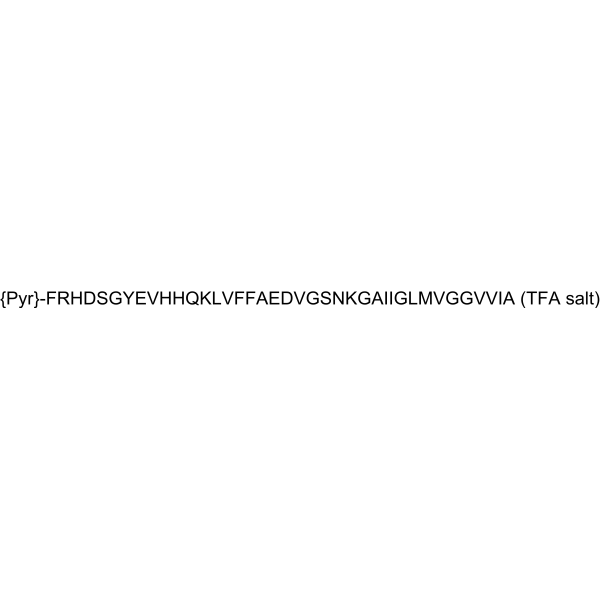
(Pyr3)-Amyloid β-Protein (3-42) TFA is an N-terminally truncated and pyroglutamate-modified amyloid β peptide. (Pyr3)-Amyloid β-Protein (3-42) TFA spontaneously aggregates into soluble oligomers and β-sheet-structured fibrils, causing neuronal cytotoxicity and leading to decreased expression of postsynaptic density protein 95 (PSD-95) in mouse cortex, thereby inducing synaptic dysfunction in spatial and short-term memory. (Pyr3)-Amyloid β-Protein (3-42) TFA can be used for research on Alzheimer's disease .
loading...
    loading...
Cat. No.: HY-P4882B
Target:  

Amyloid-β

Research Areas:  

Neurological Disease

(Pyr3)-Amyloid β-Protein (3-42) Tris is an N-terminally truncated and pyroglutamate-modified amyloid β peptide. (Pyr3)-Amyloid β-Protein (3-42) Tris spontaneously aggregates into soluble oligomers and β-sheet-structured fibrils, causing neuronal cytotoxicity and leading to decreased expression of postsynaptic density protein 95 (PSD-95) in mouse cortex, thereby inducing synaptic dysfunction in spatial and short-term memory. (Pyr3)-Amyloid β-Protein (3-42) Tris can be used for research on Alzheimer's disease .
loading...
    loading...
Cat. No.: HY-W002942
CAS No.: 6640-50-2
Synonyms: 1,2,3,4-Tetrahydroquinolin-8-ol; 8-hydroxy-1,2,3,4-tetrahydroquinoline
Ferroptosis-IN-21 is a ferroptosis inhibitor that protects against renal I/R injury by suppressing ferroptosis and directly scavenging peroxyl radicals. Ferroptosis-IN-21 displays broad-spectrum anti-ferroptotic efficacy across multiple inducers in renal tubular epithelial cells, with nanomolar potency and robust suppression of lipid Reactive Oxygen Species (ROS). Ferroptosis-IN-21 significantly ameliorates renal I/R injury in mice, reducing histological damage, functional impairment, and inflammatory cytokine expression, while decreasing lipid peroxidation biomarkers such as 4-hydroxynonenal. Ferroptosis-IN-12 can be used for research in the field of ferroptosis-targeted drug development .
loading...
    loading...
Cat. No.: HY-W099504S1
CAS No.: 1219804-99-5
Synonyms: n-Heptyl alcohol-d7
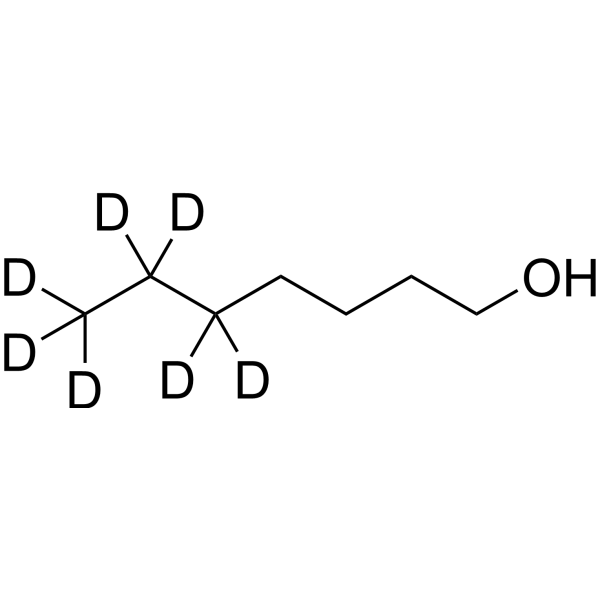
1-Heptanol-d7 is the deuterium labeled 1-Heptanol. 1-Heptanol (n-Heptyl alcohol) is a linear primary fatty alcohol. 1-Heptanol selectively inhibits the activating phosphorylation of SAPK/JNK and reduces the phosphorylation level of IκB-α. 1-Heptanol increases plasma membrane fluidity, decreases membrane thermal stability, alters the coupling kinetics of STIM1-ORAI1, inhibits the production of ROS and LTC4, and induces the expression of HSP70. 1-Heptanol is used in the fragrance industry due to its pleasant odor .
loading...
    loading...
Cat. No.: HY-W099504S2
CAS No.: 38007-42-0
Synonyms: n-Heptyl alcohol-d1
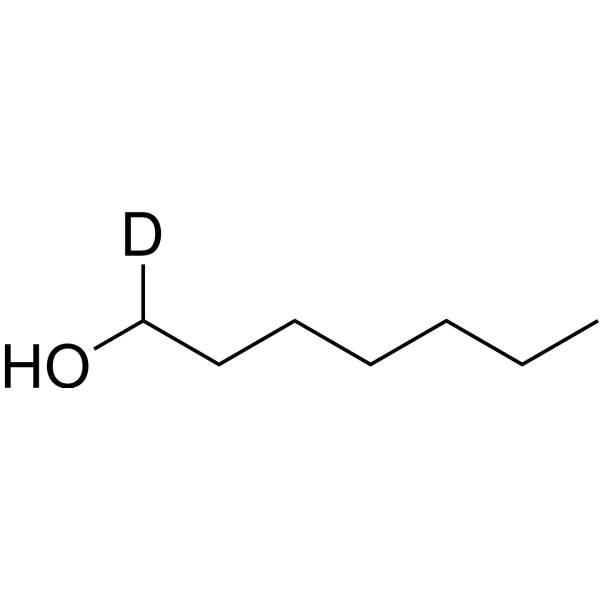
1-Heptanol-d1 is the deuterium labeled 1-Heptanol. 1-Heptanol (n-Heptyl alcohol) is a linear primary fatty alcohol. 1-Heptanol selectively inhibits the activating phosphorylation of SAPK/JNK and reduces the phosphorylation level of IκB-α. 1-Heptanol increases plasma membrane fluidity, decreases membrane thermal stability, alters the coupling kinetics of STIM1-ORAI1, inhibits the production of ROS and LTC4, and induces the expression of HSP70. 1-Heptanol is used in the fragrance industry due to its pleasant odor .
loading...
    loading...
Cat. No.: HY-W107464R
CAS No.: 2457232-14-1
G6PDi-1 (Standard) is the analytical standard of G6PDi-1 (HY-W107464). This product is intended for research and analytical applications. G6PDi-1 is a reversible and non-competitive glucose-6-phosphate dehydrogenase (G6PD) inhibitor with an IC50 of 0.07 μM for human G6PD. G6PDi-1 depletes NADPH most strongly in lymphocytes. G6PDi-1 markedly decreases inflammatory cytoKine production in T cells .
loading...
    loading...
Cat. No.: HY-W111692
CAS No.: 68915-31-1
Sodium polyphosphate, crystal,+200 mesh, 96% is an inorganic polyphosphate that also serves as a stabilizer, dispersant, chelating agent, and coacervate-forming agent. Sodium polyphosphate provides electrostatic stabilization for mineral and material suspensions, but its dispersing efficacy decreases under acidic pH, high temperature, high calcium concentration, or a combination of these conditions. Sodium polyphosphate can chelate alkaline earth metals, reduce solution pH, and alter the rate of pH decline at a divalent cation/phosphorus molar ratio of 0.18. Sodium polyphosphate forms coacervates with smaller divalent cations and precipitates with larger divalent cations, where the functional requirements of cations depend on polyphosphate concentration, average degree of polymerization, and cation type .
loading...
    loading...
Cat. No.: HY-W1133231
CAS No.: 1879038-73-9
CE-103 is a selective, blood-brain barrier-permeable dopamine transporter (DAT) inhibitor with an IC50 of 14.73 μM. CE-103 blocks DAT-mediated dopamine reuptake and exhibits antagonistic activity against 5-HT1A. CE-103 reduces working memory errors in the radial arm maze test of rats, decreases the levels of complexes containing phosphorylated DAT (pDAT) and D1R in the hippocampus of rats, and increases the levels of complexes containing D2R and D3R simultaneously. CE-103 can be used in studies related to dopaminergic neurotransmission, working memory and cognitive function .
loading...
    loading...
Cat. No.: HY-W142456
CAS No.: 7535-59-3
Synonyms: N-Benzyl-L-pyroglutamic acid
Target:  

Na+/K+ ATPase

Research Areas:  

Inflammation/Immunology

(S)-1-Benzyl-5-carboxy-2-pyrrolidinone (N-Benzyl-L-pyroglutamic acid) is an orally active H +/K +-ATPase inhibitor. (S)-1-Benzyl-5-carboxy-2-pyrrolidinone reduces free acidity and total acidity in gastric juice. (S)-1-Benzyl-5-carboxy-2-pyrrolidinone decreases ulcer formation in pylorus-ligated rats. (S)-1-Benzyl-5-carboxy-2-pyrrolidinone can be used for the research of peptic ulcers .
loading...
    loading...
Cat. No.: HY-W145695
CAS No.: 68232-35-9
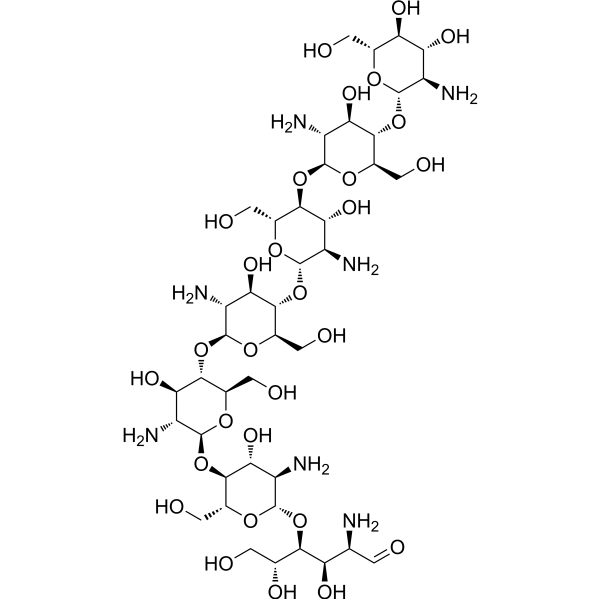
Chitoheptaose is an orally active chitooligosaccharide (degree of polymerization = 7). Chitoheptaose can be extracted from the exoskeletons of crustaceans, such as the shells of crabs, shrimps and lobsters. Chitoheptaose reduces pro-inflammatory cytokines while increasing the levels of anti-inflammatory cytokines (decreasing the levels of pro-inflammatory cytokines IL-1β, IL-17A and IFN-γ, and increasing the level of the anti-inflammatory cytokine IL-10). Chitoheptaose possesses antioxidant, anti-inflammatory and anti-Apoptotic activities. Chitoheptaose improves cardiac parameters, alleviates myocarditis injury, and exerts cardioprotective effects in a rat model of myocarditis. Chitoheptaose can be used in studies related to myocarditis .
loading...
    loading...
Cat. No.: HY-W710827
N,N'-Methylenebisacrylamide-d6 is the deuterium labeled N,N'-Methylenebisacrylamide (HY-D0848). N,N'-Methylenebisacrylamide (Bisacrylamide) is an orally active acrylamide dimer and crosslinker. N,N'-Methylenebisacrylamide increases CYP2E1, P53, cleaved caspase-3. N,N'-Methylenebisacrylamide promotes hepatic cancer. N,N'-Methylenebisacrylamide changes sperm abnormality rate and sperm count. N,N'-Methylenebisacrylamide decreases the number of various cells in the blood as well as induces liver and testicular damage. N,N'-Methylenebisacrylamide is used to prepare polyacrylamide gel .
loading...
    loading...
Cat. No.: HY-W724326
Tebuconazole-d4 is the deuterium labeled Tebuconazole (HY-B0852). Tebuconazole is an orally active agricultural azole fungicide which can also inhibit CYP51 with IC50s of 0.9 and 1.3 μM for Candida albicans CYP51 (CaCYP51) and truncated Homo sapiens CYP51 (Δ60HsCYP51), respectively. Tebuconazole induces lipid accumulation and oxidative stress in HepG2 Cells. Tebuconazole decreases MAC-T cells viability and proliferation, induces ER-stress-mediated apoptosis and increases oxidative stress levels in MAC-T cells .
loading...
    loading...
Cat. No.: HY-Y1881A
CAS No.: 7758-99-8
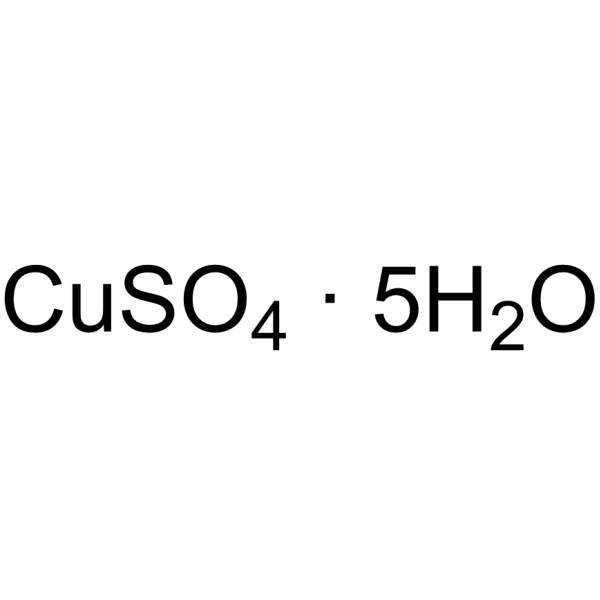
Copper sulfate pentahydrate, 99% is a biochemical reagent. Copper sulfate pentahydrate, 99% reduces the production of ROS and the expression levels of MyD88 as well as c-Rel genes. Copper sulfate pentahydrate, 99% decreases the activities of T-SOD, CAT, and GSH, increases the activities of caspase-3, caspase-8, and caspase-9. Copper sulfate pentahydrate, 99% is cytotoxic to various cells. Copper sulfate pentahydrate, 99% has antioxidant activity. Copper sulfate pentahydrate, 99% can be used in the research of diabetes, Parkinson's disease and DMBA (HY-W011845)-induced tumors .
loading...
    loading...
Cat. No.: HY-104040R
CAS No.: 1338934-59-0
Synonyms: Orin1001 (Standard)
Research Areas:  

Cancer

MKC8866 (Standard) is the analytical standard of MKC8866 (HY-104040). This product is intended for research and analytical applications. MKC8866, a salicylaldehyde analog, is a potent, selective IRE1 RNase inhibitor with an IC50 of 0.29 μM in human vitro. MKC8866 strongly inhibits Dithiothreitol-induced X-box-binding protein 1-spliced (XBP1s) expression with an EC50 of 0.52 μM and unstresses RPMI 8226 cells with an IC50 of 0.14 μM . MKC8866 inhibits IRE1 RNase in breast cancer cells leading to the decreased production of pro-tumorigenic factors and it can inhibits prostate cancer (PCa) tumor growth .
loading...
    loading...
Cat. No.: HY-105064DR
CAS No.: 863406-85-3
Synonyms: CP-597396 hydrochloride hydrate (Standard)
Zoniporide hydrochloride hydrate (Standard) (CP-597396 hydrochloride hydrate (Standard)) is the analytical standard of Zoniporide hydrochloride hydrate (HY-105064D). This product is intended for research and analytical applications. Zoniporide hydrochloride hydrate (CP-597396 hydrochloride hydrate) is a selective Na +/H + exchanger subtype 1 (NHE1) inhibitor with cardioprotective activity, with IC50 values of 67 nM and 73 nM against rat NHE1. Zoniporide hydrochloride hydrate reduces intracellular Na + and Ca 2+ overload, preserves mitochondrial integrity, activates pro-survival ERK1/2 and STAT3 signaling pathways, reduces necrosis and apoptosis, and decreases neutrophil aggregation. Zoniporide hydrochloride hydrate is applicable to research related to myocardial ischemia-reperfusion injury and heart graft ischemia-reperfusion injury .
loading...
    loading...
Cat. No.: HY-105064R
CAS No.: 241800-98-6
Synonyms: CP-597396 (Standard)
Zoniporide (Standard) (CP-597396 (Standard)) is the analytical standard of Zoniporide (HY-105064). This product is intended for research and analytical applications. Zoniporide (CP-597396) is a selective Na +/H + exchanger subtype 1 (NHE1) inhibitor with cardioprotective activity, with IC50 values of 67 nM and 73 nM against rat NHE1. Zoniporide reduces intracellular Na + and Ca 2+ overload, preserves mitochondrial integrity, activates pro-survival ERK1/2 and STAT3 signaling pathways, reduces necrosis and apoptosis, and decreases neutrophil aggregation. Zoniporide is applicable to research related to myocardial ischemia-reperfusion injury and heart graft ischemia-reperfusion injury .
loading...
    loading...
Cat. No.: HY-111648
CAS No.: 7803-88-5
Purity:  99.65%
Research Areas:  

Others

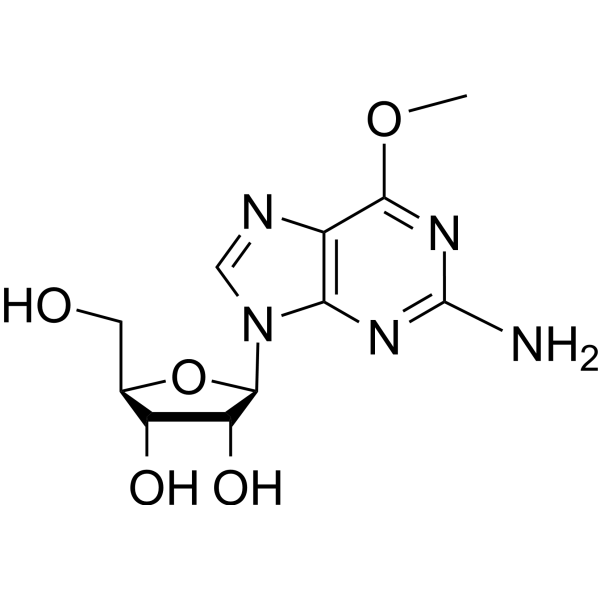
6-O-Methyl Guanosine is a Ribonucleoside. Replacement of the conserved G5, G8 or G12 residues in hammerhead ribozymes with 6-O-Methyl Guanosine reduces kcat without altering Km. 6-O-Methyl Guanosine exerts position-dependent regulatory effects on ribosomal velocity and fidelity. When 6-O-Methyl Guanosine is located at the first or third position of a codon, it decreases the accuracy of tRNA selection. When 6-O-Methyl Guanosine is located at the second position of a codon, it slows down the peptide bond formation rate of cognate aminoacyl-tRNA but does not change the reaction rate of near-cognate aminoacyl-tRNA .
loading...
    loading...

