



PanK2
PanK2 (pantothenate kinase 2) is a mitochondrial pantothenate kinase that catalyzes the ATP-dependent phosphorylation of pantothenate, the first and rate-limiting step of coenzyme A (CoA) biosynthesis, thereby controlling a central metabolic pathway required for cellular energy and lipid metabolism[1][2]. Mechanistically, PanK2 functions within the CoA biosynthetic network and contributes to mitochondrial regulation of CoA homeostasis, linking vitamin B5 utilization to downstream metabolic processes[2][3]. Because CoA is an essential cofactor for numerous mitochondrial reactions, disruption of PANK2 directly affects cellular metabolic integrity and mitochondrial function[3][1]. Disease relevance is highlighted by the discovery that loss-of-function mutations in PANK2 cause pantothenate kinase-associated neurodegeneration (PKAN), the most common form of neurodegeneration with brain iron accumulation (NBIA), characterized by progressive neurological dysfunction and brain iron deposition[1][4]. Experimental studies and disease models have therefore used PANK2 deficiency to investigate the relationship between impaired CoA metabolism, mitochondrial dysfunction, and neurodegeneration[3][4]. Compared with related pantothenate kinase isoforms, PanK2 is distinguished by its mitochondrial localization and is considered the only mitochondrial member of the human PANK family, indicating a specialized role in compartmentalized CoA regulation[2][5]. For experimental applications, PanK2 activity is regulated by CoA and acyl-CoA species, whereas palmitoylcarnitine has been reported to activate the enzyme, providing a biochemical framework for mechanistic studies of CoA metabolism and PKAN pathogenesis[3].
Références:
- [1]. Kiros M, et al. Trends in HIV-1 pretreatment drug resistance and HIV-1 variant dynamics among antiretroviral therapy-naive Ethiopians from 2003 to 2018: a pooled sequence analysis. Virol J. 2023 Oct 25;20(1):243. [Content Brief]
- [2]. Wang ZB, et al. Neurodegeneration with brain iron accumulation: Insights into the mitochondria dysregulation. Biomed Pharmacother. 2019;118:109068.
- [3]. Levi S, et al. Neurodegeneration with brain iron accumulation: update on pathogenic mechanisms. Front Pharmacol. 2014 May 7;5:99. [Content Brief]
- [4]. Alvarez-Cordoba M, et al. Precision medicine in pantothenate kinase-associated neurodegeneration. Neural Regen Res. 2019 Jul;14(7):1177-1185. doi: 10.4103/1673-5374.251203. PMID: 30804242; PMCID: PMC6425824. [Content Brief]
- [5]. Flori L, et al. Linkage of mild malaria to the major histocompatibility complex in families living in Burkina Faso. Hum Mol Genet. 2003 Feb 15;12(4):375-8. [Content Brief]
All Product Categories
-
PanK2 Produits associés (2)
Produits associés (2)

-
Pantothenate kinase-IN-2
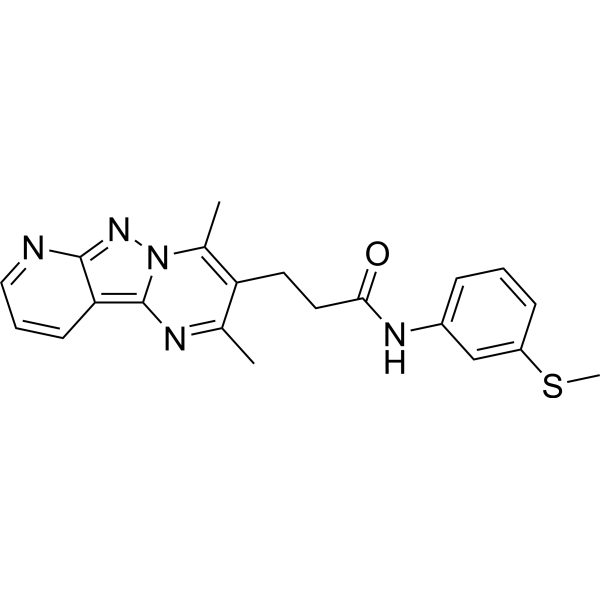 0 ImagesPantothenate kinase-IN-2 is a pantothenate kinase inhibitor with IC50 values of 92 nM for PanK2, 70 nM for PanK1β, and 25 nM for PanK3. Pantothenate kinase-IN-2 can bind specifically to the ATP-PanK3 complex and block CoA biosynthesis. Pantothenate kinase-IN-2 can be used for the research of pank-associated neurodegeneration and type 2 diabetes.
-
Claziprotamidum
 0 ImagesSynonyms: Claziprotamide; BBP-671Claziprotamidum (Claziprotamide; BBP-671) is a panthothenate kinase (PANK) activator with oral activity and blood-brain barrier permeability. Claziprotamidum binds to and activates all PANK isoforms, with the highest affinity for PANK3 (KD = 97 pM; IC50 = 1.39 nM). Claziprotamidum increases the intracellular biosynthesis of Coenzyme A (HY-128851) and restores mitochondrial function. Claziprotamidum can be used in the research of pantothenate kinase-associated neurodegeneration and propionic acidemia.



