



Licofelone (Standard)
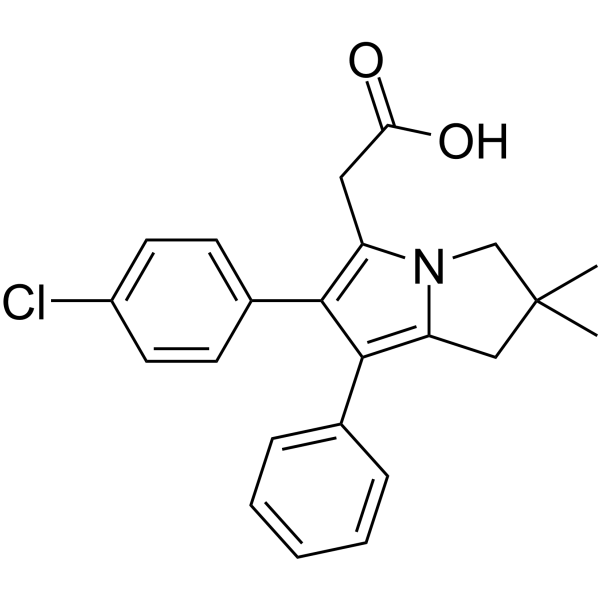
Licofelone (Standard) is the analytical standard of Licofelone. This product is intended for research and analytical applications. Licofelone (ML-3000) is a dual COX/5-lipoxygenase (5-LOX) inhibitor (IC50=0.21/0.18 μM, respectively) for the treatment of osteoarthritis. Licofelone exerts anti-inflammatory and anti-proliferative effects. Licofelone induces apoptosis, and decreases the production of proinflammatory leukotrienes and prostaglandins.
Nos produits utilisent uniquement pour la recherche. Nous ne vendons pas aux patients.
- Pureté : 98%
- CAS No.: 156897-06-2
- Formule: C23H22ClNO2
- Masse moléculaire:379.88
-
Stockage:
Please store the product under the recommended conditions in the Certificate of Analysis.


To place orders, for customer services and technical support, please contact: MedChemExpress USA
Tel: 609-228-6898 E-mail: [email protected] [email protected]


-
 Product Information
-
Chemical Information
- Pureté et documentation
-
 Help & FAQs


-
HY-B1452
LicofeloneCOX/5-LOX Inhibitor -
HY-14164
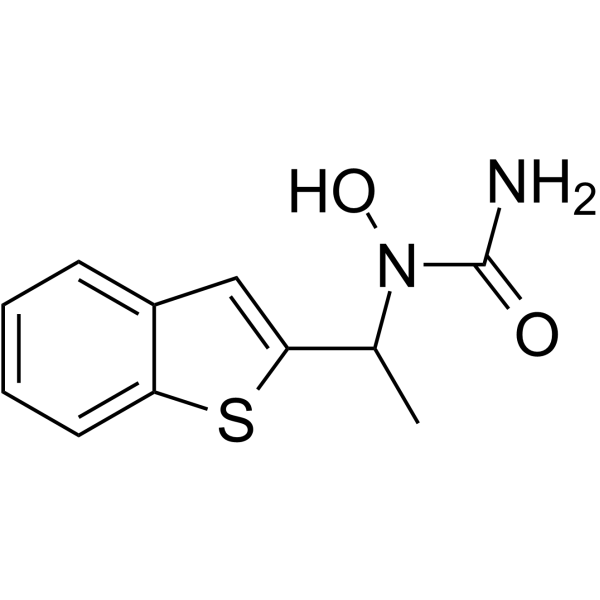
Zileuton5-Lipoxygenase Inhibitor -
HY-N0198
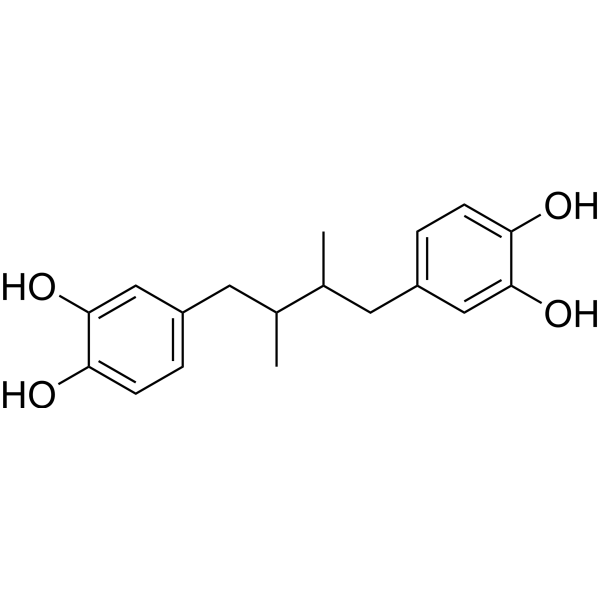
Nordihydroguaiaretic acidAutophagy Inducer -
HY-14397
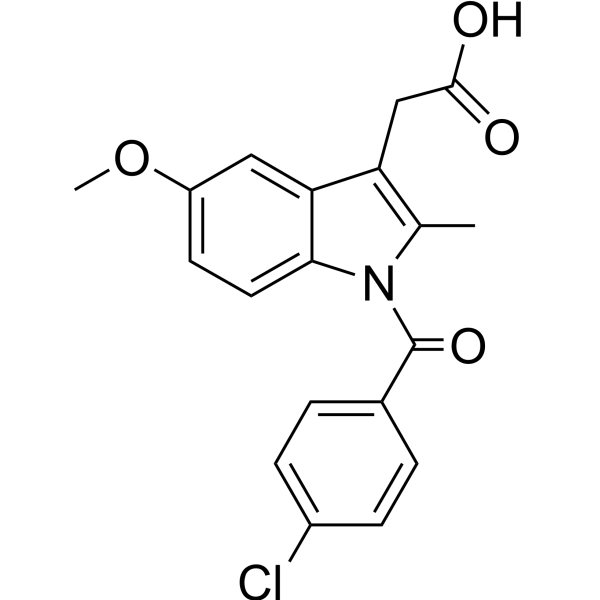
IndomethacinCOX1/2 Inhibitor -
HY-N1996
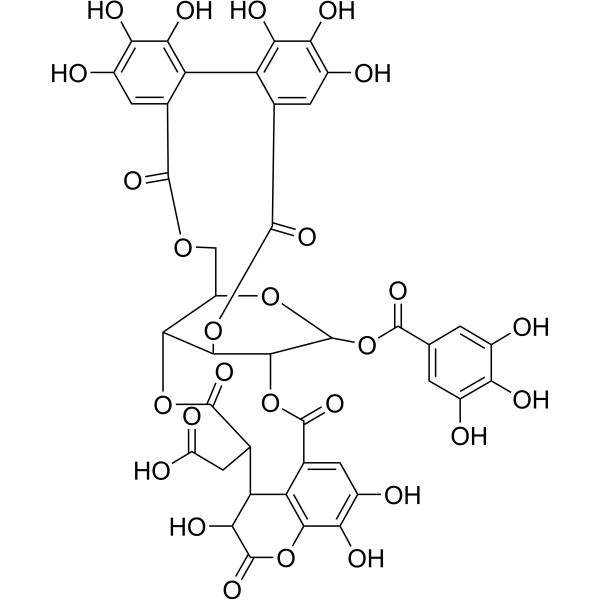
Chebulagic acidCOX Inhibitor -
HY-78131
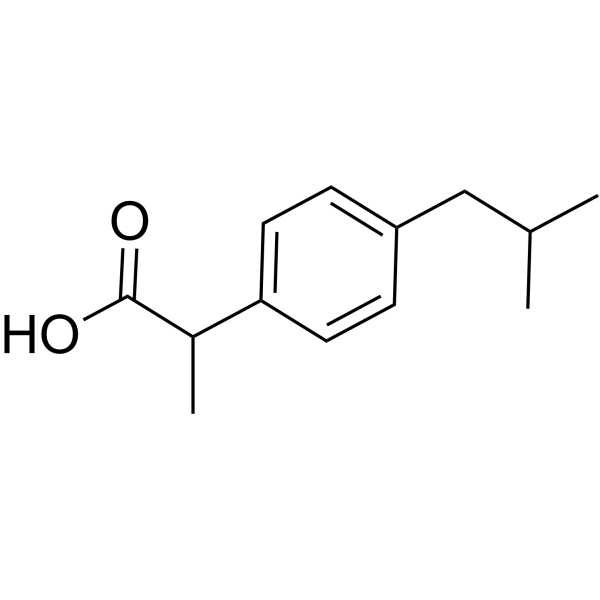
IbuprofenCOX-1 Inhibitor -
HY-B0227
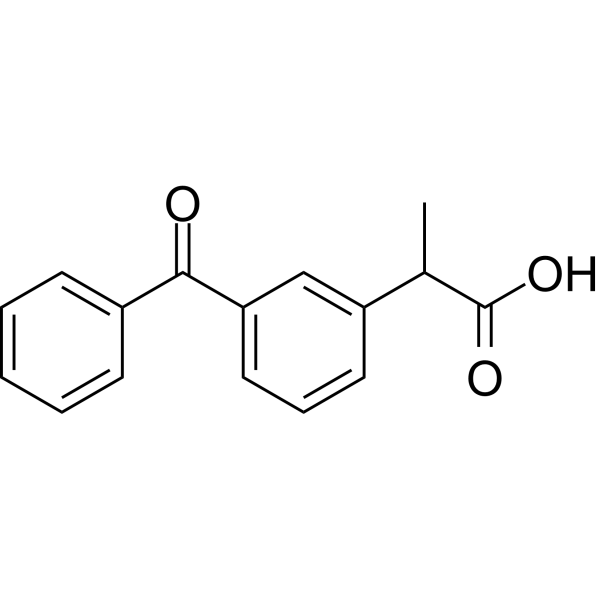
KetoprofenAnti-inflammatory agent -
HY-17372
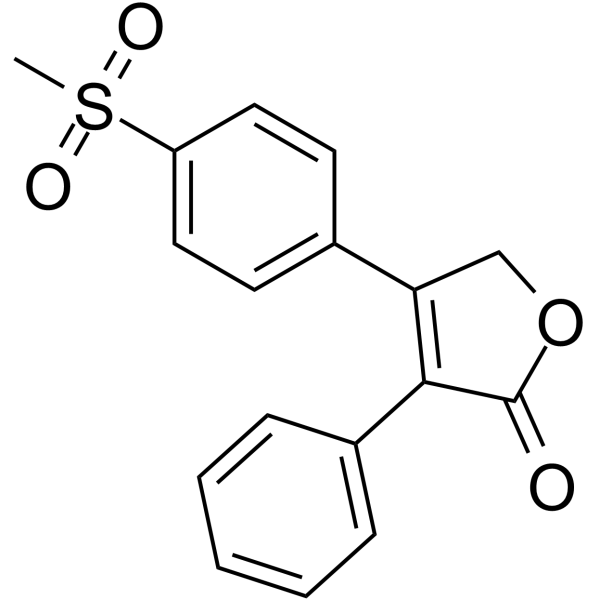
Rofecoxib -
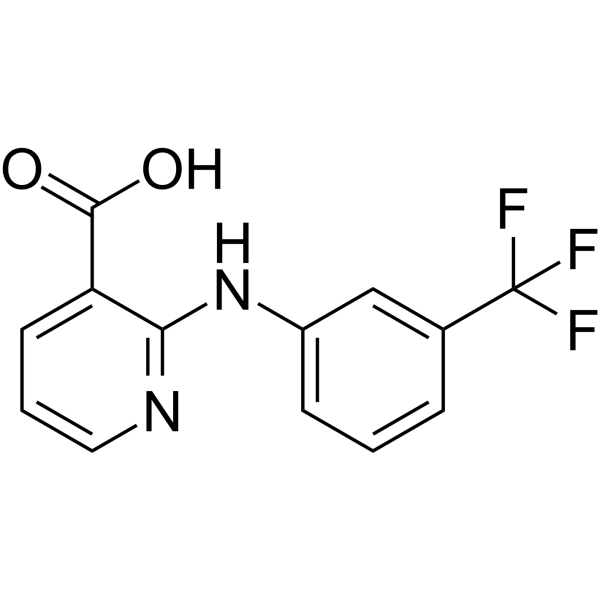
HY-B0493
Niflumic acidChloride Channel/COX Inhibitor -

HY-N0198R
Nordihydroguaiaretic acid (Standard)Autophagy Inducer -
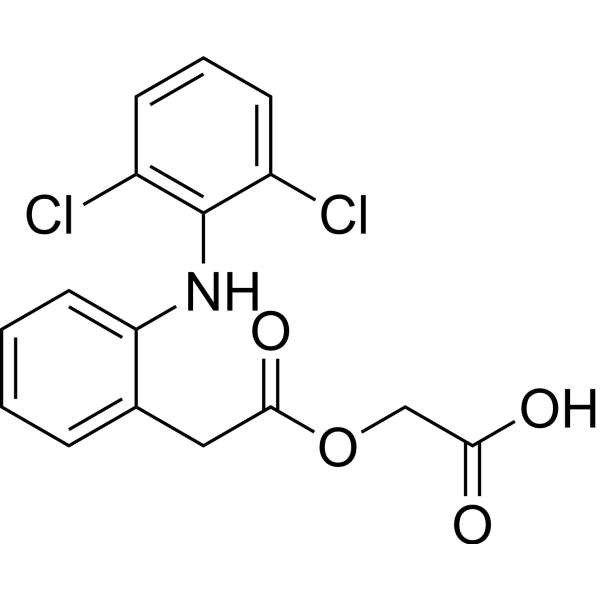
HY-B0634
AceclofenacNSAID -

HY-78131R
Ibuprofen (Standard)COX-1 Inhibitor


Product Information
Information
Application
The compound is the grade of analytical standard, which is the reference standard supplied assay. It is commonly used in qualitative, quantitative and methodological research experiments in HPLC, GC and MS.


Chemical Information
-
CAS No. 156897-06-2
-
Masse moléculaire 379.88
-
Formule C23H22ClNO2
-
SMILES
O=C(O)CC1=C(C2=CC=C(Cl)C=C2)C(C3=CC=CC=C3)=C4N1CC(C)(C)C4
-
Synonyms
ML-3000 (Standard)
-
Livraison
Room temperature in continental US; may vary elsewhere.
-
Stockage
Please store the product under the recommended conditions in the Certificate of Analysis.


Pureté et documentation
Références
[1]. Tavolari S, et al. Licofelone, a dual COX/5-LOX inhibitor, induces apoptosis in HCA-7 colon cancer cells through the mitochondrial pathway independently from its ability to affect the arachidonic acid cascade. Carcinogenesis. 2008 Feb;29(2):371-80. [Content Brief]
[2]. Alvaro-Gracia JM, et al. Licofelone--clinical update on a novel LOX/COX inhibitor for the treatment of osteoarthritis. Rheumatology (Oxford). 2004 Feb;43 Suppl 1:i21-5. [Content Brief]
[3]. Laufer SA, et al. (6,7-Diaryldihydropyrrolizin-5-yl)acetic acids, a novel class of potent dual inhibitors of both cyclooxygenase and 5-lipoxygenase. J Med Chem. 1994 Jun 10;37(12):1894-7. [Content Brief]

Calculators
Concentration (start) × Volume (start) = Concentration (final) × Volume (final)


Licofelone (Standard) Related Classifications
HY-B1452R Related Classifications
 Powered by Bioz