



PBD-monoamide

Based on 1 Customer Validation
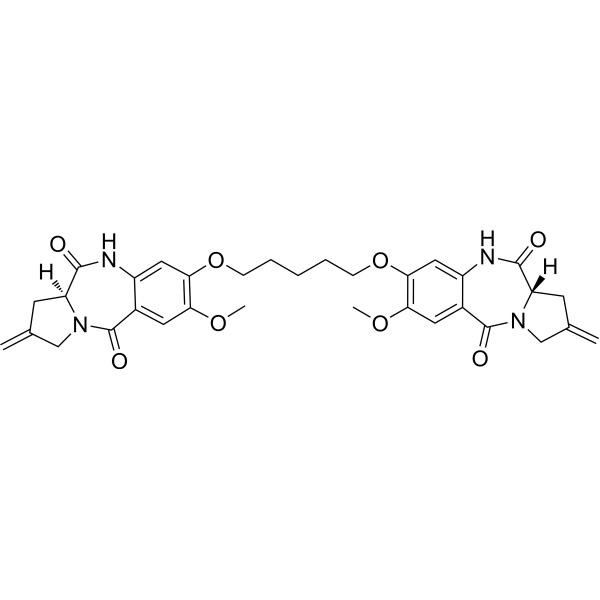
PBD-monoamide, a modified PBD (pyrrolobenzodiazepine) dimer, is an ADC Cytotoxin. PBD-monoamide can be used for synthesis of DHES0815A (an HER2 ADC). PBD-monoamide has DNA-binding activity and reduces cell viability.
Nos produits utilisent uniquement pour la recherche. Nous ne vendons pas aux patients.
- Pureté : 96.41%
- CAS No.: 2093165-00-3
- Formule: C33H36N4O7
- Masse moléculaire:600.66
-
Stockage:
4°C, protect from light, stored under nitrogen
* In solvent : -80°C, 6 months; -20°C, 1 month (protect from light, stored under nitrogen)

To place orders, for customer services and technical support, please contact: MedChemExpress USA
Tel: 609-228-6898 E-mail: [email protected] [email protected]


-
 Activité biologique
-
Chemical Information
-
Solvant et solubilité
- Protocole
- Pureté et documentation
- Références
-
 Help & FAQs


-
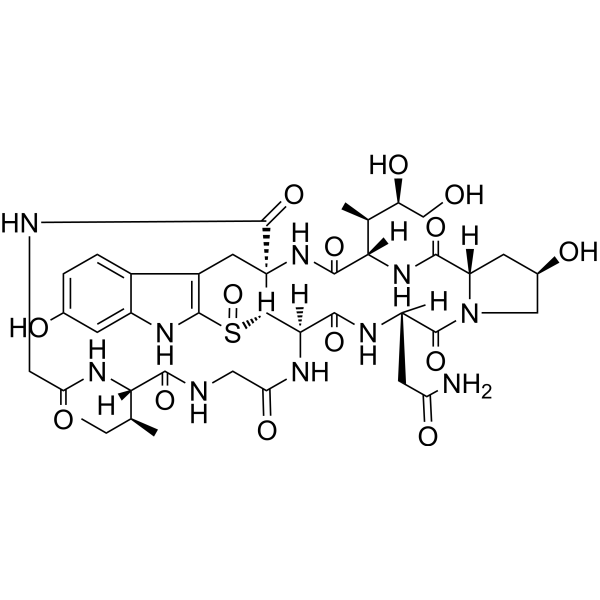
HY-19610
α-AmanitinADC Toxin/RNA Pol II Inhibitor -
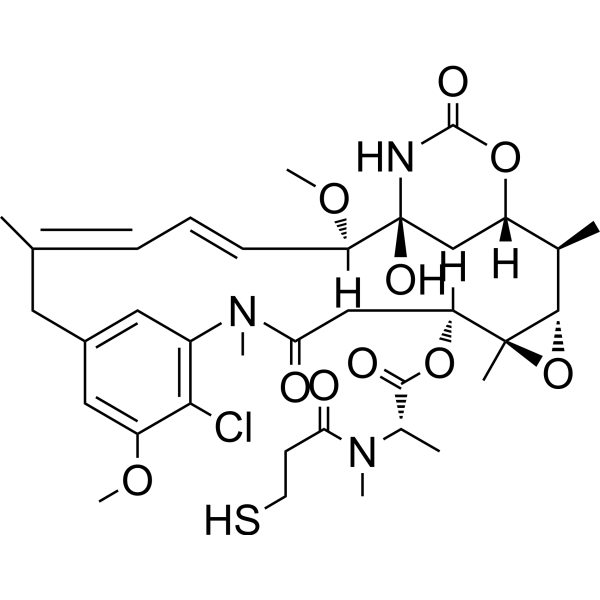
HY-19792
MertansineMicrotubule-Targeted Cytotoxin -
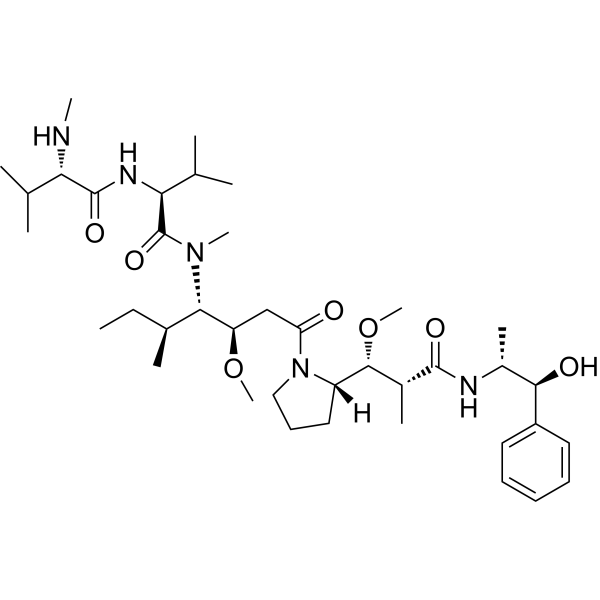
HY-15162
Monomethyl auristatin EAntimitotic Agent -
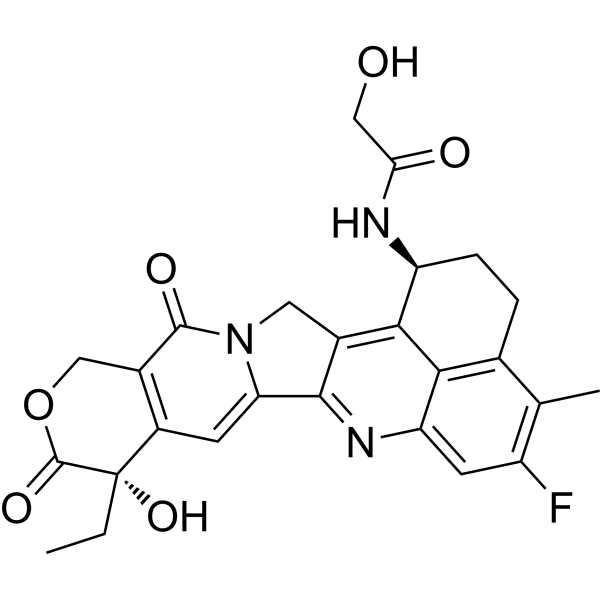
HY-13631D
DXdTopoisomerase I Inhibitor -
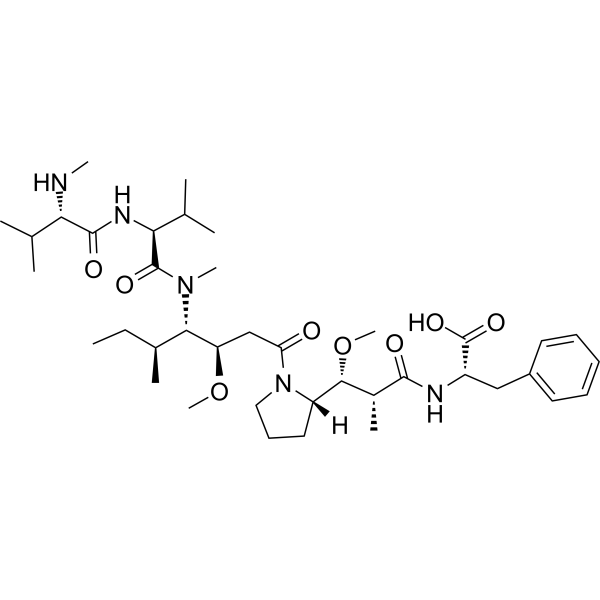
HY-15579
MMAFTubulin Inhibitor -
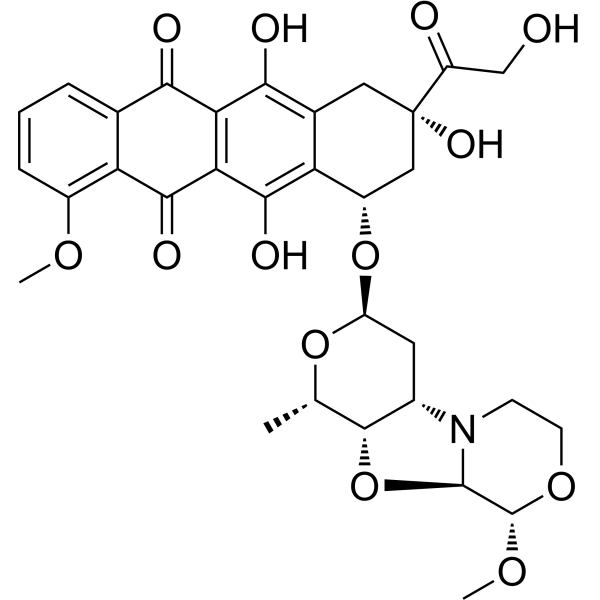
HY-16700
PNU-159682ADC Cytotoxin -
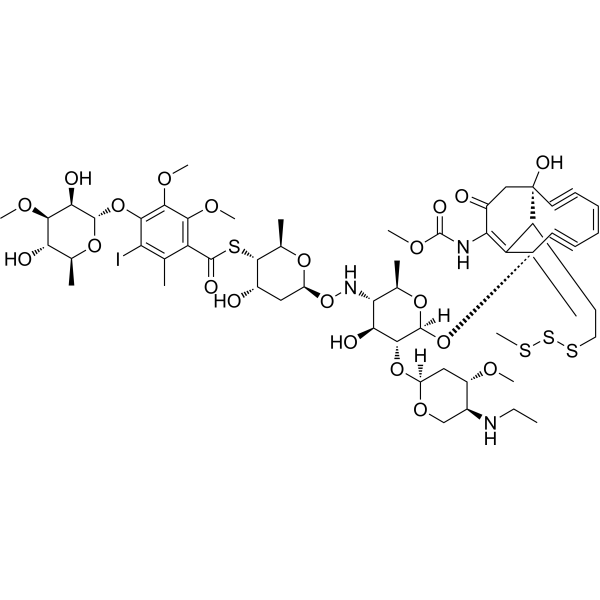
HY-19609
CalicheamicinDNA-binding ADC Cytotoxin -
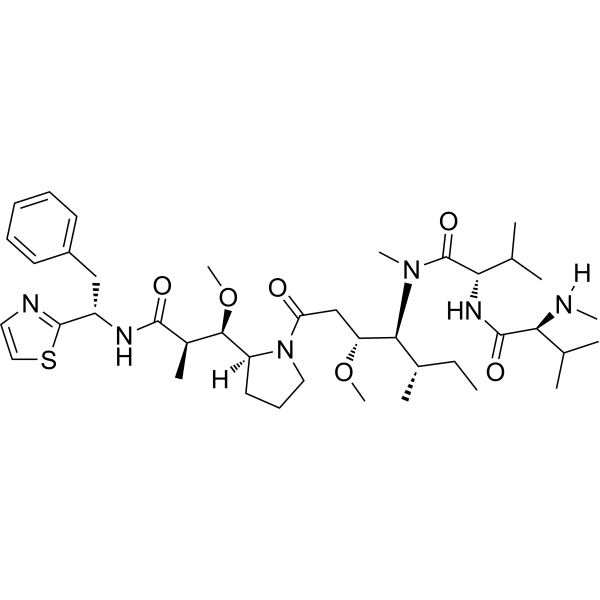
HY-15581
MMADTubulin Inhibitor -
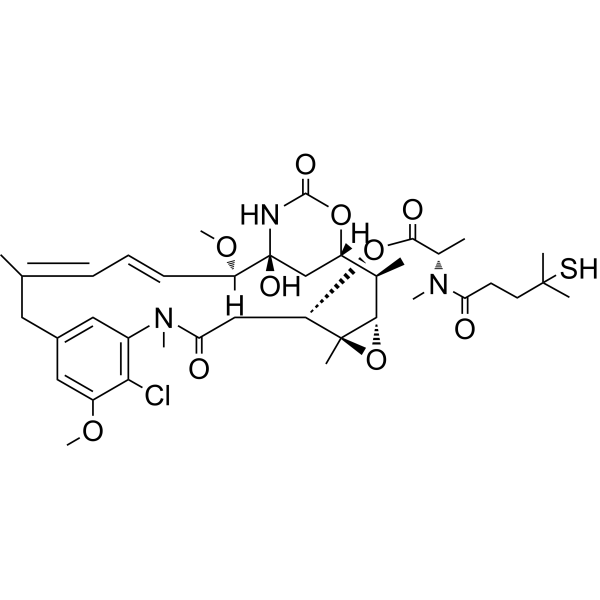
HY-12454
DM4Tubulin Inhibitor -
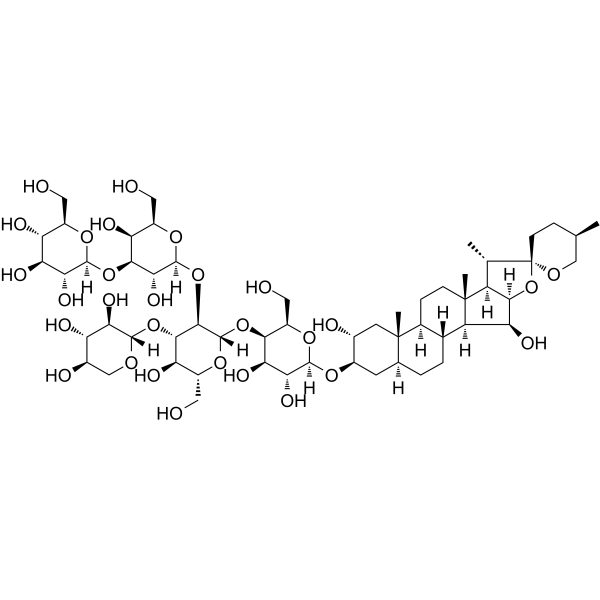
HY-N4000
DigitoninDetergent -
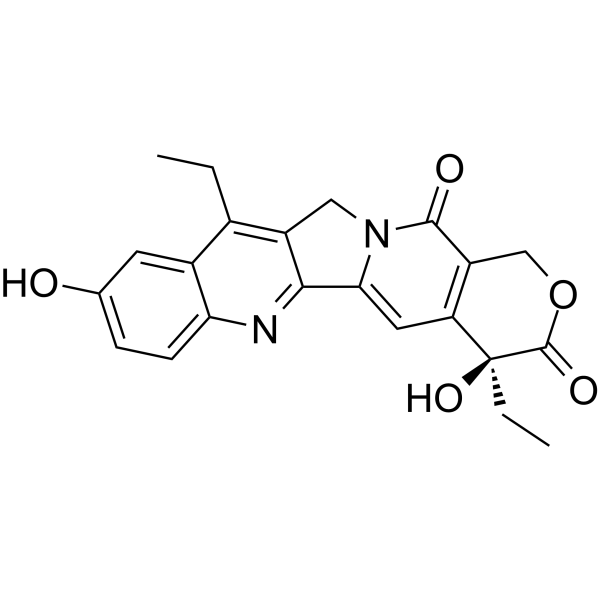
HY-13704
SN-38Topoisomerase I Inhibitor -
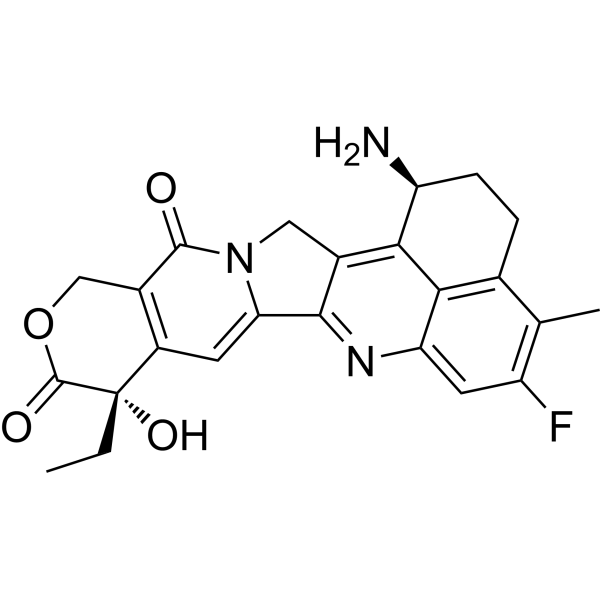
HY-13631
ExatecanTopoisomerase I Inhibitor
Voir tous les produits spécifiques à Isoform ADC Payloads
More

Activité biologique
Description
In Vitro
ADCs are comprised of an antibody to which is attached an ADC cytotoxin through an ADC linker.
MedChemExpress (MCE) has not independently confirmed the accuracy of these methods. They are for reference only.


Chemical Information
-
CAS No. 2093165-00-3
-
Appearance Solid
-
Masse moléculaire 600.66
-
Formule C33H36N4O7
-
Color White to off-white
-
SMILES
O=C(C1=CC(OC)=C(OCCCCCOC2=C(OC)C=C3C(N=C[C@@]([H])(N(C3=O)C4)CC4=C)=C2)C=C1NC5=O)N([C@]5(C6)[H])CC6=C
-
Livraison
Room temperature in continental US; may vary elsewhere.
-
Stockage
4°C, protect from light, stored under nitrogen
* In solvent : -80°C, 6 months; -20°C, 1 month (protect from light, stored under nitrogen)


Solvant et solubilité
In Vitro:
DMSO : 125 mg/mL (208.10 mM; Need ultrasonic; Hygroscopic DMSO has a significant impact on the solubility of product, please use newly opened DMSO)
Please refer to the solubility information to select the appropriate solvent. Once prepared, please aliquot and store the solution to prevent product inactivation from repeated freeze-thaw cycles.
Storage method and period of stock solution: -80°C, 6 months; -20°C, 1 month (protect from light, stored under nitrogen). When stored at -80°C, please use it within 6 months. When stored at -20°C, please use it within 1 month.
Please refer to the solubility information to select the appropriate solvent. Once prepared, please aliquot and store the solution to prevent product inactivation from repeated freeze-thaw cycles.
Storage method and period of stock solution: -80°C, 6 months; -20°C, 1 month (protect from light, stored under nitrogen). When stored at -80°C, please use it within 6 months. When stored at -20°C, please use it within 1 month.
Concentration (start) × Volume (start) = Concentration (final) × Volume (final)


Pureté et documentation
-
Fiche technique (271 KB)
-
SDS (252 KB)
- English - EN (252 KB)
- Français - FR (252 KB)
- Deutsch - DE (252 KB)
- Norwegian - NO (252 KB)
- Español - ES (252 KB)
- Swedish - SV (252 KB)
- Italian - IT (252 KB)
- Korean - KR (252 KB)
- Portuguese - PT (252 KB)
-
Instruction de manipulation (2659 KB)
Références


Complete Stock Solution Preparation Table
Please refer to the solubility information to select the appropriate solvent. Once prepared, please aliquot and store the solution to prevent product inactivation from repeated freeze-thaw cycles.
Storage method and period of stock solution: -80°C, 6 months; -20°C, 1 month (protect from light, stored under nitrogen). When stored at -80°C, please use it within 6 months. When stored at -20°C, please use it within 1 month.
| Optional Solvent | Concentration Solvent Mass | 1 mg | 5 mg | 10 mg | 25 mg |
|---|---|---|---|---|---|
| DMSO | 1 mM | 1.6648 mL | 8.3242 mL | 16.6484 mL | 41.6209 mL |
| 5 mM | 0.3330 mL | 1.6648 mL | 3.3297 mL | 8.3242 mL | |
| 10 mM | 0.1665 mL | 0.8324 mL | 1.6648 mL | 4.1621 mL | |
| 15 mM | 0.1110 mL | 0.5549 mL | 1.1099 mL | 2.7747 mL | |
| 20 mM | 0.0832 mL | 0.4162 mL | 0.8324 mL | 2.0810 mL | |
| 25 mM | 0.0666 mL | 0.3330 mL | 0.6659 mL | 1.6648 mL | |
| 30 mM | 0.0555 mL | 0.2775 mL | 0.5549 mL | 1.3874 mL | |
| 40 mM | 0.0416 mL | 0.2081 mL | 0.4162 mL | 1.0405 mL | |
| 50 mM | 0.0333 mL | 0.1665 mL | 0.3330 mL | 0.8324 mL | |
| 60 mM | 0.0277 mL | 0.1387 mL | 0.2775 mL | 0.6937 mL | |
| 80 mM | 0.0208 mL | 0.1041 mL | 0.2081 mL | 0.5203 mL | |
| 100 mM | 0.0166 mL | 0.0832 mL | 0.1665 mL | 0.4162 mL |


PBD-monoamide Related Classifications
HY-161252 Related Classifications
 Powered by Bioz