6 Results for "

ASC specks

" in MedChemExpress (MCE) Product Catalog:
Products (6)

6 Results for "ASC specks" in MCE Product Catalog:

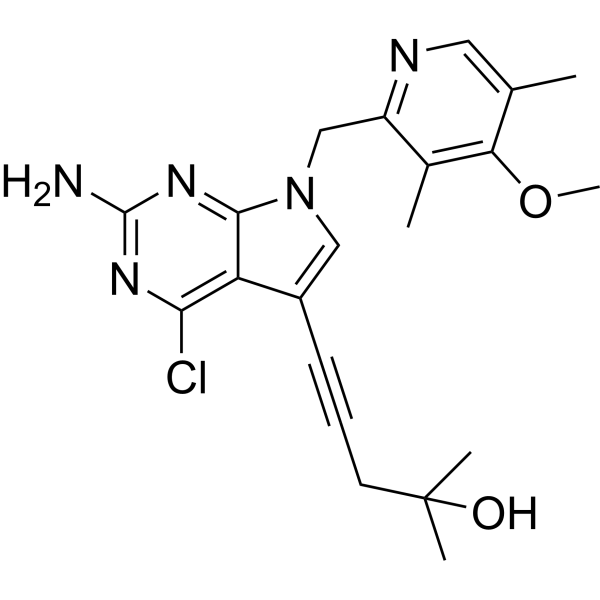
Cat. No.: HY-159520
CAS No.: 2731294-23-6
Synonyms: Ofirnoflast; HT-6184
Ofirnoflastum (Ofirnoflast) is an orally active first-in-class allosteric NEK7 inhibitor with an IC50 of 46 nM. Ofirnoflastum binds an allosteric site adjacent to NEK7’s ATP-binding pocket, induces conformational shifts, disrupts NEK7-NLRP3 binding, blocks NLRP3 inflammasome assembly, spares NEK7’s physiological functions, and suppresses caspase-1, caspase-8, NF-κB, and TNF activity. Ofirnoflastum reduces pro-inflammatory cytokine production, suppresses ASC specks, IL-1β release, pyroptotic cell death, and leukemic burden, induces apoptosis and erythroid differentiation, restores hematopoiesis, and improves outcomes in colitis models. Ofirnoflastum can be used for the research of myelodysplastic syndromes, chronic myelomonocytic leukemia, and acute myeloid leukemia .
loading...
    loading...
Cat. No.: HY-13479
CAS No.: 911397-80-3
Pureté:  99.58%
EC144 is an orally active and selective Hsp90 inhibitor (IC50 = 1.1 nM, Ki = 0.2 nM). EC144 inhibits NLRP3 inflammasome (IC50 99 nM), binds to the ATP-binding pocket of the N-terminal domain, blocks chaperone function and destabilizes client proteins, including JAK2, STAT3, Her-2, EGFR, IGFR, Akt, ErbB2 and cyclin D, with higher selectivity for cytoplasmic Hsp90 than for Grp94 and TNF-α-inducible protein 1 (TNFAIP1). EC144 also directly binds to the extracellular region of E-cadherin, disrupting E-cadherin-mediated adhesion and tight junction function, and exhibits species-specific binding to human, bovine and mouse E-cadherin, but does not bind rat or chicken E-cadherin, and does not interact with N-cadherin or VE-cadherin. EC144 blocks NLRP3 inflammasome priming and activation, ASC speck formation, caspase-1 activation, IL-1β release and pyroptotic cell death. EC144 is detectable at brain levels after oral administration and upregulates brain Hsp70. EC144 can be used for research on rheumatoid arthritis, Alzheimer's disease, intervertebral disc degeneration, peritonitis, gastric cancer and botulism .
loading...
    loading...
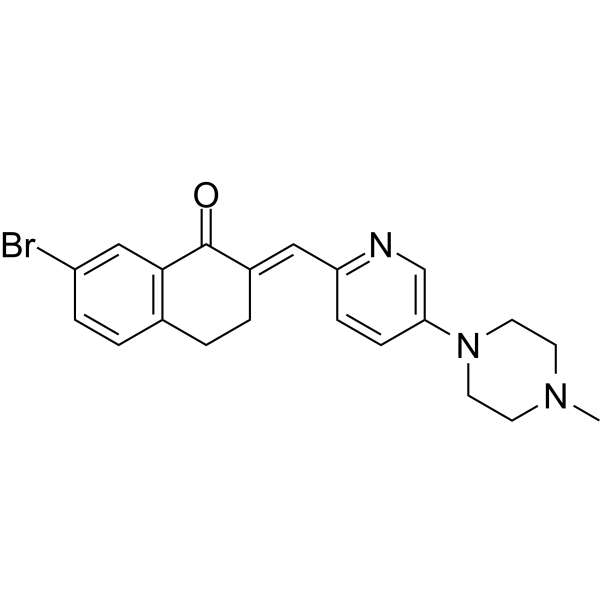
Cat. No.: HY-161329
NLRP3-IN-32 (compound 7a), a 3, 4-dihydronaphthalene-1(2H)-one derivative, is a potential NLRP3 inflammatory vesicles inhibitor. NLRP3-IN-32 can block the assembly and activation of NLRP3 inflammasome by down-regulating the expression of NLPR3 and apoptosis-associated speck-like protein containing a CARD (ASC), and inhibiting the production of reactive oxygen species (ROS) and other inflammatory mediators. NLRP3-IN-32 inhibits the phosphorylation of IκBα and NF-κB/p65 and the nuclear translocation of p65, thereby inhibiting NF-κB signaling .
loading...
    loading...
Cat. No.: HY-P992382

Target:  

Interleukin Related

Domaines de recherche:  

Neurological Disease Inflammation/Immunology

IC 100 is a humanized IgG4κ monoclonal antibody targeting apoptosis-associated speck-like protein (ASC) with blood-brain barrier permeability. IC 100 specifically inhibits ASC after being endocytosed via its Fc segment, blocks ASC polymerization and inflammasome activation, suppresses IL-1β release, forms complexes with ASC and TRIM21, and evades TRIM21-mediated proteasomal degradation. IC 100 alleviates symptoms associated with autoimmune encephalomyelitis, reduces immune cell infiltration and microglial activation in the mouse EAE model. IC 100 is suitable for research on neuroinflammatory and inflammasome-related diseases such as multiple sclerosis. Isotype comparison: HY-P99003 .
loading...
    loading...
Cat. No.: HY-W017087
CAS No.: 135-77-3
1,2,4-Trimethoxybenzene is an orally active NLRP3 selective inhibitor. 1,2,4-Trimethoxybenzene can markedly suppress Nigericin (HY-127019) or ATP (HY-B2176)-induced NLRP3 inflammasome activation, thus decreasing caspase-1 activation and IL-1β secretion. 1,2,4-Trimethoxybenzene specifically inhibits the activation of NLRP3 inflammasome without affecting absent in melanoma 2 (AIM2) inflammasome activation. 1,2,4-Trimethoxybenzene inhibits oligomerization of the apoptosis-associated speck-like protein containing a CARD (ASC) and protein-protein interaction between NLRP3 and ASC, thus blocking NLRP3 inflammasome assembly. 1,2,4-Trimethoxybenzene can be used for the study of experimental autoimmune encephalomyelitis (EAE), multiple sclerosis, and type 2 diabetes .
loading...
    loading...
Cat. No.: HY-P12397
CAS No.: 2112717-44-7
Fmoc-D-cyclohexylalanine is a Dnase1L3 inhibitor. Fmoc-D-cyclohexylalanine targets the calcium/magnesium-dependent endonuclease Dnase1L3 essential for inflammasome function, inhibiting its endonuclease activity and DNA degradation. Fmoc-D-cyclohexylalanine interferes with processes such as ASC nuclear transport and speck formation, blocking NLRP3/NLRC4-dependent caspase-1 activation, IL-1β maturation, and the release of alarmins such as HMGB1, without directly inhibiting caspase-1 or affecting TNF-α secretion. Fmoc-D-cyclohexylalanine mildly inhibits pyroptosis while strongly blocking inflammasome-dependent cytokine secretion, uncoupling this secretion from pyroptosis .
loading...
    loading...

