



911397-80-3
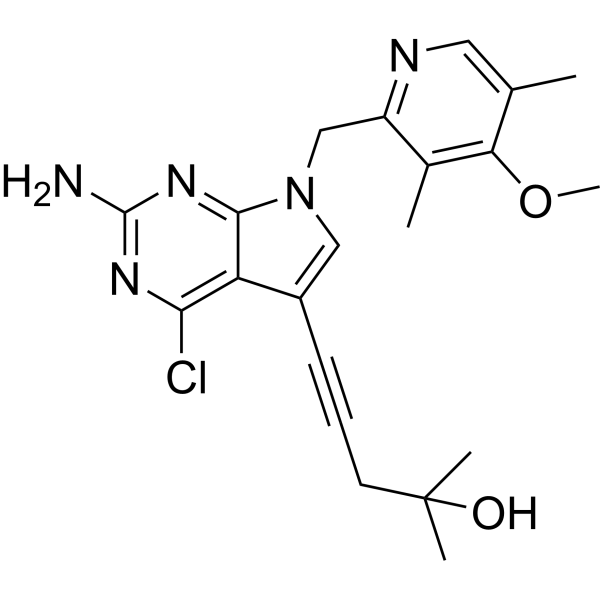
Chemical Structure
EC144
- CAS No.: 911397-80-3
- Formula:C21H24ClN5O2
- Molecular Weight:413.90
IUPAC Name: 5-(2-amino-4-chloro-7-((4-methoxy-3,5-dimethylpyridin-2-yl)methyl)-7H-pyrrolo[2,3-d]pyrimidin-5-yl)-2-methylpent-4-yn-2-ol
InChIKey: VOASEWXFCTZRDF-UHFFFAOYSA-N
SMILES: CC(O)(C)CC#CC1=CN(CC2=NC=C(C)C(OC)=C2C)C3=NC(N)=NC(Cl)=C31
Biological Activity: EC144 is an orally active and selective Hsp90 inhibitor (IC50 = 1.1 nM, Ki = 0.2 nM). EC144 inhibits NLRP3 inflammasome (IC50 99 nM), binds to the ATP-binding pocket of the N-terminal domain, blocks chaperone function and destabilizes client proteins, including JAK2, STAT3, Her-2, EGFR, IGFR, Akt, ErbB2 and cyclin D, with higher selectivity for cytoplasmic Hsp90 than for Grp94 and TNF-α-inducible protein 1 (TNFAIP1). EC144 also directly binds to the extracellular region of E-cadherin, disrupting E-cadherin-mediated adhesion and tight junction function, and exhibits species-specific binding to human, bovine and mouse E-cadherin, but does not bind rat or chicken E-cadherin, and does not interact with N-cadherin or VE-cadherin. EC144 blocks NLRP3 inflammasome priming and activation, ASC speck formation, caspase-1 activation, IL-1β release and pyroptotic cell death. EC144 is detectable at brain levels after oral administration and upregulates brain Hsp70. EC144 can be used for research on rheumatoid arthritis, Alzheimer's disease, intervertebral disc degeneration, peritonitis, gastric cancer and botulism[1][2][3][5][6].
| Cat. No. | Product Name | Purity | Description | Pricing | |||||||||||||||||||
|---|---|---|---|---|---|---|---|---|---|---|---|---|---|---|---|---|---|---|---|---|---|---|---|
|
|
EC144 | 98.01% | EC144 is an orally active and selective Hsp90 inhibitor (IC50 = 1.1 nM, Ki = 0.2 nM). EC144 inhibits NLRP3 inflammasome (IC50 99 nM), binds to the ATP-binding pocket of the N-terminal domain, blocks chaperone function and destabilizes client proteins, including JAK2, STAT3, Her-2, EGFR, IGFR, Akt, ErbB2 and cyclin D, with higher selectivity for cytoplasmic Hsp90 than for Grp94 and TNF-α-inducible protein 1 (TNFAIP1). EC144 also directly binds to the extracellular region of E-cadherin, disrupting E-cadherin-mediated adhesion and tight junction function, and exhibits species-specific binding to human, bovine and mouse E-cadherin, but does not bind rat or chicken E-cadherin, and does not interact with N-cadherin or VE-cadherin. EC144 blocks NLRP3 inflammasome priming and activation, ASC speck formation, caspase-1 activation, IL-1β release and pyroptotic cell death. EC144 is detectable at brain levels after oral administration and upregulates brain Hsp70. EC144 can be used for research on rheumatoid arthritis, Alzheimer's disease, intervertebral disc degeneration, peritonitis, gastric cancer and botulism. | ||||||||||||||||||||
|
loading...
/
|
|||||||||||||||||||||||
-
Similarity Score 0.81
 HY-12933BIIB-028
-
Similarity Score 0.71
 HY-W4375985-Iodo-BIIB021
-
Similarity Score 0.62
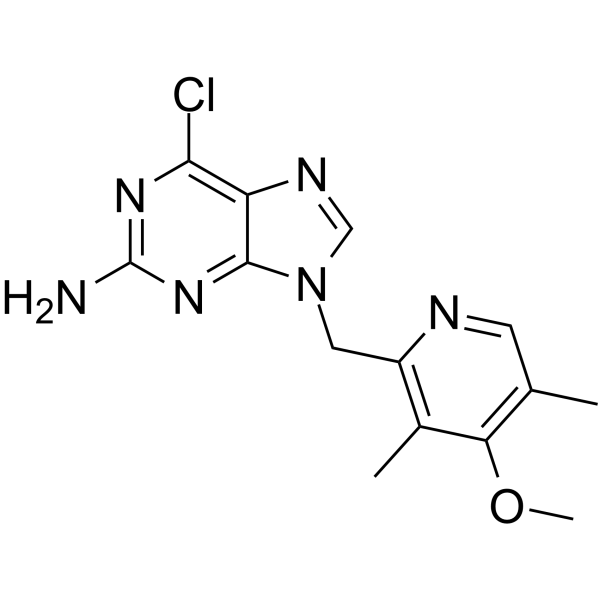 HY-10212BIIB021
-
Similarity Score 0.61
 HY-10212ABIIB021 mesylate
-
Similarity Score 0.55
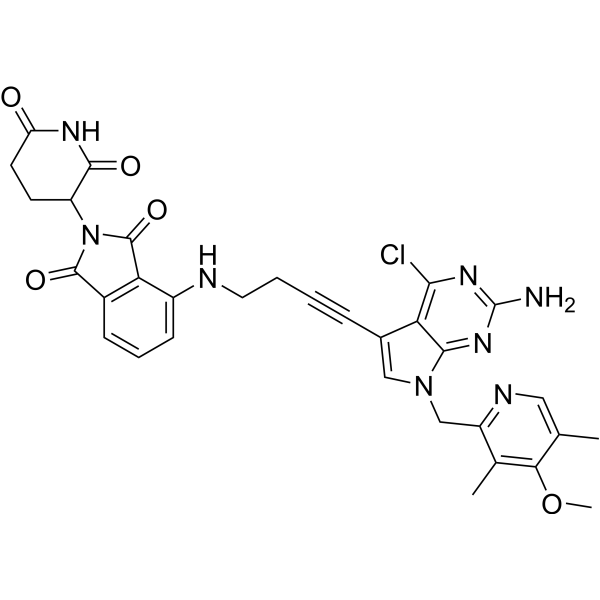 HY-115997PROTAC HSP90 degrader BP3
-
Similarity Score 0.47
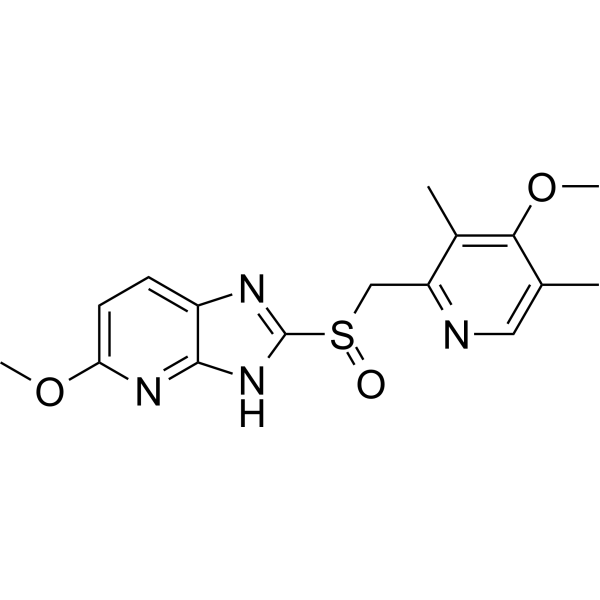 HY-17421Tenatoprazole
-
Similarity Score 0.47
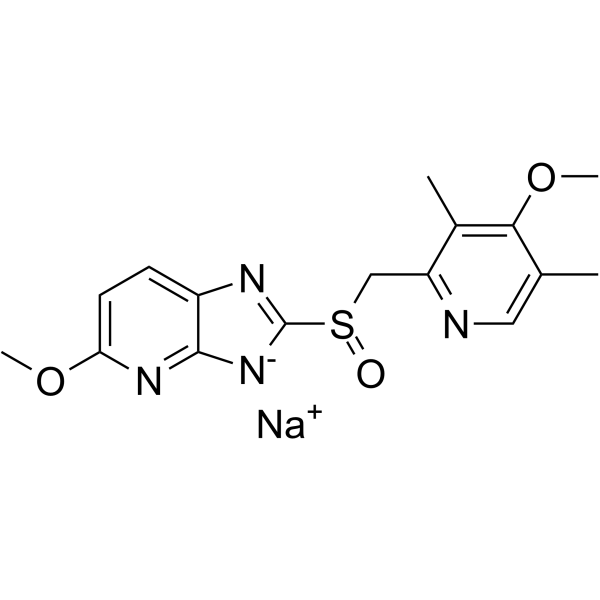 HY-17421ATenatoprazole sodium
-
Similarity Score 0.46
 HY-Z23385-O-Desmethyl omeprazole
-
Similarity Score 0.46
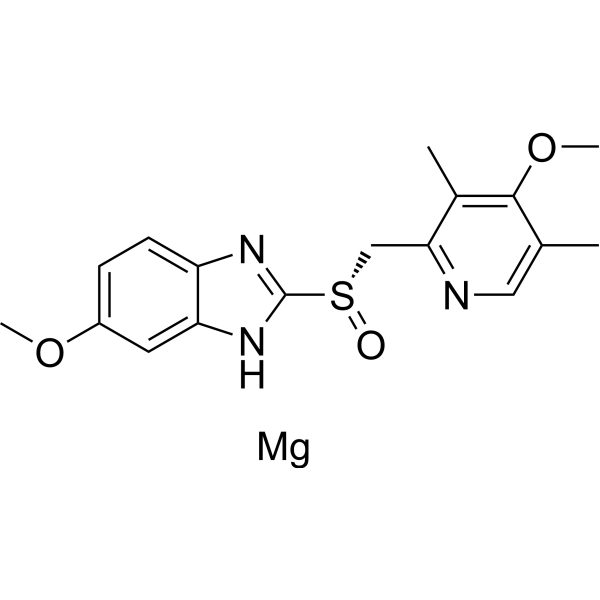 HY-17021AEsomeprazole magnesium salt
-

Explore the MedChemAI to find more analogs


References
- [1]. Yun TJ, et al. EC144, a synthetic inhibitor of heat shock protein 90, blocks innate and adaptive immune responses in models of inflammation and autoimmunity. Journal of immunology (Baltimore, Md. : 1950). 2011 Jan 01;186(1):563-75.
- [2]. Jha D, et al. Mechanistic and therapeutic role of NLRP3 inflammasome in the pathogenesis of Alzheimer's disease. Journal of neurochemistry. 2024 Oct;168(10):3574-3598.
- [3]. Nizami S, et al. Inhibition of the NLRP3 inflammasome by HSP90 inhibitors. Immunology. 2021 Jan;162(1):84-91. [Content Brief]
- [5]. Shi J, et al. EC144 is a potent inhibitor of the heat shock protein 90. Journal of medicinal chemistry. 2012 Sep 13;55(17):7786-95. [Content Brief]
- [6]. Sugawara Y, et al. Botulinum hemagglutinin disrupts the intercellular epithelial barrier by directly binding E-cadherin. The Journal of cell biology. 2010 May 17;189(4):691-700.



