



CA77.1
Based on 8 publication(s) in Google Scholar
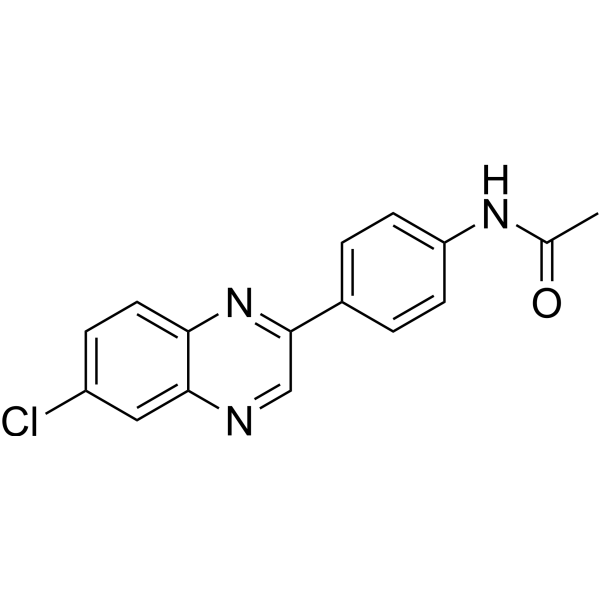
CA77.1 is a potent, brain-penetrant and orally active chaperone-mediated autophagy (CMA) activator with favorable pharmacokinetics. CA77.1 is a derivative of AR7 (HY-101106) and can increase the expression of the lysosomal receptor LAMP2A in?lysosomes. CA77.1 improves behavior and neuropathology in PS19 mice model and can be used for alzheimer's?disease research.
For research use only. We do not sell to patients.
- Purity : 99.92%
- CAS No.: 2412270-22-3
- Formula: C16H12ClN3O
- Molecular Weight:297.74
-
Storage:
4°C, protect from light
* In solvent : -80°C, 2 years; -20°C, 1 year (protect from light)

To place orders, for customer services and technical support, please contact: MedChemExpress USA
Tel: 609-228-6898 E-mail: [email protected] [email protected]


-
 Biological Activity
-
Chemical Information
-
Solvent & Solubility
- Protocols
- Purity & Documentation
- References
-
 Help & FAQs


-
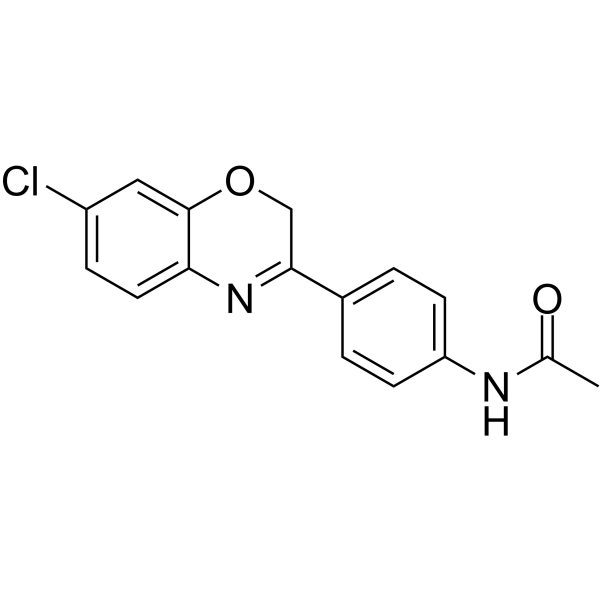
HY-112483
QX77CMA activator -
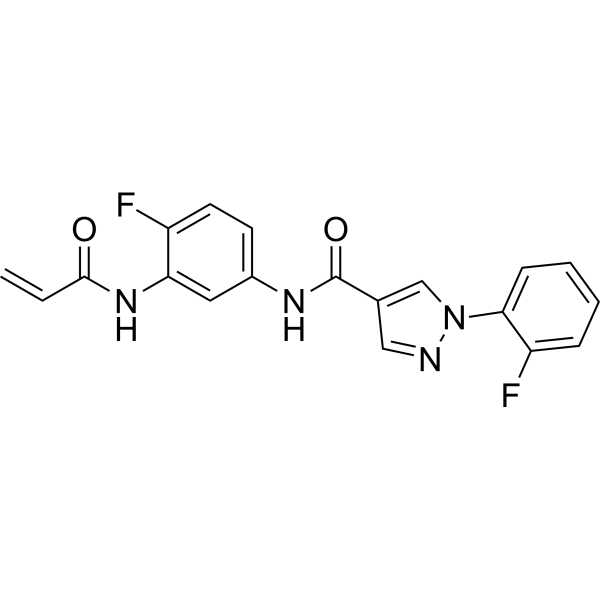
HY-128892
EN6Autophagy Activator -
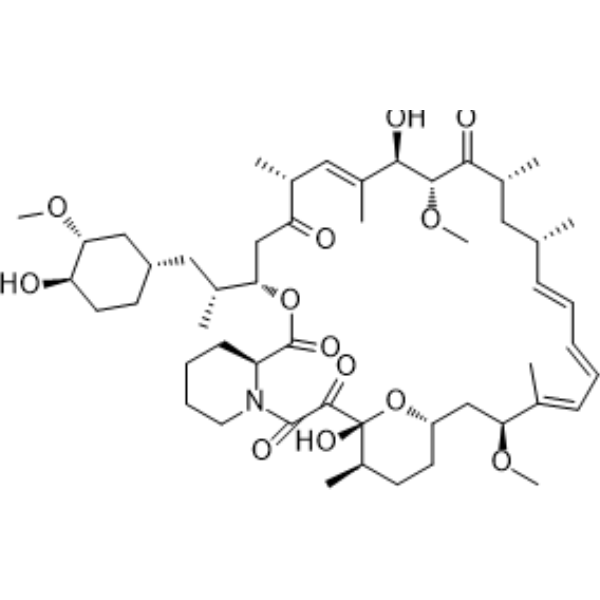
HY-10219
RapamycinmTOR Inhibitor -
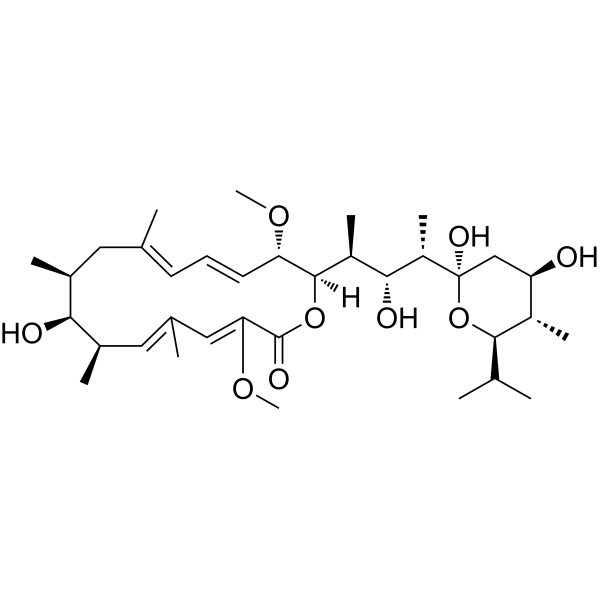
HY-100558
Bafilomycin A1V-ATPase Inhibitor -
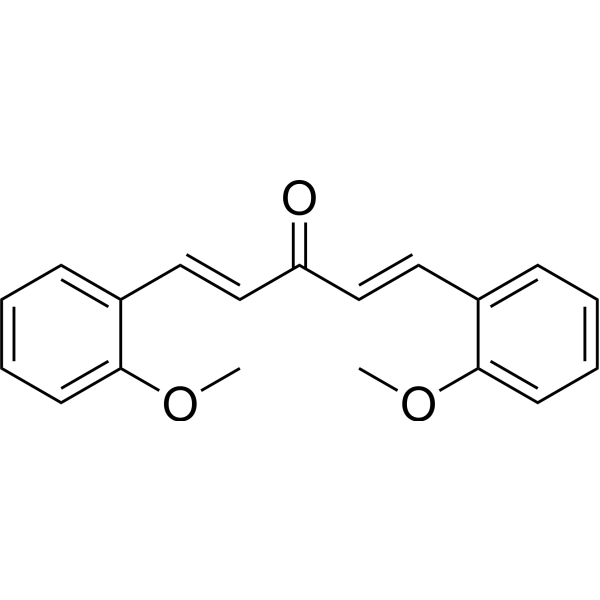
HY-135825
TFEB activator 1TFEB Activator -
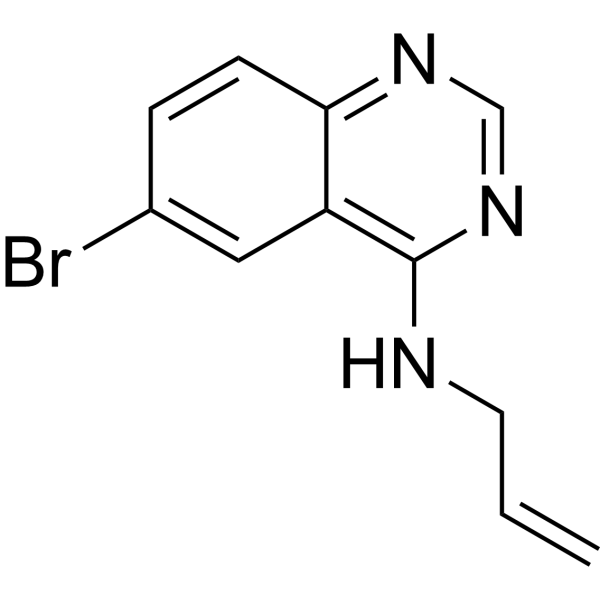
HY-100200
SMER28Autophagy Positive Regulator -
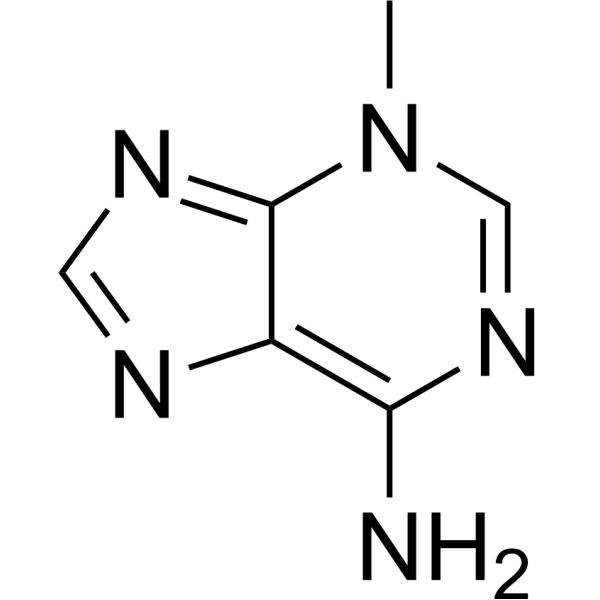
HY-19312
3-MethyladenineAutophagy/PI3K Inhibitor -
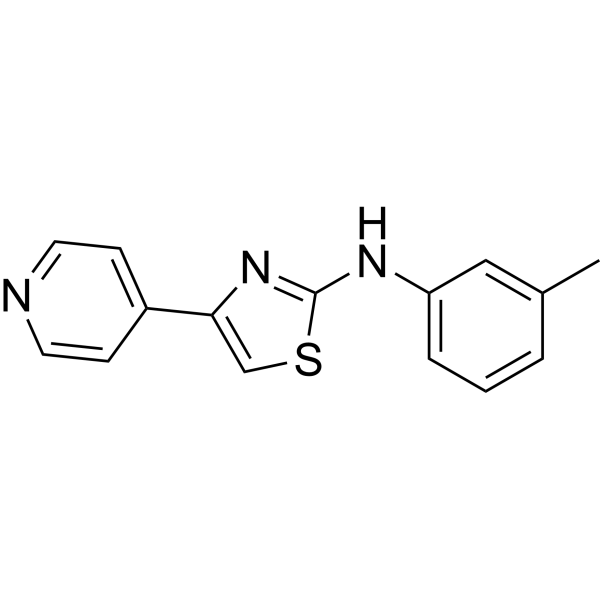
HY-100746
STF-62247Autophagy Inducer -
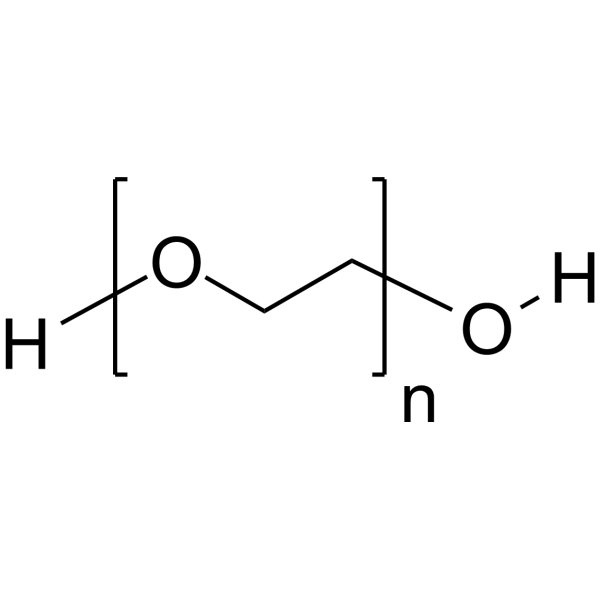
HY-Y0873
PEG300Neutral Polymer -

HY-Y1891
Tween 80 -
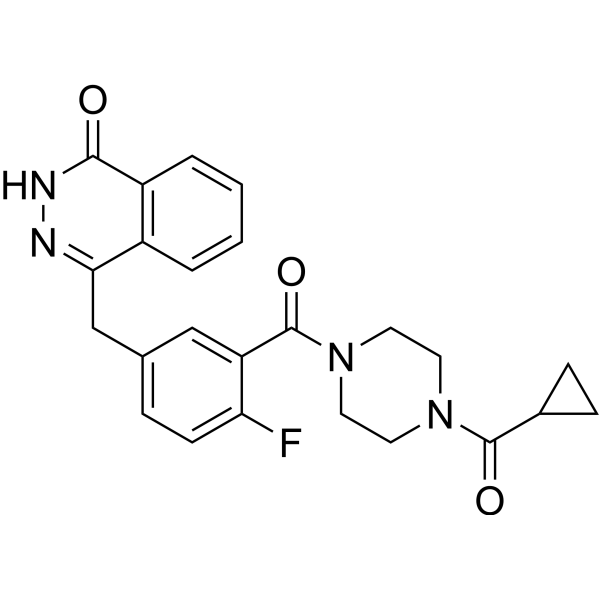
HY-10162
OlaparibPARP Inhibitor -
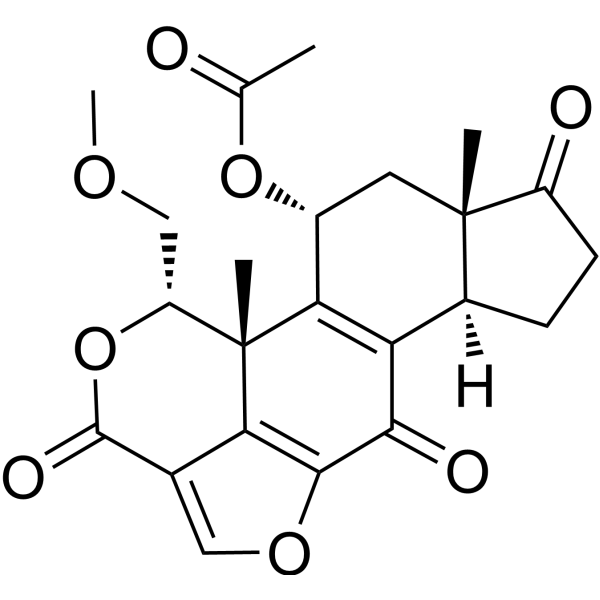
HY-10197
WortmanninPI3K Inhibitor
Publications Citing Use of MedChemExpress (MCE) CA77.1
More- Autophagy. 2026 Feb;22(2):245-265. [Abstract]
- Sci Transl Med. 2026 Feb 18;18(837):eads9597. [Abstract]
- Sci Adv. 2023 Oct 6;9(40):eadi8343. [Abstract]
- Cell Rep. 2025 Apr 2;44(4):115489. [Abstract]
- Cell Rep. 2023 Aug 16;42(8):112998. [Abstract]
- Am J Physiol Cell Physiol. 2026 Mar 1;330(3):C590-C604. [Abstract]
- J Virol. 2025 May 20;99(5):e0016825. [Abstract]
- Res Sq. 2026 May 20.
 Customer Validation & Images

-
WB
-
WB
-
In Vivo Efficacy Study
-
Histological Imaging/Staining
-
WB


Biological Activity
Description
In Vitro
CA77.1 (0-30 μM; 16 hours) activates CMA in a dose-and time-dependent manner to NIH 3T3 cells stably expressing the KFERQ-PS-Dendra reporter. The CMA activity is quantified as the average of fluorescent puncta per cell[1].CA77.1 (20 μM; 6 hours) does not alter on LC3-II expression, and does not effects autophagic flux in NIH 3T3 cells[1].
MedChemExpress (MCE) has not independently confirmed the accuracy of these methods. They are for reference only. Further protocols information, click here.
In Vivo
MedChemExpress (MCE) has not independently confirmed the accuracy of these methods. They are for reference only.
-
Animal Model:9-month-old CTR or PS19 mice[1]
-
Dosage:30 mg/kg
-
Administration:Oral gavage; 30 mg/kg; 6 months
-
Result:Improved behavior and neuropathology in a mouse model of frontotemporal-dementia-related proteotoxicity.


Chemical Information
-
CAS No. 2412270-22-3
-
Appearance Solid
-
Molecular Weight 297.74
-
Formula C16H12ClN3O
-
Color Off-white to light yellow
-
SMILES
CC(NC1=CC=C(C2=NC3=CC=C(Cl)C=C3N=C2)C=C1)=O
-
Shipping
Room temperature in continental US; may vary elsewhere.
-
Storage
4°C, protect from light
* In solvent : -80°C, 2 years; -20°C, 1 year (protect from light)


Publications (8)
-
Journal Impact Factor
-
Most Recent
-
Autophagy
Activation of chaperone-mediated autophagy suppresses glioblastoma by promoting wild-type IDH1/isocitrate dehydrogenase 1 degradation. [Abstract]2026 Feb;22(2):245-265. PMID: 41231102 -
Sci Transl Med
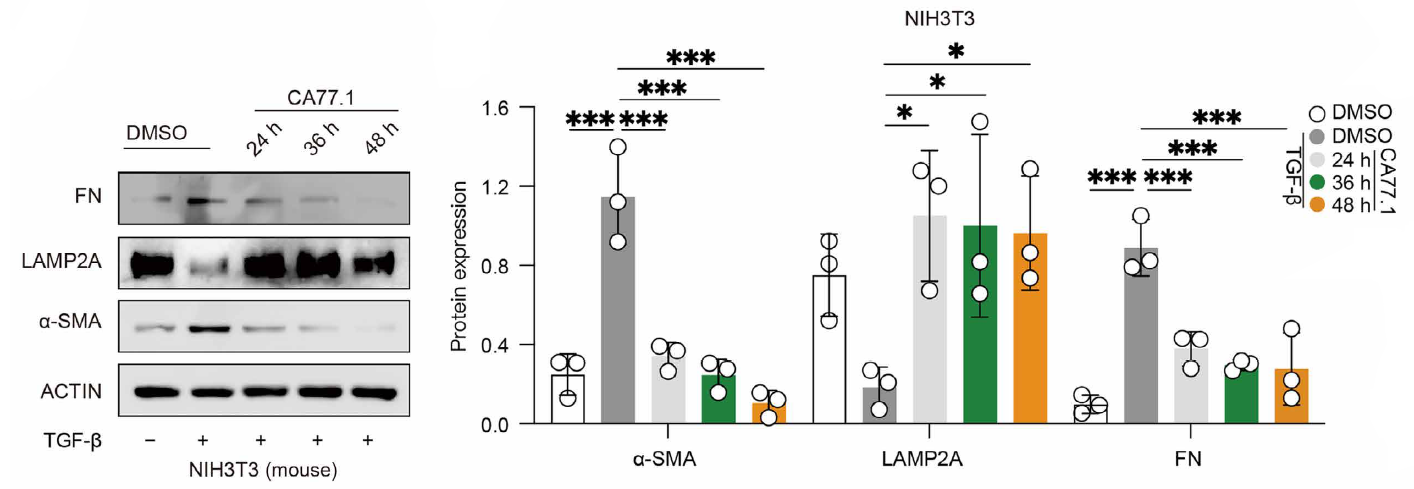
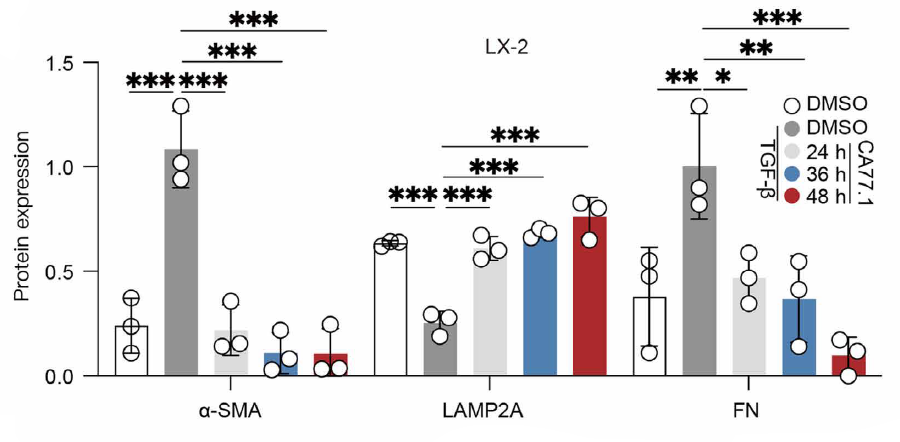
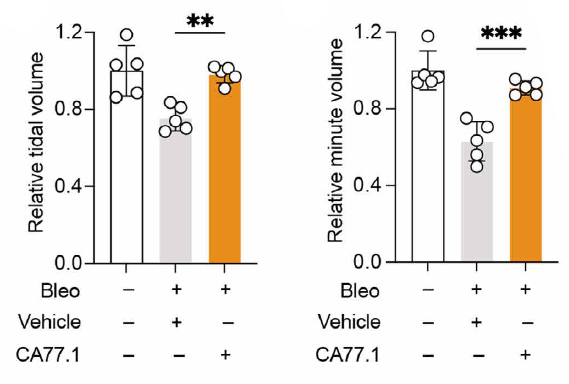
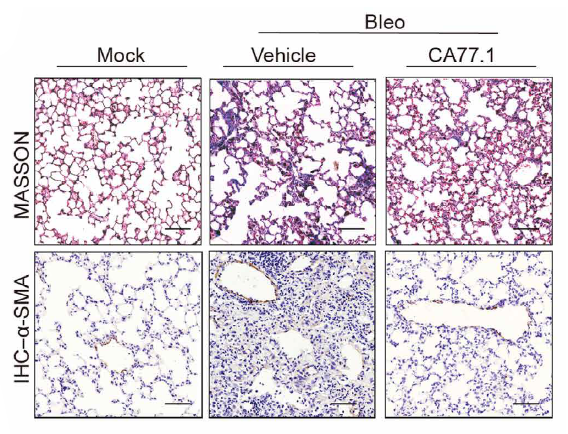
Chaperone-mediated autophagy supports organ regeneration and fibroblast quiescence in mouse models of fibrosis. [Abstract]2026 Feb 18;18(837):eads9597. PMID: 41706873
CA77.1 purchased from MedChemExpress. Usage Cited in: Sci Transl Med. 2026 Feb 18;18(837):eads9597. [Abstract]
CA77.1 (20 μM; 24-48 h) decreased the expression of FN and α-SMA, and increased LAMP2A in TGF-β-treated NIH3T3 cells.
CA77.1 purchased from MedChemExpress. Usage Cited in: Sci Transl Med. 2026 Feb 18;18(837):eads9597. [Abstract]
CA77.1 (20 μM; 24-48 h) decreased the expression of FN and α-SMA, and increased LAMP2A in TGF-β-treated LX-2 cells.
CA77.1 purchased from MedChemExpress. Usage Cited in: Sci Transl Med. 2026 Feb 18;18(837):eads9597. [Abstract]
CA77.1 (10 mg/kg; i.p.; once daily for 2 weeks) improved respiratory function, as reflected by increased tidal volume and minute ventilation in pulmonary fibrosis mice.
CA77.1 purchased from MedChemExpress. Usage Cited in: Sci Transl Med. 2026 Feb 18;18(837):eads9597. [Abstract]
CA77.1 (10 mg/kg; i.p.; once daily for 2 weeks) reduced fibrotic pathology in pulmonary fibrosis mice.
CA77.1 purchased from MedChemExpress. Usage Cited in: Sci Transl Med. 2026 Feb 18;18(837):eads9597. [Abstract]
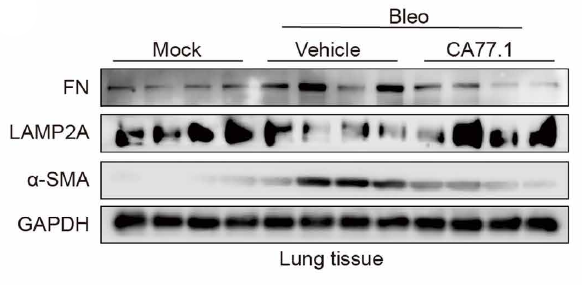
CA77.1 (10 mg/kg; i.p.; once daily for 2 weeks) reduced FN, LAMP2A, and α-SMA expression in lung tissue of pulmonary fibrosis mice.
-
Sci Adv
Deficient chaperone-mediated autophagy facilitates LPS-induced microglial activation via regulation of the p300/NF-κB/NLRP3 pathway. [Abstract]2023 Oct 6;9(40):eadi8343. PMID: 37801503 -
Cell Rep
LAMP2A-mediated neuronal hyperexcitability by enhancing NKAβ1 degradation underlies depression-induced allodynia. [Abstract]2025 Apr 2;44(4):115489. PMID: 40178973 -
Cell Rep
Chaperone-mediated autophagy in neuronal dendrites utilizes activity-dependent lysosomal exocytosis for protein disposal. [Abstract]2023 Aug 16;42(8):112998. PMID: 37590146 -
Am J Physiol Cell Physiol
Central activation of chaperone-mediated autophagy reduces appetite by fine-tuning hypothalamic amino acid pools: new insights from fish. [Abstract]2026 Mar 1;330(3):C590-C604. PMID: 41525106 -
J Virol
Heat shock protein A1 inhibits the replication of foot-and-mouth disease virus by degrading viral RNA polymerase 3D through chaperone-mediated autophagy. [Abstract]2025 May 20;99(5):e0016825. PMID: 40162788 -


Solvent & Solubility
In Vitro:
DMSO : 5 mg/mL (16.79 mM; ultrasonic and warming and heat to 60°C; Hygroscopic DMSO has a significant impact on the solubility of product, please use newly opened DMSO)
Ethanol : < 1 mg/mL (insoluble)
Please refer to the solubility information to select the appropriate solvent. Once prepared, please aliquot and store the solution to prevent product inactivation from repeated freeze-thaw cycles.
Storage method and period of stock solution: -80°C, 2 years; -20°C, 1 year (protect from light). When stored at -80°C, please use it within 2 years. When stored at -20°C, please use it within 1 year.
Please refer to the solubility information to select the appropriate solvent. Once prepared, please aliquot and store the solution to prevent product inactivation from repeated freeze-thaw cycles.
Storage method and period of stock solution: -80°C, 2 years; -20°C, 1 year (protect from light). When stored at -80°C, please use it within 2 years. When stored at -20°C, please use it within 1 year.
Concentration (start) × Volume (start) = Concentration (final) × Volume (final)

Protocols
-
RNA extraction experimental
By lysing cells, releasing RNA, and removing impurities such as proteins and DNA, high-purity RNA products are finally obtained. The commonly used traditional method is the guanidine isothiocyanate/phenol/chloroform method (Trizol), which is suitable for a variety of animal materials including animal tissues, microorganisms, cultured cells, etc., and most plant materials.
-
Autophagy
Autophagy is a process in which eukaryotic cells use lysosomes to degrade their own cytoplasmic proteins and damaged organelles under the regulation of autophagy related gene (Atg). Microtubule-associated proteins light chain 3 (LC3) is recognized as autophagy marker, which transfers from cytoplasmic LC3 (LC3-I) to membrane type (LC3-II). LC3-II/I ratio could be detected by Western Blot and fluorescence microscopy.
-
Protocol for Pharmacokinetic Study
Pharmacokinetic studies quantify how an organism handles a drug over time through absorption, distribution, metabolism, and excretion, and the core experimental readout is the concentration-time profile of parent drug and, when relevant, metabolites in biological matrices such as plasma, whole blood, urine, bile, or tissue. Pharmacokinetic analysis links dose, route, exposure, clearance, half-life, distribution, bioavailability, and systemic exposure to drug efficacy and toxicity hypotheses rather than measuring a signaling pathway directly. The literature links pharmacokinetics to drug-development phenotypes by showing that drug metabolism and pharmacokinetics influence compound progression, exposure-response interpretation, safety margins, dosing strategy, and failure risk during discovery and development. DMPK science contributes to compound optimization by integrating physicochemical properties, in vitro metabolism, transporter behavior, in vivo exposure, and pharmacodynamic contex
-
Lysosome and acidic-vesicle live-cell staining
Lysosome and acidic-vesicle live-cell staining detects acidic intracellular compartments by using membrane-permeant acidotropic probes that accumulate in low-pH vesicles, including lysosomes, late endosomes, autolysosomes, and acidic phagosomes. LysoTracker staining is commonly used as an intensity-based readout of acidic lysosomal compartment abundance or enlargement, while acridine orange produces green fluorescence in less concentrated compartments and red fluorescence after concentration-dependent accumulation in acidic vesicular organelles. Loss or reduction of acridine-orange red signal can be used as a readout of lysosomal membrane permeabilization or reduced acidic-vesicle integrity. This protocol is designed for live cultured cells and can be adapted for fluorescence microscopy, high-content imaging, plate-reader readout, or flow cytometry when the selected literature supports the readout. Because these dyes report acidotropic accumulation rather than lysosome identity alone,
-
Macroautophagy Solutions
Macroautophagy is a conserved lysosome-dependent degradation pathway in which cytoplasmic material is sequestered into double-membrane autophagosomes and delivered to lysosomes for degradation and recycling. The pathway supports cellular homeostasis during nutrient limitation, organelle stress, protein-aggregate accumulation, infection, differentiation, and tissue remodeling by coupling cargo sequestration, autophagosome maturation, lysosomal fusion, and degradation of cargo-derived macromolecules. The core molecular sequence includes initiation by nutrient- and stress-regulated autophagy machinery, autophagosome nucleation, LC3/ATG8-family conjugation to autophagosomal membranes, cargo selection through receptors such as SQSTM1/p62, autophagosome-lysosome fusion, and lysosomal degradation. LC3 was identified as a mammalian homolog of yeast Atg8 that localizes to autophagosomal membranes after processing, and p62/SQSTM1 was shown to connect ubiquitinated cargo with autophagic degradati


Purity & Documentation
-
Data Sheet (273 KB)
-
SDS (393 KB)
- English - EN (393 KB)
- Français - FR (393 KB)
- Deutsch - DE (393 KB)
- Norwegian - NO (393 KB)
- Español - ES (393 KB)
- Swedish - SV (393 KB)
- Italian - IT (393 KB)
- Korean - KR (393 KB)
- Portuguese - PT (393 KB)
-
Handling Instructions (2659 KB)
References


Complete Stock Solution Preparation Table
Please refer to the solubility information to select the appropriate solvent. Once prepared, please aliquot and store the solution to prevent product inactivation from repeated freeze-thaw cycles.
Storage method and period of stock solution: -80°C, 2 years; -20°C, 1 year (protect from light). When stored at -80°C, please use it within 2 years. When stored at -20°C, please use it within 1 year.
| Optional Solvent | Concentration Solvent Mass | 1 mg | 5 mg | 10 mg | 25 mg |
|---|---|---|---|---|---|
| DMSO | 1 mM | 3.3586 mL | 16.7932 mL | 33.5864 mL | 83.9659 mL |
| 5 mM | 0.6717 mL | 3.3586 mL | 6.7173 mL | 16.7932 mL | |
| 10 mM | 0.3359 mL | 1.6793 mL | 3.3586 mL | 8.3966 mL | |
| 15 mM | 0.2239 mL | 1.1195 mL | 2.2391 mL | 5.5977 mL |


CA77.1 Related Classifications
HY-134923 Related Classifications
 Powered by Bioz