



Caficrestat

Based on 1 Customer Validation
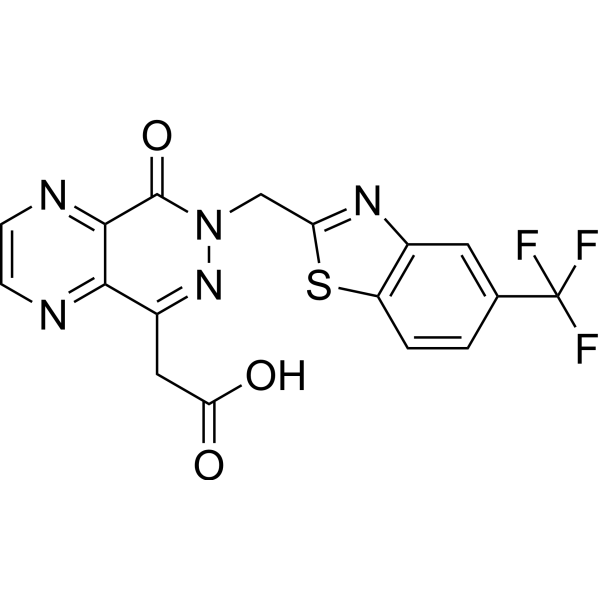
Caficrestat (AT-001) is an orally active aldose reductase inhibitor. Caficrestat can be used in the study of diabetic cardiomyopathy.
For research use only. We do not sell to patients.
- Purity : 99.74%
- CAS No.: 1355612-71-3
- Formula: C17H10F3N5O3S
- Molecular Weight:421.35
-
Storage:Powder -20°C, 3 years , 4°C, 2 years ; In solvent -80°C, 2 years , -20°C, 1 year

To place orders, for customer services and technical support, please contact: MedChemExpress USA
Tel: 609-228-6898 E-mail: [email protected] [email protected]


-
 Biological Activity
-
Chemical Information
-
Solvent & Solubility
- Purity & Documentation
- References
-
 Help & FAQs


-
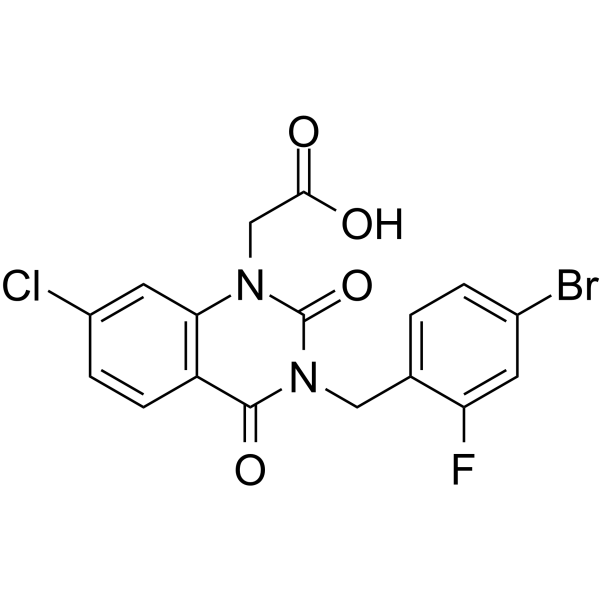
HY-116239
ZenarestatAldose Reductase Inhibitor -
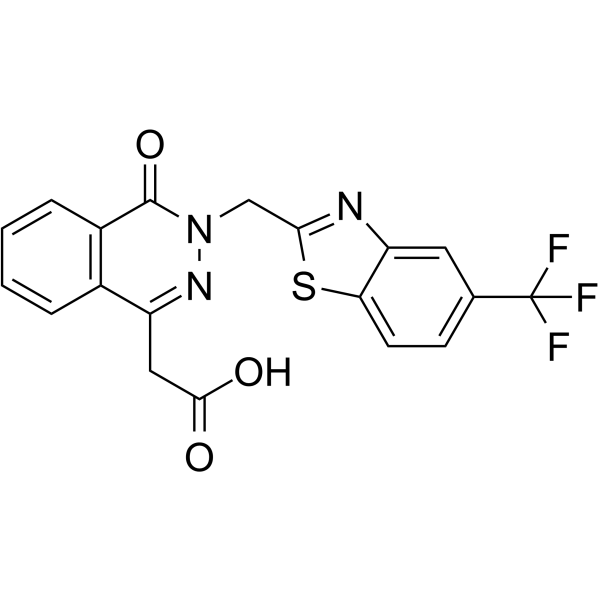
HY-19687
ZopolrestatAldose Reductase Inhibitor -
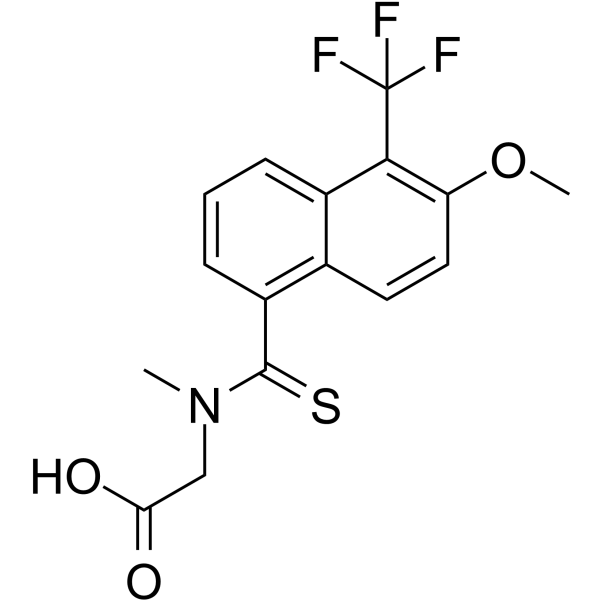
HY-16500
TolrestatAldose Reductase Inhibitor -

HY-16500R
Tolrestat (Standard)Aldose Reductase Inhibitor -
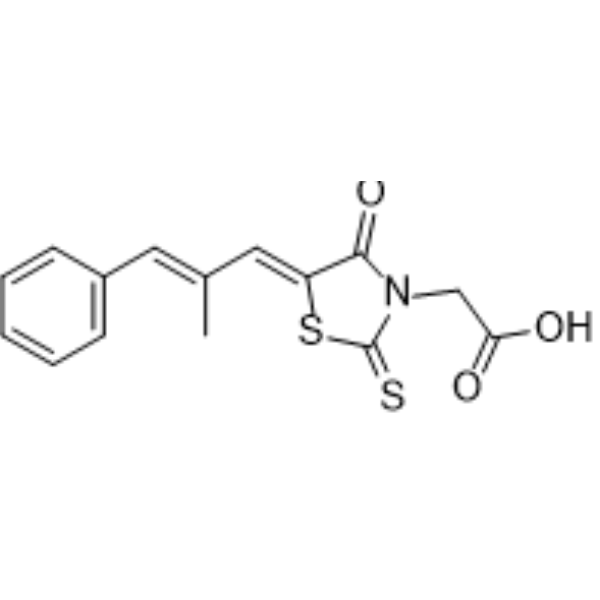
HY-66009
EpalrestatAldose Reductase Inhibitor -
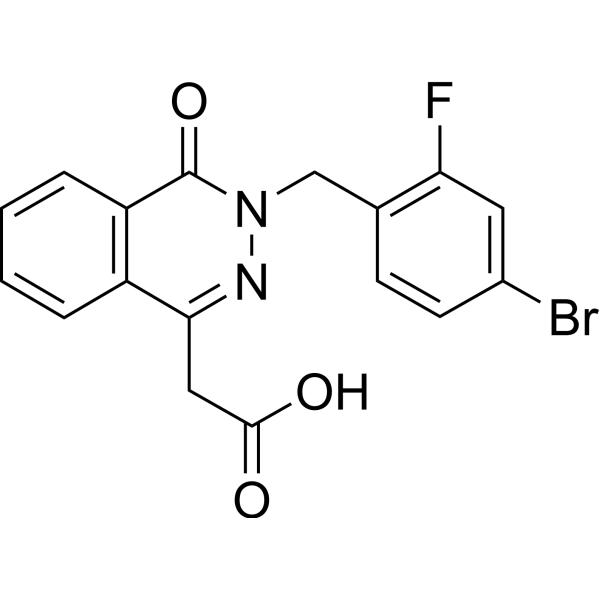
HY-106697
PonalrestatAldose Reductase Inhibitor -

HY-66009R
Epalrestat (Standard)Aldose Reductase Inhibitor -
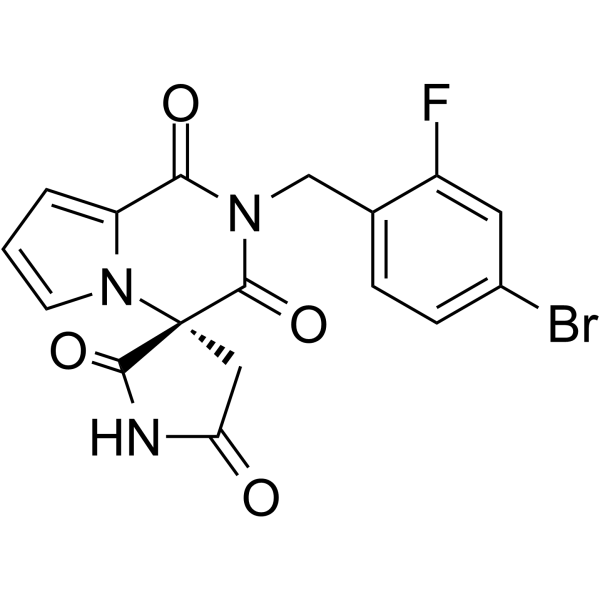
HY-15314
RanirestatAldose Reductase Inhibitor -
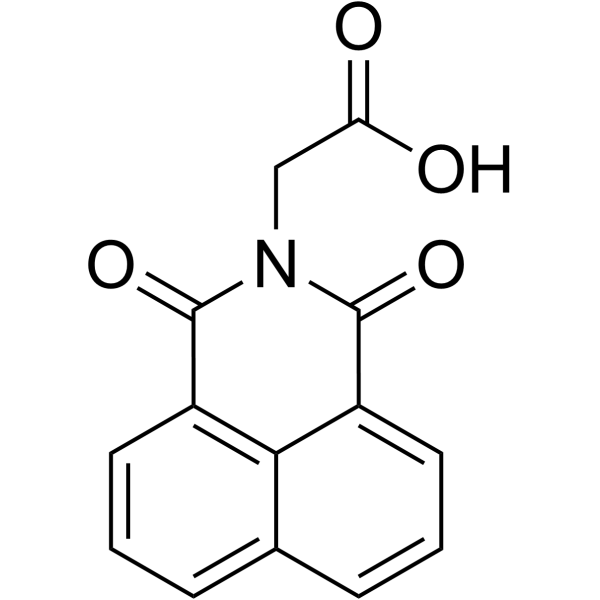
HY-B1202
AlrestatinAldose Reductase Inhibitor -
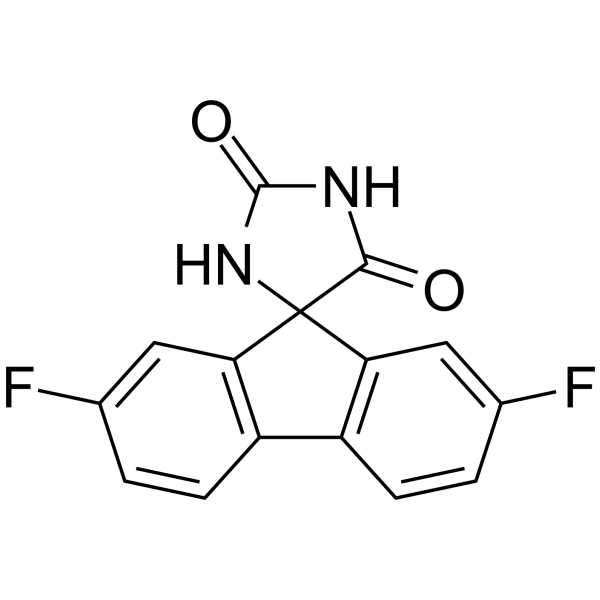
HY-16255
ImirestatAldose Reductase Inhibitor -
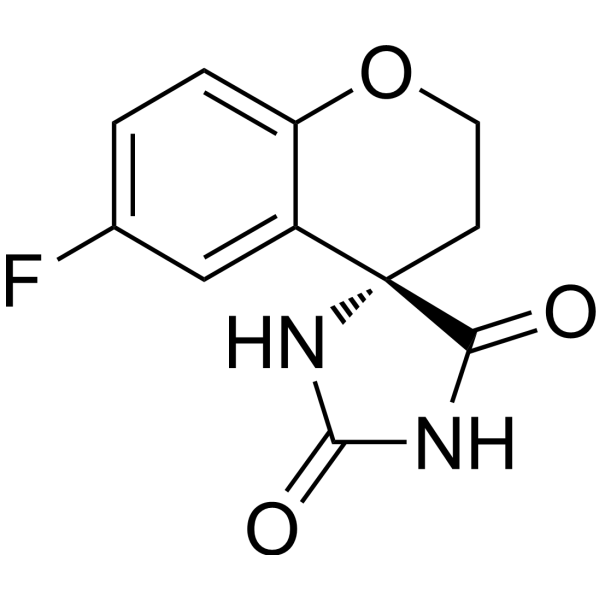
HY-50289
SorbinilAldose Reductase Inhibitor -
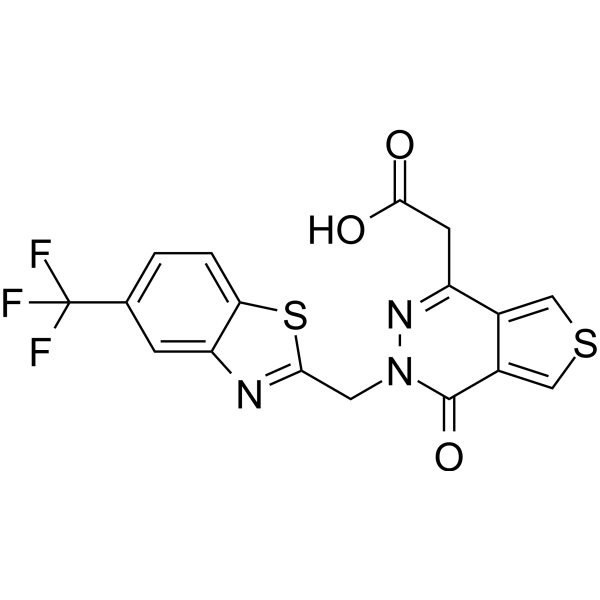
HY-129586
GovorestatAldose Reductase Inhibitor


Biological Activity
Description
In Vitro
Caficrestat (0.2 nM, 48 h) inhibits the activity of aldose reductase (AR) in normal human keratinocytes (NHK) (75%)[1].
Caficrestat (0.2 nM, 48 h) inhibits high glucose (HG), hydrogen peroxide (H2O2), and mitomycin-c (MMC)-induced NHK senescence[1].
MedChemExpress (MCE) has not independently confirmed the accuracy of these methods. They are for reference only. .
-
Cell Line:NHK cells
-
Concentration:0.2 nM
-
Incubation Time:48 h
-
Result:Down-regulated SA-β-galactosidase activity, γ-H2AX foci, CDKN1A, TP53, SASP, and SERPINE1 gene expression.
In Vivo
MedChemExpress (MCE) has not independently confirmed the accuracy of these methods. They are for reference only.
-
Animal Model:Experimental type 2 DbCM model (8-week-old male C57BL/6J mice, high-fat diet [60% kcal from lard] for 10 weeks with a single intraperitoneal injection of Streptozotocin (HY-13753) (75 mg/kg) at 4 weeks)[2]
-
Dosage:40 mg/kg
-
Administration:Oral gavage (p.o.), daily in light cycle for 3 weeks
-
Result:Increased tissue Doppler e'/a' ratio and decreased E/e' ratio.
Reduced LV mass.
Reduced palmitate oxidation rate.
Reduced cross-sectional collagen deposition.
Reduced cardiomyocyte hypertrophy.
Clinical Trial
| NCT Number | Sponsor | Condition | Start Date |
Phase

|
|---|---|---|---|---|
| NCT01329991 | Plexxikon| | 2011-05 | PHASE1 |


Chemical Information
-
CAS No. 1355612-71-3
-
Appearance Solid
-
Molecular Weight 421.35
-
Formula C17H10F3N5O3S
-
Color White to off-white
-
SMILES
O=C1C2=NC=CN=C2C(CC(O)=O)=NN1CC3=NC4=C(C=CC(C(F)(F)F)=C4)S3
-
Synonyms
AT-001; Aldose reductase-IN-1
-
Shipping
Room temperature in continental US; may vary elsewhere.
-
Storage
Powder -20°C 3 years 4°C 2 years In solvent -80°C 2 years -20°C 1 year


Solvent & Solubility
In Vitro:
DMSO : ≥ 28 mg/mL (66.45 mM; Hygroscopic DMSO has a significant impact on the solubility of product, please use newly opened DMSO)
* "≥" means soluble, but saturation unknown.
Please refer to the solubility information to select the appropriate solvent. Once prepared, please aliquot and store the solution to prevent product inactivation from repeated freeze-thaw cycles.
Storage method and period of stock solution: -80°C, 2 years; -20°C, 1 year. When stored at -80°C, please use it within 2 years. When stored at -20°C, please use it within 1 year.
Please refer to the solubility information to select the appropriate solvent. Once prepared, please aliquot and store the solution to prevent product inactivation from repeated freeze-thaw cycles.
Storage method and period of stock solution: -80°C, 2 years; -20°C, 1 year. When stored at -80°C, please use it within 2 years. When stored at -20°C, please use it within 1 year.
Concentration (start) × Volume (start) = Concentration (final) × Volume (final)
In Vivo:
Select the appropriate dissolution method based on your experimental animal and administration route.
- For the following dissolution methods, please ensure to first prepare a clear stock solution using an In Vitro approach and then sequentially add co-solvents:
- To ensure reliable experimental results, the clarified stock solution can be appropriately stored based on storage conditions. As for the working solution for In Vivo experiments, it is recommended to prepare freshly and use it on the same day.
- The percentages shown for the solvents indicate their volumetric ratio in the final prepared solution. If precipitation or phase separation occurs during preparation, heat and/or sonication can be used to aid dissolution.
Add each solvent one by one: 10% DMSO 40% PEG300 5% Tween-80 45% Saline
Solubility: ≥ 2.5 mg/mL (5.93 mM); Clear solution
This protocol yields a clear solution of ≥ 2.5 mg/mL (saturation unknown).
Taking 1 mL working solution as an example, add 100 μL DMSO stock solution (25.0 mg/mL) to 400 μL PEG300, and mix evenly; then add 50 μL Tween-80 and mix evenly; then add 450 μL Saline to adjust the volume to 1 mL.
Preparation of Saline: Dissolve 0.9 g sodium chloride in ddH₂O and dilute to 100 mL to obtain a clear Saline solution.
Add each solvent one by one: 10% DMSO 90% (20% SBE-β-CD in Saline)
Solubility: ≥ 2.5 mg/mL (5.93 mM); Clear solution
This protocol yields a clear solution of ≥ 2.5 mg/mL (saturation unknown).
Taking 1 mL working solution as an example, add 100 μL DMSO stock solution (25.0 mg/mL) to 900 μL 20% SBE-β-CD in Saline, and mix evenly.
Preparation of 20% SBE-β-CD in Saline (4°C, storage for one week): 2 g SBE-β-CD powder is dissolved in 10 mL Saline, completely dissolve until clear.
In Vivo Dissolution Calculator
Please enter the basic information of animal experiments:
-
-
-
-
Recommended: Prepare an additional quantity of animals to account for potential losses during experiments.
Please enter your animal formula composition:
-
%DMSO +
Recommended: Keep the proportion of DMSO in working solution below 2% if your animal is weak.
-
%+
-
+%Tween-80 + +
-
%Saline +
The co-solvents required include: DMSO, . All of co-solvents are available by MedChemExpress (MCE). , Tween 80. All of co-solvents are available by MedChemExpress (MCE).
Working solution concentration: 0.22 mg/mL
Method for preparing stock solution: mg drug dissolved in μL DMSO. Stock solution concentration: mg/mL.
1. Take μL DMSO stock solution;
2. Add μL .
μL , mix evenly;
3. Then add μL Tween 80, mix evenly;
4. Then add μL
Please ensure that the stock solution in the first step is dissolved to a clear state, and add co-solvents in sequence. You can use ultrasonic heating (ultrasonic cleaner, recommended frequency 20-40 kHz), vortexing, etc. to assist dissolution.


Purity & Documentation
-
Data Sheet (276 KB)
-
SDS (252 KB)
- English - EN (252 KB)
- Français - FR (252 KB)
- Deutsch - DE (252 KB)
- Norwegian - NO (252 KB)
- Español - ES (252 KB)
- Swedish - SV (252 KB)
- Italian - IT (252 KB)
- Korean - KR (252 KB)
- Portuguese - PT (252 KB)
-
Handling Instructions (2659 KB)
References
[1]. Yepuri G, Kancharla K, Perfetti R, Shendelman S, Wasmuth A, Ramasamy R. The aldose reductase inhibitors AT-001, AT-003 and AT-007 attenuate human keratinocyte senescence. Front Aging. 2024 Dec 17;5:1466281. [Content Brief]
[2]. Gopal K, et ak. Aldose reductase inhibition alleviates diabetic cardiomyopathy and is associated with a decrease in myocardial fatty acid oxidation. Cardiovasc Diabetol. 2023 Mar 28;22(1):73. [Content Brief]


Complete Stock Solution Preparation Table
Please refer to the solubility information to select the appropriate solvent. Once prepared, please aliquot and store the solution to prevent product inactivation from repeated freeze-thaw cycles.
Storage method and period of stock solution: -80°C, 2 years; -20°C, 1 year. When stored at -80°C, please use it within 2 years. When stored at -20°C, please use it within 1 year.
| Optional Solvent | Concentration Solvent Mass | 1 mg | 5 mg | 10 mg | 25 mg |
|---|---|---|---|---|---|
| DMSO | 1 mM | 2.3733 mL | 11.8666 mL | 23.7332 mL | 59.3331 mL |
| 5 mM | 0.4747 mL | 2.3733 mL | 4.7466 mL | 11.8666 mL | |
| 10 mM | 0.2373 mL | 1.1867 mL | 2.3733 mL | 5.9333 mL | |
| 15 mM | 0.1582 mL | 0.7911 mL | 1.5822 mL | 3.9555 mL | |
| 20 mM | 0.1187 mL | 0.5933 mL | 1.1867 mL | 2.9667 mL | |
| 25 mM | 0.0949 mL | 0.4747 mL | 0.9493 mL | 2.3733 mL | |
| 30 mM | 0.0791 mL | 0.3956 mL | 0.7911 mL | 1.9778 mL | |
| 40 mM | 0.0593 mL | 0.2967 mL | 0.5933 mL | 1.4833 mL | |
| 50 mM | 0.0475 mL | 0.2373 mL | 0.4747 mL | 1.1867 mL | |
| 60 mM | 0.0396 mL | 0.1978 mL | 0.3956 mL | 0.9889 mL |


Caficrestat Related Classifications
HY-18967 Related Classifications
 Powered by Bioz