



117-37-3
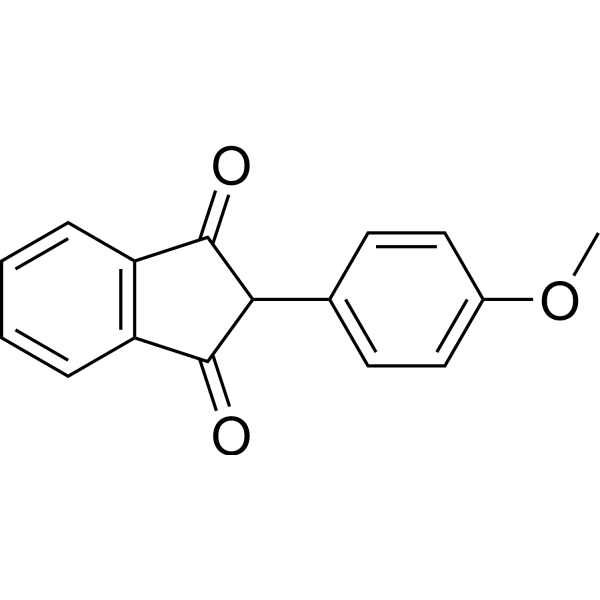
Chemical Structure
Anisindione
- CAS No.: 117-37-3
- Formula:C16H12O3
- Molecular Weight:252.26
IUPAC Name: 2-(4-methoxyphenyl)-1H-indene-1,3(2H)-dione
InChIKey: XRCFXMGQEVUZFC-UHFFFAOYSA-N
SMILES: O=C1C(C2=CC=C(OC)C=C2)C(C3=C1C=CC=C3)=O
Biological Activity: Anisindione is an anticoagulant, a GGCX inhibitor, and a VKORC1 inhibitor. Anisindione directly occupies the vitamin K binding pocket of γ-glutamyl carboxylase (GGCX) and acts as a competitive antagonist of GGCX. Anisindione reduces plasma prothrombin activity. The effect of Anisindione can be interrupted by phytonadione, and it lacks hepatobiliary or hematological toxicity, making it useful for research on thrombosis, deep vein thrombosis, and pulmonary embolism[1][2][3].
| Cat. No. | Product Name | Purity | Description | Pricing | |||||||||||||||||||
|---|---|---|---|---|---|---|---|---|---|---|---|---|---|---|---|---|---|---|---|---|---|---|---|
|
|
Anisindione | 98.09% | Anisindione is an anticoagulant, a GGCX inhibitor, and a VKORC1 inhibitor. Anisindione directly occupies the vitamin K binding pocket of γ-glutamyl carboxylase (GGCX) and acts as a competitive antagonist of GGCX. Anisindione reduces plasma prothrombin activity. The effect of Anisindione can be interrupted by phytonadione, and it lacks hepatobiliary or hematological toxicity, making it useful for research on thrombosis, deep vein thrombosis, and pulmonary embolism. | ||||||||||||||||||||
|
loading...
/
|
|||||||||||||||||||||||
|
|
Anisindione (Standard) | ≥98% | Anisindione (Standard) is the analytical standard of Anisindione (HY-B0924). This product is intended for research and analytical applications. Anisindione is an anticoagulant, a GGCX inhibitor, and a VKORC1 inhibitor. Anisindione directly occupies the vitamin K binding pocket of γ-glutamyl carboxylase (GGCX) and acts as a competitive antagonist of GGCX. Anisindione reduces plasma prothrombin activity. The effect of Anisindione can be interrupted by phytonadione, and it lacks hepatobiliary or hematological toxicity, making it useful for research on thrombosis, deep vein thrombosis, and pulmonary embolism. | ||||||||||||||||||||
|
loading...
/
|
|||||||||||||||||||||||
-
Similarity Score 0.85
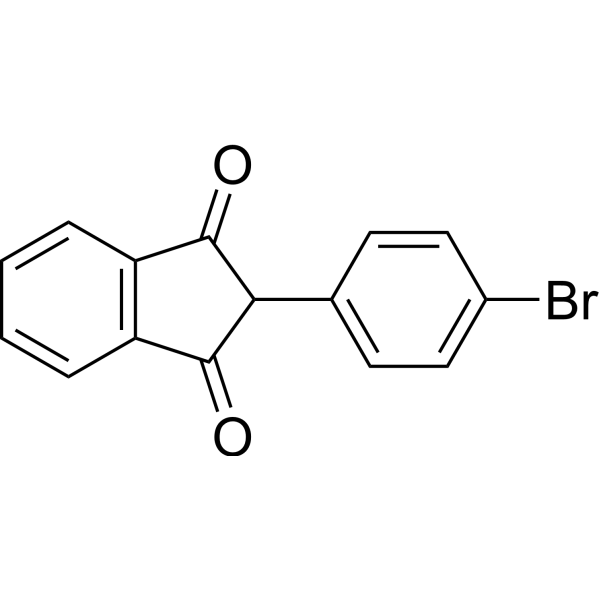 HY-B0917Bromindione
-
Similarity Score 0.84
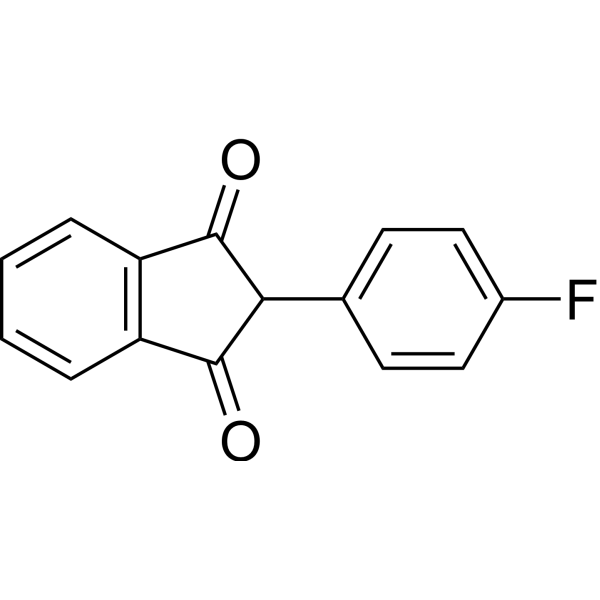 HY-121124Fluindione
-
Similarity Score 0.84
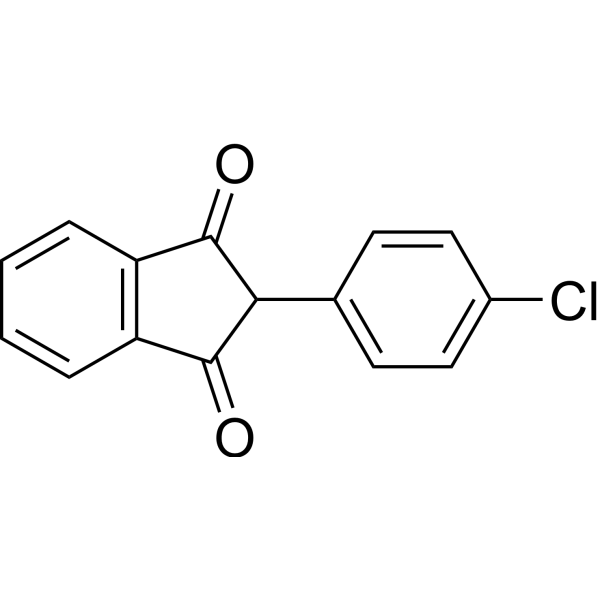 HY-B0918Chlorindione
-
Similarity Score 0.79
 HY-W982689Fluindarol
-
Similarity Score 0.79
 HY-B0325RPhenindione (Standard)
-
Similarity Score 0.64
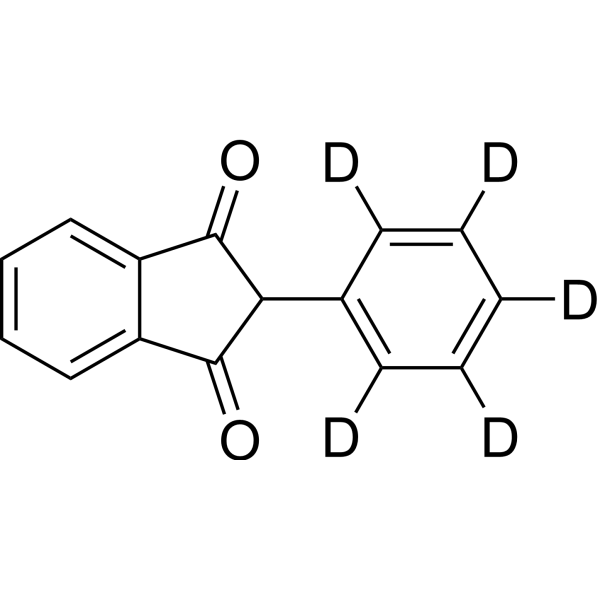 HY-B0325SPhenindione-d5
-
Similarity Score 0.64
 HY-121124SFluindione-d4
-
Similarity Score 0.63
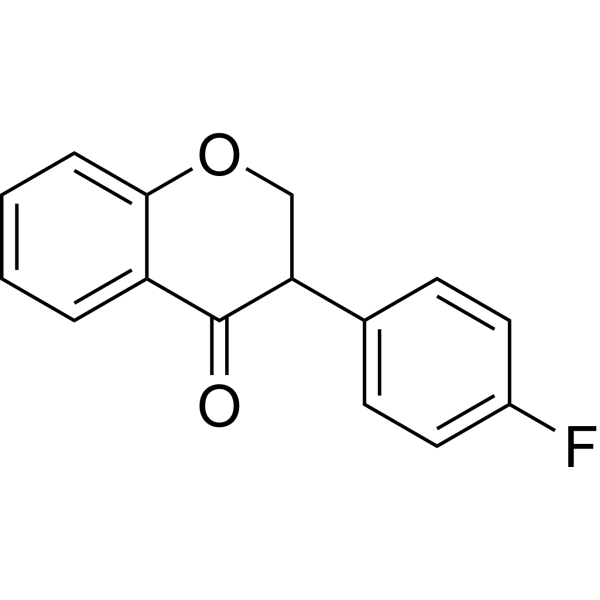 HY-120548KBU2046
-
Similarity Score 0.63
 HY-W097754Desoxyanisoin
-

Explore the MedChemAI to find more analogs


References
- [1]. Kurt Lange M.D., et al. Anisindione: A new anticoagulant with unusual properties. Volume 55, Issue 1, January 1958, Pages 73-79.
- [2]. Grosset AB, et al. Anticoagulation with anisindione in patients who are intolerant of warfarin. Am J Hematol. 1994;46(2):138-140. [Content Brief]
- [3]. Wu K, et al. Structural insight into bicarbonate-mediated carboxylation by human vitamin K-dependent carboxylase. Nature communications. 2025 Nov 25;16(1):10480. [Content Brief]



