



12192-57-3
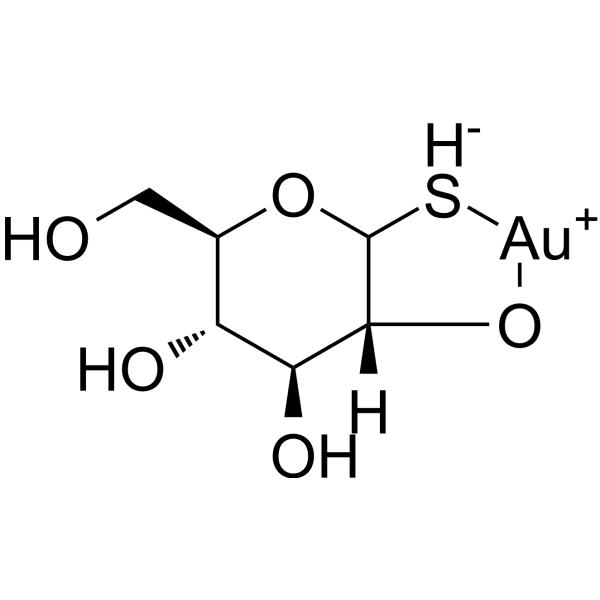
12192-57-3
Chemical Structure
Aurothioglucose
Synonym(s): Gold thioglucose
- CAS No.: 12192-57-3
- Formula:C6H11AuO5S
- Molecular Weight:392.18
InChIKey: MSCUYDPRQMSUFW-BMZZJELJSA-N
SMILES: O[C@@H]1[C@](O[Au+][SH-]2)([H])C2O[C@H](CO)[C@H]1O
Biological Activity: Aurothioglucose (Gold thioglucose), containing monovalent gold ion, is a potent active-site inhibitor of TrxR1 (thioredoxin reductase 1), with an IC50 of 65 nM. Aurothioglucose inhibits the DNA binding of NF-κB in vitro. Aurothioglucose shows anti-HIV and anti-rheumatic activities[1][2].
| Cat. No. | Product Name | Purity | Description | Pricing | |||||||||||||||||||
|---|---|---|---|---|---|---|---|---|---|---|---|---|---|---|---|---|---|---|---|---|---|---|---|
|
|
Aurothioglucose | 96.1% | Aurothioglucose (Gold thioglucose), containing monovalent gold ion, is a potent active-site inhibitor of TrxR1 (thioredoxin reductase 1), with an IC50 of 65 nM. Aurothioglucose inhibits the DNA binding of NF-κB in vitro. Aurothioglucose shows anti-HIV and anti-rheumatic activities. | ||||||||||||||||||||
|
loading...
/
|
|||||||||||||||||||||||
Structural Analogs
-
Similarity Score 0.77
 HY-W5530701-Thio-β-D-galactose, Sodium Salt
-
Similarity Score 0.76
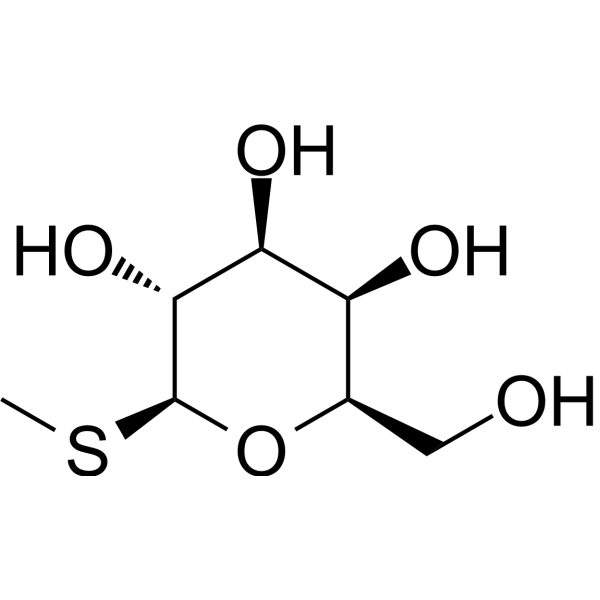 HY-W145648Methyl-β-D-thiogalactoside
-
Similarity Score 0.76
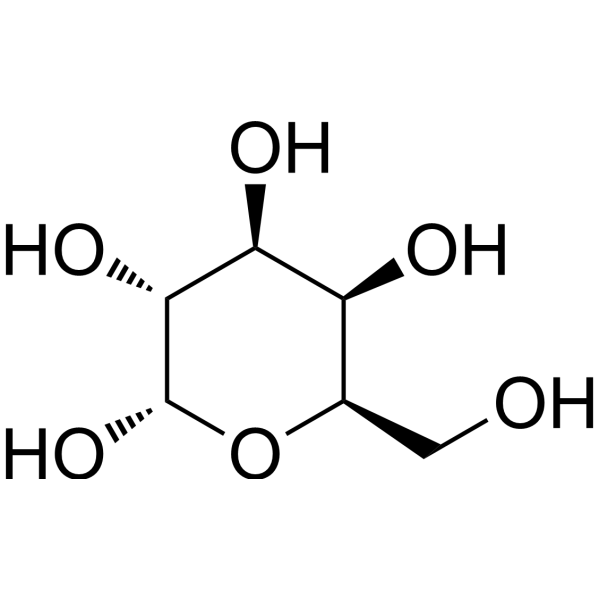 HY-121370α-D-Galactose
-
Similarity Score 0.76
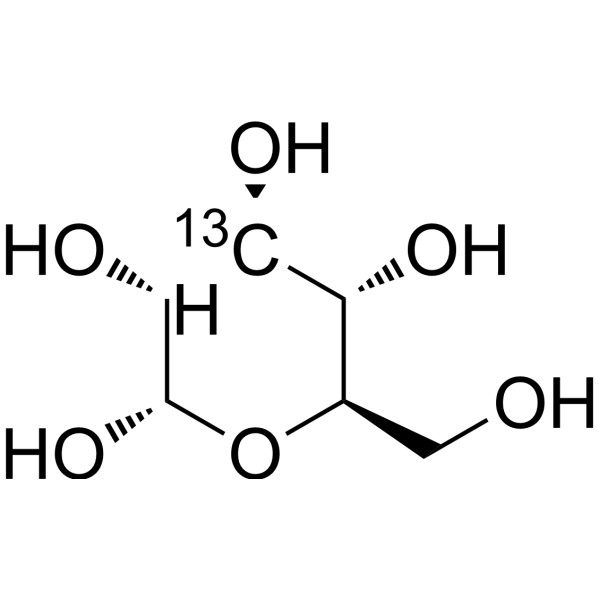 HY-128417S1Alpha-D-glucose-13C
-
Similarity Score 0.76
 HY-128417S2D-Glucose-1,6-13C2
-
Similarity Score 0.76
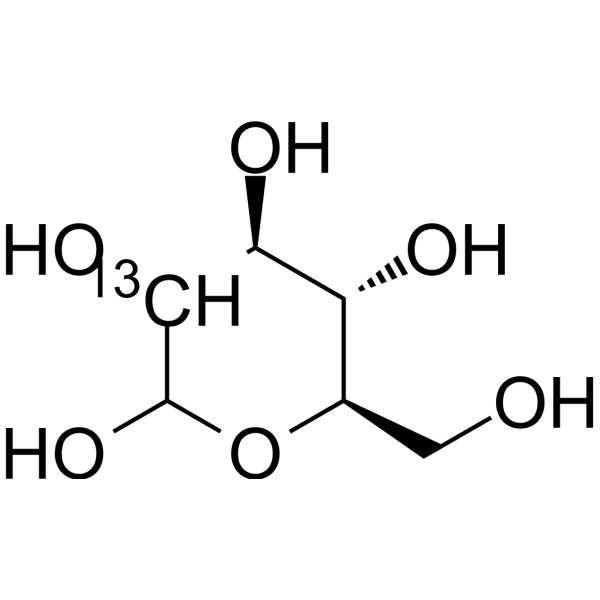 HY-B0389S13D-Glucose-2-13C
-
Similarity Score 0.76
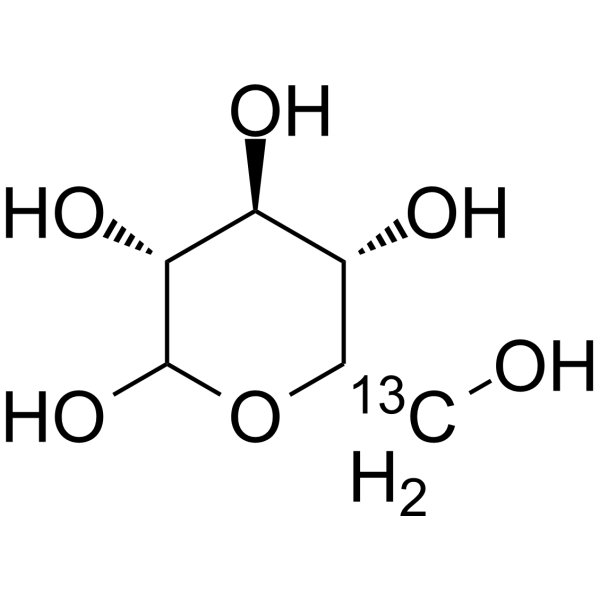 HY-B0389S17D-Glucose-6-13C
-
Similarity Score 0.76
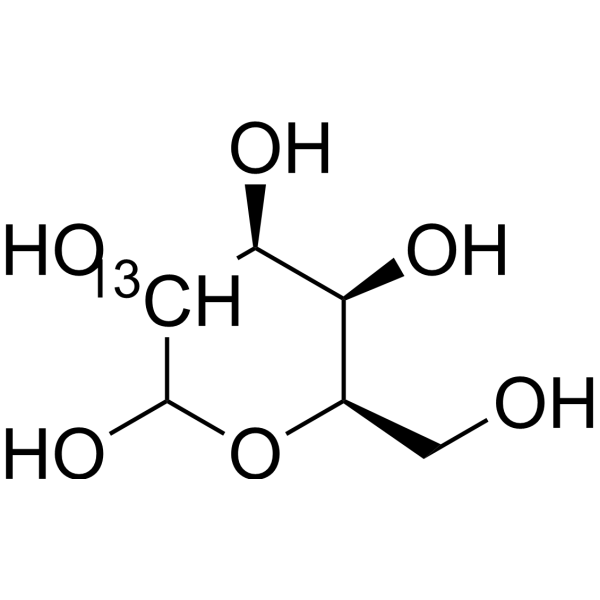 HY-W142434SD-Galactose-13C-1
-
Similarity Score 0.76
 HY-W779002alpha-D-glucose-13C2-1
-

Explore the MedChemAI to find more analogs


References
- [1]. Du Y, et al. Glutathione and glutaredoxin act as a backup of human thioredoxin reductase 1 to reduce thioredoxin 1 preventing cell death by aurothioglucose. J Biol Chem. 2012 Nov 2;287(45):38210-9. [Content Brief]
- [2]. Traber KE, et al. Anti-rheumatic compound aurothioglucose inhibits tumor necrosis factor-alpha-induced HIV-1 replication in latently infected OM10.1 and Ach2 cells. Int Immunol. 1999 Feb;11(2):143-50. [Content Brief]



