



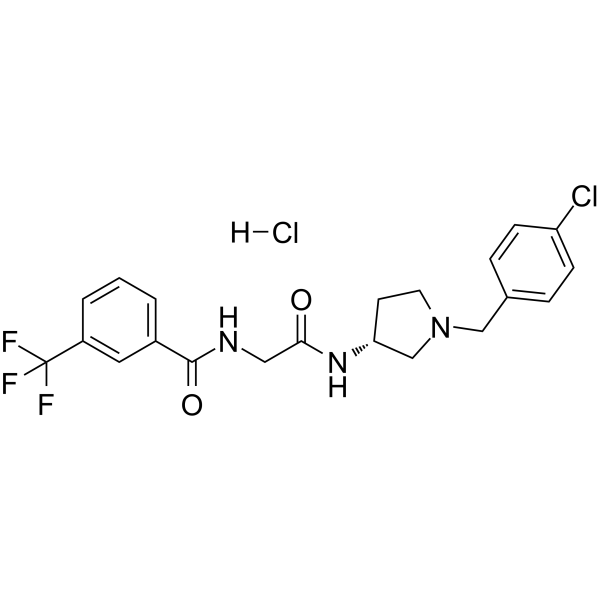
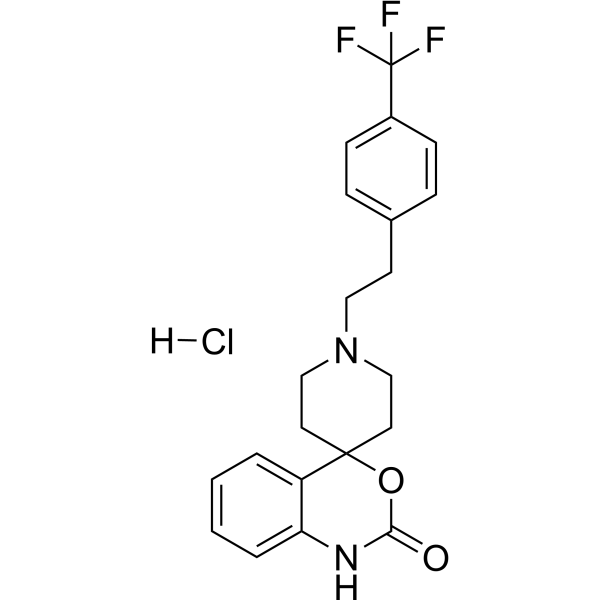
CCR2 antagonist 4 hydrochloride
Based on 6 publication(s) in Google Scholar
CCR2 antagonist 4 hydrochloride (Teijin compound 1 hydrochloride) is a potent and specific CCR2 antagonist, with IC50s of 180 nM for CCR2b. CCR2 antagonist 4 hydrochloride potently inhibits MCP-1-induced chemotaxis with an IC50 of 24 nM.
For research use only. We do not sell to patients.
- Purity : 99.91%
- CAS No.: 1313730-14-1
- Formula: C21H22Cl2F3N3O2
- Molecular Weight:476.32
-
Storage:
4°C, sealed storage, away from moisture
* In solvent : -80°C, 6 months; -20°C, 1 month (sealed storage, away from moisture)

To place orders, for customer services and technical support, please contact: MedChemExpress USA
Tel: 609-228-6898 E-mail: [email protected] [email protected]


-
 Biological Activity
-
Chemical Information
-
Solvent & Solubility
- Purity & Documentation
- References
-
 Help & FAQs


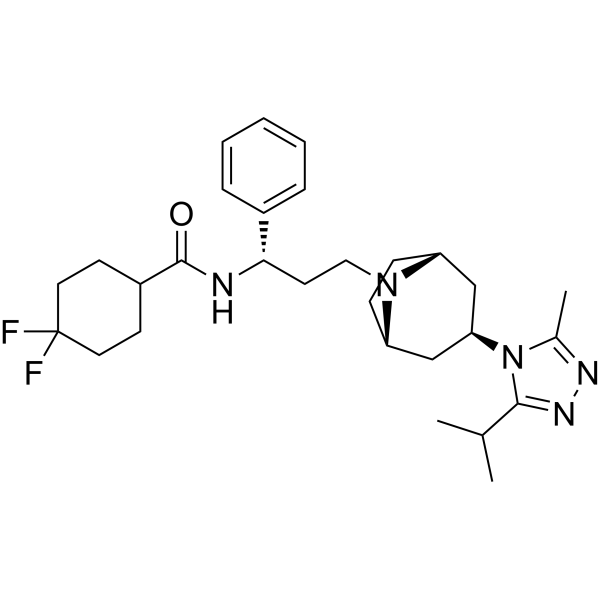
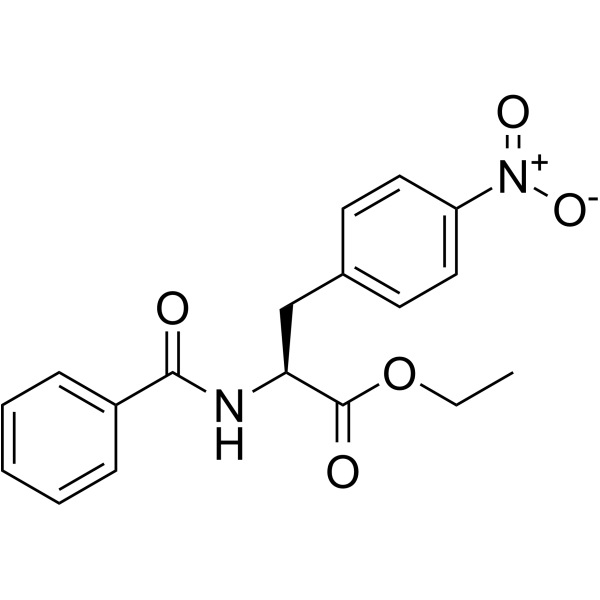
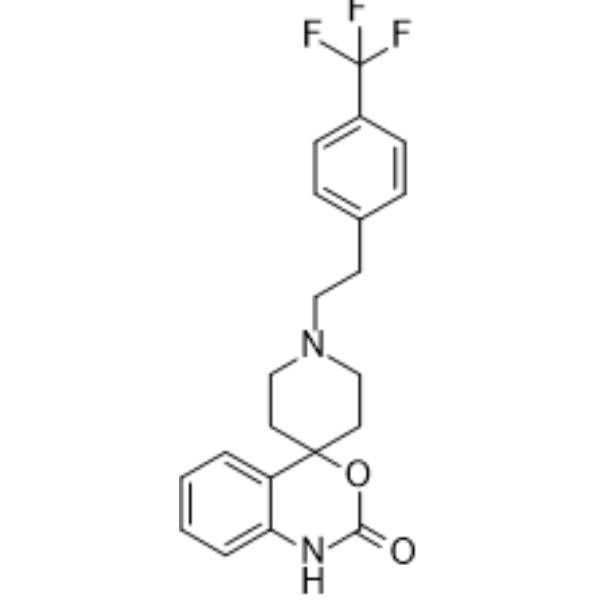
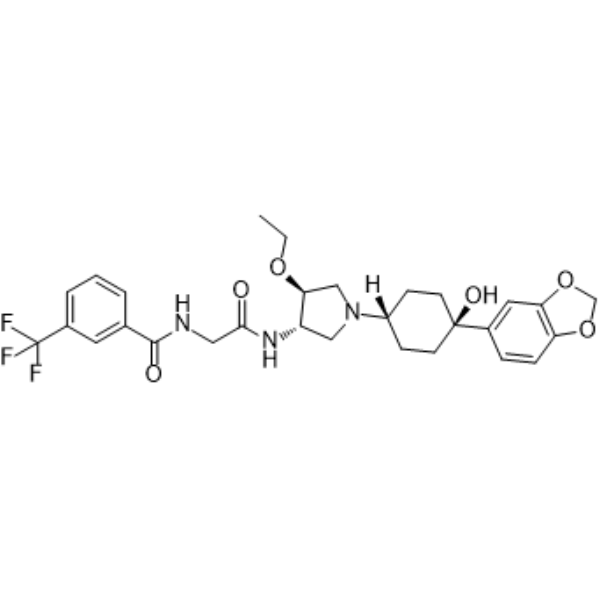
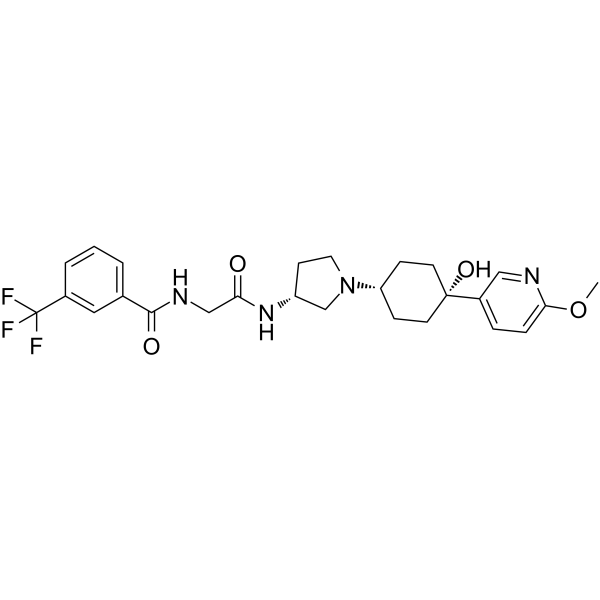
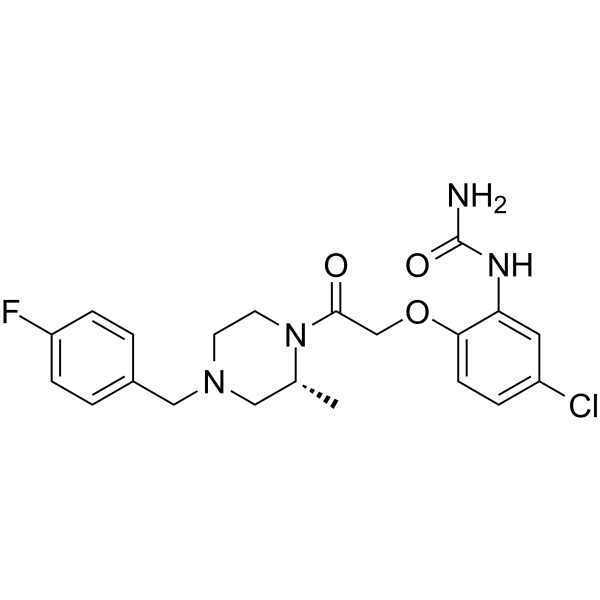
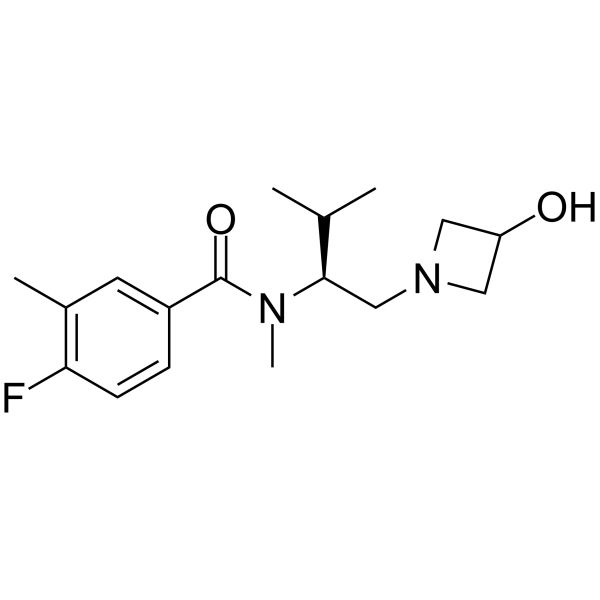
![CCR2-RA-[R]](https://file.medchemexpress.com/product_pic/hy-50081.gif)
Publications Citing Use of MedChemExpress (MCE) CCR2 antagonist 4 hydrochloride
More

Biological Activity
Description
IC50 & Target
[1]|
CCR2b 180 nM (IC50) |
In Vitro
Ile263 and Thr292 in CCR2 contribute significantly to binding of CCR2 antagonist 4 in CCR2. Residue Glu291 in TM7, a highly conserved residue in many CC chemokine receptors, contributes substantially to binding of the protonated CCR2 antagonist 4 hydrochloride, and CCL2. His121 on TM3 and Ile263 on TM6 also strongly interact with CCR2 antagonist 4 hydrochloride[2].
MedChemExpress (MCE) has not independently confirmed the accuracy of these methods. They are for reference only.
In Vivo
MedChemExpress (MCE) has not independently confirmed the accuracy of these methods. They are for reference only.


Chemical Information
-
CAS No. 1313730-14-1
-
Appearance Solid
-
Molecular Weight 476.32
-
Formula C21H22Cl2F3N3O2
-
Color White to off-white
-
SMILES
O=C(NCC(N[C@H]1CN(CC2=CC=C(Cl)C=C2)CC1)=O)C3=CC=CC(C(F)(F)F)=C3.[H]Cl
-
Synonyms
Teijin compound 1 hydrochloride
-
Shipping
Room temperature in continental US; may vary elsewhere.
-
Storage
4°C, sealed storage, away from moisture
* In solvent : -80°C, 6 months; -20°C, 1 month (sealed storage, away from moisture)


Publications (6)
-
Journal Impact Factor
-
Most Recent
-
Immunity
Spatiotemporal dynamics of CXCL10 encode contextual immune information revealed by the genetically encoded fluorescent sensor. [Abstract]2025 Sep 9;58(9):2320-2335.e9. PMID: 40818452 -
Nat Immunol
The lactate receptor HCAR1 drives the recruitment of immunosuppressive PMN-MDSCs in colorectal cancer. [Abstract]2025 Mar;26(3):391-403. PMID: 39905201 -
Stem Cell Res Ther
Intramyocardial injected human umbilical cord-derived mesenchymal stem cells (HucMSCs) contribute to the recovery of cardiac function and the migration of CD4+ T cells into the infarcted heart via CCL5/CCR5 signaling. [Abstract]2022 Jun 11;13(1):247. PMID: 35690805 -
Mediators Inflamm
Convergent Multistage Evidence Implicates the CCR2-Artemin Immune-Inflammation Axis in Acute Myeloid Leukemia. [Abstract]2026 Jan 31:2026:2476470. PMID: 41624379 -
FASEB J
CCR2 inhibitor strengthens the adiponectin effects against myocardial injury after infarction. [Abstract]2023 Aug;37(8):e23039. PMID: 37392374 -


Solvent & Solubility
In Vitro:
DMSO : 250 mg/mL (524.86 mM; Need ultrasonic; Hygroscopic DMSO has a significant impact on the solubility of product, please use newly opened DMSO)
Methanol : 125 mg/mL (262.43 mM; Need ultrasonic)
Please refer to the solubility information to select the appropriate solvent. Once prepared, please aliquot and store the solution to prevent product inactivation from repeated freeze-thaw cycles.
Storage method and period of stock solution: -80°C, 6 months; -20°C, 1 month (sealed storage, away from moisture). When stored at -80°C, please use it within 6 months. When stored at -20°C, please use it within 1 month.
Please refer to the solubility information to select the appropriate solvent. Once prepared, please aliquot and store the solution to prevent product inactivation from repeated freeze-thaw cycles.
Storage method and period of stock solution: -80°C, 6 months; -20°C, 1 month (sealed storage, away from moisture). When stored at -80°C, please use it within 6 months. When stored at -20°C, please use it within 1 month.
Concentration (start) × Volume (start) = Concentration (final) × Volume (final)
In Vivo:
Select the appropriate dissolution method based on your experimental animal and administration route.
- For the following dissolution methods, please ensure to first prepare a clear stock solution using an In Vitro approach and then sequentially add co-solvents:
- To ensure reliable experimental results, the clarified stock solution can be appropriately stored based on storage conditions. As for the working solution for In Vivo experiments, it is recommended to prepare freshly and use it on the same day.
- The percentages shown for the solvents indicate their volumetric ratio in the final prepared solution. If precipitation or phase separation occurs during preparation, heat and/or sonication can be used to aid dissolution.
Add each solvent one by one: 10% DMSO 40% PEG300 5% Tween-80 45% Saline
Solubility: ≥ 2.08 mg/mL (4.37 mM); Clear solution
This protocol yields a clear solution of ≥ 2.08 mg/mL (saturation unknown).
Taking 1 mL working solution as an example, add 100 μL DMSO stock solution (20.8 mg/mL) to 400 μL PEG300, and mix evenly; then add 50 μL Tween-80 and mix evenly; then add 450 μL Saline to adjust the volume to 1 mL.
Preparation of Saline: Dissolve 0.9 g sodium chloride in ddH₂O and dilute to 100 mL to obtain a clear Saline solution.
Add each solvent one by one: 10% DMSO 90% (20% SBE-β-CD in Saline)
Solubility: ≥ 2.08 mg/mL (4.37 mM); Clear solution
This protocol yields a clear solution of ≥ 2.08 mg/mL (saturation unknown).
Taking 1 mL working solution as an example, add 100 μL DMSO stock solution (20.8 mg/mL) to 900 μL 20% SBE-β-CD in Saline, and mix evenly.
Preparation of 20% SBE-β-CD in Saline (4°C, storage for one week): 2 g SBE-β-CD powder is dissolved in 10 mL Saline, completely dissolve until clear.
In Vivo Dissolution Calculator
Please enter the basic information of animal experiments:
-
-
-
-
Recommended: Prepare an additional quantity of animals to account for potential losses during experiments.
Please enter your animal formula composition:
-
%DMSO +
Recommended: Keep the proportion of DMSO in working solution below 2% if your animal is weak.
-
%+
-
+%Tween-80 + +
-
%Saline +
The co-solvents required include: DMSO, . All of co-solvents are available by MedChemExpress (MCE). , Tween 80. All of co-solvents are available by MedChemExpress (MCE).
Working solution concentration: 0.22 mg/mL
Method for preparing stock solution: mg drug dissolved in μL DMSO. Stock solution concentration: mg/mL. * In solvent : -80°C, 6 months; -20°C, 1 month (sealed storage, away from moisture)
1. Take μL DMSO stock solution;
2. Add μL .
μL , mix evenly;
3. Then add μL Tween 80, mix evenly;
4. Then add μL
Please ensure that the stock solution in the first step is dissolved to a clear state, and add co-solvents in sequence. You can use ultrasonic heating (ultrasonic cleaner, recommended frequency 20-40 kHz), vortexing, etc. to assist dissolution.


Purity & Documentation
-
Data Sheet (273 KB)
-
SDS (252 KB)
- English - EN (252 KB)
- Français - FR (252 KB)
- Deutsch - DE (252 KB)
- Norwegian - NO (252 KB)
- Español - ES (252 KB)
- Swedish - SV (252 KB)
- Italian - IT (252 KB)
- Korean - KR (252 KB)
- Portuguese - PT (252 KB)
-
Handling Instructions (2659 KB)
References
[1]. Moree WJ, et al. Potent antagonists of the CCR2b receptor. Part 3: SAR of the (R)-3-aminopyrrolidine series. Bioorg Med Chem Lett. 2008 Mar 15;18(6):1869-73. [Content Brief]
[2]. Hall SE, et al. Elucidation of binding sites of dual antagonists in the human chemokine receptors CCR2 and CCR5. Mol Pharmacol. 2009 Jun;75(6):1325-36. [Content Brief]
[3]. Calin M, et al. VCAM-1 directed target-sensitive liposomes carrying CCR2 antagonists bind to activated endothelium and reduce adhesion and transmigration of monocytes. Eur J Pharm Biopharm. 2015 Jan;89:18-29. [Content Brief]


Complete Stock Solution Preparation Table
Please refer to the solubility information to select the appropriate solvent. Once prepared, please aliquot and store the solution to prevent product inactivation from repeated freeze-thaw cycles.
Storage method and period of stock solution: -80°C, 6 months; -20°C, 1 month (sealed storage, away from moisture). When stored at -80°C, please use it within 6 months. When stored at -20°C, please use it within 1 month.
| Optional Solvent | Concentration Solvent Mass | 1 mg | 5 mg | 10 mg | 25 mg |
|---|---|---|---|---|---|
| Methanol / DMSO | 1 mM | 2.0994 mL | 10.4971 mL | 20.9943 mL | 52.4857 mL |
| 5 mM | 0.4199 mL | 2.0994 mL | 4.1989 mL | 10.4971 mL | |
| 10 mM | 0.2099 mL | 1.0497 mL | 2.0994 mL | 5.2486 mL | |
| 15 mM | 0.1400 mL | 0.6998 mL | 1.3996 mL | 3.4990 mL | |
| 20 mM | 0.1050 mL | 0.5249 mL | 1.0497 mL | 2.6243 mL | |
| 25 mM | 0.0840 mL | 0.4199 mL | 0.8398 mL | 2.0994 mL | |
| 30 mM | 0.0700 mL | 0.3499 mL | 0.6998 mL | 1.7495 mL | |
| 40 mM | 0.0525 mL | 0.2624 mL | 0.5249 mL | 1.3121 mL | |
| 50 mM | 0.0420 mL | 0.2099 mL | 0.4199 mL | 1.0497 mL | |
| 60 mM | 0.0350 mL | 0.1750 mL | 0.3499 mL | 0.8748 mL | |
| 80 mM | 0.0262 mL | 0.1312 mL | 0.2624 mL | 0.6561 mL | |
| 100 mM | 0.0210 mL | 0.1050 mL | 0.2099 mL | 0.5249 mL |


CCR2 antagonist 4 hydrochloride Related Classifications
HY-103362 Related Classifications
 Powered by Bioz