



CD38 inhibitor 1
Based on 13 publication(s) in Google Scholar
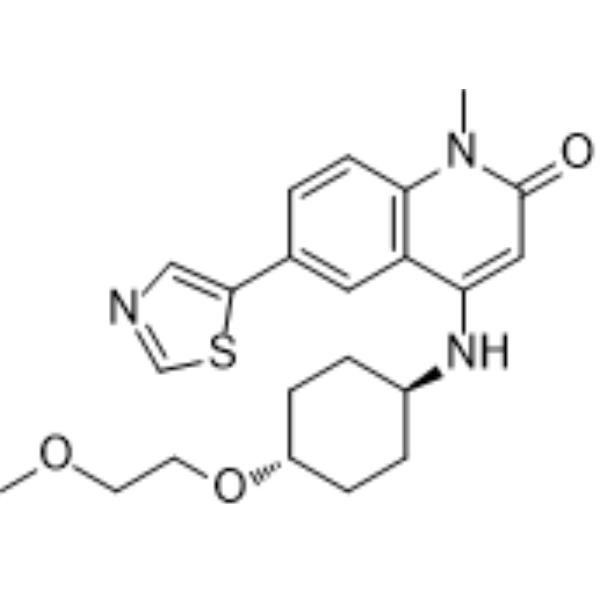
CD38 inhibitor 1 (compound 78c) is a potent CD38 inhibitor with IC50s of 7.3 nM and 1.9 nM for hCD38 and mouse CD38.
For research use only. We do not sell to patients.
- Purity : 99.64%
- CAS No.: 1700637-55-3
- Formula: C22H27N3O3S
- Molecular Weight:413.53
-
Storage:Powder -20°C, 3 years , 4°C, 2 years ; In solvent -80°C, 2 years , -20°C, 1 year

To place orders, for customer services and technical support, please contact: MedChemExpress USA
Tel: 609-228-6898 E-mail: [email protected] [email protected]


-
 Biological Activity
-
Chemical Information
-
Solvent & Solubility
- Purity & Documentation
- References
-
 Help & FAQs


-
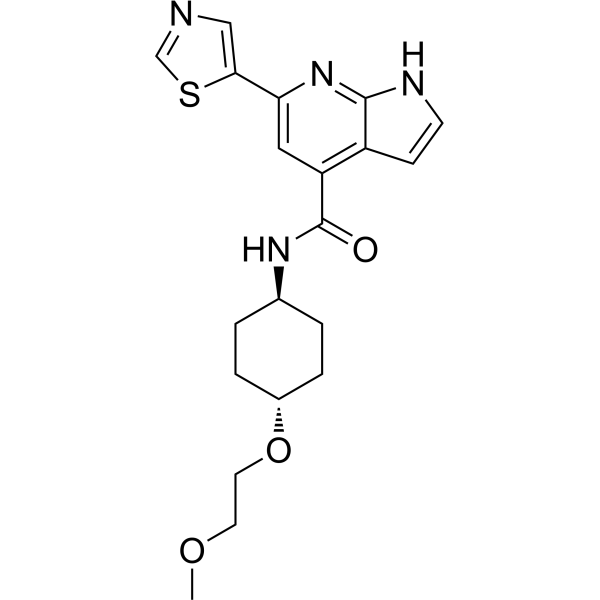
HY-150508
MK-0159CD38 Inhibitor -
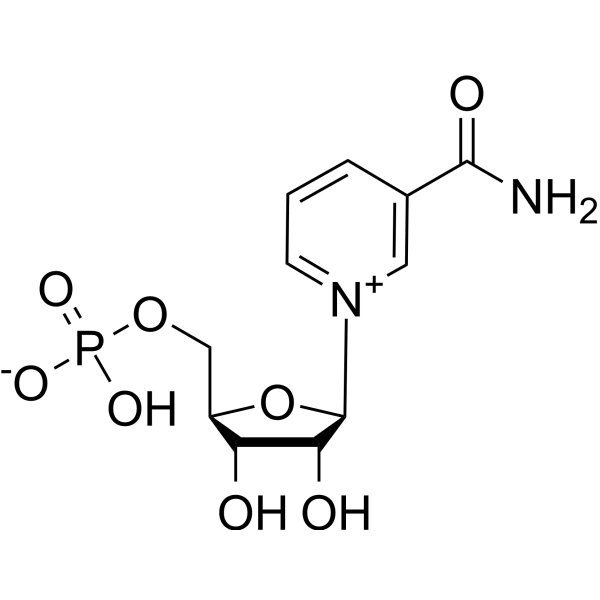
HY-F0004
FosribnicotinamideNAD+ Intermediate -
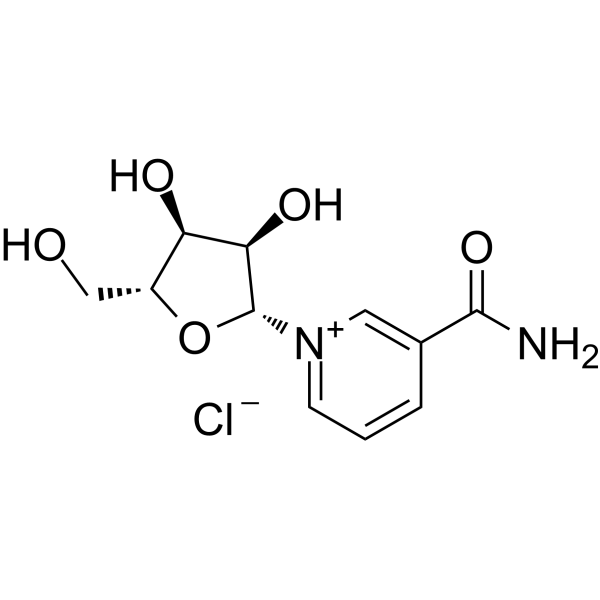
HY-123033A
Nicotinamide riboside chlorideEndogenous Metabolite -
HY-B0445
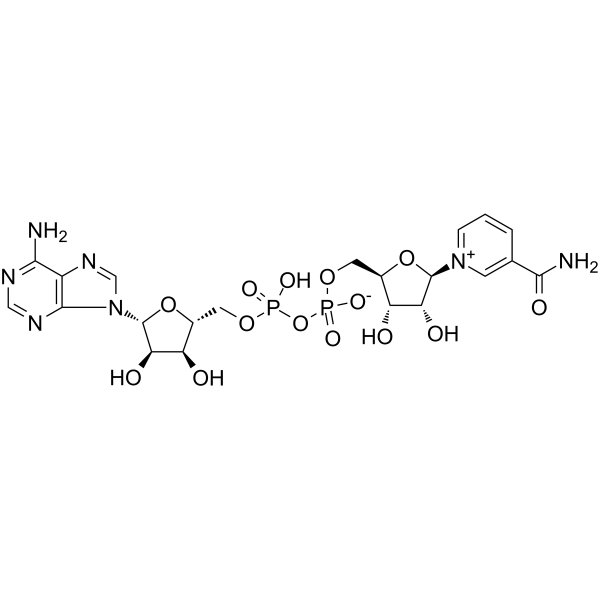
NAD+Endogenous Metabolite -
HY-N0640
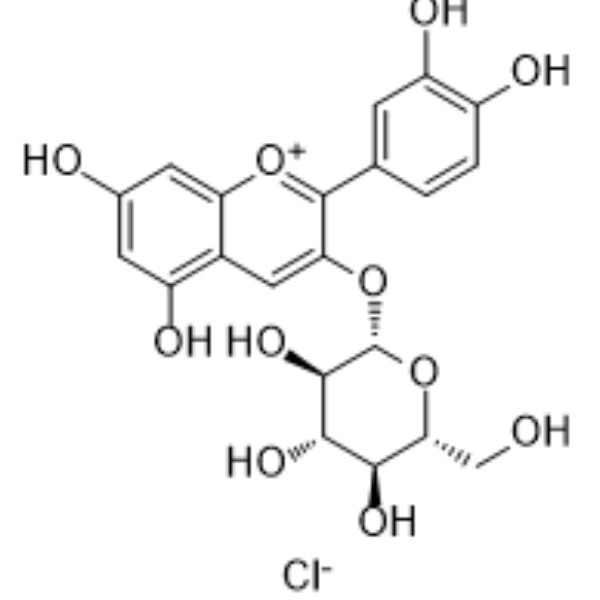
Kuromanin chlorideBlood glucose regulator -
HY-125286
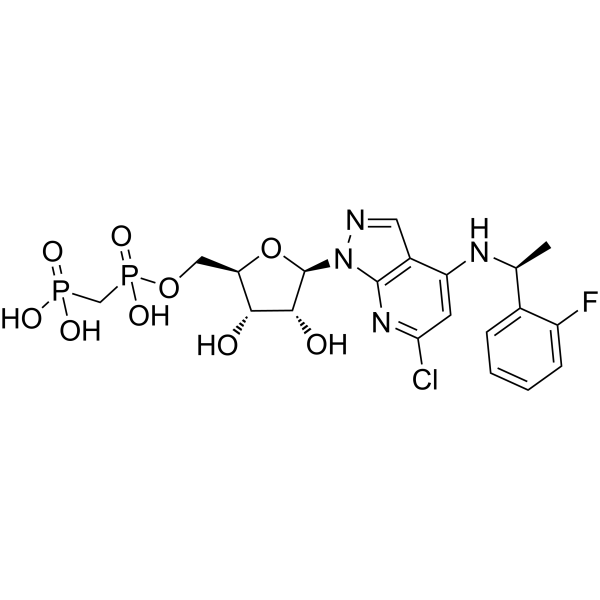
AB-680CD73 Inhibitor -
HY-50876
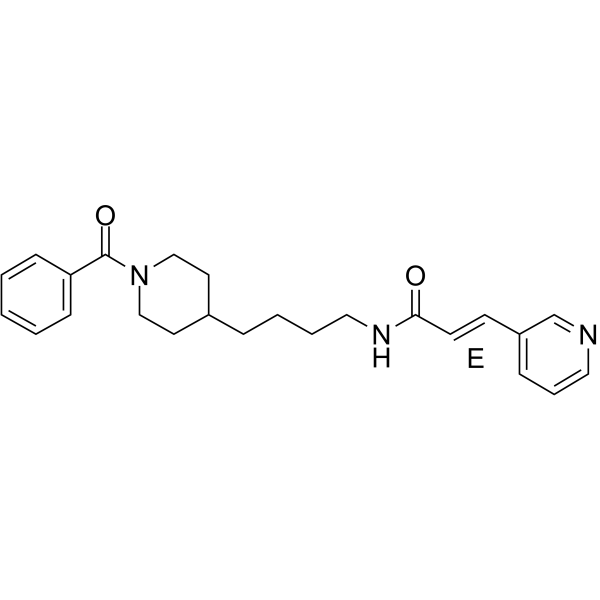
DaporinadNMPRT Inhibitor -
HY-144987
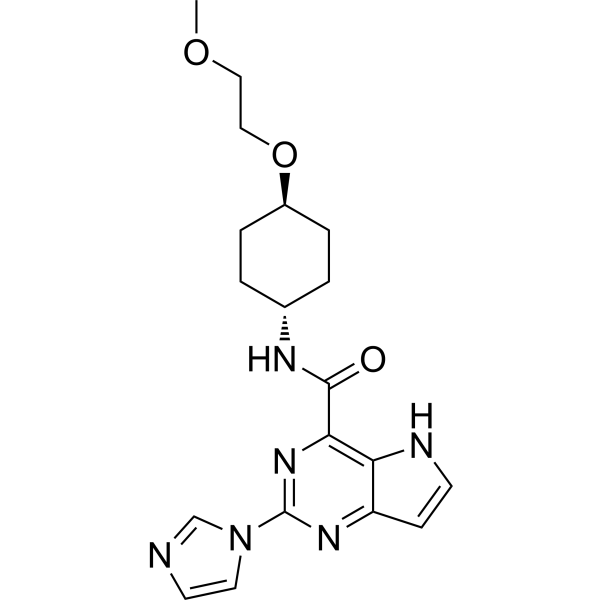
RBN013209CD38 Inhibitor -
HY-101054
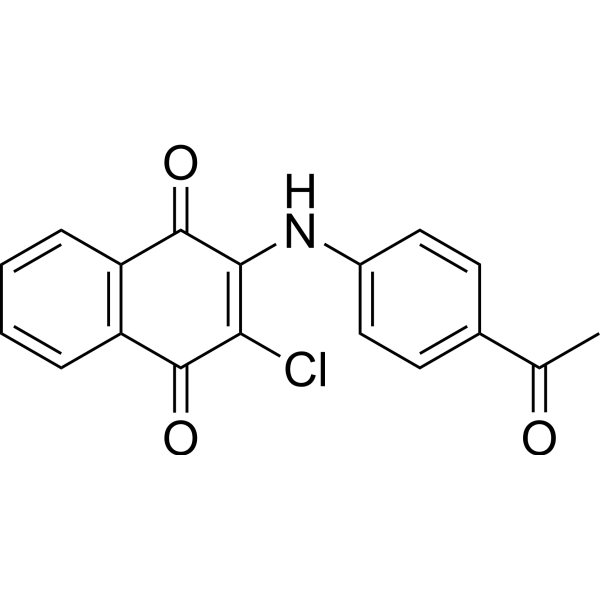
NQ301CD45/TXA2 Inhibitor -
HY-Y0873
PEG300Neutral Polymer -
HY-137592
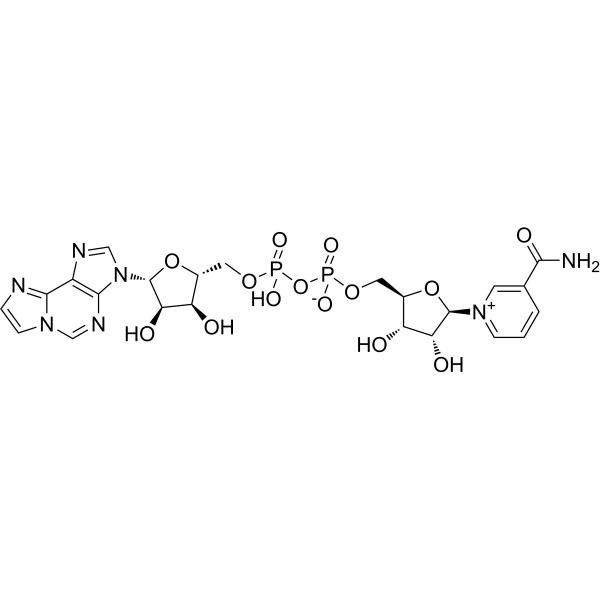
Nicotinamide 1,N6-ethenoadenine dinucleotideFluorescent Substrate -
HY-15452
SelisistatSirT1/Sir2 Inhibitor
Publications Citing Use of MedChemExpress (MCE) CD38 inhibitor 1
More- Signal Transduct Target Ther. 2023 Sep 18;8(1):353. [Abstract]
- Nat Med. 2026 Jun;32(6):2026-2036. [Abstract]
- Cell Metab. 2021 Jan 5;33(1):110-127.e5. [Abstract]
- Cell Death Dis. 2020 Jan 6;11(1):15. [Abstract]
- Aging Cell. 2025 Sep;24(9):e70162. [Abstract]
- Cell Rep. 2025 Apr 11;44(4):115562. [Abstract]
- Cell Rep. 2022 Dec 13;41(11):111803. [Abstract]
- Brain Behav Immun. 2024 Jan:115:64-79. [Abstract]
- Front Immunol. 2022 Oct 4:13:946871. [Abstract]
- J Pharmacol Sci. 2025 Aug;158(4):310-321. [Abstract]
- Res Sq. 2026 Mar 5.
- Research Square Preprint. 2023 Oct 23.
- Heinrich-Heine-Universität Düsseldorf. 2021 Sep 6.
 Customer Validation & Images

-
In Vivo Efficacy Study
-
In Vivo Efficacy Study
-
In Vivo Efficacy Study
-
In Vivo Efficacy Study

-
WB


Biological Activity
Description
IC50 & Target
IC50: 7.3 nM (hCD38), 1.9 nM (mouse CD38)[1]
Ki: 0.3 nM (WT hCD38)[1]
In Vivo
MedChemExpress (MCE) has not independently confirmed the accuracy of these methods. They are for reference only.
-
Animal Model:Diet induced obese (DIO) C57Bl6 mice[1]
-
Dosage:30 mg/kg
-
Administration:Orally once
-
Result:NAD levels were significantly increased at both the 2 and 6 h time points in liver and muscle.


Chemical Information
-
CAS No. 1700637-55-3
-
Appearance Solid
-
Molecular Weight 413.53
-
Formula C22H27N3O3S
-
Color Light yellow to brown
-
SMILES
O=C1N(C)C2=C(C=C(C3=CN=CS3)C=C2)C(N[C@H]4CC[C@H](OCCOC)CC4)=C1
-
Shipping
Room temperature in continental US; may vary elsewhere.
-
Storage
Powder -20°C 3 years 4°C 2 years In solvent -80°C 2 years -20°C 1 year


Publications (13)
-
Journal Impact Factor
-
Most Recent
-
Signal Transduct Target Ther
NAD+ exhaustion by CD38 upregulation contributes to blood pressure elevation and vascular damage in hypertension. [Abstract]2023 Sep 18;8(1):353. PMID: 37718359 -
Nat Med
Low-dose oral nicotinamide mononucleotide for immune thrombocytopenia: a phase 1/2 trial. [Abstract]2026 Jun;32(6):2026-2036. PMID: 42056497 -
Cell Metab
2021 Jan 5;33(1):110-127.e5. PMID: 33171124 -
Cell Death Dis
2020 Jan 6;11(1):15. PMID: 31907356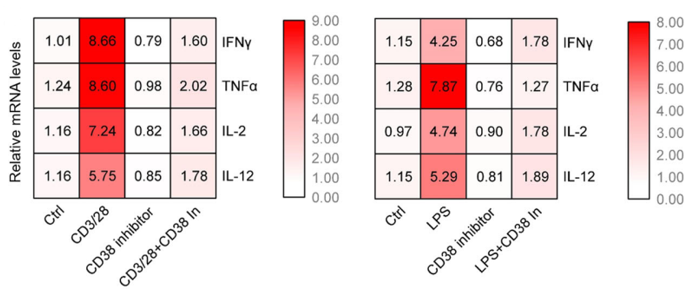
CD38 inhibitor 1 purchased from MedChemExpress. Usage Cited in: Cell Death Dis. 2020 Jan 6;11(1):15. [Abstract]
qPCR showing IFNγ, TNFα, IL-2 and IL-12 levels in activated CD4+ T cells or LPS-stimulated HOKs, following CD38 inhibitor 1 (CD38 inhibitor) treatment. Real-time PCR analysis of IFNγ, TNFα, IL-2 and IL-12 levels in HOKs during miR-26a. 12-h PKCδ/CD38 inhibitors (CD38 inhibitor 1, 20 nM) pre-treatment, HOKs were stimulated with LPS or activated CD4+ T cells production for 24 h.
-
Aging Cell
2025 Sep;24(9):e70162. PMID: 40925650
CD38 inhibitor 1 purchased from MedChemExpress. Usage Cited in: Aging Cell. 2025 Sep;24(9):e70162. [Abstract]
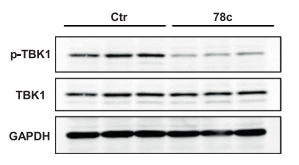
Western blotting analyses and quantification of TBK1 and phosphorylated TBK1 in the liver. C57BL/6 mice, CD38 inhibitor 1 (78c) was administered to mice by intraperitoneal injection (10 mg/kg/dose) twice daily for 2 months. Control mice received vehicle (5% DMSO, 15% PEG400, 80% of 15% hydroxypropyl‐g‐cyclodextrin (in citrate buffer pH 6.0)) injections.
-
Cell Rep
SIRT2 suppresses aging-associated cGAS activation and protects aged mice from severe COVID-19. [Abstract]2025 Apr 11;44(4):115562. PMID: 40220296 -
Cell Rep
The hepatic integrated stress response suppresses the somatotroph axis to control liver damage in nonalcoholic fatty liver disease. [Abstract]2022 Dec 13;41(11):111803. PMID: 36516757 -
Brain Behav Immun
The role of CD38 in inflammation-induced depression-like behavior and the antidepressant effect of (R)-ketamine. [Abstract]2024 Jan:115:64-79. PMID: 37793489
CD38 inhibitor 1 purchased from MedChemExpress. Usage Cited in: Brain Behav Immun. 2024 Jan:115:64-79. [Abstract]
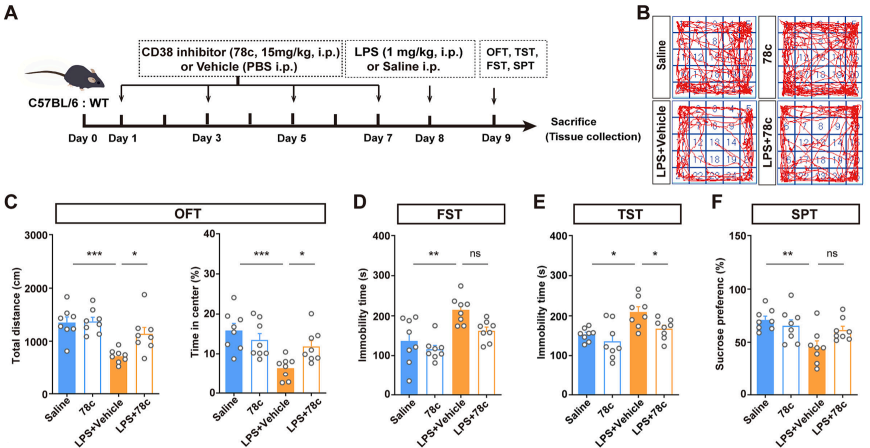
(A) Schematic illustrations of the experiment and timeline. (B) Representative tracks of the OFT. (C) Total distances and percentage of time spent in the center of OFT. (D) FST immobility time. (E) TST immobility time. (F) Scores of SPT. Wild-type C57BL/6 mice, after a week of intraperitoneal injection with the CD38 inhibitor 1 (compound 78c) at a dose of 15 mg/kg every 2 days, a single intraperitoneal (i.p.) injection of LPS was administered 24 h after the last dose.
CD38 inhibitor 1 purchased from MedChemExpress. Usage Cited in: Brain Behav Immun. 2024 Jan:115:64-79. [Abstract]
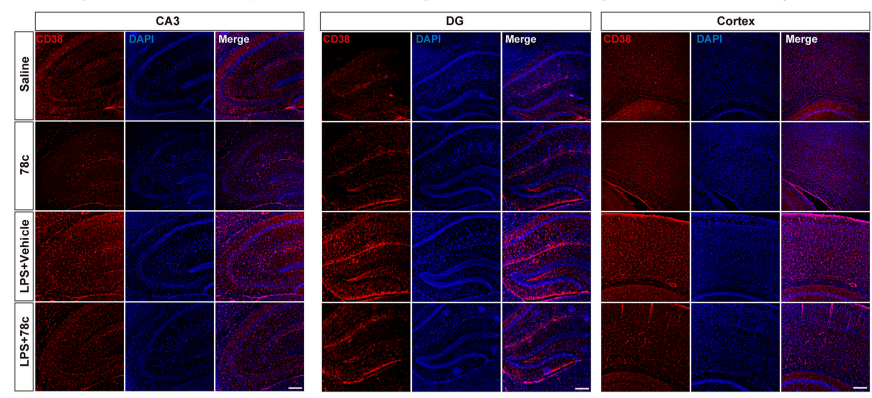
Representative immunofluorescent images of CD38 expression in CA3 and DG of hippocampus and cortex. Wild-type C57BL/6 mice, After a week of intraperitoneal injection with the CD38 inhibitor 1 (compound 78c) at a dose of 15 mg/kg every 2 days, a single intraperitoneal (i.p.) injection of LPS was administered 24 h after the last dose.
CD38 inhibitor 1 purchased from MedChemExpress. Usage Cited in: Brain Behav Immun. 2024 Jan:115:64-79. [Abstract]
Representative immunohistochemistry Sholl images of Iba1+ microglia in hippocampus. Wild-type C57BL/6 mice, After a week of intraperitoneal injection with the CD38 inhibitor 1 (compound 78c) at a dose of 15 mg/kg every 2 days, a single intraperitoneal (i.p.) injection of LPS was administered 24 h after the last dose.
CD38 inhibitor 1 purchased from MedChemExpress. Usage Cited in: Brain Behav Immun. 2024 Jan:115:64-79. [Abstract]
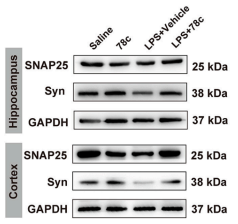
Protein bands of SNAP25 and Syn in hippocampus and cortex. Wild-type C57BL/6 mice, After a week of intraperitoneal injection with the CD38 inhibitor 1 (compound 78c) at a dose of 15 mg/kg every 2 days, a single intraperitoneal (i.p.) injection of LPS was administered 24 h after the last dose.
-
Front Immunol
CD38+CD39+ NK cells associate with HIV disease progression and negatively regulate T cell proliferation. [Abstract]2022 Oct 4:13:946871. PMID: 36268017 -
J Pharmacol Sci
Targeting CD38 to alleviate brain endothelial cell dysfunction and cognitive impairment in vascular dementia. [Abstract]2025 Aug;158(4):310-321. PMID: 40543993 -
-
-


Solvent & Solubility
In Vitro:
DMSO : 25 mg/mL (60.46 mM; ultrasonic and warming and heat to 60°C; Hygroscopic DMSO has a significant impact on the solubility of product, please use newly opened DMSO)
Please refer to the solubility information to select the appropriate solvent. Once prepared, please aliquot and store the solution to prevent product inactivation from repeated freeze-thaw cycles.
Storage method and period of stock solution: -80°C, 2 years; -20°C, 1 year. When stored at -80°C, please use it within 2 years. When stored at -20°C, please use it within 1 year.
Please refer to the solubility information to select the appropriate solvent. Once prepared, please aliquot and store the solution to prevent product inactivation from repeated freeze-thaw cycles.
Storage method and period of stock solution: -80°C, 2 years; -20°C, 1 year. When stored at -80°C, please use it within 2 years. When stored at -20°C, please use it within 1 year.
Concentration (start) × Volume (start) = Concentration (final) × Volume (final)
In Vivo:
Select the appropriate dissolution method based on your experimental animal and administration route.
- For the following dissolution methods, please ensure to first prepare a clear stock solution using an In Vitro approach and then sequentially add co-solvents:
- To ensure reliable experimental results, the clarified stock solution can be appropriately stored based on storage conditions. As for the working solution for In Vivo experiments, it is recommended to prepare freshly and use it on the same day.
- The percentages shown for the solvents indicate their volumetric ratio in the final prepared solution. If precipitation or phase separation occurs during preparation, heat and/or sonication can be used to aid dissolution.
Add each solvent one by one: 10% DMSO 40% PEG300 5% Tween-80 45% Saline
Solubility: ≥ 2.5 mg/mL (6.05 mM); Clear solution
This protocol yields a clear solution of ≥ 2.5 mg/mL (saturation unknown).
Taking 1 mL working solution as an example, add 100 μL DMSO stock solution (25.0 mg/mL) to 400 μL PEG300, and mix evenly; then add 50 μL Tween-80 and mix evenly; then add 450 μL Saline to adjust the volume to 1 mL.
Preparation of Saline: Dissolve 0.9 g sodium chloride in ddH₂O and dilute to 100 mL to obtain a clear Saline solution.
Add each solvent one by one: 10% DMSO 90% (20% SBE-β-CD in Saline)
Solubility: 2.5 mg/mL (6.05 mM); Suspended solution; Need ultrasonic
This protocol yields a suspended solution of 2.5 mg/mL. Suspended solution can be used for oral and intraperitoneal injection.
Taking 1 mL working solution as an example, add 100 μL DMSO stock solution (25.0 mg/mL) to 900 μL 20% SBE-β-CD in Saline, and mix evenly.
Preparation of 20% SBE-β-CD in Saline (4°C, storage for one week): 2 g SBE-β-CD powder is dissolved in 10 mL Saline, completely dissolve until clear.
For the following dissolution methods, please prepare the working solution directly:
It is recommended to prepare fresh solutions and use them promptly within a short period of time.
The percentages shown for the solvents indicate their volumetric ratio in the final prepared solution. If precipitation or phase separation occurs during preparation, heat and/or sonication can be used to aid dissolution.
In Vivo Dissolution Calculator
Please enter the basic information of animal experiments:
-
-
-
-
Recommended: Prepare an additional quantity of animals to account for potential losses during experiments.
Please enter your animal formula composition:
-
%DMSO +
Recommended: Keep the proportion of DMSO in working solution below 2% if your animal is weak.
-
%+
-
+%Tween-80 + +
-
%Saline +
The co-solvents required include: DMSO, . All of co-solvents are available by MedChemExpress (MCE). , Tween 80. All of co-solvents are available by MedChemExpress (MCE).
Working solution concentration: 0.22 mg/mL
Method for preparing stock solution: mg drug dissolved in μL DMSO. Stock solution concentration: mg/mL.
1. Take μL DMSO stock solution;
2. Add μL .
μL , mix evenly;
3. Then add μL Tween 80, mix evenly;
4. Then add μL
Please ensure that the stock solution in the first step is dissolved to a clear state, and add co-solvents in sequence. You can use ultrasonic heating (ultrasonic cleaner, recommended frequency 20-40 kHz), vortexing, etc. to assist dissolution.


Purity & Documentation
-
Data Sheet (278 KB)
-
SDS (393 KB)
- English - EN (393 KB)
- Français - FR (393 KB)
- Deutsch - DE (393 KB)
- Norwegian - NO (393 KB)
- Español - ES (393 KB)
- Swedish - SV (393 KB)
- Italian - IT (393 KB)
- Korean - KR (393 KB)
- Portuguese - PT (393 KB)
-
Handling Instructions (2659 KB)
References
[1]. Haffner CD, et al. Discovery, Synthesis, and Biological Evaluation of Thiazoloquin(az)olin(on)es as Potent CD38 Inhibitors. J Med Chem. 2015 Apr 23;58(8):3548-71. [Content Brief]
[2]. Tarragó MG, Chini CCS, Kanamori KS, et al. A Potent and Specific CD38 Inhibitor Ameliorates Age-Related Metabolic Dysfunction by Reversing Tissue NAD+ Decline. Cell Metab. 2018;27(5):1081-1095.e10. [Content Brief]


Complete Stock Solution Preparation Table
Please refer to the solubility information to select the appropriate solvent. Once prepared, please aliquot and store the solution to prevent product inactivation from repeated freeze-thaw cycles.
Storage method and period of stock solution: -80°C, 2 years; -20°C, 1 year. When stored at -80°C, please use it within 2 years. When stored at -20°C, please use it within 1 year.
| Optional Solvent | Concentration Solvent Mass | 1 mg | 5 mg | 10 mg | 25 mg |
|---|---|---|---|---|---|
| DMSO | 1 mM | 2.4182 mL | 12.0910 mL | 24.1820 mL | 60.4551 mL |
| 5 mM | 0.4836 mL | 2.4182 mL | 4.8364 mL | 12.0910 mL | |
| 10 mM | 0.2418 mL | 1.2091 mL | 2.4182 mL | 6.0455 mL | |
| 15 mM | 0.1612 mL | 0.8061 mL | 1.6121 mL | 4.0303 mL | |
| 20 mM | 0.1209 mL | 0.6046 mL | 1.2091 mL | 3.0228 mL | |
| 25 mM | 0.0967 mL | 0.4836 mL | 0.9673 mL | 2.4182 mL | |
| 30 mM | 0.0806 mL | 0.4030 mL | 0.8061 mL | 2.0152 mL | |
| 40 mM | 0.0605 mL | 0.3023 mL | 0.6046 mL | 1.5114 mL | |
| 50 mM | 0.0484 mL | 0.2418 mL | 0.4836 mL | 1.2091 mL | |
| 60 mM | 0.0403 mL | 0.2015 mL | 0.4030 mL | 1.0076 mL |


CD38 inhibitor 1 Related Classifications
HY-123999 Related Classifications
 Powered by Bioz