



Dalbavancin hydrochloride
Based on 8 publication(s) in Google Scholar
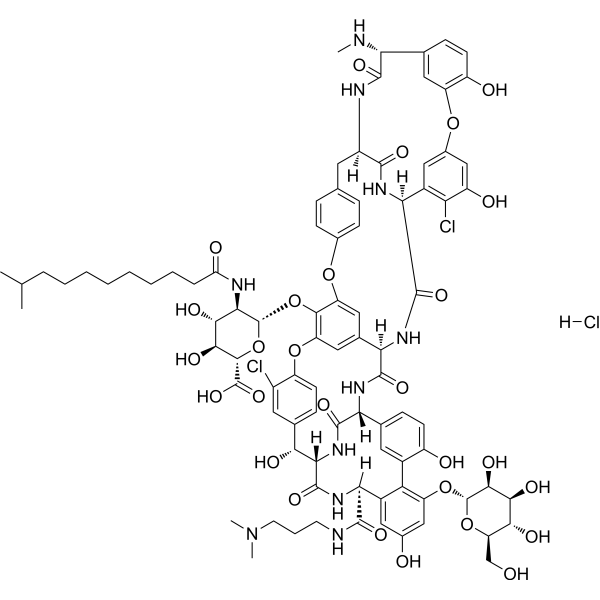
Dalbavancin hydrochloride (MDL-63397 hydrochloride) is a semisynthetic lipoglycopeptide antibiotic with potent bactericidal activity against Gram-positive bacteria. Dalbavancin hydrochloride inhibits Staphylococcus aureus and Bacillus anthracis with MIC90s of 0.06 μg/mL and 0.25 μg/mL, respectively.
Nur für Forschungszwecke. Wir verkaufen nicht an Patienten.
- Reinheit: 99.65%
- CAS. Nr.: 2227366-51-8
- Formel: C88H101Cl3N10O28
- Molecular Weight:1853.15
-
Speicherung:
-20°C, sealed storage, away from moisture
* In solvent : -80°C, 6 months; -20°C, 1 month (sealed storage, away from moisture)

To place orders, for customer services and technical support, please contact: MedChemExpress USA
Tel: 609-228-6898 E-mail: [email protected] [email protected]


-
 Biologische Aktivität
-
Chemical Information
-
Lösungsmittel & Löslichkeit
- Reinheit & Dokumentation
- Verweise
-
 Help & FAQs


-
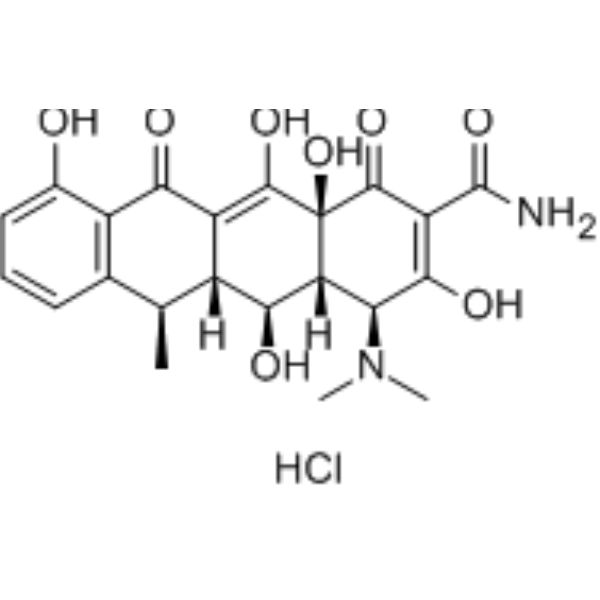
HY-N0565A
Doxycycline hydrochloride -
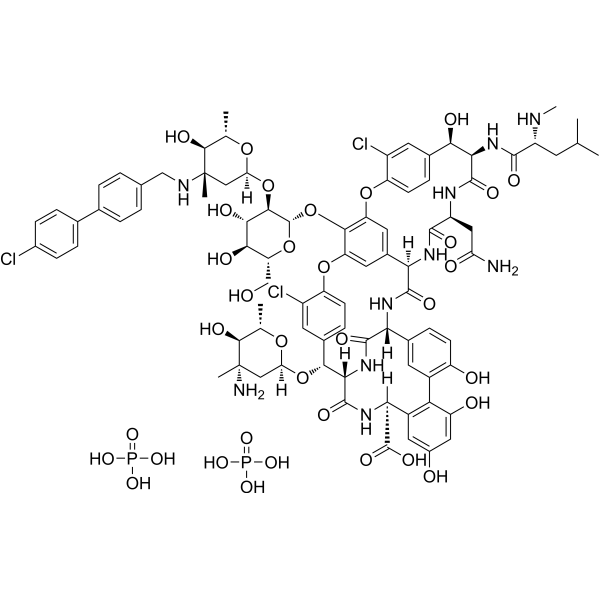
HY-B1831A
Oritavancin diphosphate -
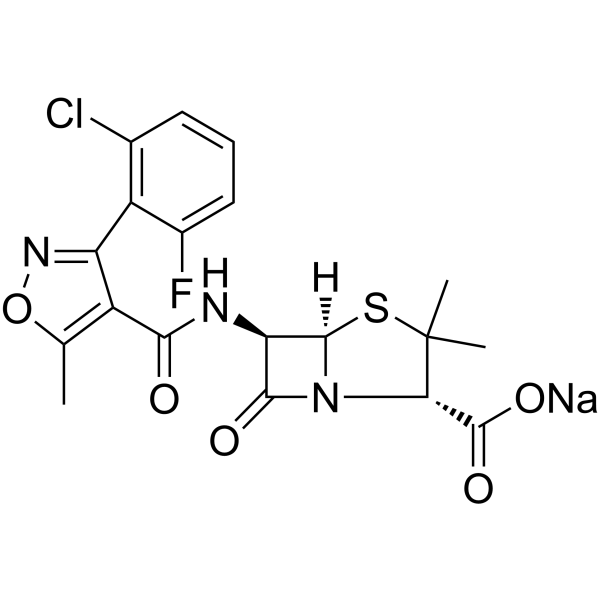
HY-A0246A
Flucloxacillin sodium -
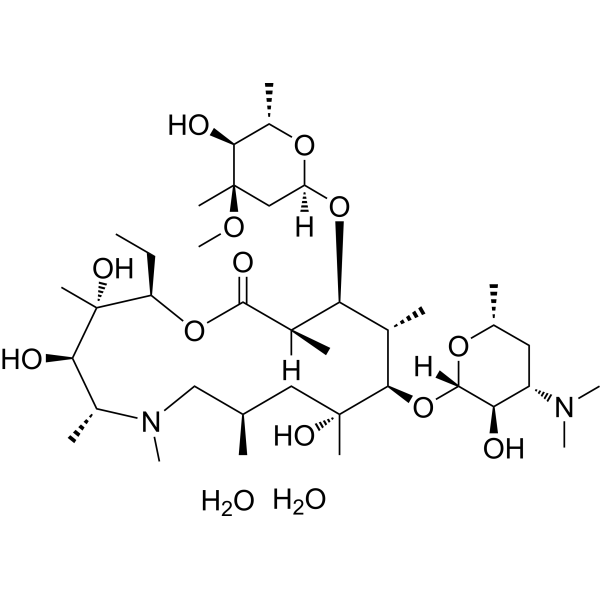
HY-17506A
Azithromycin hydrate -
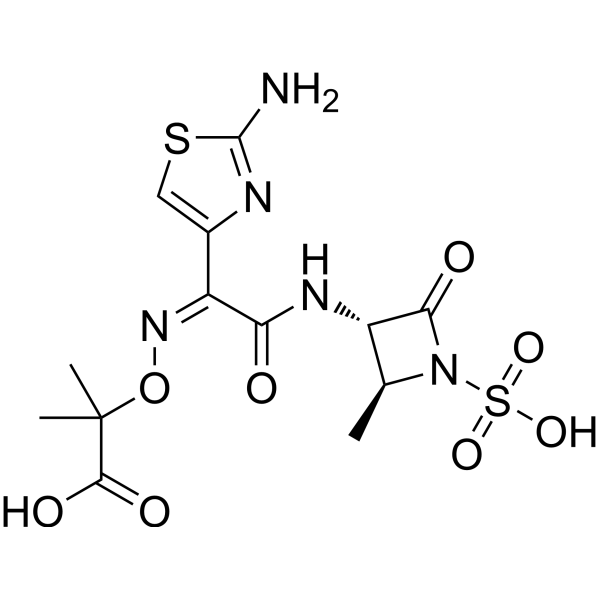
HY-B0129
Aztreonam -
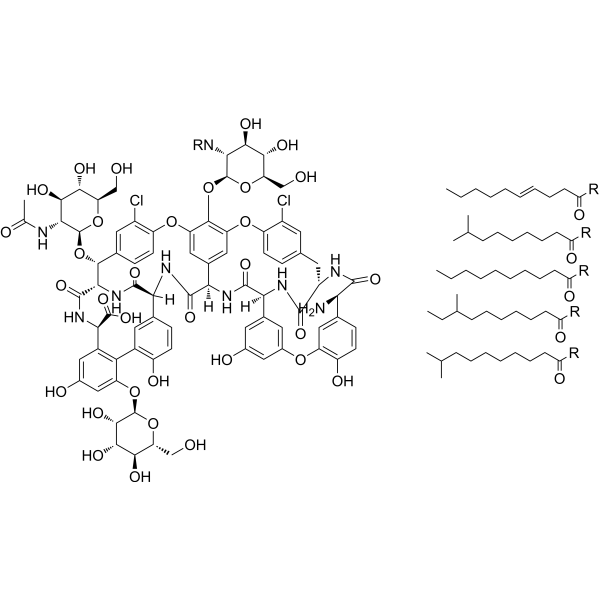
HY-A0097
Teicoplanin -
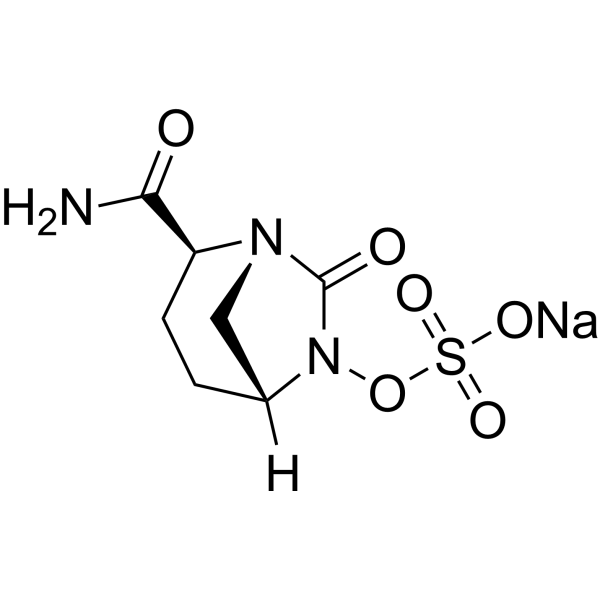
HY-14879A
Avibactam sodium -
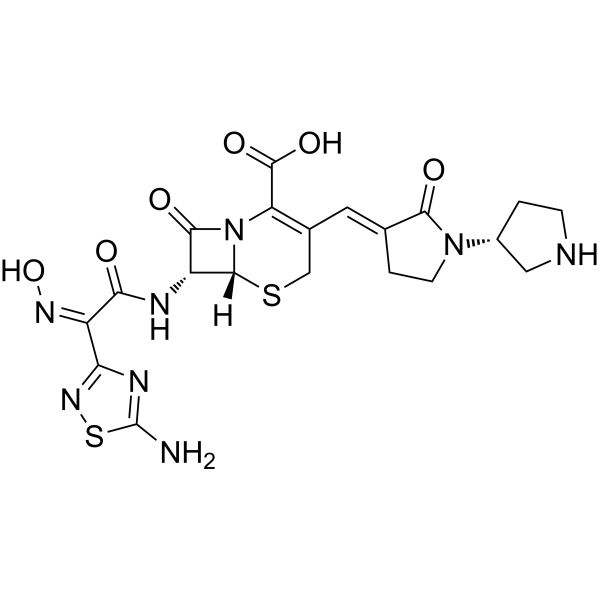
HY-112579
Ceftobiprole -

HY-16485
Telavancin hydrochloride -
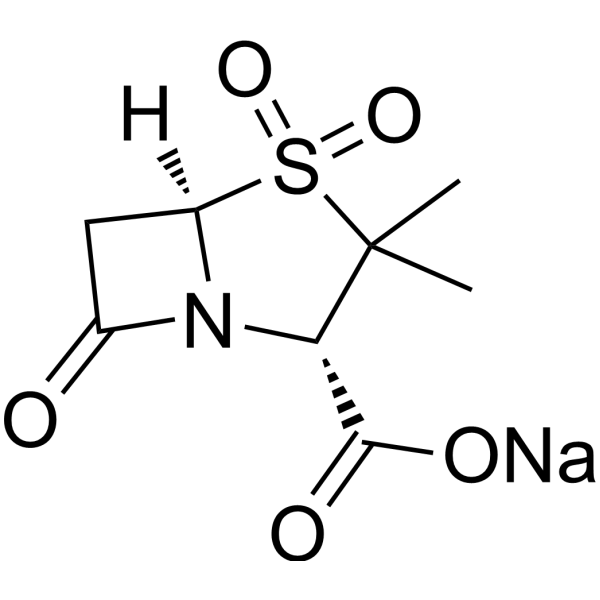
HY-B0334A
Sulbactam sodium -
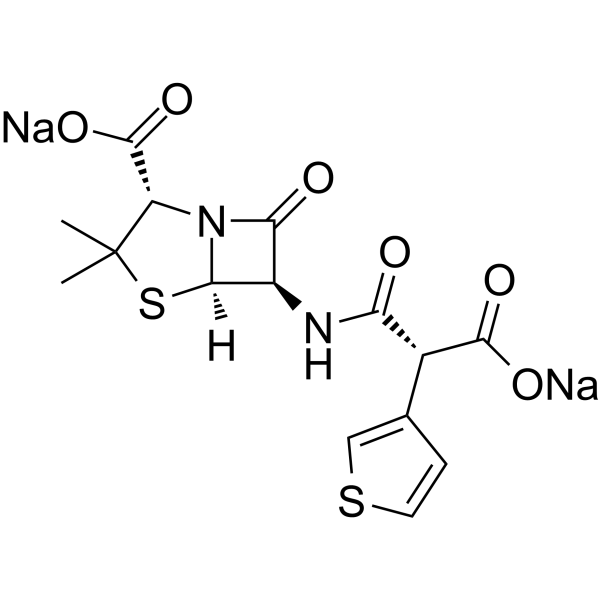
HY-100577
Ticarcillin sodium -
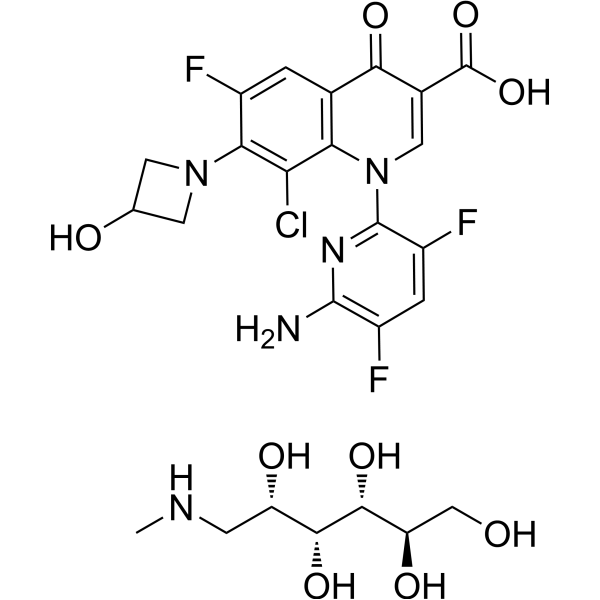
HY-14814A
Delafloxacin meglumine
Publications Citing Use of MedChemExpress (MCE) Dalbavancin hydrochloride
More- Cell Res. 2021 Jan;31(1):17-24. [Abstract]
- Sci Rep. 2025 May 2;15(1):15346. [Abstract]
- Sci Rep. 2022 Sep 26;12(1):16001. [Abstract]
- Antiviral Res. 2020 Jun:178:104786. [Abstract]
- Pathology. 2026 Feb 6:S0031-3025(26)00393-4. [Abstract]
- J Antibiot (Tokyo). 2019 Feb;72(2):114-117. [Abstract]
- Enferm Infec Micr Cl. 30 July 2022.
- Eur J Orthop Surg Traumatol. 2023 Dec;33(8):3655-3659. [Abstract]
Alle Antibiotic Isoform-spezifische Produkte anzeigen
More

Biologische Aktivität
Beschreibung
IC50 & Target
|
Glycopeptide |
In Vitro
Dalbavancin is a parenterally administered semisynthetic lipoglycopeptide developed to combat infections caused by resistant gram-positive pathogens. Dalbavancin exhibits potent in vitro bactericidal activity against gram-positive pathogens including S. aureus (MRSA), VISA, and non-VanA strains of VRE. Dalbavancin is developed for the treatment of complicated skin and skin structure infections (cSSSIs), predominantly those caused by MRSA and β-hemolytic streptococci, organisms against which it has shown greater potency than existing glycopeptide therapeutic agents[1][2].
MedChemExpress (MCE) has not independently confirmed the accuracy of these methods. They are for reference only.
In Vivo
MedChemExpress (MCE) has not independently confirmed the accuracy of these methods. They are for reference only.
-
Animal Model:Female BALB/c mice (6-8 weeks) challenged with Ames strain of B. anthracis[1]
-
Dosage:15 mg/kg, 30 mg/kg, 60 mg/kg, 120 mg/kg, 240 mg/kg
-
Administration:Intraperitoneal injection; every 36 h or 72 h; for 14 days
-
Result:The efficacy was 80 to 100%, as determined by the rate of survival at 42 days, when treatment was initiated 24 h postchallenge with regimens of 15 to 120 mg/kg every 36 h or 30 to 240 mg/kg every 72 h.


Chemical Information
-
CAS. Nr. 2227366-51-8
-
Appearance Solid
-
Molecular Weight 1853.15
-
Formel C88H101Cl3N10O28
-
Color White to light yellow
-
SMILES
O[C@@H]([C@@H](O)[C@@H]1O)[C@H](O[C@@H]1CO)OC2=C(C3=CC([C@@](C4=O)([H])NC([C@@](NC([C@](NC([C@@](NC5=O)([H])C6)=O)([H])C(C=C7OC(C=C8[C@H]5NC)=C(C=C8)O)=C(C(O)=C7)Cl)=O)([H])C9=CC%10=C(O[C@H](O[C@H](C(O)=O)[C@@H](O)[C@@H]%11O)[C@@H]%11NC(CCCCCCCCC(C)C)=O)C(OC%12=CC=C6C=C%12)=C9)=O)=CC=C3O)C([C@@](NC([C@](N4)([H])[C@@H](C%13=CC=C(O%10)C(Cl)=C%13)O)=O)([H])C(NCCCN(C)C)=O)=CC(O)=C2.[H]Cl
-
Synonyms
MDL-63397 hydrochloride; BI-397 hydrochloride
-
Versand
Room temperature in continental US; may vary elsewhere.
-
Speicherung
-20°C, sealed storage, away from moisture
* In solvent : -80°C, 6 months; -20°C, 1 month (sealed storage, away from moisture)


Publications (8)
-
Journal Impact Factor
-
Most Recent
-
Cell Res
Dalbavancin binds ACE2 to block its interaction with SARS-CoV-2 spike protein and is effective in inhibiting SARS-CoV-2 infection in animal models. [Abstract]2021 Jan;31(1):17-24. PMID: 33262453 -
Sci Rep
Genomic and phenotypic adaptations of methicillin resistant Staphylococcus aureus during vancomycin therapy. [Abstract]2025 May 2;15(1):15346. PMID: 40316685 -
Sci Rep
Semisynthetic teicoplanin derivatives with dual antimicrobial activity against SARS-CoV-2 and multiresistant bacteria. [Abstract]2022 Sep 26;12(1):16001. PMID: 36163239 -
Antiviral Res
Remdesivir, lopinavir, emetine, and homoharringtonine inhibit SARS-CoV-2 replication in vitro. [Abstract]2020 Jun:178:104786. PMID: 32251767 -
Pathology
In vitro activity of recently introduced Gram-positive-specific antimicrobial agents against Australian methicillin-resistant Staphylococcus aureus isolates. [Abstract]2026 Feb 6:S0031-3025(26)00393-4. PMID: 41760492 -
J Antibiot (Tokyo)
2019 Feb;72(2):114-117. PMID: 30504918 -
-
Eur J Orthop Surg Traumatol
Effective use of a two-dose regimen of dalbavancin to treat prosthetic joint infections and spinal hardware infections. [Abstract]2023 Dec;33(8):3655-3659. PMID: 37270761


Lösungsmittel & Löslichkeit
In Vitro:
DMSO : 250 mg/mL (134.91 mM; Need ultrasonic; Hygroscopic DMSO has a significant impact on the solubility of product, please use newly opened DMSO)
H2O : 50 mg/mL (26.98 mM; Need ultrasonic)
Please refer to the solubility information to select the appropriate solvent. Once prepared, please aliquot and store the solution to prevent product inactivation from repeated freeze-thaw cycles.
Storage method and period of stock solution: -80°C, 6 months; -20°C, 1 month (sealed storage, away from moisture). When stored at -80°C, please use it within 6 months. When stored at -20°C, please use it within 1 month.
* Note: If you choose water as the stock solution, please dilute it to the working solution, then filter and sterilize it with a 0.22 μm filter before use.
Please refer to the solubility information to select the appropriate solvent. Once prepared, please aliquot and store the solution to prevent product inactivation from repeated freeze-thaw cycles.
Storage method and period of stock solution: -80°C, 6 months; -20°C, 1 month (sealed storage, away from moisture). When stored at -80°C, please use it within 6 months. When stored at -20°C, please use it within 1 month.
* Note: If you choose water as the stock solution, please dilute it to the working solution, then filter and sterilize it with a 0.22 μm filter before use.
Konzentration (Stammlösung) × Volumen (Stammlösung) = Konzentration (Ziellösung) × Volumen (Ziellösung)
In Vivo:
Select the appropriate dissolution method based on your experimental animal and administration route.
- For the following dissolution methods, please ensure to first prepare a clear stock solution using an In Vitro approach and then sequentially add co-solvents:
- To ensure reliable experimental results, the clarified stock solution can be appropriately stored based on storage conditions. As for the working solution for In Vivo experiments, it is recommended to prepare freshly and use it on the same day.
- The percentages shown for the solvents indicate their volumetric ratio in the final prepared solution. If precipitation or phase separation occurs during preparation, heat and/or sonication can be used to aid dissolution.
Add each solvent one by one: 10% DMSO 40% PEG300 5% Tween-80 45% Saline
Solubility: ≥ 2.08 mg/mL (1.12 mM); Clear solution
This protocol yields a clear solution of ≥ 2.08 mg/mL (saturation unknown).
Taking 1 mL working solution as an example, add 100 μL DMSO stock solution (20.8 mg/mL) to 400 μL PEG300, and mix evenly; then add 50 μL Tween-80 and mix evenly; then add 450 μL Saline to adjust the volume to 1 mL.
Preparation of Saline: Dissolve 0.9 g sodium chloride in ddH₂O and dilute to 100 mL to obtain a clear Saline solution.
Add each solvent one by one: 10% DMSO 90% (20% SBE-β-CD in Saline)
Solubility: ≥ 2.08 mg/mL (1.12 mM); Clear solution
This protocol yields a clear solution of ≥ 2.08 mg/mL (saturation unknown).
Taking 1 mL working solution as an example, add 100 μL DMSO stock solution (20.8 mg/mL) to 900 μL 20% SBE-β-CD in Saline, and mix evenly.
Preparation of 20% SBE-β-CD in Saline (4°C, storage for one week): 2 g SBE-β-CD powder is dissolved in 10 mL Saline, completely dissolve until clear.
In Vivo Dissolution Calculator
Please enter the basic information of animal experiments:
-
-
-
-
Recommended: Prepare an additional quantity of animals to account for potential losses during experiments.
Working solution concentration: 0.22 mg/mL
This product has good water solubility, please refer to the measured solubility data in water/PBS/Saline for details.


Reinheit & Dokumentation
-
Data Sheet (296 KB)
-
SDS (394 KB)
- English - EN (394 KB)
- Français - FR (394 KB)
- Deutsch - DE (394 KB)
- Norwegian - NO (394 KB)
- Español - ES (394 KB)
- Swedish - SV (394 KB)
- Italian - IT (394 KB)
- Korean - KR (394 KB)
- Portuguese - PT (394 KB)
-
Handling Instructions (2659 KB)
Verweise
[1]. Heine HS, et al. Activity of dalbavancin against Bacillus anthracis in vitro and in a mouse inhalation anthrax model. Antimicrob Agents Chemother. 2010 Mar;54(3):991-6. [Content Brief]
[2]. Bennett JW, et al. Dalbavancin in the treatment of complicated skin and soft-tissue infections: a review. Ther Clin Risk Manag. 2008 Feb;4(1):31-40. [Content Brief]


Complete Stock Solution Preparation Table
Please refer to the solubility information to select the appropriate solvent. Once prepared, please aliquot and store the solution to prevent product inactivation from repeated freeze-thaw cycles.
Storage method and period of stock solution: -80°C, 6 months; -20°C, 1 month (sealed storage, away from moisture). When stored at -80°C, please use it within 6 months. When stored at -20°C, please use it within 1 month.
| Optional Solvent | Concentration Solvent Mass | 1 mg | 5 mg | 10 mg | 25 mg |
|---|---|---|---|---|---|
| H2O / DMSO | 1 mM | 0.5396 mL | 2.6981 mL | 5.3962 mL | 13.4905 mL |
| 5 mM | 0.1079 mL | 0.5396 mL | 1.0792 mL | 2.6981 mL | |
| 10 mM | 0.0540 mL | 0.2698 mL | 0.5396 mL | 1.3491 mL | |
| 15 mM | 0.0360 mL | 0.1799 mL | 0.3597 mL | 0.8994 mL | |
| 20 mM | 0.0270 mL | 0.1349 mL | 0.2698 mL | 0.6745 mL | |
| 25 mM | 0.0216 mL | 0.1079 mL | 0.2158 mL | 0.5396 mL | |
| DMSO | 30 mM | 0.0180 mL | 0.0899 mL | 0.1799 mL | 0.4497 mL |
| 40 mM | 0.0135 mL | 0.0675 mL | 0.1349 mL | 0.3373 mL | |
| 50 mM | 0.0108 mL | 0.0540 mL | 0.1079 mL | 0.2698 mL | |
| 60 mM | 0.0090 mL | 0.0450 mL | 0.0899 mL | 0.2248 mL | |
| 80 mM | 0.0067 mL | 0.0337 mL | 0.0675 mL | 0.1686 mL | |
| 100 mM | 0.0054 mL | 0.0270 mL | 0.0540 mL | 0.1349 mL |
* Note: If you choose water as the stock solution, please dilute it to the working solution, then filter and sterilize it with a 0.22 μm filter before use.


Dalbavancin hydrochloride Related Classifications
HY-17586 Related Classifications
 Powered by Bioz