



GSK046
Based on 4 publication(s) in Google Scholar
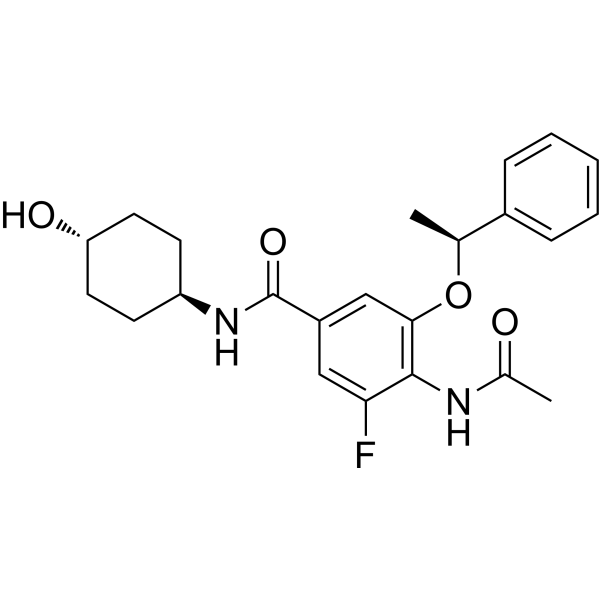
GSK046 (iBET-BD2), a chemical probe, is a potent, selective and orally active BD2 bromodomain inhibitor of the BET proteins, with IC50s of 264 nM (BRD2 BD2), 98 nM (BRD3 BD2), 49 nM (BRD4 BD2) and 214 nM (BRDT BD2), respectively. GSK046 has immunomodulatory activity.
Nur für Forschungszwecke. Wir verkaufen nicht an Patienten.
- Reinheit : 99.70%
- CAS. Nr.: 2474876-09-8
- Formel: C23H27FN2O4
- Molecular Weight:414.47
-
Speicherung:Powder -20°C, 3 years , 4°C, 2 years ; In solvent -80°C, 6 months , -20°C, 1 month

To place orders, for customer services and technical support, please contact: MedChemExpress USA
Tel: 609-228-6898 E-mail: [email protected] [email protected]


-
 Biologische Aktivität
-
Chemical Information
-
Lösungsmittel & Löslichkeit
- Reinheit & Dokumentation
- Verweise
-
 Help & FAQs


-
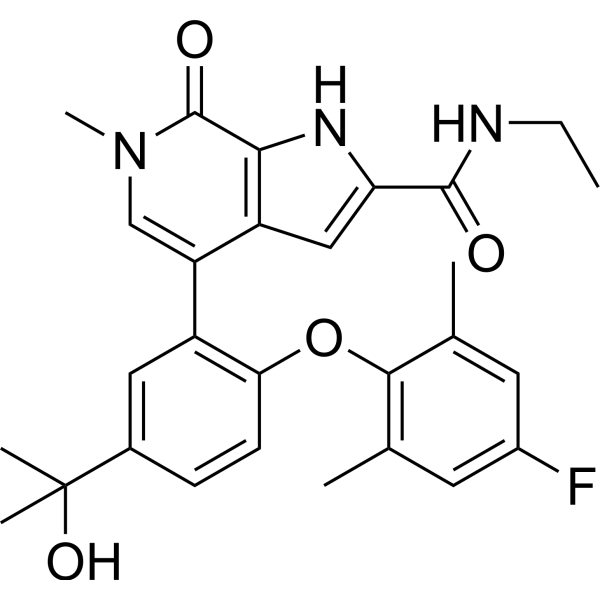
HY-112090
ABBV-744BD2 Inhibitor -
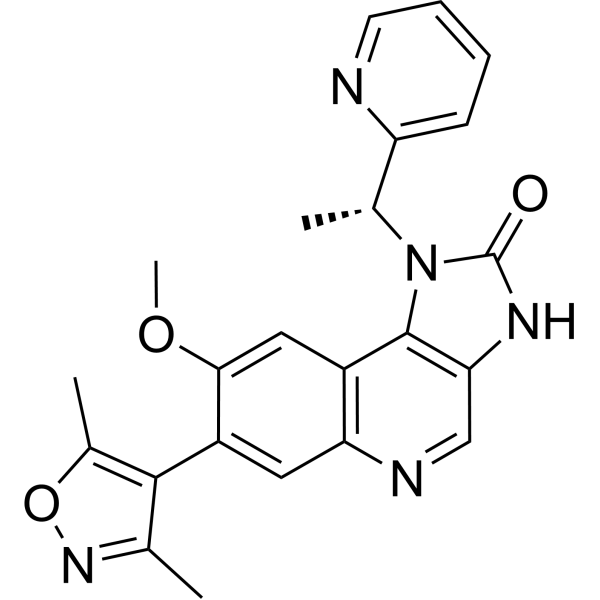
HY-13235
I-BET151BRD2/3/4 Inhibitor -
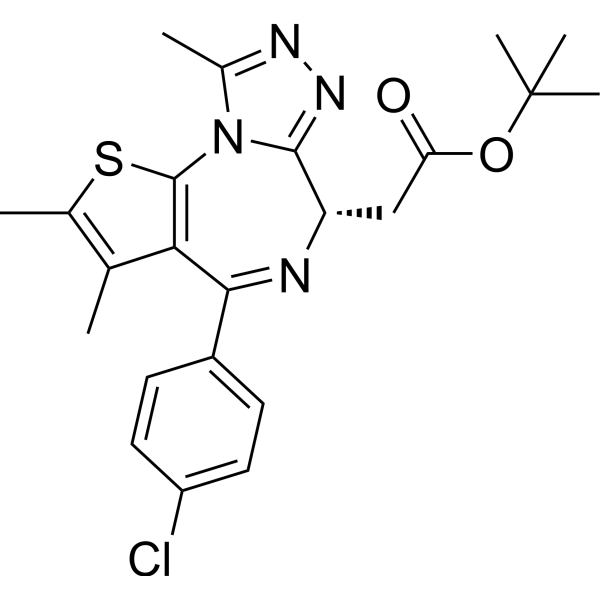
HY-13030
(+)-JQ-1BET Inhibitor -
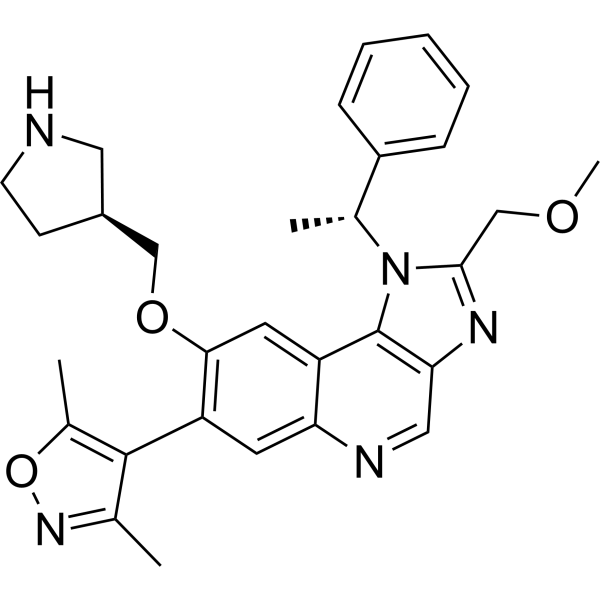
HY-136570
GSK778BET BD1 Inhibitor -
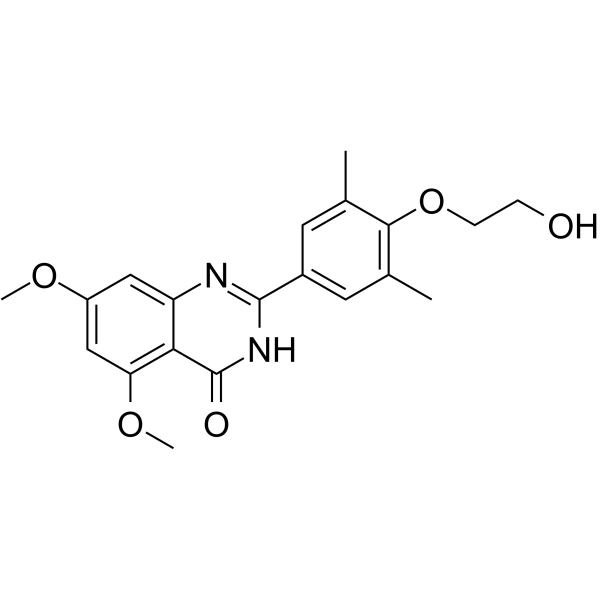
HY-16652
ApabetaloneBET Inhibitor -
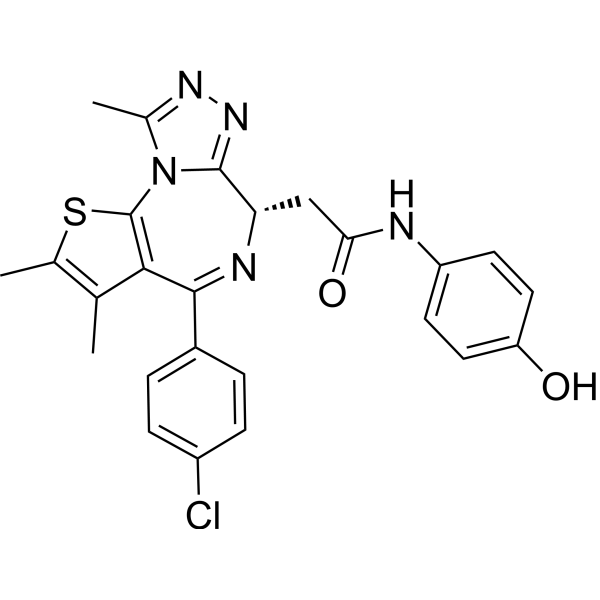
HY-15743
BirabresibBRD2/3/4 Inhibitor -
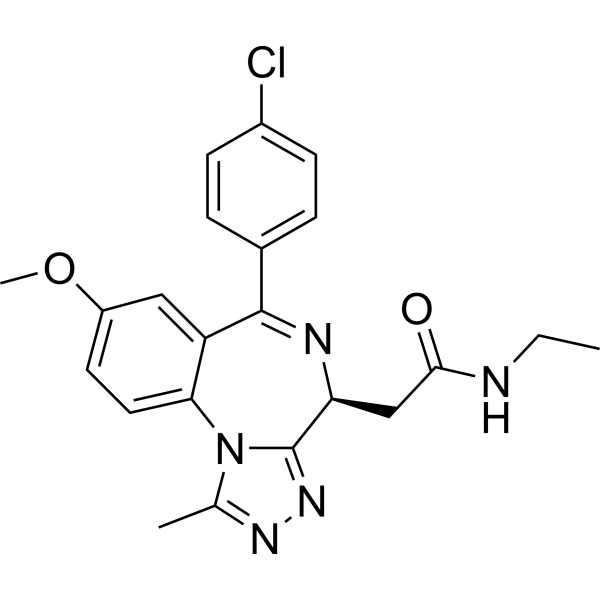
HY-13032
MolibresibBET Inhibitor -
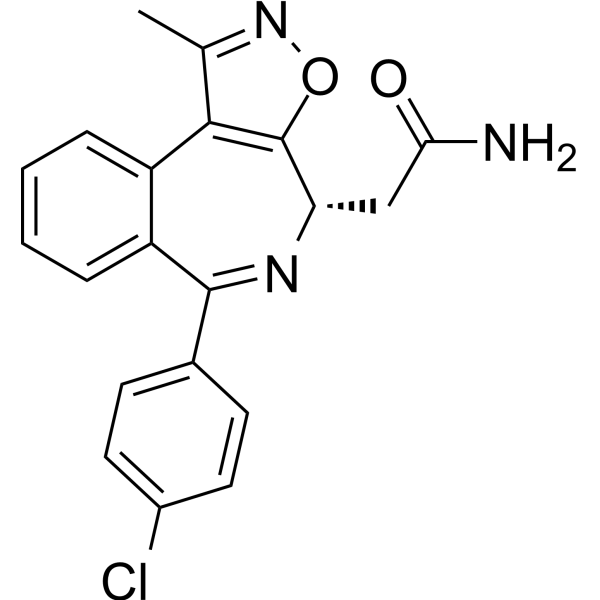
HY-12863
PelabresibBET Inhibitor -
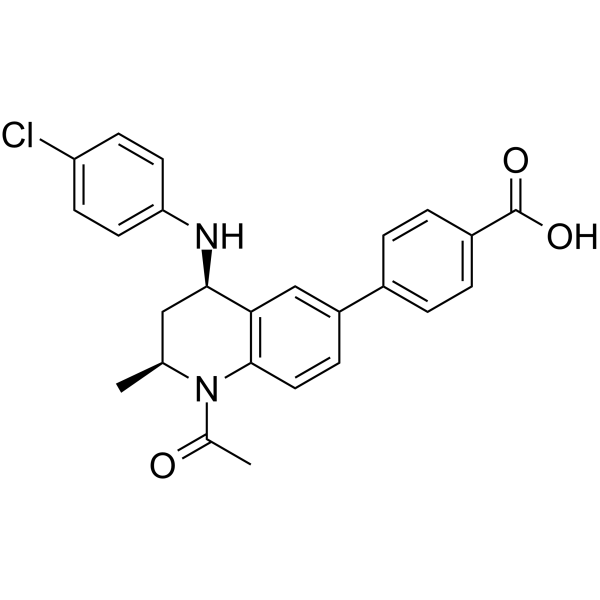
HY-13960
GSK1324726ABET Inhibitor -
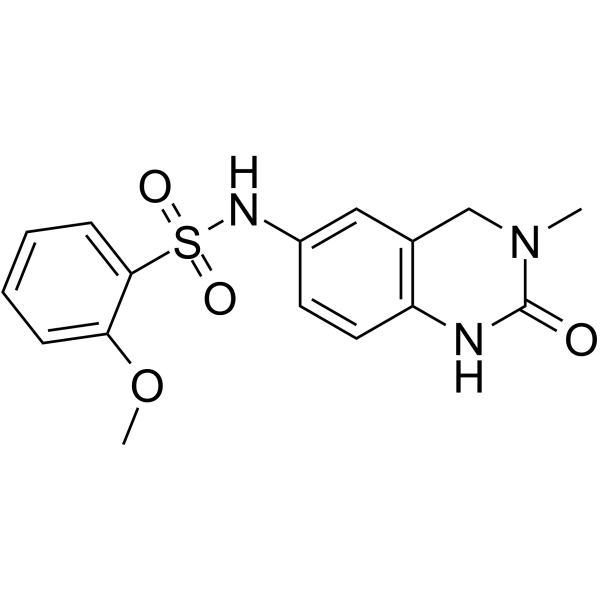
HY-16586
PFI-1BET Inhibitor -
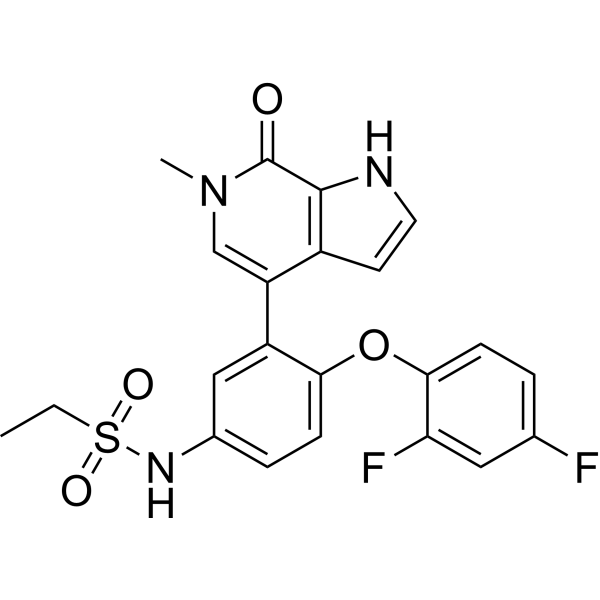
HY-100015
MivebresibBET Inhibitor -
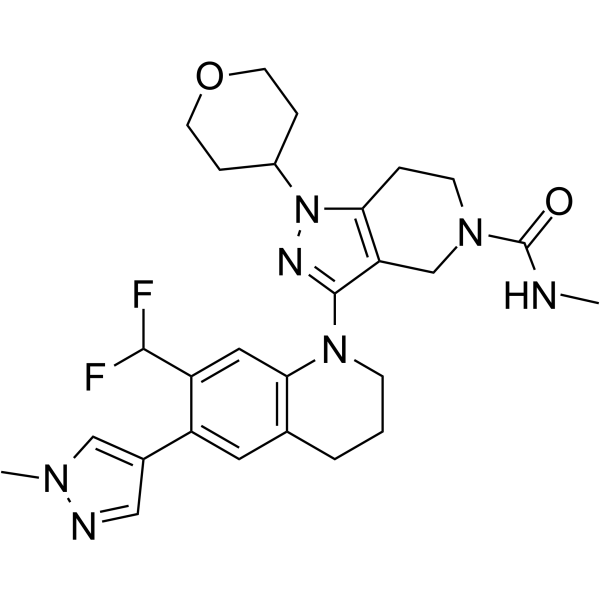
HY-108696
GNE-781CBP Inhibitor
Publications Citing Use of MedChemExpress (MCE) GSK046
More

Biologische Aktivität
Beschreibung
IC50 & Target
[1]|
BRD2 BD2 264 nM (IC50) |
BRD3 BD2 98 nM (IC50) |
BRD4 BD2 49 nM (IC50) |
BRDT BD2 214 nM (IC50) |
Cellular Effect
|
Cell Line

|
Type | Value | Description | References |
|---|---|---|---|---|
| CCRF-CEM | EC50 |
>5 μM
Compound: GSK-046
|
Cytotoxicity against human CCRF-CEM cells assessed as reduction in cell viability incubated for 72 hrs
Cytotoxicity against human CCRF-CEM cells assessed as reduction in cell viability incubated for 72 hrs
|
[PMID: 35348328] |
| K562 | EC50 |
>5 μM
Compound: GSK-046
|
Cytotoxicity against human K562 cells assessed as reduction in cell viability incubated for 72 hrs
Cytotoxicity against human K562 cells assessed as reduction in cell viability incubated for 72 hrs
|
[PMID: 35348328] |
| MOLM-14 | EC50 |
14 μM
Compound: GSK-046
|
Cytotoxicity against human MOLM-14 cells assessed as reduction in cell viability incubated for 72 hrs
Cytotoxicity against human MOLM-14 cells assessed as reduction in cell viability incubated for 72 hrs
|
[PMID: 35348328] |
| NB-4 | EC50 |
>5 μM
Compound: GSK-046
|
Cytotoxicity against human NB-4 cells assessed as reduction in cell viability incubated for 72 hrs
Cytotoxicity against human NB-4 cells assessed as reduction in cell viability incubated for 72 hrs
|
[PMID: 35348328] |
In Vitro
GSK046 (1000 nM; refresh every three days) reduces the recruitment of BET proteins to interferon (IFN) target genes following IFN-γ stimulation. GSK046 appears to more prominently affect the recruitment of BRD2 and BRD3 compared to BRD4[1].
GSK046 (0.1-10 μM) displays a more selective phenotypic fingerprint, particularly inhibiting the production of key pro-inflammatory mediators including Th17 cytokines in the B and T cell co-culture system[1].
GSK046 (0.01-10 μM; 72 hours) does not affect the proliferative activity of human primary CD4+ T cells but still inhibits the production of effector cytokines including IFNγ, IL-17A and IL-22[1].
GSK046 (0.005-10 μM; 48 hours) impairs macrophage activation following PMA stimulation, without impacting cellular viability[1].
MedChemExpress (MCE) has not independently confirmed the accuracy of these methods. They are for reference only.
-
Cell Line:Human primary CD4+ T cell
-
Concentration:0.001, 0.01, 0.1, 1, 10 μM
-
Incubation Time:72 hours
-
Result:Did not affect the proliferative activity of the cells but still inhibited the production of effector cytokines.
In Vivo
GSK046 exhibits Cmax (C57BL6 1589, C57B16 2993 ng/mL) and terminal elimination half-lives (C57BL6 1.8, C57B16 1.9 h) following oral administration (C57BL6 10, C57B16 40 mg/kg)[1].
GSK046 exhibits Cmax (mouse 1589, rat 202 ng/mL) and terminal elimination half-lives (mouse 1.8, rat 1.4 h) following oral administration (mouse 10, rat 10 mg/kg)[1].
MedChemExpress (MCE) has not independently confirmed the accuracy of these methods. They are for reference only.
-
Animal Model:Male C57BL/6 mice (8/10-weeks-old) are injected with keyhole limpet hemocyanin (KLH)[1]
-
Dosage:40 mg/kg/QD
-
Administration:S.c. injections for 14 days
-
Result:Reduced the production of anti-keyhole limpet hemocyanin (KLH) IgM and was well tolerated.
-
Animal Model:Female C57BL/6 mice[1]
-
Dosage:10 mg/kg (Pharmacokinetic Analysis)
-
Administration:Oral administration
-
Result:Cmax (1859 ng/mL), T1/2 (1.8 h).
-
Animal Model:Male C57BL/6 mice[1]
-
Dosage:40 mg/kg (Pharmacokinetic Analysis)
-
Administration:Oral administration
-
Result:Cmax (2993 ng/mL), T1/2 (1.9 h).
-
Animal Model:Female Lewis rat[1]
-
Dosage:10 mg/kg (Pharmacokinetic Analysis)
-
Administration:Oral administration
-
Result:Cmax (202 ng/mL), T1/2 (1.4 h).


Chemical Information
-
CAS. Nr. 2474876-09-8
-
Appearance Solid
-
Molecular Weight 414.47
-
Formel C23H27FN2O4
-
Color White to off-white
-
SMILES
O=C(N[C@H]1CC[C@H](O)CC1)C2=CC(O[C@H](C3=CC=CC=C3)C)=C(NC(C)=O)C(F)=C2
-
Synonyms
iBET-BD2
-
Versand
Room temperature in continental US; may vary elsewhere.
-
Speicherung
Powder -20°C 3 years 4°C 2 years In solvent -80°C 6 months -20°C 1 month


Publications (4)
-
Journal Impact Factor
-
Most Recent
-
Cell Signal
A role for BET proteins in regulating basal, dopamine-induced and cAMP/PKA-dependent transcription in rat striatal neurons. [Abstract]2022 Mar:91:110226. PMID: 34974082 -
iScience
Transcriptional synergy in human aortic endothelial cells is vulnerable to combination p300/CBP and BET bromodomain inhibition. [Abstract]2024 May 16;27(6):110011. PMID: 38868181 -
iScience
Mining the transcriptome of target tissues of autoimmune and degenerative pancreatic β-cell and brain diseases to discover therapies. [Abstract]2022 Oct 17;25(11):105376. PMID: 36345338 -
J Leukoc Biol
BET inhibition curbs macrophage inflammation, lipid accumulation, and atherogenesis by disrupting the YAP/TAZ-BRD4 axis. [Abstract]2026 Apr 29:qiag017. PMID: 42054500


Lösungsmittel & Löslichkeit
In Vitro:
DMSO : 83.33 mg/mL (201.05 mM; Need ultrasonic; Hygroscopic DMSO has a significant impact on the solubility of product, please use newly opened DMSO)
Please refer to the solubility information to select the appropriate solvent. Once prepared, please aliquot and store the solution to prevent product inactivation from repeated freeze-thaw cycles.
Storage method and period of stock solution: -80°C, 6 months; -20°C, 1 month. When stored at -80°C, please use it within 6 months. When stored at -20°C, please use it within 1 month.
Please refer to the solubility information to select the appropriate solvent. Once prepared, please aliquot and store the solution to prevent product inactivation from repeated freeze-thaw cycles.
Storage method and period of stock solution: -80°C, 6 months; -20°C, 1 month. When stored at -80°C, please use it within 6 months. When stored at -20°C, please use it within 1 month.
Konzentration (Stammlösung) × Volumen (Stammlösung) = Konzentration (Ziellösung) × Volumen (Ziellösung)
In Vivo:
Select the appropriate dissolution method based on your experimental animal and administration route.
- For the following dissolution methods, please ensure to first prepare a clear stock solution using an In Vitro approach and then sequentially add co-solvents:
- To ensure reliable experimental results, the clarified stock solution can be appropriately stored based on storage conditions. As for the working solution for In Vivo experiments, it is recommended to prepare freshly and use it on the same day.
- The percentages shown for the solvents indicate their volumetric ratio in the final prepared solution. If precipitation or phase separation occurs during preparation, heat and/or sonication can be used to aid dissolution.
Add each solvent one by one: 10% DMSO 40% PEG300 5% Tween-80 45% Saline
Solubility: ≥ 2.08 mg/mL (5.02 mM); Clear solution
This protocol yields a clear solution of ≥ 2.08 mg/mL (saturation unknown).
Taking 1 mL working solution as an example, add 100 μL DMSO stock solution (20.8 mg/mL) to 400 μL PEG300, and mix evenly; then add 50 μL Tween-80 and mix evenly; then add 450 μL Saline to adjust the volume to 1 mL.
Preparation of Saline: Dissolve 0.9 g sodium chloride in ddH₂O and dilute to 100 mL to obtain a clear Saline solution.
Add each solvent one by one: 10% DMSO 90% (20% SBE-β-CD in Saline)
Solubility: ≥ 2.08 mg/mL (5.02 mM); Clear solution
This protocol yields a clear solution of ≥ 2.08 mg/mL (saturation unknown).
Taking 1 mL working solution as an example, add 100 μL DMSO stock solution (20.8 mg/mL) to 900 μL 20% SBE-β-CD in Saline, and mix evenly.
Preparation of 20% SBE-β-CD in Saline (4°C, storage for one week): 2 g SBE-β-CD powder is dissolved in 10 mL Saline, completely dissolve until clear.
In Vivo Dissolution Calculator
Please enter the basic information of animal experiments:
-
-
-
-
Recommended: Prepare an additional quantity of animals to account for potential losses during experiments.
Please enter your animal formula composition:
-
%DMSO +
Recommended: Keep the proportion of DMSO in working solution below 2% if your animal is weak.
-
%+
-
+%Tween-80 + +
-
%Saline +
The co-solvents required include: DMSO, . All of co-solvents are available by MedChemExpress (MCE). , Tween 80. All of co-solvents are available by MedChemExpress (MCE).
Working solution concentration: 0.22 mg/mL
Method for preparing stock solution: mg drug dissolved in μL DMSO. Stock solution concentration: mg/mL.
1. Take μL DMSO stock solution;
2. Add μL .
μL , mix evenly;
3. Then add μL Tween 80, mix evenly;
4. Then add μL
Please ensure that the stock solution in the first step is dissolved to a clear state, and add co-solvents in sequence. You can use ultrasonic heating (ultrasonic cleaner, recommended frequency 20-40 kHz), vortexing, etc. to assist dissolution.


Reinheit & Dokumentation
-
Data Sheet (279 KB)
-
SDS (252 KB)
- English - EN (252 KB)
- Français - FR (252 KB)
- Deutsch - DE (252 KB)
- Norwegian - NO (252 KB)
- Español - ES (252 KB)
- Swedish - SV (252 KB)
- Italian - IT (252 KB)
- Korean - KR (252 KB)
- Portuguese - PT (252 KB)
-
Handling Instructions (2659 KB)
Verweise


Complete Stock Solution Preparation Table
Please refer to the solubility information to select the appropriate solvent. Once prepared, please aliquot and store the solution to prevent product inactivation from repeated freeze-thaw cycles.
Storage method and period of stock solution: -80°C, 6 months; -20°C, 1 month. When stored at -80°C, please use it within 6 months. When stored at -20°C, please use it within 1 month.
| Optional Solvent | Concentration Solvent Mass | 1 mg | 5 mg | 10 mg | 25 mg |
|---|---|---|---|---|---|
| DMSO | 1 mM | 2.4127 mL | 12.0636 mL | 24.1272 mL | 60.3180 mL |
| 5 mM | 0.4825 mL | 2.4127 mL | 4.8254 mL | 12.0636 mL | |
| 10 mM | 0.2413 mL | 1.2064 mL | 2.4127 mL | 6.0318 mL | |
| 15 mM | 0.1608 mL | 0.8042 mL | 1.6085 mL | 4.0212 mL | |
| 20 mM | 0.1206 mL | 0.6032 mL | 1.2064 mL | 3.0159 mL | |
| 25 mM | 0.0965 mL | 0.4825 mL | 0.9651 mL | 2.4127 mL | |
| 30 mM | 0.0804 mL | 0.4021 mL | 0.8042 mL | 2.0106 mL | |
| 40 mM | 0.0603 mL | 0.3016 mL | 0.6032 mL | 1.5079 mL | |
| 50 mM | 0.0483 mL | 0.2413 mL | 0.4825 mL | 1.2064 mL | |
| 60 mM | 0.0402 mL | 0.2011 mL | 0.4021 mL | 1.0053 mL | |
| 80 mM | 0.0302 mL | 0.1508 mL | 0.3016 mL | 0.7540 mL | |
| 100 mM | 0.0241 mL | 0.1206 mL | 0.2413 mL | 0.6032 mL |


GSK046 Related Classifications
HY-136571 Related Classifications
 Powered by Bioz