

201 Results for "

TLC visualization

" in MedChemExpress (MCE) Product Catalog:
Products (201)

201 Results for "TLC visualization" in MCE Product Catalog:

36
36 Publications Verification
Art. -Nr.: HY-K2005

High Sensitivity ECL Kit enables low picogram detection of antigen by oxidizing luminol in the presence of HRP and peroxide. This reaction produces a prolonged chemiluminescence which can be visualized on X-ray film or digital imaging systems. The 100 mL is defined as the base specification. All larger sizes correspond to incremental volumes of this base.

loading...
    loading...
12
12 Cited Publications
Art. -Nr.: HY-D1168
CAS. Nr.: 1320-06-5
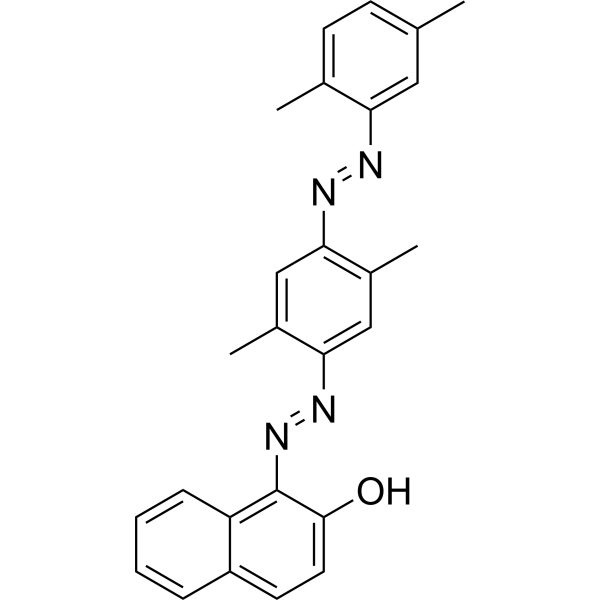
Oil Red O is a fat-soluble diazol dye, with a maximum absorption at 518 nm. Oil Red O stains neutral lipids and cholesteryl esters but not biological membranes. Oil Red O can be used for detecting and quantifying hepatic steatosis in mouse liver biopsies. Oil Red O staining efficiently helps to visualize the radical changes that occur in tissues as metabolic disease occurs and progresses .
loading...
    loading...
8
8 Cited Publications
Art. -Nr.: HY-K2006

Sensitive ECL Kit enables low picogram detection of antigen by oxidizing luminol in the presence of HRP and peroxide. This reaction produces a prolonged chemiluminescence which can be visualized on X-ray film or digital imaging systems. The 100 mL is defined as the base specification. All larger sizes correspond to incremental volumes of this base.

loading...
    loading...
4
4 Cited Publications
Art. -Nr.: HY-D0014
CAS. Nr.: 6104-58-1
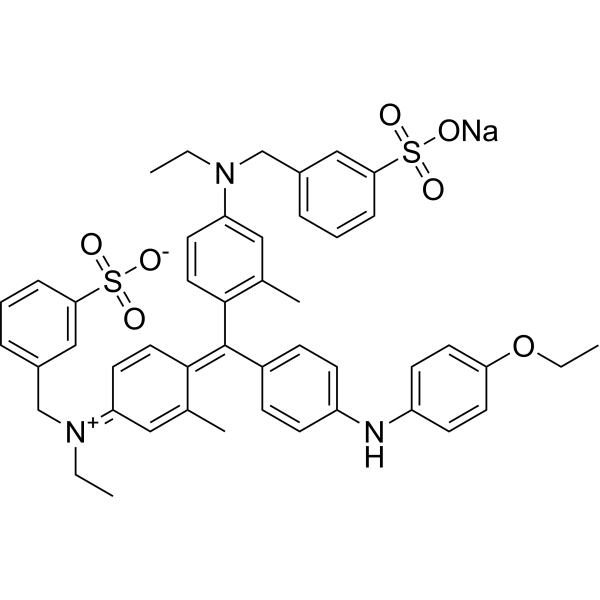
Brilliant Blue G-250 is a dye commonly used for the visualization of proteins separated by SDS-PAGE, offering a simple staining procedure and high quantitation. In the Bradford protein assay, protein concentrations are determined by the absorbance at 595 nm due to the binding of Brilliant Blue G-250 to proteins. Brilliant Blue G-250 is a safe highly selective P2×7R antagonist with promising consequent inactivation of NLRP3 inflammasome .
loading...
    loading...
3
3 Cited Publications
Art. -Nr.: HY-B1157
CAS. Nr.: 3902-71-4
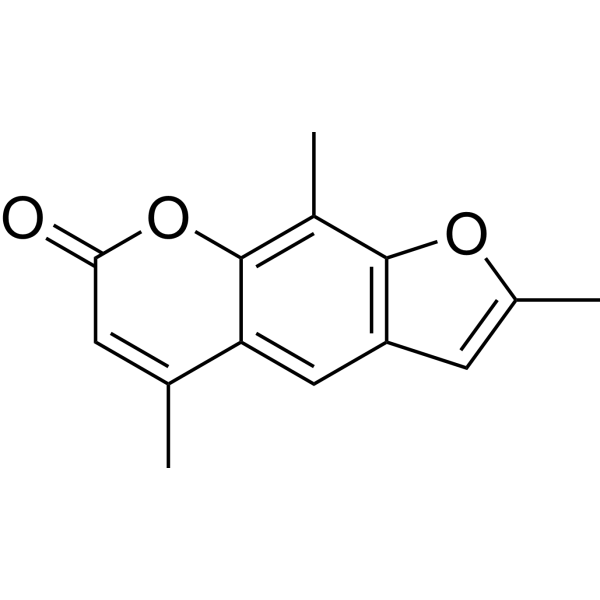
Synonyms: Trisoralen; Trioxysalen; TMP
Forschungsgebiete:  

Inflammation/Immunology

Trioxsalen (Trisoralen), a psoralen derivative, is a photochemical DNA crosslinker. Trioxsalen only works after photoactivation with near ultraviolet light. Trioxsalen is a photosensitizer that can be used for the research of vitiligo and hand eczema. Trioxsalen is used for visualization of genomic interstrand cross-links localized by laser photoactivation .
loading...
    loading...
3
3 Cited Publications
Art. -Nr.: HY-D2119
CAS. Nr.: 2089438-23-1
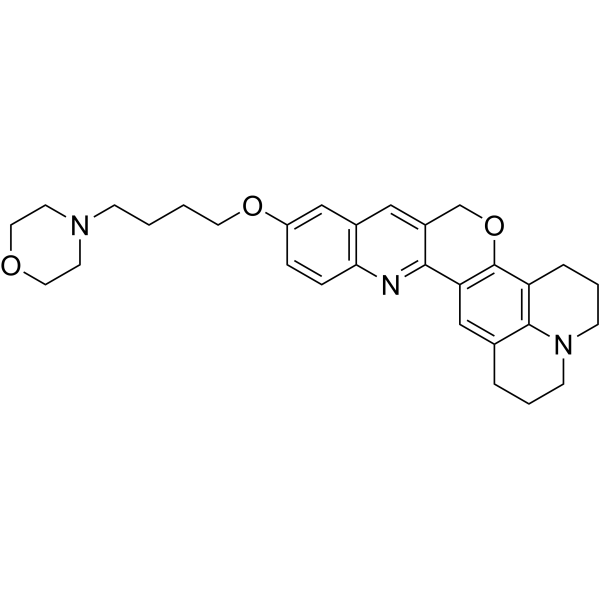
CQ-Lyso is a lysosome-targeting chromenoquinoline. CQ-Lyso is a fluorescent probe for measuring the pH of lysosomes in living cells using only single wavelength excitation. CQ-Lyso can visualize the dynamic pH changes in lysosomes .
loading...
    loading...
2
2 Cited Publications
Art. -Nr.: HY-158082
Synonyms: Tetramethyl rhodamine isothiocyanate glucan, MW 4000
Target:  

Fluorescent Dye

Forschungsgebiete:  

Others

TRITC-dextran MW 4000 (Tetramethyl rhodamine isothiocyanate glucan, MW 4000) is a fluorescent dye, with the molecular weight of 4 kD. TRITC-dextran MW 4000 exhibits an excitation wavelength of 555 nm. TRITC-dextran MW 4000 is vessel penetrate, which could label blood plasma to visualize the vasculature. TRITC-dextran MW 4000 is utilized in drug delivery for the stability of TRITC over a wide pH range (i.e. pH 2–11) and resistance to photo-bleaching .
loading...
    loading...
2
2 Cited Publications
Art. -Nr.: HY-129084
CAS. Nr.: 111755-76-1
Reinheit:  98.85%
Forschungsgebiete:  

Others

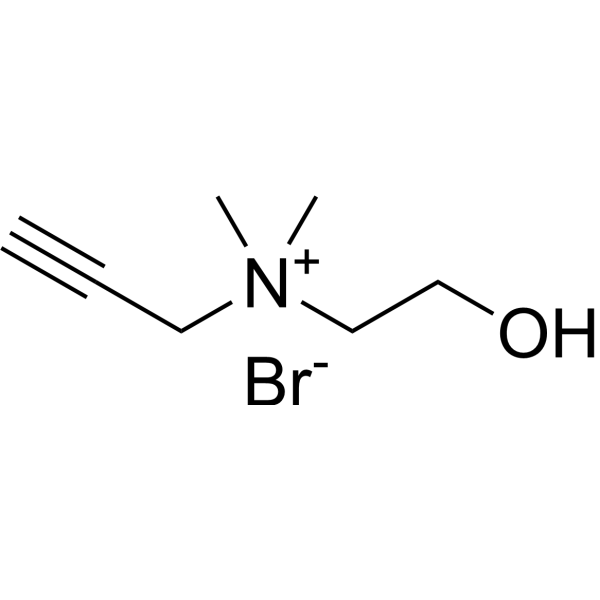
Propargylcholine bromide is a choline analogue containing terminal propargyl that can be incorporated into all classes of Choline-containing phospholipids such as phosphatidylcholine and sphingomyelin, labeling Choline-containing phospholipids. Propargylcholine bromide-labeled phospholipid molecules can be visualized in cells with high sensitivity and spatial resolution. Propargylcholine bromide can be used as a molecular tool to study the biochemical and metabolic processes of Choline-containing phospholipids in cells . Propargylcholine (bromide) is a click chemistry reagent, it contains an Alkyne group and can undergo copper-catalyzed azide-alkyne cycloaddition (CuAAc) with molecules containing Azide groups.
loading...
    loading...
1
1 Cited Publications
Art. -Nr.: HY-N0335
CAS. Nr.: 482-89-3
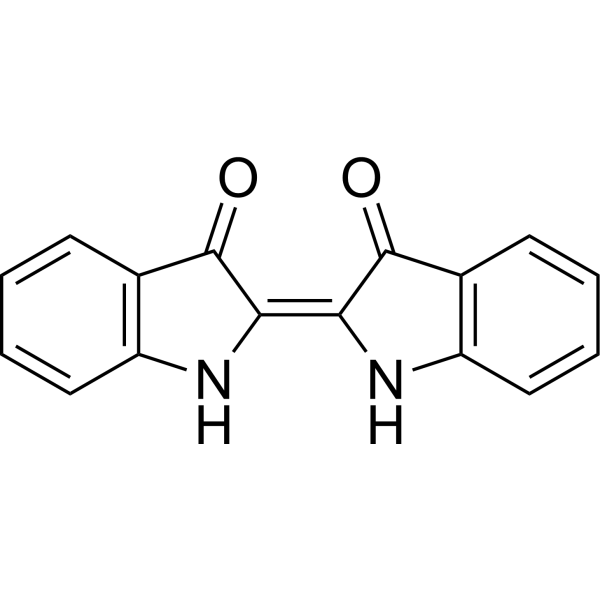
Indigo is a blue dye. Indigo stains cellulose fibers such as cotton. Indigo stains food or biological samples to visualize and quantify the uptake or distribution of substances by organisms .
loading...
    loading...
1
1 Cited Publications
Art. -Nr.: HY-B1292
CAS. Nr.: 606-17-7
Synonyms: Adipiodone
Forschungsgebiete:  

Inflammation/Immunology

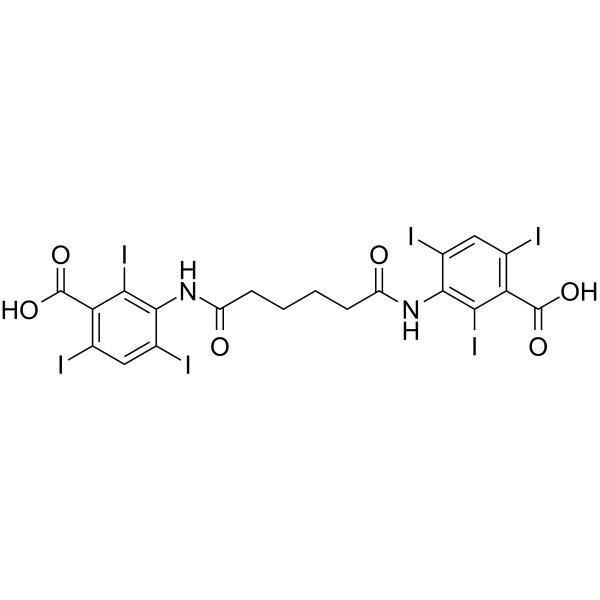
Iodipamide (Adipiodone) is an ionic iodinated contrast agent. Iodipamide is used for diagnostic imaging to visualize the bile ducts and gallbladder during X-ray examinations .
loading...
    loading...
1
1 Cited Publications
Art. -Nr.: HY-D1903
CAS. Nr.: 218280-33-2
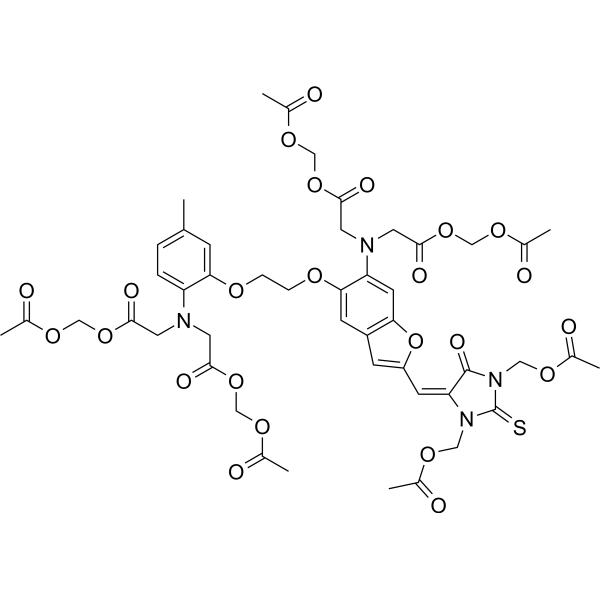
Fura Red AM is a fluorescent probe that can be used to visualize Ca 2+ distribution in the cytoplasm of undifferentiated cells. Fura Red AM operates at an excitation wavelength of 488 nm .
loading...
    loading...
1
1 Cited Publications
Art. -Nr.: HY-W039924
CAS. Nr.: 361154-23-6
Target:  

Drug Metabolite

Forschungsgebiete:  

Metabolic Disease

N-Azidoacetylmannosamine is an azide-labeled sugar that can be metabolically incorporated into glycoproteins. N-Azidoacetylmannosamine can then react with alkynes or phosphines that are linked to fluorescent or biotin tags for visualization or capture of the glycoproteins. N-Azidoacetylmannosamine can be used for studying glycan structures and functions in vivo .
loading...
    loading...
1
1 Cited Publications
Art. -Nr.: HY-109513
CAS. Nr.: 107793-72-6
Reinheit:  98.34%
Forschungsgebiete:  

Others

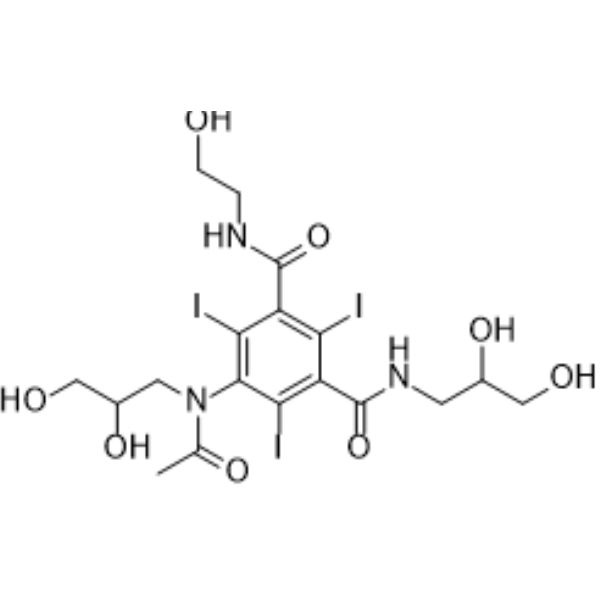
Ioxilan is a low-osmolar, nonionic and tri-iodinated diagnostic contrast agent. Ioxilan is also an X-ray contrast agent for excretory urography and contrast enhanced computed tomographic (CECT) imaging of the head and body. Intravascular injection results in opacification of vessels in the path of flow of the contrast medium, permitting radiographic visualization of the internal structures of the human body until significant hemodilution occurs .
loading...
    loading...
1
1 Cited Publications
Art. -Nr.: HY-P10896
CAS. Nr.: 1446005-10-2
Target:  

Bombesin Receptor

Forschungsgebiete:  

Cancer

NOTA-P2-RM26 is an antagonist of Bombesin (HY-P0195) analogs, and the gastrin-releasing peptide receptor (GRPR/BB2) is a molecular target for prostate cancer visualization. NOTA-P2-RM26 is labeled with 111In and 68Ga for prostate cancer imaging studies using PET and SPECT/CT .
loading...
    loading...
1
1 Cited Publications
Art. -Nr.: HY-W010042
CAS. Nr.: 921-60-8
Synonyms: L-(-)-Glucose
Target:  

Fluorescent Dye

Forschungsgebiete:  

Metabolic Disease Cancer

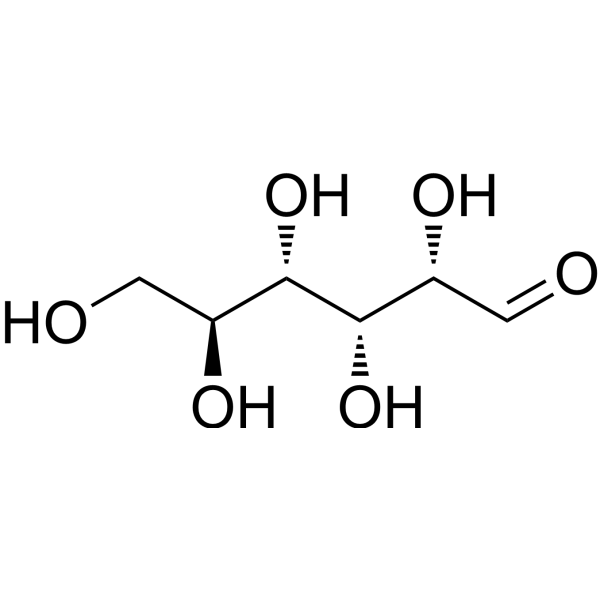
L-Glucose (L-(-)-Glucose) is a stereoisomer of D-Glucose (HY-B0389), which does not readily enter the brain. L-Glucose can promote food intake. L-glucose is combined with a fluorescence detector to produce a fluorescent probe that can be used to visualize and characterize cancer cells. L-Glucose also can be used in the research to enhance memory in mice .
loading...
    loading...
1
1 Cited Publications
Art. -Nr.: HY-W250150
CAS. Nr.: 5486-84-0
Forschungsgebiete:  

Others

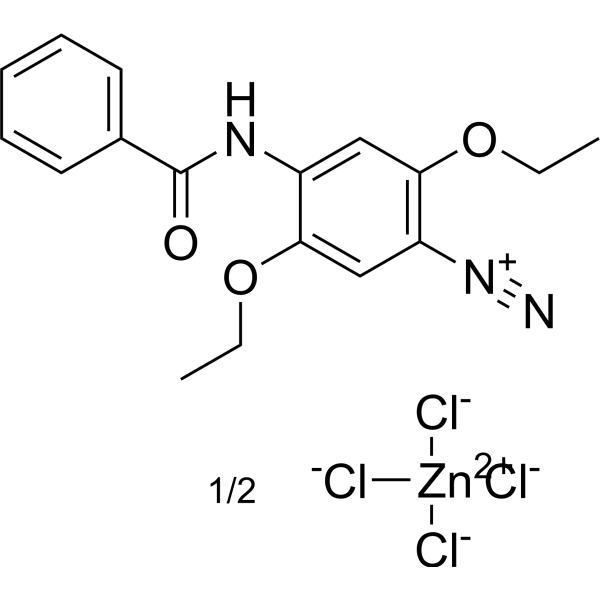
Fast blue bb salt (hemi(zinc chloride) salt is a water-soluble dye commonly used as a histological stain in various biological applications such as staining cellular components or detecting enzyme activity. Fast blue BB salt has a unique Chemical properties that allow it to bind to specific proteins to form a blue product that can be detected by microscopy or spectrophotometry. This makes it a useful tool for visualizing and quantifying target proteins in tissue samples or cell cultures.
loading...
    loading...
1
1 Cited Publications
Art. -Nr.: HY-158082A
Synonyms: Tetramethyl rhodamine isothiocyanate glucan, MW 20000
TRITC-dextran, MW 20000 (Tetramethyl rhodamine isothiocyanate glucan, MW 20000) is a fluorescent dye, with the molecular weight of 20 kD. TRITC-dextran MW 20000 exhibits an excitation wavelength of 555 nm. TRITC-dextran MW 20000 is vessel penetrate, which could label blood plasma to visualize the vasculature. TRITC-dextran MW 20000 is utilized in drug delivery for the stability of TRITC over a wide pH range (i.e. pH 2–11) and resistance to photo-bleaching .
loading...
    loading...
1
1 Cited Publications
Art. -Nr.: HY-P2031
CAS. Nr.: 26645-35-2
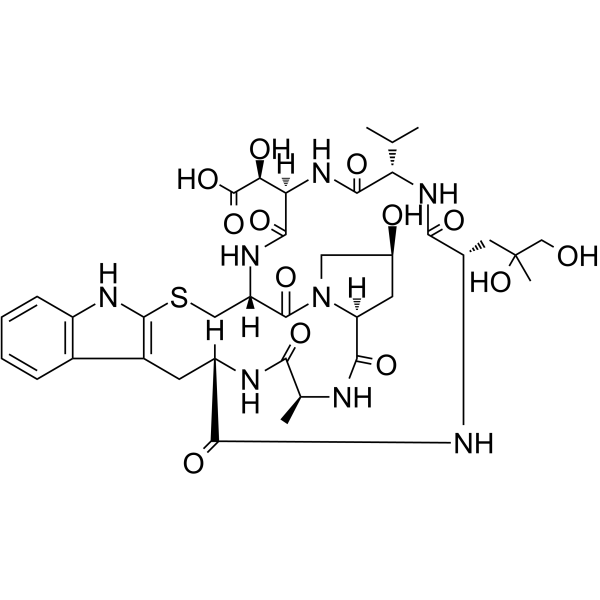
Phallacidin is a natural bicyclic heptapeptide derived from the poisonous mushroom Amanita phalloides. Phallacidin binds to filamentous actin specifically with high affinity, with a Kd of 20 nM. After binding to F-actin, Phallacidin strongly inhibits its depolymerization, stabilizes microfilament structures, and prevents their disruption by drugs such as cytochalasins. When conjugated with a fluorophore, Phallacidin serves as a specific fluorescent probe for F-actin, which is used to clearly visualize the distribution of actin in the cytoskeleton (e.g., stress fibers, cortical peripheral bands) under fluorescence microscopy .
loading...
    loading...
1
1 Cited Publications
Art. -Nr.: HY-P3443
Synonyms: PNA
Peanut agglutinin (PNA) is a carbohydrate-recognition protein that binds competitively and irreversibly to cell-surface β-D-Gal (1-3)-GalNAc, and this binding can be inhibited by D-galactose and asialofetuin. Peanut agglutinin recognizes exposed glycoepitopes and reflects the glycosylation status of cells. Peanut agglutinin can label glycoconjugates at neuromuscular junctions to safely visualize synaptic structures. Peanut agglutinin can be used to synthesize dyes to distinguish between normal and tumor tissues. Peanut agglutinin provides support for research on leukemia, Burkitt's tumors, and cutaneous squamous lesions .
loading...
    loading...
1
1 Cited Publications
Art. -Nr.: HY-D1428
CAS. Nr.: 797785-10-5
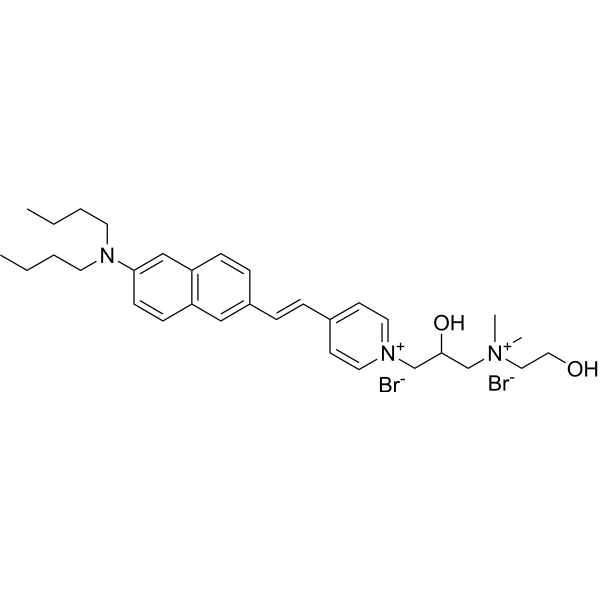
Di-4-ANEPPDHQ is a polarity-sensitive membrane probe with a doubly positive charge that can be used to visualize membrane microdomains in living Arabidopsis cells. Di-4-ANEPPDHQ produces a fluorescence spectrum shift by changing the polarity of the lipid environment after embedding into the cell membrane, thereby quantifying the degree of lipid accumulation. The excitation wavelength of Di-4-ANEPPDHQ is 488 nm, and the emission wavelengths are 560 nm and 650 nm in the liquid ordered and disordered phases, respectively. Di-4-ANEPPDHQ is often used for fluorescence imaging studies of membrane microstructure, lipid order, and membrane tension response in living cells[1][2][3].
loading...
    loading...

