



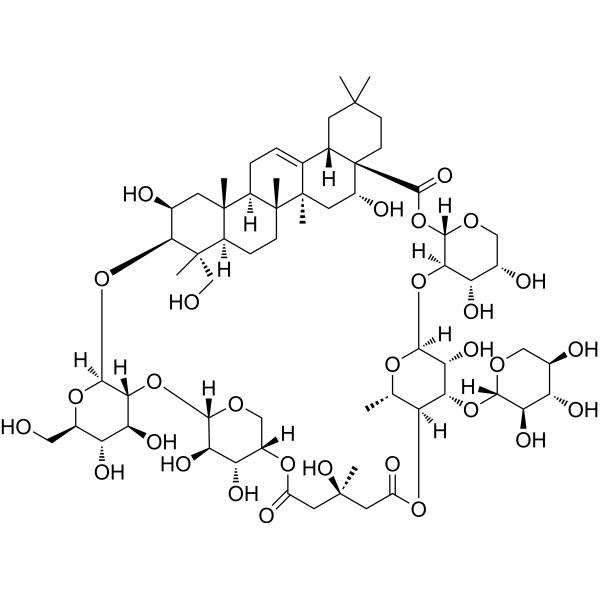
Tubeimoside II

Based on 1 Customer Validation
Tubeimoside II is an orally active triterpenoid saponin and antiviral agent that binds to PACT/PRKRA with Kd values of 5.37 μM and 133.1 μM, respectively. Tubeimoside II inhibits oxidase-dependent EGFR activation and reduces TGF-β1-induced oxidative stress. Tubeimoside II activates the RIG-I signaling pathway and increases IFN-β secretion. Tubeimoside II suppresses TPA-induced ear edema, mouse sarcoma 180 growth, and TPA-induced skin tumor formation. Tubeimoside II exerts broad-spectrum antiviral activity against SARS-CoV-2, HCoV-OC43, and IAV-H1N1/FM1. Tubeimoside II can be used in research related to retinoblastoma, respiratory viral infections, skin tumors, and sarcoma 180.
Nos produits utilisent uniquement pour la recherche. Nous ne vendons pas aux patients.
- Pureté : 99.90%
- CAS No.: 115810-12-3
- Formule: C63H98O30
- Masse moléculaire:1335.43
-
Stockage:Powder -20°C, 3 years , 4°C, 2 years ; In solvent -80°C, 6 months , -20°C, 1 month

To place orders, for customer services and technical support, please contact: MedChemExpress USA
Tel: 609-228-6898 E-mail: [email protected] [email protected]


-
 Activité biologique
-
Chemical Information
-
Solvant et solubilité
- Protocole
- Pureté et documentation
- Références
-
 Help & FAQs


-
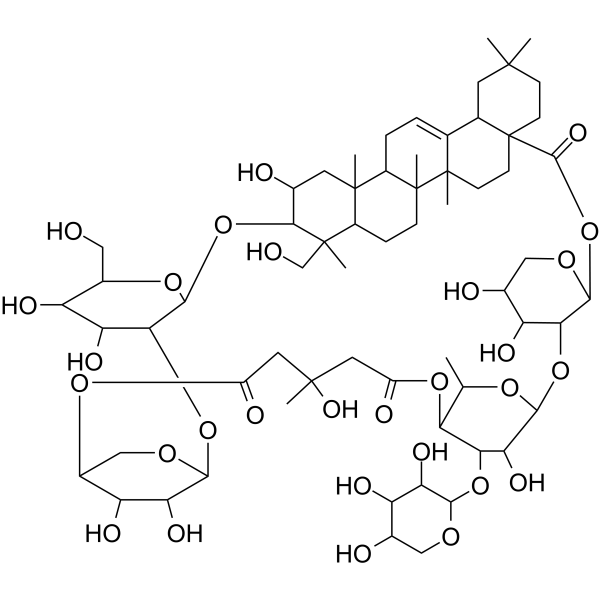
HY-N0890
Tubeimoside IAnticancer Agent -
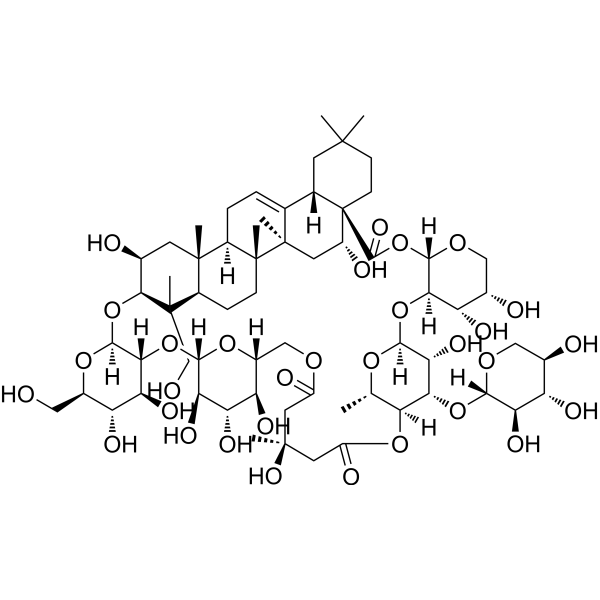
HY-N2542
Tubeimoside IIITriterpenoid Saponin -
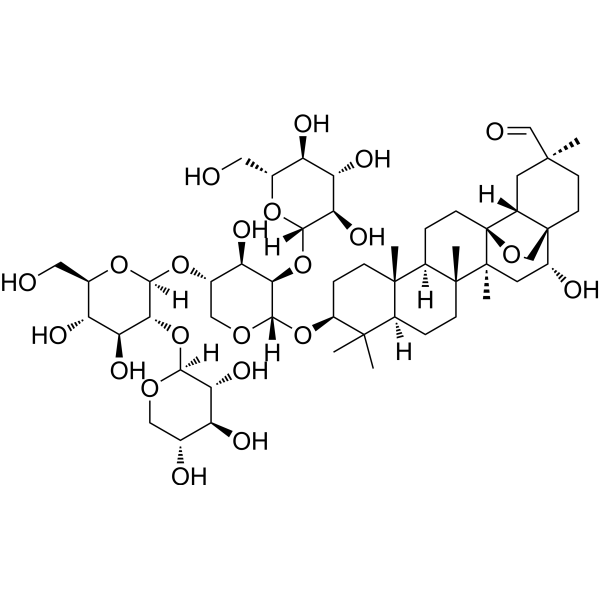
HY-N0206
Ardisiacrispin ANatural Product -
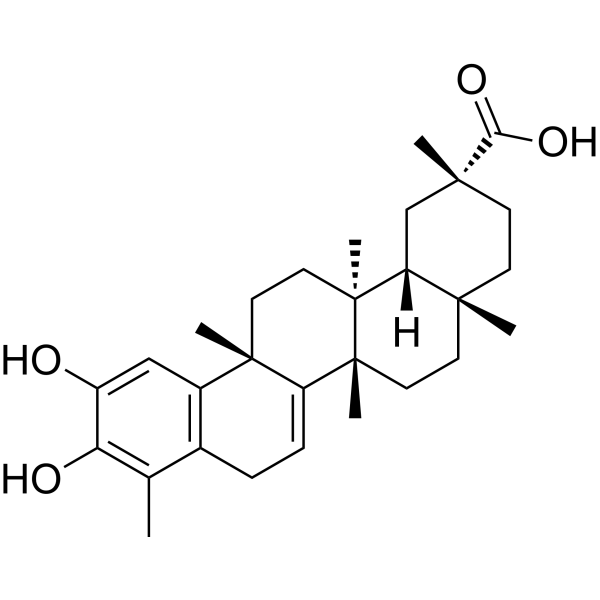
HY-117469
Triptohypol CAnti-Inflammatory Agent -
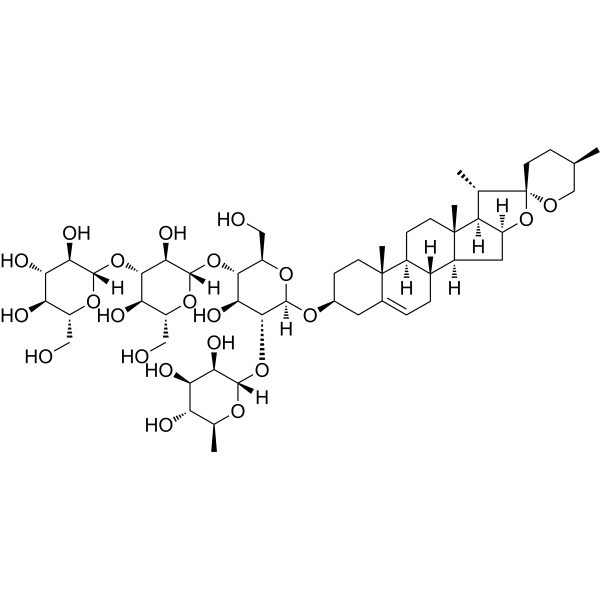
HY-N2282
Zingiberen newsaponinAKR1C1/JAK2/STAT3/NF-κB Inhibitor -
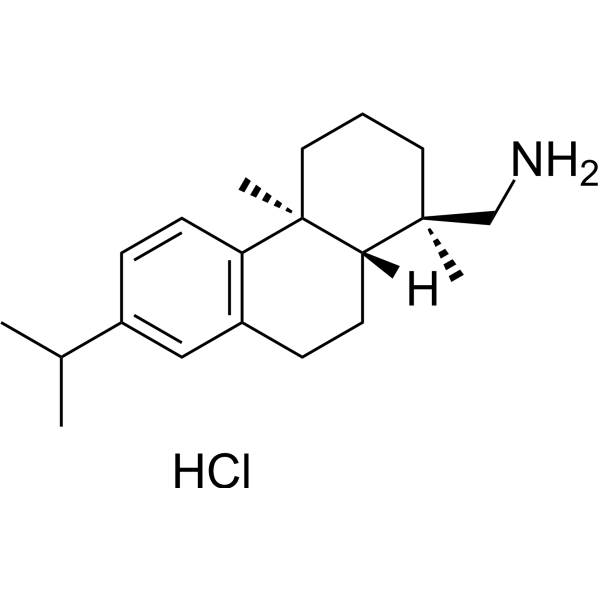
HY-110028
Leelamine hydrochlorideNPC1/Androgen Receptor Inhibitor
Voir tous les produits spécifiques à Isoform EGFR
More

Activité biologique
Description
IC50 & Target
[2]|
RIG-I |
In Vitro
Tubeimoside II (1-5 μM; 24 h) dose-dependently reverses TGF-β1-induced epithelial-mesenchymal transition in retinoblastoma Y-79 and WERI-Rb-1 cells[1].
Tubeimoside II (1-5 μM; 24 h) dose-dependently inhibits TGF-β1-induced phosphorylation of SRC and Vav2 in retinoblastoma Y-79 and WERI-Rb-1 cells[1].
Tubeimoside II (1-5 μM; 48 h) dose-dependently inhibits TGF-β1-induced extracellular matrix adhesion of retinoblastoma Y-79 and WERI-Rb-1 cells[1].
Tubeimoside II (1-5 μM; 48 h) inhibits TGF-β1-induced migration of retinoblastoma Y-79 and WERI-Rb-1 cells in a dose-dependent manner[1].
Tubeimoside II (1-5 μM; 48 h) dose-dependently inhibits TGF-β1-induced invasion of retinoblastoma Y-79 and WERI-Rb-1 cells[1].
Tubeimoside II (1-5 μM; 6 h) dose-dependently reduces TGF-β1-induced ROS production in retinoblastoma Y-79 and WERI-Rb-1 cells[1].
Tubeimoside II (1-5 μM; 6 h) dose-dependently reduces TGF-β1-induced intracellular H2O2 production in retinoblastoma Y-79 and WERI-Rb-1 cells[1].
Tubeimoside II (1-5 μM; 12 h) dose-dependently reduces TGF-β1-induced active Rac1-GTP expression in retinoblastoma Y-79 and WERI-Rb-1 cells[1].
Tubeimoside II (1-5 μM; 12 h) inhibits TGF-β1-induced phosphorylation, oxidation and nuclear translocation of EGFR in retinoblastoma Y-79 and WERI-Rb-1 cells, while co-treatment with H2O2 or the EGFR activator NSC228155 reverses this effect[1].
Tubeimoside II (0.25-1 μmol/L) exerts broad-spectrum antiviral activity against SARS-CoV-2, HCoV-OC43 and IAV-H1N1/FM1 in Caco-2-N, RAW264.7, A549 and Calu-3 cells, reduces viral load and alleviates cytopathic effects in a dose-dependent manner[2].
Tubeimoside II exhibits broad-spectrum antiviral activity in A549 cells infected with IAV-H1N1/FM1, and this activity depends on the functional RIG-I signaling pathway, as knockout of RIG-I, MAVS or IFN-β abolishes its ability to reduce viral load and upregulate IFN-β expression[2].
MedChemExpress (MCE) has not independently confirmed the accuracy of these methods. They are for reference only.
-
Cell Line:human retinoblastoma Y-79, WERI-Rb-1 cells (TGF-β1-pretreated)
-
Concentration:1-5 μM
-
Incubation Time:24 h
-
Result:Induced the expression of the epithelial marker E-cadherin in a dose-dependent manner.
Reduced the expression of the mesenchymal marker Vimentin in a dose-dependent manner.\nReversed TGF-β1-induced phosphorylation of SRC in a dose-dependent manner.
Reversed TGF-β1-induced phosphorylation of Vav2 in a dose-dependent manner.
Maintained consistent total SRC and Vav2 expression across treatments.
-
Cell Line:human retinoblastoma Y-79, WERI-Rb-1 cells (TGF-β1-pretreated)
-
Concentration:1-5 μM
-
Incubation Time:48 h
-
Result:Dose-dependently inhibited the migratory ability of cells as measured by reduced wound closure over 48 h.
-
Cell Line:human retinoblastoma Y-79, WERI-Rb-1 cells (TGF-β1-pretreated)
-
Concentration:1-5 μM
-
Incubation Time:48 h
-
Result:Dose-dependently inhibited the invasive ability of cells as measured by reduced numbers of cells invading through the polycarbonate filter membrane.
-
Cell Line:human retinoblastoma Y-79, WERI-Rb-1 cells (TGF-β1-pretreated)
-
Concentration:1-5 μM
-
Incubation Time:12 h
-
Result:Reversed TGF-β1-induced increases in active Rac1-GTP expression in a dose-dependent manner.
Maintained consistent total Rac1 expression across treatments.
-
Cell Line:human retinoblastoma Y-79, WERI-Rb-1 cells (TGF-β1-pretreated)
-
Concentration:1-5 μM
-
Incubation Time:12 h (localization assay); 24 h (Western blot)
-
Result:Reversed TGF-β1-induced phosphorylation of EGFR.
Reversed TGF-β1-induced oxidation of EGFR.
Reversed TGF-β1-induced nuclear translocation of EGFR.
Had inhibitory effects attenuated by co-treatment with H2O2 or the EGFR activator NSC228155.
In Vivo
Tubeimoside II (0.65-2.6 mg/kg; i.g.; daily; 5 days) dose-dependently reduces pulmonary and brain viral load, restores CD4+/CD8+ T-lymphocyte levels, alleviates pulmonary and cerebral inflammation, and upregulates key RIG-I signaling pathway proteins to enhance innate antiviral immunity in BALB/c mice infected with HCoV-OC43[2].
Tubeimoside II (0.0075-0.11 μmol per ear; topical; single dose) inhibits TPA-induced ear edema in male ICR mice in vivo in a dose-dependent manner, achieving 100% inhibition at the highest tested dose of 0.11 μmol per ear[3].
Tubeimoside II (12 mg/kg; i.m.; single dose, daily for 2 days, daily for 3 days) inhibits the growth of transplantable mouse S180 tumors in BALB/c mice in a dose-dependent manner, achieving 60.1% inhibition at 12 mg/kg administered intramuscularly for 3 days[3].
Topical Tubeimoside II (0.5 mg per painting; topical; twice weekly; 17 weeks) completely inhibits DMBA-initiated, TPA-promoted skin tumor formation in female ICR mice, while oral Tubeimoside II (0.1 g/L; p.o.; ad libitum; 17 weeks) reduces tumor number but not tumor incidence[3].
MedChemExpress (MCE) has not independently confirmed the accuracy of these methods. They are for reference only.
-
Animal Model:ICR (13-15 g, equal males and females, intranasal inoculation with 15 TCID50 IAV-H1N1/FM1)[2]
-
Dosage:0.65-2.6 mg/kg
-
Administration:i.g.; daily; 5 days
-
Result:Mitigated pulmonary volume expansion and focal ground-glass opacities, with dose-dependent improvement in lung grayscale values.
Dose-dependently reduced pulmonary viral load, with significant decreases at all tested doses compared to the infected model group.
Restored CD4+ and CD8+ T-lymphocyte levels in whole blood, with the high dose (2.6 mg/kg) showing the strongest effect.
Alleviated alveolar wall thickening, interstitial congestion, edema, and inflammatory cell infiltration in lung tissue, reducing the lung index and HE pathology score in a dose-dependent manner.
Significantly decreased lung tissue levels of pro-inflammatory cytokines TNF-α, IL-1ß, IL-6, and IFN-γ in a dose-dependent manner.
Dose-dependently increased protein expression levels of PACT, RIG-I, MAVS, and IFN-ß in lung tissue.
-
Animal Model:BALB/c (13-15 g, equal males and females, intranasal inoculation with 15 TCID50 HCoV-OC43)[2]
-
Dosage:0.65-2.6 mg/kg
-
Administration:i.g.; daily; 5 days
-
Result:Mitigated pulmonary volume expansion and focal ground-glass opacities, with dose-dependent improvement in lung grayscale values.
Dose-dependently reduced pulmonary viral load, with significant decreases at all tested doses compared to the infected model group; also significantly reduced viral load in brain tissue.
Restored CD4+ and CD8+ T-lymphocyte levels in whole blood, with the high dose (2.6 mg/kg) showing the strongest effect.
Alleviated alveolar wall thickening, interstitial congestion, edema, and inflammatory cell infiltration in lung tissue, reducing the lung index and HE pathology score in a dose-dependent manner; also attenuated neuropathological alterations in brain tissue, including loosened interstitial architecture and shrunken neurons.
Significantly decreased lung tissue levels of pro-inflammatory cytokines TNF-α, IL-1ß, IL-6, and IFN-γ in a dose-dependent manner.
Dose-dependently increased protein expression levels of PACT, RIG-I, MAVS, and IFN-ß in lung tissue.
-
Animal Model:ICR (male, ~8 weeks old)[3]
-
Dosage:0.0075 μmol per ear; 0.037 μmol per ear; 0.075 μmol per ear; 0.11 μmol per ear
-
Administration:topical; single dose
-
Result:Reduced TPA-induced ear thickness increase to 6.8 × 10⁻² mm, resulting in 37.7% inhibition.
Reduced TPA-induced ear thickness increase to 4.6 × 10⁻² mm, resulting in 56.6% inhibition.
Reduced TPA-induced ear thickness increase to 1.6 × 10⁻² mm, resulting in 84.9% inhibition.
Reduced TPA-induced ear thickness increase to 0.00 × 10⁻² mm, resulting in 100.0% inhibition.
-
Animal Model:BALB/c (male and female, ~8 weeks old)[3]
-
Dosage:12 mg/kg
-
Administration:i.m.; single dose; i.m.; daily; 2 days; i.m.; daily; 3 days
-
Result:Reduced average tumor weight to 1.5 g, resulting in 43.3% inhibition.
Reduced average tumor weight to 1.35 g, resulting in 49.8% inhibition.
Reduced average tumor weight to 1.07 g, resulting in 60.1% inhibition.
Caused no animal mortality during the experimental course.


Chemical Information
-
CAS No. 115810-12-3
-
Appearance Solid
-
Masse moléculaire 1335.43
-
Formule C63H98O30
-
Color White to off-white
-
SMILES
OC[C@H]1O[C@](O[C@H]2[C@@H](O)C[C@@]3(C)[C@](CC[C@]4(C)[C@]3([H])CC=C5[C@@]4(C)C[C@@H](O)[C@]67[C@@]5([H])CC(C)(C)CC6)([H])[C@@]2(CO)C)([H])[C@@](O[C@@]8([H])[C@H](O)[C@@H](O)[C@](OC(C[C@](O)(C)CC(O[C@]9([H])[C@@H](O[C@@]%10([H])[C@H](O)[C@@H](O)[C@H](O)CO%10)[C@@H](O)[C@@](O[C@]%11([H])[C@@H](O)[C@@H](O)CO[C@@]%11([H])OC7=O)([H])O[C@H]9C)=O)=O)([H])CO8)([H])[C@@H](O)[C@@H]1O
-
Synonyms
Tubeimoside-B
-
Structure Classification
-
Initial Source
-
Livraison
Room temperature in continental US; may vary elsewhere.
-
Stockage
Powder -20°C 3 years 4°C 2 years In solvent -80°C 6 months -20°C 1 month


Solvant et solubilité
In Vitro:
DMSO : 100 mg/mL (74.88 mM; Need ultrasonic; Hygroscopic DMSO has a significant impact on the solubility of product, please use newly opened DMSO)
Please refer to the solubility information to select the appropriate solvent. Once prepared, please aliquot and store the solution to prevent product inactivation from repeated freeze-thaw cycles.
Storage method and period of stock solution: -80°C, 6 months; -20°C, 1 month. When stored at -80°C, please use it within 6 months. When stored at -20°C, please use it within 1 month.
Please refer to the solubility information to select the appropriate solvent. Once prepared, please aliquot and store the solution to prevent product inactivation from repeated freeze-thaw cycles.
Storage method and period of stock solution: -80°C, 6 months; -20°C, 1 month. When stored at -80°C, please use it within 6 months. When stored at -20°C, please use it within 1 month.
Concentration (start) × Volume (start) = Concentration (final) × Volume (final)
In Vivo:
Select the appropriate dissolution method based on your experimental animal and administration route.
- For the following dissolution methods, please ensure to first prepare a clear stock solution using an In Vitro approach and then sequentially add co-solvents:
- To ensure reliable experimental results, the clarified stock solution can be appropriately stored based on storage conditions. As for the working solution for In Vivo experiments, it is recommended to prepare freshly and use it on the same day.
- The percentages shown for the solvents indicate their volumetric ratio in the final prepared solution. If precipitation or phase separation occurs during preparation, heat and/or sonication can be used to aid dissolution.
Add each solvent one by one: 10% DMSO 40% PEG300 5% Tween-80 45% Saline
Solubility: ≥ 2.5 mg/mL (1.87 mM); Clear solution
This protocol yields a clear solution of ≥ 2.5 mg/mL (saturation unknown).
Taking 1 mL working solution as an example, add 100 μL DMSO stock solution (25.0 mg/mL) to 400 μL PEG300, and mix evenly; then add 50 μL Tween-80 and mix evenly; then add 450 μL Saline to adjust the volume to 1 mL.
Preparation of Saline: Dissolve 0.9 g sodium chloride in ddH₂O and dilute to 100 mL to obtain a clear Saline solution.
Add each solvent one by one: 10% DMSO 90% (20% SBE-β-CD in Saline)
Solubility: ≥ 2.5 mg/mL (1.87 mM); Clear solution
This protocol yields a clear solution of ≥ 2.5 mg/mL (saturation unknown).
Taking 1 mL working solution as an example, add 100 μL DMSO stock solution (25.0 mg/mL) to 900 μL 20% SBE-β-CD in Saline, and mix evenly.
Preparation of 20% SBE-β-CD in Saline (4°C, storage for one week): 2 g SBE-β-CD powder is dissolved in 10 mL Saline, completely dissolve until clear.
In Vivo Dissolution Calculator
Please enter the basic information of animal experiments:
-
-
-
-
Recommended: Prepare an additional quantity of animals to account for potential losses during experiments.
Please enter your animal formula composition:
-
%DMSO +
Recommended: Keep the proportion of DMSO in working solution below 2% if your animal is weak.
-
%+
-
+%Tween-80 + +
-
%Saline +
The co-solvents required include: DMSO, . All of co-solvents are available by MedChemExpress (MCE). , Tween 80. All of co-solvents are available by MedChemExpress (MCE).
Working solution concentration: 0.22 mg/mL
Method for preparing stock solution: mg drug dissolved in μL DMSO. Stock solution concentration: mg/mL.
1. Take μL DMSO stock solution;
2. Add μL .
μL , mix evenly;
3. Then add μL Tween 80, mix evenly;
4. Then add μL
Please ensure that the stock solution in the first step is dissolved to a clear state, and add co-solvents in sequence. You can use ultrasonic heating (ultrasonic cleaner, recommended frequency 20-40 kHz), vortexing, etc. to assist dissolution.


Pureté et documentation
-
Fiche technique (299 KB)
-
SDS (392 KB)
- English - EN (392 KB)
- Français - FR (392 KB)
- Deutsch - DE (392 KB)
- Norwegian - NO (392 KB)
- Español - ES (392 KB)
- Swedish - SV (392 KB)
- Italian - IT (392 KB)
- Korean - KR (392 KB)
- Portuguese - PT (392 KB)
-
Instruction de manipulation (2659 KB)
Références
[1]. Chen Y, et al. Tubeimoside II inhibits TGF-β1-induced metastatic progression of human retinoblastoma cells through suppressing redoxosome-dependent EGFR activation. Chem Biol Interact. 2021;335:109367. [Content Brief]
[2]. Liu X, et al. A new approach to discovering a broad-spectrum anti-respiratory virus drug: Tubeimoside II modulates host factor PACT to potentiate the RIG-I antiviral pathway. Acta Pharm Sin B. 2026;16(5):3109-3127. [Content Brief]
[3]. Yu TX, et al. Structure-activity relationship of tubeimosides in anti-inflammatory, antitumor, and antitumor-promoting effects. Acta Pharmacol Sin. 2001;22(5):463-468. [Content Brief]


Complete Stock Solution Preparation Table
Please refer to the solubility information to select the appropriate solvent. Once prepared, please aliquot and store the solution to prevent product inactivation from repeated freeze-thaw cycles.
Storage method and period of stock solution: -80°C, 6 months; -20°C, 1 month. When stored at -80°C, please use it within 6 months. When stored at -20°C, please use it within 1 month.
| Optional Solvent | Concentration Solvent Mass | 1 mg | 5 mg | 10 mg | 25 mg |
|---|---|---|---|---|---|
| DMSO | 1 mM | 0.7488 mL | 3.7441 mL | 7.4882 mL | 18.7206 mL |
| 5 mM | 0.1498 mL | 0.7488 mL | 1.4976 mL | 3.7441 mL | |
| 10 mM | 0.0749 mL | 0.3744 mL | 0.7488 mL | 1.8721 mL | |
| 15 mM | 0.0499 mL | 0.2496 mL | 0.4992 mL | 1.2480 mL | |
| 20 mM | 0.0374 mL | 0.1872 mL | 0.3744 mL | 0.9360 mL | |
| 25 mM | 0.0300 mL | 0.1498 mL | 0.2995 mL | 0.7488 mL | |
| 30 mM | 0.0250 mL | 0.1248 mL | 0.2496 mL | 0.6240 mL | |
| 40 mM | 0.0187 mL | 0.0936 mL | 0.1872 mL | 0.4680 mL | |
| 50 mM | 0.0150 mL | 0.0749 mL | 0.1498 mL | 0.3744 mL | |
| 60 mM | 0.0125 mL | 0.0624 mL | 0.1248 mL | 0.3120 mL |


Tubeimoside II Related Classifications
HY-N0891 Related Classifications
 Powered by Bioz
Keywords
- Tubeimoside II
- 115810-12-3
- Tubeimoside-B
- EGFR
- TGF-β Receptor
- RIG-I-like receptor (RLR)
- SARS-CoV
- human PACT/PRKRA
- retinoblastoma
- human retinoblastoma Y-79 cells
- SARS-CoV-2
- RIG-I signaling pathway
- respiratory viral infections
- transplantable mouse sarcoma 180
- skin neoplasms
- human retinoblastoma WERI-Rb-1 cells
- Inhibitor
- inhibitor
- inhibit