



CMS-121
Based on 2 publication(s) in Google Scholar
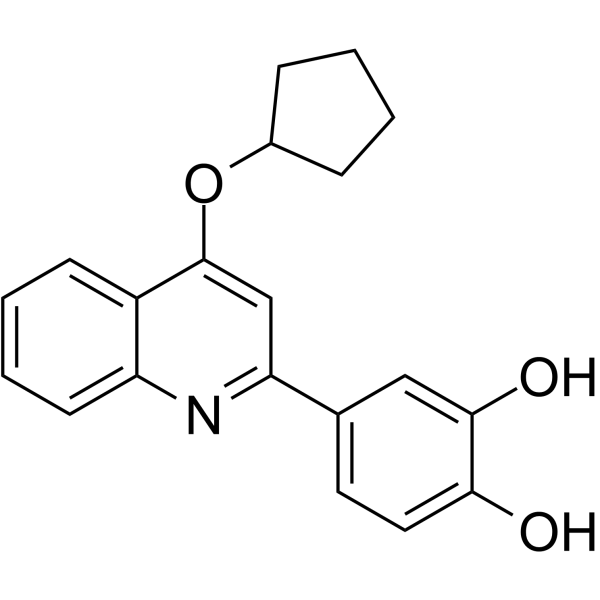
CMS-121 is a quinolone derivative and an orally active acetyl-CoA carboxylase 1 (ACC1) inhibitor. CMS-121 protects HT22 cells against ischemia and oxidative damage with EC50 values of 7 nM and 200 nM, respectively. CMS-121 has strong neuroprotective, anti-inflammatory, antioxidative and renoprotective activities.
Nos produits utilisent uniquement pour la recherche. Nous ne vendons pas aux patients.
- Pureté : 98.30%
- CAS No.: 1353224-53-9
- Formule: C20H19NO3
- Masse moléculaire:321.37
-
Stockage:Powder -20°C, 3 years , 4°C, 2 years ; In solvent -80°C, 6 months , -20°C, 1 month

To place orders, for customer services and technical support, please contact: MedChemExpress USA
Tel: 609-228-6898 E-mail: [email protected] [email protected]


-
 Activité biologique
-
Chemical Information
-
Solvant et solubilité
- Protocole
- Pureté et documentation
- Références
-
 Help & FAQs


-
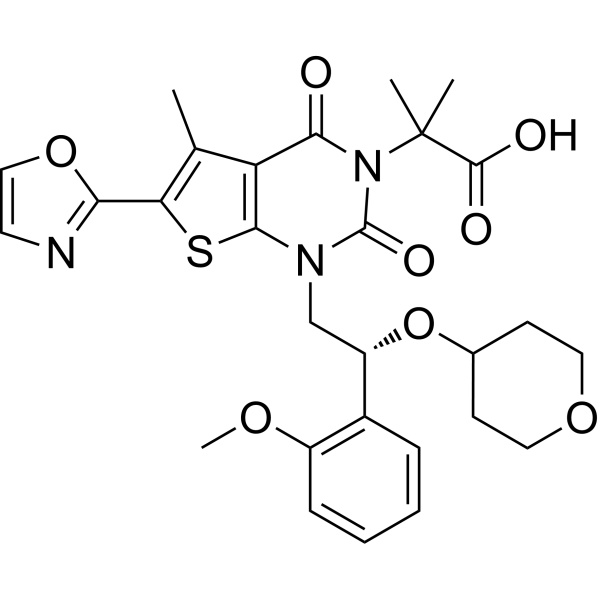
HY-16901
FirsocostatACC Inhibitor -
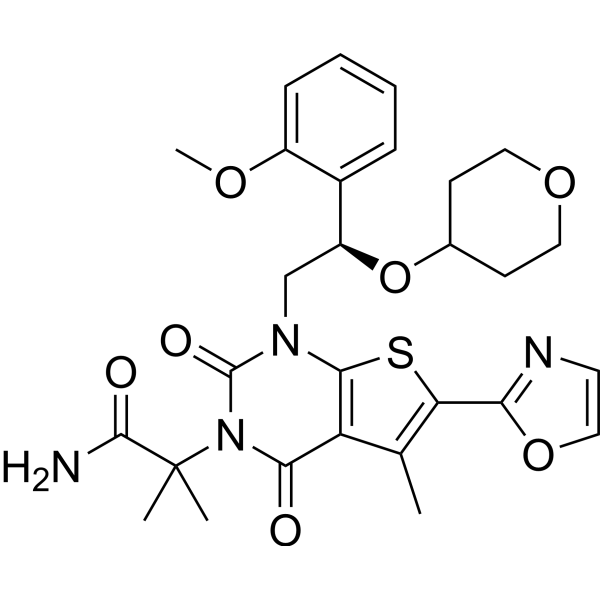
HY-101842
ND-646ACC Inhibitor -
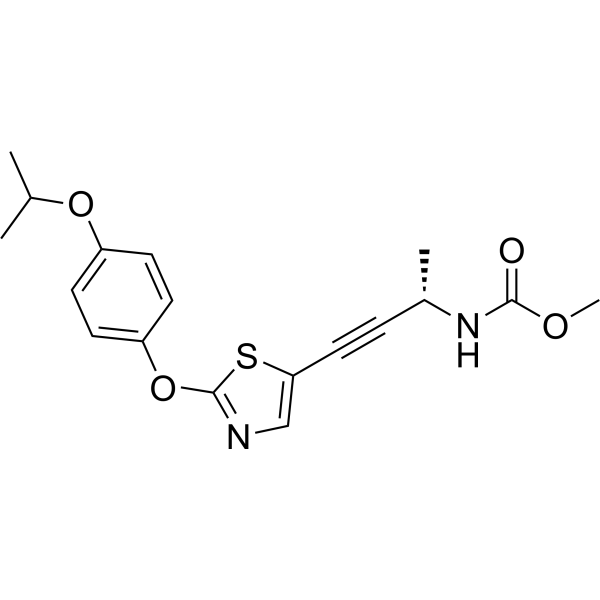
HY-147004
A-908292ACC2 Inhibitor -
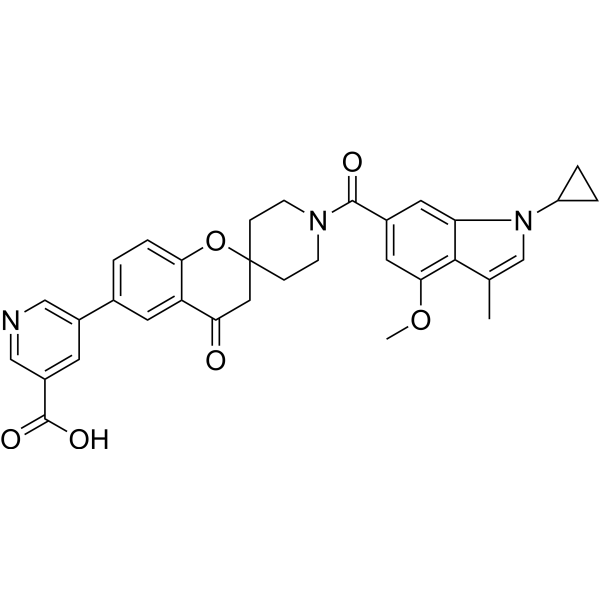
HY-107709
MK-4074Acetyl-CoA Carboxylase Inhibitor -
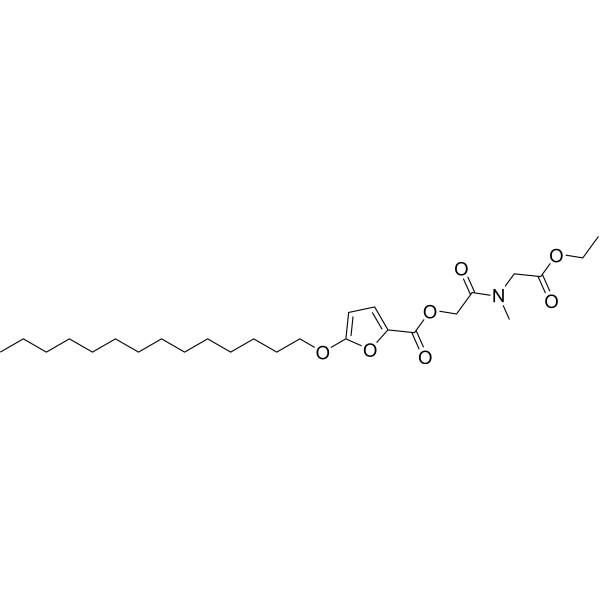
HY-17641
Olumacostat glasaretilACC Inhibitor -
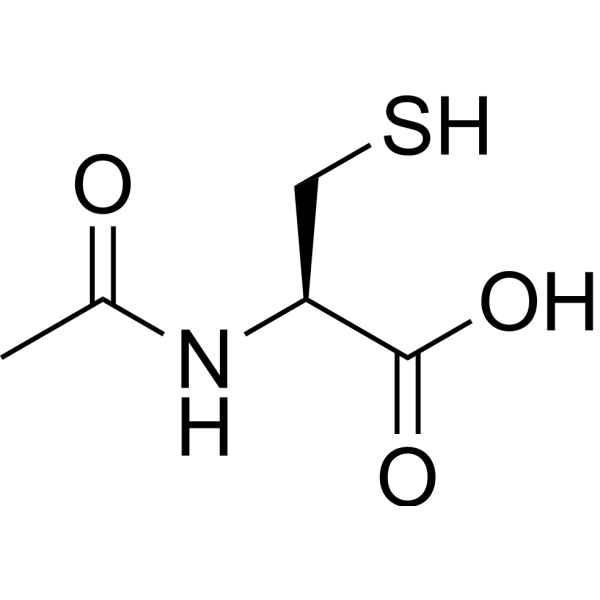
HY-B0215
AcetylcysteineMucolytic Agent -
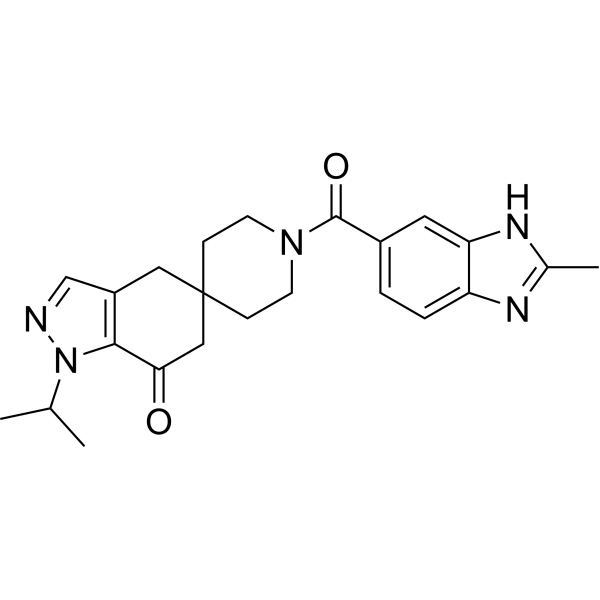
HY-12942
PF-05175157Acetyl-CoA Carboxylase Inhibitor -
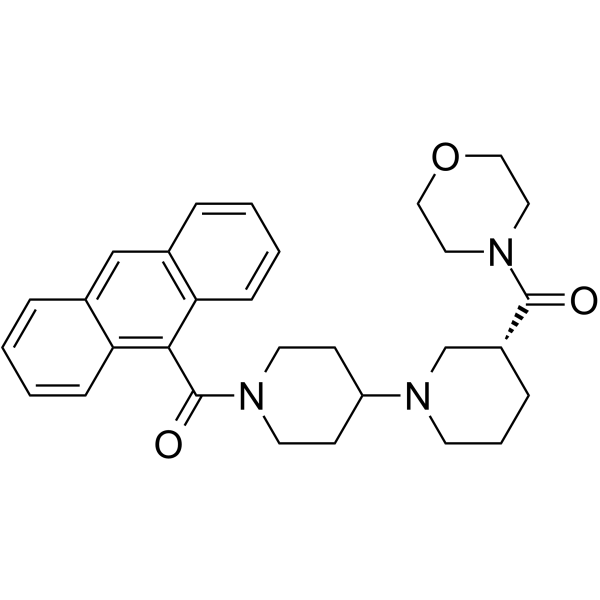
HY-15259
CP-640186ACC Inhibitor -
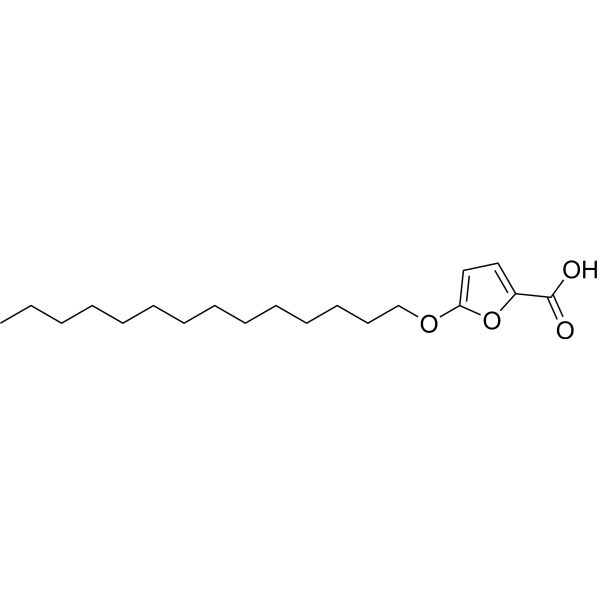
HY-101068
TOFAAcetyl-CoA Carboxylase Inhibitor -
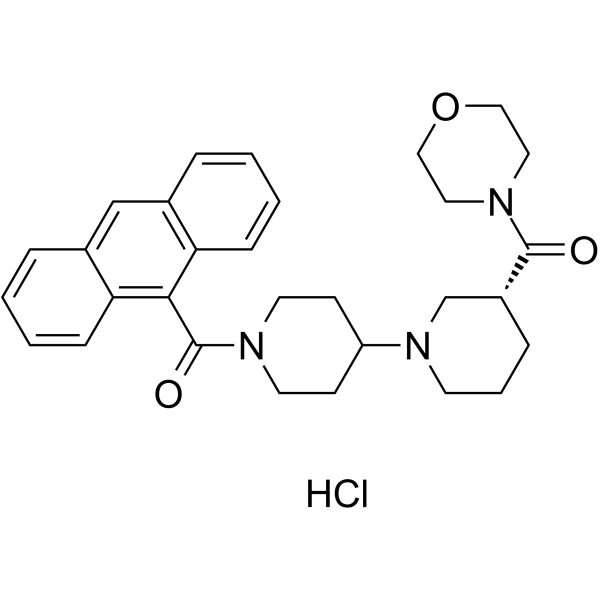
HY-15259A
CP-640186 hydrochlorideACC Inhibitor -
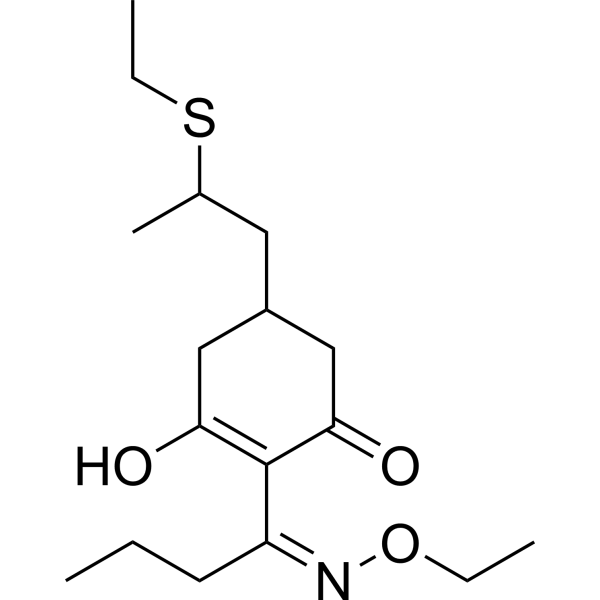
HY-135753
SethoxydimHerbicide -
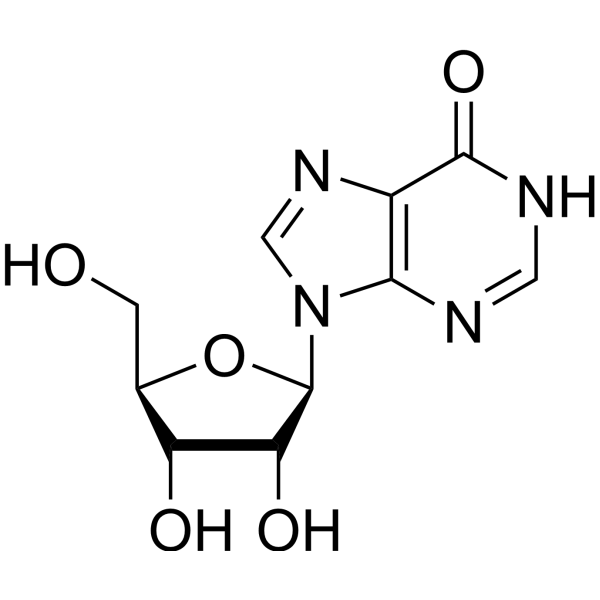
HY-N0092
InosineEndogenous Metabolite
Publications Citing Use of MedChemExpress (MCE) CMS-121
More

Activité biologique
Description
IC50 & Target
Acetyl-CoA carboxylase 1 (ACC1)[1]
Cellular Effect
|
Cell Line

|
Type | Value | Description | References |
|---|---|---|---|---|
| HT-22 | EC50 |
0.007 μM
Compound: 121
|
Neuroprotective activity in mouse HT22 cells assessed as reduction in IAA-induced ischemia after 24 hrs by MTT assay
Neuroprotective activity in mouse HT22 cells assessed as reduction in IAA-induced ischemia after 24 hrs by MTT assay
|
[PMID: 22192055] |
In Vitro
CMS-121 (1 μM; 4 hours; HT22 cells) treatment increases the phosphorylation of ACC1 at serine 79. CMS-121 can increase acetyl-CoA in cells[1].
MedChemExpress (MCE) has not independently confirmed the accuracy of these methods. They are for reference only.
-
Cell Line:HT22 cells
-
Concentration:1 µM
-
Incubation Time:4 hours
-
Result:Increases the phosphorylation of ACC1 at serine 79.
In Vivo
MedChemExpress (MCE) has not independently confirmed the accuracy of these methods. They are for reference only.
-
Animal Model:Female SAMP8 mice (9 months old)[1]
-
Dosage:~20 mg/kg/day
-
Administration:Oral administration; daily; for 4 months
-
Result:Reduced cognitive decline as well as metabolic and transcriptional markers of aging in the brain.
Essai clinique
| NCT Number | Sponsor | Condition | Start Date |
Phase
|
|---|---|---|---|---|
| NCT01329991 | Plexxikon| | 2011-05 | PHASE1 |


Chemical Information
-
CAS No. 1353224-53-9
-
Appearance Solid
-
Masse moléculaire 321.37
-
Formule C20H19NO3
-
Color Light yellow to yellow
-
SMILES
OC1=CC=C(C2=NC3=CC=CC=C3C(OC4CCCC4)=C2)C=C1O
-
Livraison
Room temperature in continental US; may vary elsewhere.
-
Stockage
Powder -20°C 3 years 4°C 2 years In solvent -80°C 6 months -20°C 1 month


Publications (2)
-
Journal Impact Factor
-
Most Recent
-
Adv Sci (Weinh)
MSL1 Promotes Liver Regeneration by Driving Phase Separation of STAT3 and Histone H4 and Enhancing Their Acetylation. [Abstract]2023 Aug;10(23):e2301094. PMID: 37279389 -
PLoS Pathog
2025 May 6;21(5):e1013068. PMID: 40327680


Solvant et solubilité
In Vitro:
DMSO : 50 mg/mL (155.58 mM; Need ultrasonic; Hygroscopic DMSO has a significant impact on the solubility of product, please use newly opened DMSO)
Please refer to the solubility information to select the appropriate solvent. Once prepared, please aliquot and store the solution to prevent product inactivation from repeated freeze-thaw cycles.
Storage method and period of stock solution: -80°C, 6 months; -20°C, 1 month. When stored at -80°C, please use it within 6 months. When stored at -20°C, please use it within 1 month.
Please refer to the solubility information to select the appropriate solvent. Once prepared, please aliquot and store the solution to prevent product inactivation from repeated freeze-thaw cycles.
Storage method and period of stock solution: -80°C, 6 months; -20°C, 1 month. When stored at -80°C, please use it within 6 months. When stored at -20°C, please use it within 1 month.
Concentration (start) × Volume (start) = Concentration (final) × Volume (final)
In Vivo:
Select the appropriate dissolution method based on your experimental animal and administration route.
- For the following dissolution methods, please ensure to first prepare a clear stock solution using an In Vitro approach and then sequentially add co-solvents:
- To ensure reliable experimental results, the clarified stock solution can be appropriately stored based on storage conditions. As for the working solution for In Vivo experiments, it is recommended to prepare freshly and use it on the same day.
- The percentages shown for the solvents indicate their volumetric ratio in the final prepared solution. If precipitation or phase separation occurs during preparation, heat and/or sonication can be used to aid dissolution.
Add each solvent one by one: 10% DMSO 40% PEG300 5% Tween-80 45% Saline
Solubility: ≥ 2.08 mg/mL (6.47 mM); Clear solution
This protocol yields a clear solution of ≥ 2.08 mg/mL (saturation unknown).
Taking 1 mL working solution as an example, add 100 μL DMSO stock solution (20.8 mg/mL) to 400 μL PEG300, and mix evenly; then add 50 μL Tween-80 and mix evenly; then add 450 μL Saline to adjust the volume to 1 mL.
Preparation of Saline: Dissolve 0.9 g sodium chloride in ddH₂O and dilute to 100 mL to obtain a clear Saline solution.
Add each solvent one by one: 10% DMSO 90% (20% SBE-β-CD in Saline)
Solubility: ≥ 2.08 mg/mL (6.47 mM); Clear solution
This protocol yields a clear solution of ≥ 2.08 mg/mL (saturation unknown).
Taking 1 mL working solution as an example, add 100 μL DMSO stock solution (20.8 mg/mL) to 900 μL 20% SBE-β-CD in Saline, and mix evenly.
Preparation of 20% SBE-β-CD in Saline (4°C, storage for one week): 2 g SBE-β-CD powder is dissolved in 10 mL Saline, completely dissolve until clear.
In Vivo Dissolution Calculator
Please enter the basic information of animal experiments:
-
-
-
-
Recommended: Prepare an additional quantity of animals to account for potential losses during experiments.
Please enter your animal formula composition:
-
%DMSO +
Recommended: Keep the proportion of DMSO in working solution below 2% if your animal is weak.
-
%+
-
+%Tween-80 + +
-
%Saline +
The co-solvents required include: DMSO, . All of co-solvents are available by MedChemExpress (MCE). , Tween 80. All of co-solvents are available by MedChemExpress (MCE).
Working solution concentration: 0.22 mg/mL
Method for preparing stock solution: mg drug dissolved in μL DMSO. Stock solution concentration: mg/mL.
1. Take μL DMSO stock solution;
2. Add μL .
μL , mix evenly;
3. Then add μL Tween 80, mix evenly;
4. Then add μL
Please ensure that the stock solution in the first step is dissolved to a clear state, and add co-solvents in sequence. You can use ultrasonic heating (ultrasonic cleaner, recommended frequency 20-40 kHz), vortexing, etc. to assist dissolution.


Pureté et documentation
-
Fiche technique (279 KB)
-
SDS (251 KB)
- English - EN (251 KB)
- Français - FR (251 KB)
- Deutsch - DE (251 KB)
- Norwegian - NO (251 KB)
- Español - ES (251 KB)
- Swedish - SV (251 KB)
- Italian - IT (251 KB)
- Korean - KR (251 KB)
- Portuguese - PT (251 KB)
-
Instruction de manipulation (2659 KB)
Références
[1]. Currais A, et al. Elevating acetyl-CoA levels reduces aspects of brain aging. Elife. 2019 Nov 19;8. pii: e47866. [Content Brief]
[2]. Chiruta C, et al. Chemical modification of the multitarget neuroprotective compound fisetin. J Med Chem. 2012 Jan 12;55(1):378-89. [Content Brief]
[3]. Prior M, et al. Back to the future with phenotypic screening. ACS Chem Neurosci. 2014 Jul 16;5(7):503-13. [Content Brief]


Complete Stock Solution Preparation Table
Please refer to the solubility information to select the appropriate solvent. Once prepared, please aliquot and store the solution to prevent product inactivation from repeated freeze-thaw cycles.
Storage method and period of stock solution: -80°C, 6 months; -20°C, 1 month. When stored at -80°C, please use it within 6 months. When stored at -20°C, please use it within 1 month.
| Optional Solvent | Concentration Solvent Mass | 1 mg | 5 mg | 10 mg | 25 mg |
|---|---|---|---|---|---|
| DMSO | 1 mM | 3.1117 mL | 15.5584 mL | 31.1168 mL | 77.7920 mL |
| 5 mM | 0.6223 mL | 3.1117 mL | 6.2234 mL | 15.5584 mL | |
| 10 mM | 0.3112 mL | 1.5558 mL | 3.1117 mL | 7.7792 mL | |
| 15 mM | 0.2074 mL | 1.0372 mL | 2.0745 mL | 5.1861 mL | |
| 20 mM | 0.1556 mL | 0.7779 mL | 1.5558 mL | 3.8896 mL | |
| 25 mM | 0.1245 mL | 0.6223 mL | 1.2447 mL | 3.1117 mL | |
| 30 mM | 0.1037 mL | 0.5186 mL | 1.0372 mL | 2.5931 mL | |
| 40 mM | 0.0778 mL | 0.3890 mL | 0.7779 mL | 1.9448 mL | |
| 50 mM | 0.0622 mL | 0.3112 mL | 0.6223 mL | 1.5558 mL | |
| 60 mM | 0.0519 mL | 0.2593 mL | 0.5186 mL | 1.2965 mL | |
| 80 mM | 0.0389 mL | 0.1945 mL | 0.3890 mL | 0.9724 mL | |
| 100 mM | 0.0311 mL | 0.1556 mL | 0.3112 mL | 0.7779 mL |


CMS-121 Related Classifications
HY-135981 Related Classifications
 Powered by Bioz