



CpG ODN 10101
Based on 3 publication(s) in Google Scholar
CpG ODN 10101 (ODN 10101; CPG 10101) is a selective agonist targeting TLR9, a synthetic oligodeoxynucleotide modified with phosphate thioester. CpG ODN 10101 activates B cells and plasmacytoid dendritic cells (pDCs), inducing the production of cytokines and chemokines such as interferon-IFN-α, interferon-inducible protein IP-10, and 2'5'-oligoadenylate synthase (2'5'-OAS), regulating innate immunity and promoting Th1 adaptive immune responses. CpG ODN 10101 also possesses antiviral properties and enhances vaccine immunogenicity, making it suitable as an immunomodulator and vaccine adjuvant for vaccine development in chronic hepatitis C and infectious diseases such as melioidosis, pertussis, and respiratory syncytial virus (RSV).
Nos produits utilisent uniquement pour la recherche. Nous ne vendons pas aux patients.
- Pureté : 99.44%
- CAS No.: 1234402-77-7
- Masse moléculaire:6702.37
-
Stockage:
-20°C, sealed storage, away from moisture
* In solvent : -80°C, 6 months; -20°C, 1 month (sealed storage, away from moisture)


To place orders, for customer services and technical support, please contact: MedChemExpress USA
Tel: 609-228-6898 E-mail: [email protected] [email protected]


-
 Activité biologique
-
Chemical Information
-
Solvant et solubilité
- Protocole
- Pureté et documentation
- Références
-
 Help & FAQs


-
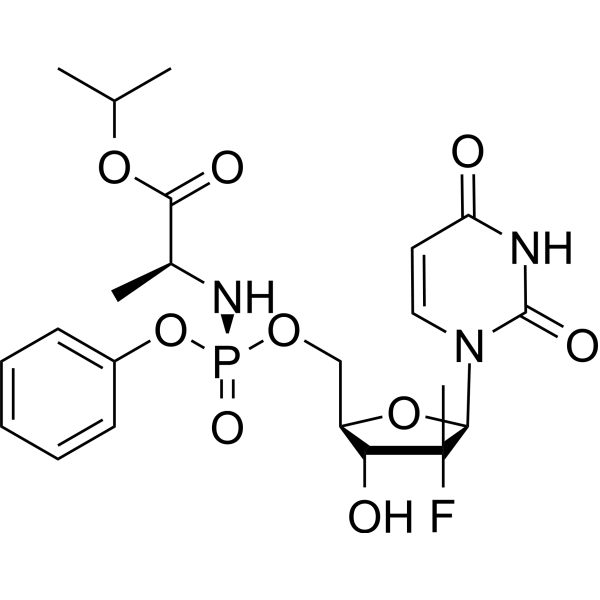
HY-15005
Sofosbuvir -
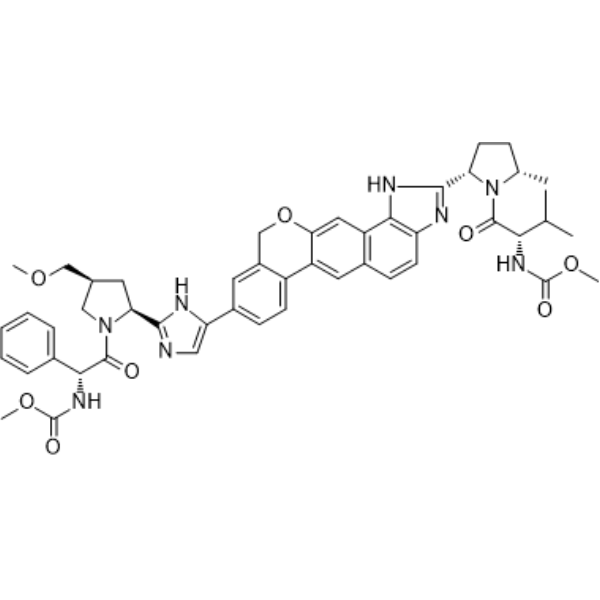
HY-12530
VelpatasvirHCV NS5A Inhibitor -
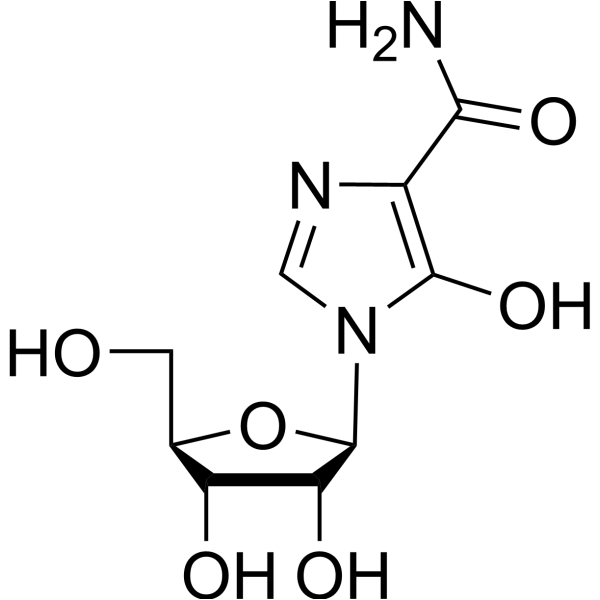
HY-17470
MizoribineIMPDH Inhibitor -
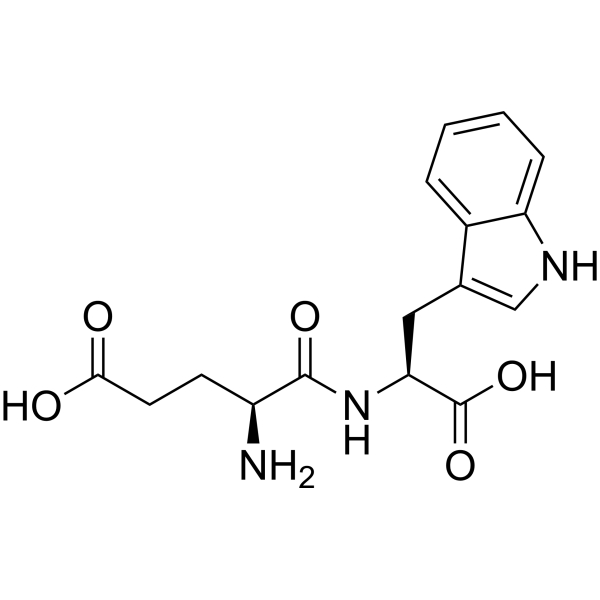
HY-13718
OglufanideImmunomodulator -
HY-19314
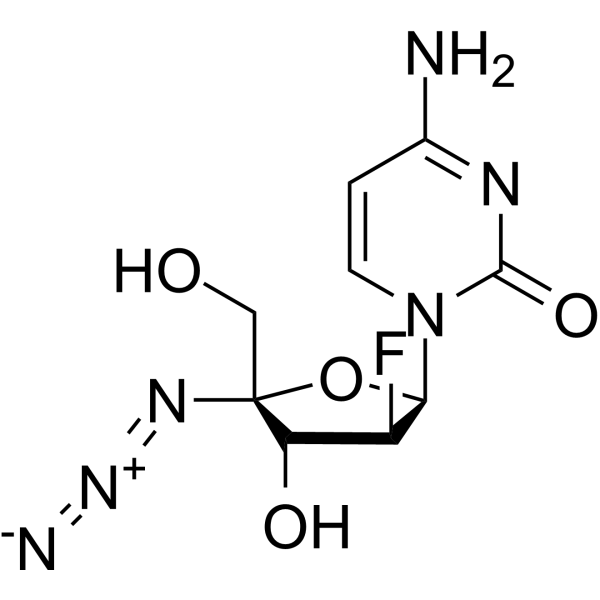
AzvudineNucleoside Reverse Transcriptase Inhibitor -
HY-13997
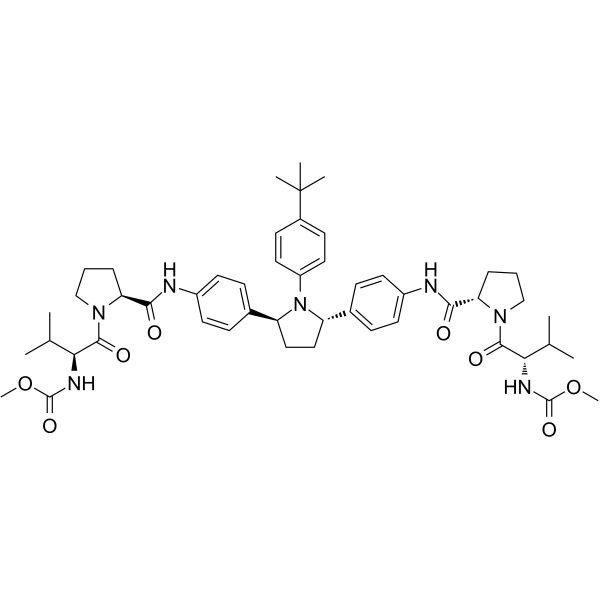
OmbitasvirHCV NS5A Inhibitor -
HY-19900
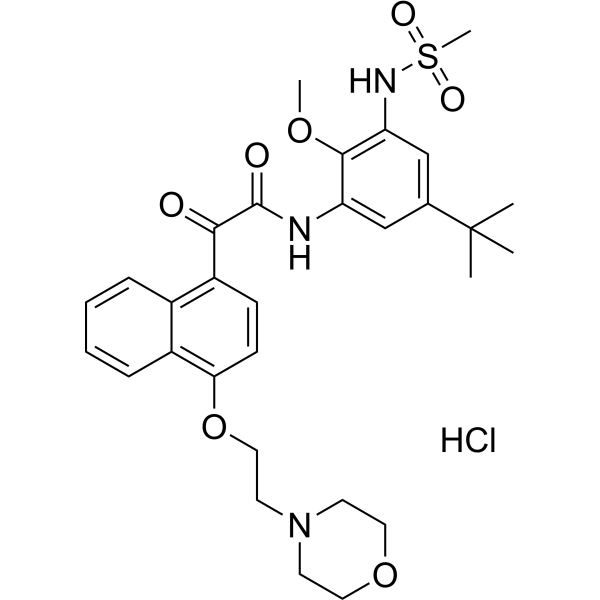
ITX5061p38 MAPK Inhibitor -

HY-15005R
Sofosbuvir (Standard) -

HY-17470R
Mizoribine (Standard)IMPDH Inhibitor -

HY-12530R
Velpatasvir (Standard)HCV NS5A Inhibitor -
HY-N7934
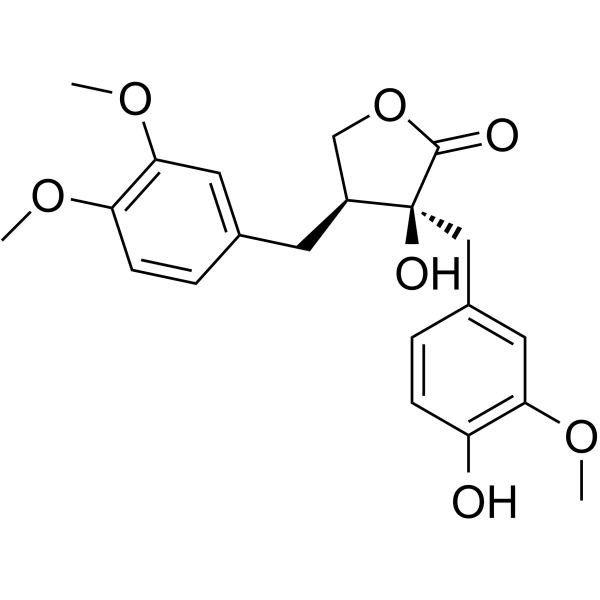
TrachelogeninHCV Entry Inhibitor -
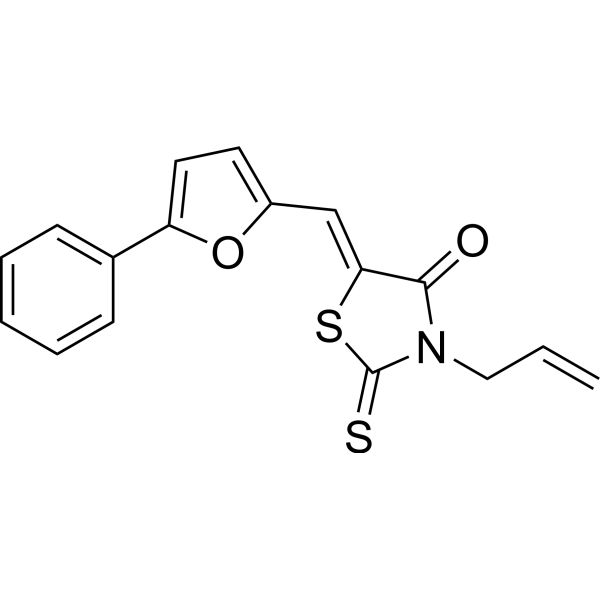
HY-16957
LJ001Antiviral Agent
Publications Citing Use of MedChemExpress (MCE) CpG ODN 10101
More

Activité biologique
Description
|
TLR9 |
In Vitro
CpG ODN 10101 (10 μg/well; 48 hours) stimulates mouse J774 macrophages, and the MP complex formulation induced significantly higher levels of TNF-α, IL-6, and IL-12p40 than the soluble formulation (SOL) and the formulation without PCEP (AQ), while the SOL formulation induced the highest level of MCP-1[3].
CpG ODN 10101 (10 μg/well, combined with 10 μg or 20 μg/well IDR 1002 and 10 μg/well PCEP; 48 hours) stimulates mouse J774 macrophages, and the cytokine levels induced by the uncomplexed MP formulations (MP-IDR + MP-CpG) were lower than those induced by the MP complex formulation[3].
MedChemExpress (MCE) has not independently confirmed the accuracy of these methods. They are for reference only.
-
Cell Line:J774 murine macrophages
-
Concentration:CpG ODN 10101: 10 μg/well; IDR 1002: 10 μg/well, 20 μg/well; PCEP: 10 μg/well; Formulations: MP-complexed (CpG ODN-IDR-PCEP), MP-uncomplexed (MP-IDR + MP-CpG), SOL-complexed (PCEP+CpG ODN+IDR), AQ-complexed (CpG ODN+IDR); Positive control: LPS (5 μg/well)
-
Incubation Time:48 hours
-
Result:The MP-complexed formulation induced significantly higher levels of pro-inflammatory cytokines TNF-α and IL-6 compared to the AQ-complexed and SOL-complexed formulations. The IL-12p40 level in the MP-complexed group was twice as high as that in the SOL and AQ groups. The SOL-complexed formulation showed the strongest induction of MCP-1, while the MP-complexed formulation had higher MCP-1 levels than the MP-uncomplexed and AQ-complexed groups. LPS served as a positive control to confirm cell viability, and medium alone did not induce significant cytokine secretion.
In Vivo
CpG ODN 10101 (10 μg/mouse, combined with 10 μg PCEP and 20 μg IDR 1002; subcutaneous injection; single dose) induced a strong Th1-type immune response in a pertussis model in BALB/c mice, increasing the number of IL-17-secreting cells in the spleen, increasing levels of MCP-1, TNF-α, and IFN-γ in lung tissue, decreasing IL-10 levels, and reducing the bacterial load of Bordetella pertussis in the lungs[3].
CpG ODN 10101 (10 μg/mouse, combined with 10 μg PCEP, 20 μg IDR 1002, and 1 μg RSV F protein; intramuscular/intranasal injection; two doses) induced serum and lung tissue virus-neutralizing antibodies in an RSV infection model in BALB/c mice, increased IFN-γ-secreting cells, completely inhibited RSV replication in lung tissue, and caused no immunopathological damage[4].
CpG ODN 10101 (10 μg/mouse, combined with 10 μg PCEP, 20 μg IDR 1002, and 1 μg RSV F protein; intramuscular injection; two doses) induced high levels of virus-neutralizing antibodies in an RSV infection model in cotton rats (Sigmodon hispidus), completely inhibited RSV replication in lung tissue, and reduced pulmonary inflammatory infiltration and alveolar septal thickening[4].
MedChemExpress (MCE) has not independently confirmed the accuracy of these methods. They are for reference only.
-
Animal Model:BALB/c mice (female, 8-10 weeks old) + RSV A2 strain pulmonary infection model[4]
-
Dosage:10 μg per mouse, complexed with 10 μg PCEP, 20 μg IDR 1002, and 1 μg truncated RSV F protein
-
Administration:administered intramuscularly (IM) or intranasally (IN), twice with a 3-week interval
-
Result:Both IM and IN administration induced significantly higher RSV-neutralizing antibodies in sera and lungs compared to mice immunized with F protein alone. The number of IFN-γ-secreting splenocytes was increased, while IL-5 production was reduced. After RSV challenge, no virus replication was detected in lung tissues of F-MP-immunized mice, and there was no evidence of immunopathology (eosinophilia, increased IL-4/IL-13/eotaxin levels) compared to mice immunized with F protein alone.


Chemical Information
-
CAS No. 1234402-77-7
-
Appearance Solid
-
Masse moléculaire 6702.37
-
Color White to off-white
-
SMILES
[CpG ODN 10101]
-
Synonyms
ODN 10101
-
Sequence
DNA, d(P-thio)(T-C-G-T-C-G-T-T-T-T-C-G-C-G-C-G-C-G-C-C-G)
-
Livraison
Room temperature in continental US; may vary elsewhere.
-
Stockage
-20°C, sealed storage, away from moisture
* In solvent : -80°C, 6 months; -20°C, 1 month (sealed storage, away from moisture)


Publications (3)
-
Journal Impact Factor
-
Most Recent
-
-
Acta Pharmacol Sin
Triptolide derivative STP1 ameliorates murine systemic lupus erythematosus via targeting Fyn kinase. [Abstract]2026 Feb 11. PMID: 41673457 -
Cancer Med
miR-34a promotes the immunosuppressive function of multiple myeloma-associated macrophages by dampening the TLR-9 signaling. [Abstract]2024 Jun;13(11):e7387. PMID: 38864479


Solvant et solubilité
In Vitro:
H2O : ≥ 25 mg/mL (3.73 mM)
* "≥" means soluble, but saturation unknown.
Please refer to the solubility information to select the appropriate solvent. Once prepared, please aliquot and store the solution to prevent product inactivation from repeated freeze-thaw cycles.
Storage method and period of stock solution: -80°C, 6 months; -20°C, 1 month (sealed storage, away from moisture). When stored at -80°C, please use it within 6 months. When stored at -20°C, please use it within 1 month.
* Note: If you choose water as the stock solution, please dilute it to the working solution, then filter and sterilize it with a 0.22 μm filter before use.
Please refer to the solubility information to select the appropriate solvent. Once prepared, please aliquot and store the solution to prevent product inactivation from repeated freeze-thaw cycles.
Storage method and period of stock solution: -80°C, 6 months; -20°C, 1 month (sealed storage, away from moisture). When stored at -80°C, please use it within 6 months. When stored at -20°C, please use it within 1 month.
* Note: If you choose water as the stock solution, please dilute it to the working solution, then filter and sterilize it with a 0.22 μm filter before use.
Concentration (start) × Volume (start) = Concentration (final) × Volume (final)


Pureté et documentation
-
Fiche technique (278 KB)
-
SDS (251 KB)
- English - EN (251 KB)
- Français - FR (251 KB)
- Deutsch - DE (251 KB)
- Norwegian - NO (251 KB)
- Español - ES (251 KB)
- Swedish - SV (251 KB)
- Italian - IT (251 KB)
- Korean - KR (251 KB)
- Portuguese - PT (251 KB)
-
Instruction de manipulation (2242 KB)
Références
[1]. McHutchison JG, et al. Phase 1B, randomized, double-blind, dose-escalation trial of CPG 10101 in patients with chronic hepatitis C virus. Hepatology. 2007 Nov;46(5):1341-9. [Content Brief]
[2]. Easton A, et al. Combining vaccination and postexposure CpG therapy provides optimal protection against lethal sepsis in a biodefense model of human melioidosis. J Infect Dis. 2011 Aug 15;204(4):636-44. [Content Brief]
[3]. Garlapati S, et al. Immunization with PCEP microparticles containing pertussis toxoid, CpG ODN and a synthetic innate defense regulator peptide induces protective immunity against pertussis. Vaccine. 2011 Sep 2;29(38):6540-8. [Content Brief]
[4]. Garlapati S, et al. Enhanced immune responses and protection by vaccination with respiratory syncytial virus fusion protein formulated with CpG oligodeoxynucleotide and innate defense regulator peptide in polyphosphazene microparticles. Vaccine. 2012 Jul 27;30(35):5206-14. [Content Brief]


Complete Stock Solution Preparation Table
Please refer to the solubility information to select the appropriate solvent. Once prepared, please aliquot and store the solution to prevent product inactivation from repeated freeze-thaw cycles.
Storage method and period of stock solution: -80°C, 6 months; -20°C, 1 month (sealed storage, away from moisture). When stored at -80°C, please use it within 6 months. When stored at -20°C, please use it within 1 month.
| Optional Solvent | Concentration Solvent Mass | 1 mg | 5 mg | 10 mg | 25 mg |
|---|---|---|---|---|---|
| H2O | 1 mM | 0.1492 mL | 0.7460 mL | 1.4920 mL | 3.7300 mL |
* Note: If you choose water as the stock solution, please dilute it to the working solution, then filter and sterilize it with a 0.22 μm filter before use.


CpG ODN 10101 Related Classifications
HY-150217 Related Classifications
 Powered by Bioz