



Cyclic MKEY
Cyclic MKEY is a synthetic cyclic peptide inhibitor of CXCL4-CCL5 heterodimer formation, which protects against atherosclerosis and aortic aneurysm formation by mediating inflammation. Cyclic MKEY also protects against stroke-induced brain injury in mice.
For research use only. We do not sell to patients.
- Formula: C113H174N28O34S2
- Molecular Weight:2530.87
-
Storage:
Please store the product under the recommended conditions in the Certificate of Analysis.

To place orders, for customer services and technical support, please contact: MedChemExpress USA
Tel: 609-228-6898 E-mail: [email protected] [email protected]


-
 Biological Activity
-
Chemical Information
- Protocols
- Purity & Documentation
- References
-
 Help & FAQs




Biological Activity
Description
IC50 & Target
CXCL4-CCL5 heterodimer formation[1]


Chemical Information
-
Molecular Weight 2530.87
-
Formula C113H174N28O34S2
-
Sequence
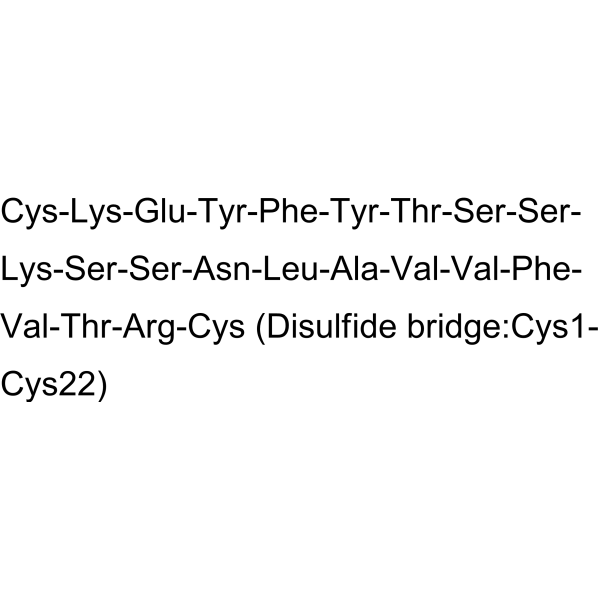
Cys-Lys-Glu-Tyr-Phe-Tyr-Thr-Ser-Ser-Lys-Ser-Ser-Asn-Leu-Ala-Val-Val-Phe-Val-Thr-Arg-Cys (Disulfide bridge:Cys1-Cys22)
-
Sequence Shortening
CKEYFYTSSKSSNLAVVFVTRC (Disulfide bridge:Cys1-Cys22)
-
Shipping
Room temperature in continental US; may vary elsewhere.
-
Storage
Please store the product under the recommended conditions in the Certificate of Analysis.


Purity & Documentation
References
[1]. Fan Y,et al. MKEY, a Peptide Inhibitor of CXCL4-CCL5 Heterodimer Formation, Protects Against Stroke in Mice. J Am Heart Assoc. 2016 Sep 15;5(9). pii: e003615. [Content Brief]
[2]. Iida Y, et al. Peptide inhibitor of CXCL4-CCL5 heterodimer formation, MKEY, inhibits experimental aortic aneurysm initiation and progression. Arterioscler Thromb Vasc Biol. 2013 Apr;33(4):718-26. [Content Brief]

Calculators
Concentration (start) × Volume (start) = Concentration (final) × Volume (final)


Cyclic MKEY Related Classifications
HY-P1949 Related Classifications
 Powered by Bioz