



Dihydrocaffeic acid (Standard)

Based on 1 Customer Validation
Ditalimfos (Standard) is the analytical standard of Ditalimfos. This product is intended for research and analytical applications. Ditalimfos is an organophosphate fungicide. Ditalimfos is mainly used in agriculture to control fungal diseases of crops. Ditalimfos can be used for fungal resistance studies and risk assessment of residues in the environment.
For research use only. We do not sell to patients.
- Purity : 99.88%
- CAS No.: 1078-61-1
- Formula: C9H10O4
- Molecular Weight:182.17
-
Storage:
Please store the product under the recommended conditions in the Certificate of Analysis.


To place orders, for customer services and technical support, please contact: MedChemExpress USA
Tel: 609-228-6898 E-mail: [email protected] [email protected]


-
 Product Information
-
Chemical Information
- Purity & Documentation
-
 Help & FAQs


-
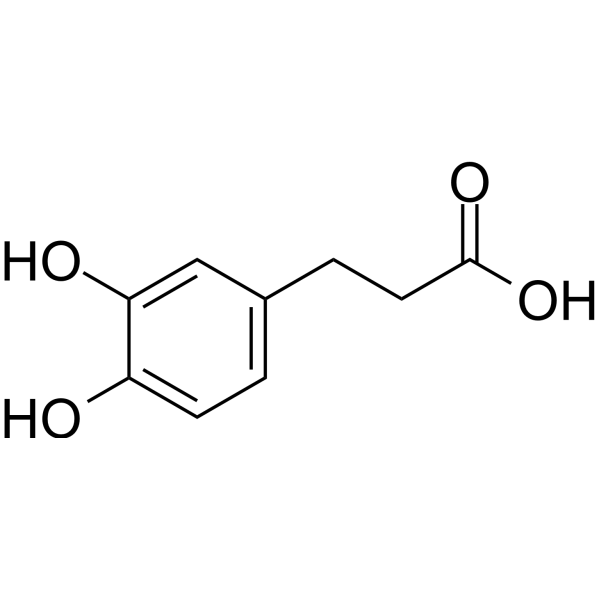
HY-N2406
Dihydrocaffeic acidEndogenous Metabolite -
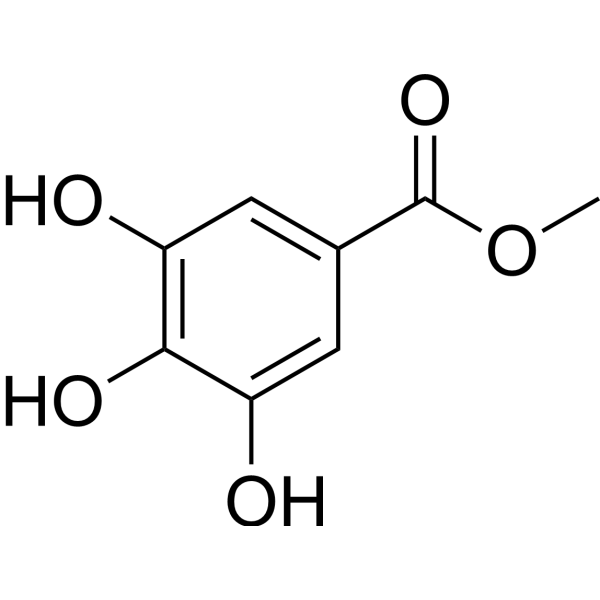
HY-N2010
Methyl gallateAntioxidant -
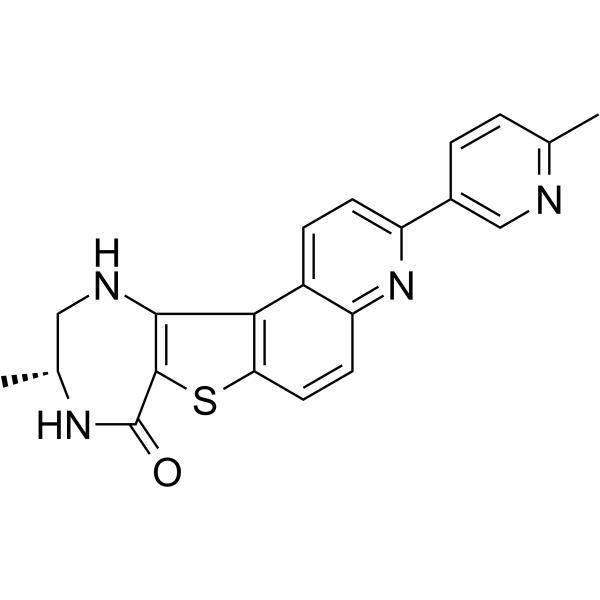
HY-107427
PF-3644022MK2 Inhibitor -
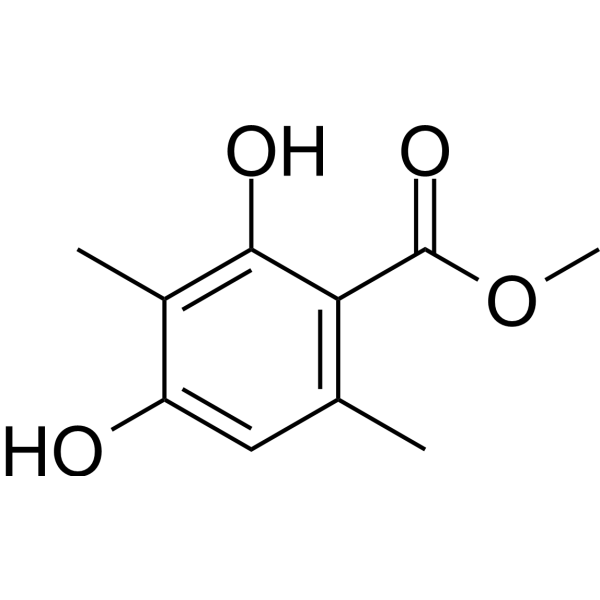
HY-N2908
Atraric acidAndrogen Receptor Antagonist -
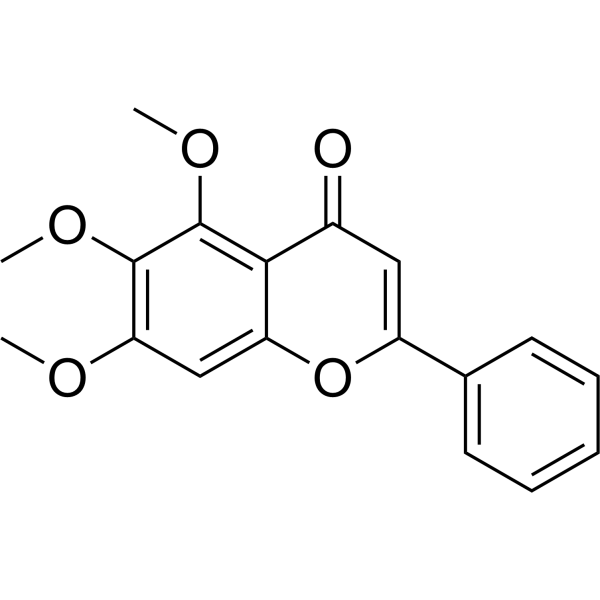
HY-110398
5,6,7-Trimethoxyflavonep38 MAPK Inhibitor -
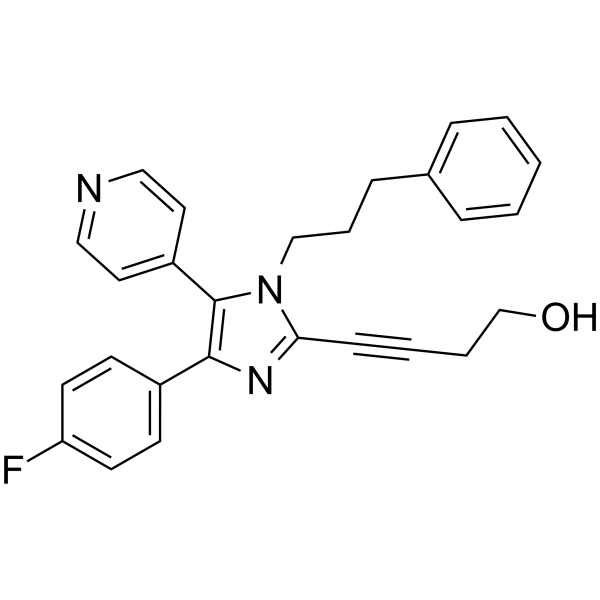
HY-15505
RWJ-67657p38α/β Inhibitor -
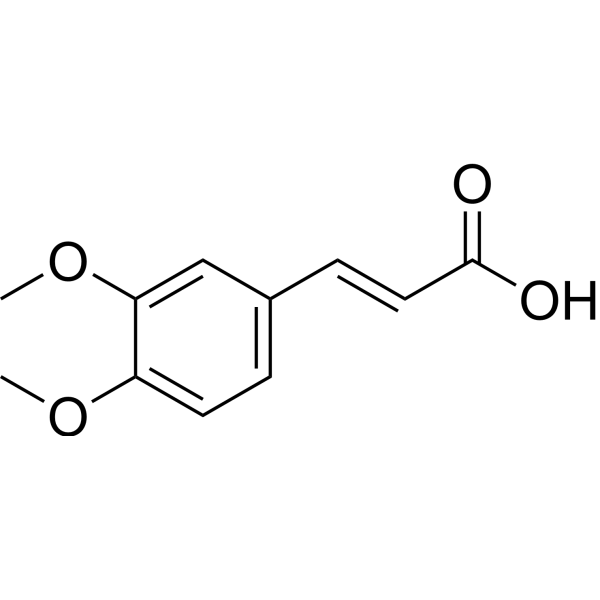
HY-N1778
3,4-Dimethoxycinnamic acidVirus Protease Inhibitor -
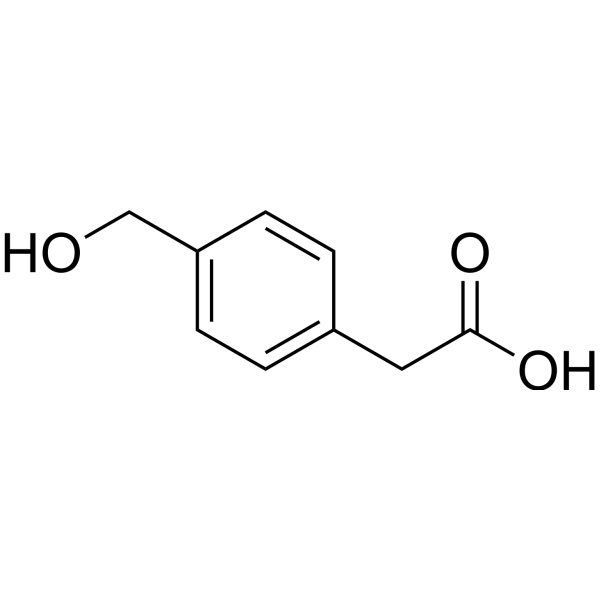
HY-W004128
4-(Hydroxymethyl)phenylacetic acidInsoluble Peptide -
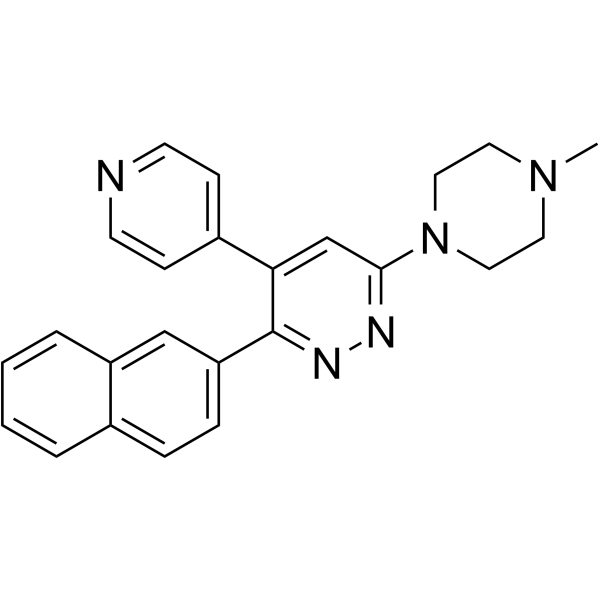
HY-120111
MW-150p38α MAPK Inhibitor -

HY-N2010R
Methyl gallate (Standard)Antioxidant -

HY-W017703
Diethyl 2,5-dihydroxyterephthalate -
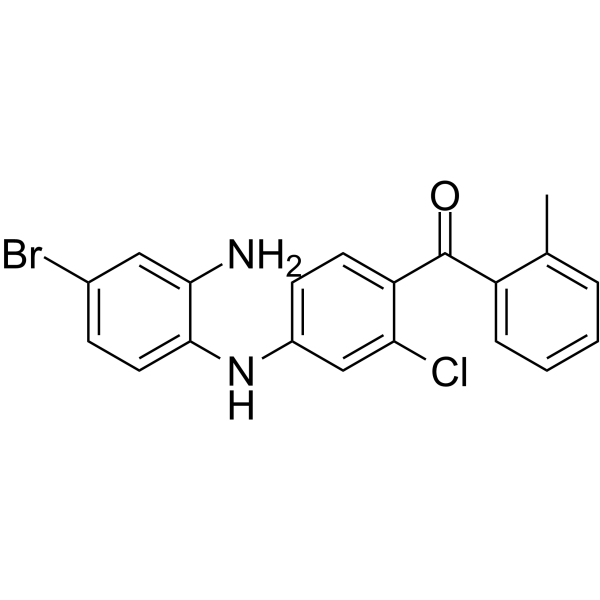
HY-108647
EO 1428p38 Inhibitor


Product Information
Information
Application
The compound is the grade of analytical standard, which is the reference standard supplied assay. It is commonly used in qualitative, quantitative and methodological research experiments in HPLC, GC and MS.


Chemical Information
-
CAS No. 1078-61-1
-
Appearance Solid
-
Molecular Weight 182.17
-
Formula C9H10O4
-
Color Off-white to light brown
-
SMILES
O=C(O)CCC1=CC=C(O)C(O)=C1
-
Synonyms
3,4-Dihydroxy-benzenepropanoic acid (Standard)
-
Structure Classification
-
Initial Source
-
Shipping
Room temperature in continental US; may vary elsewhere.
-
Storage
Please store the product under the recommended conditions in the Certificate of Analysis.


Purity & Documentation
-
SDS (394 KB)
- English - EN (394 KB)
- Français - FR (394 KB)
- Deutsch - DE (394 KB)
- Norwegian - NO (394 KB)
- Español - ES (394 KB)
- Swedish - SV (394 KB)
- Italian - IT (394 KB)
- Korean - KR (394 KB)
- Portuguese - PT (394 KB)
-
Handling Instructions (2659 KB)
References
[1]. Oliveira MM, et al. Dihydrocaffeic Acid Prevents UVB-Induced Oxidative Stress Leading to the Inhibition of Apoptosis and MMP-1 Expression via p38 Signaling Pathway. Oxid Med Cell Longev. 2019 Jan 17;2019:2419096. [Content Brief]
[2]. Botta G, et al. Carbon nanotubes supported tyrosinase in the synthesis of lipophilic hydroxytyrosol and dihydrocaffeoyl catechols with antiviral activity against DNA and RNA viruses. Bioorg Med Chem. 2015 Sep 1;23(17):5345-51. [Content Brief]
[3]. Vázquez R, et al. Structure-anti-leukemic activity relationship study of ortho-dihydroxycoumarins in U-937 cells: key role of the δ-lactone ring in determining differentiation-inducing potency and selective pro-apoptotic action. Bioorg Med Chem. 2012 Sep 15;20(18):5537-49. [Content Brief]
[4]. Huang J, et al. Antioxidant effects of dihydrocaffeic acid in human EA.hy926 endothelial cells. J Nutr Biochem. 2004 Dec;15(12):722-9. [Content Brief]
[5]. Poquet L, et al. Effect of dihydrocaffeic acid on UV irradiation of human keratinocyte HaCaT cells. Arch Biochem Biophys. 2008 Aug 15;476(2):196-204. [Content Brief]
[6]. Lu R, et al. Dihydrocaffeic acid improves IL-1β-induced inflammation and cartilage degradation via inhibiting NF-κB and MAPK signalling pathways. Bone Joint Res. 2023 Apr 6;12(4):259-273. [Content Brief]
[7]. Baeza G, et al. The colonic metabolites dihydrocaffeic acid and dihydroferulic acid are more effective inhibitors of in vitro platelet activation than their phenolic precursors. Food Funct. 2017 Mar 22;8(3):1333-1342. [Content Brief]
[8]. Lee K, et al. Protective Effects of Dihydrocaffeic Acid, a Coffee Component Metabolite, on a Focal Cerebral Ischemia Rat Model. Molecules. 2015 Jun 30;20(7):11930-40. [Content Brief]

Calculators
Concentration (start) × Volume (start) = Concentration (final) × Volume (final)


Dihydrocaffeic acid (Standard) Related Classifications
HY-N2406R Related Classifications
 Powered by Bioz