



Diphenyl Phosphate (Standard)

Based on 1 Customer Validation
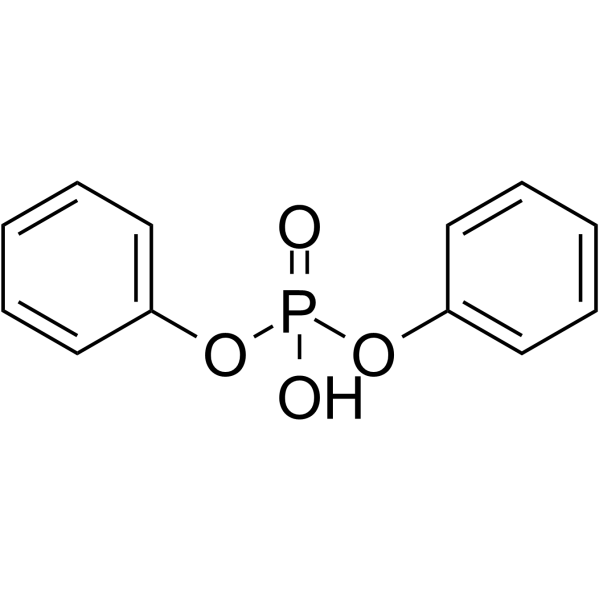
Diphenyl Phosphate inhibits growth and energy metabolism in zebrafish and mice in a sex-specific manner. Diphenyl Phosphate can inhibit the activity of SDH (respiratory complex II), reduce the expression of CPT1 and disrupts the integrity of the mitochondrial membrane. Diphenyl Phosphate may be used in research on metabolic diseases.
For research use only. We do not sell to patients.
- Purity : 99.94%
- CAS No.: 838-85-7
- Formula: C12H11O4P
- Molecular Weight:250.19
-
Storage:
Please store the product under the recommended conditions in the Certificate of Analysis.


To place orders, for customer services and technical support, please contact: MedChemExpress USA
Tel: 609-228-6898 E-mail: [email protected] [email protected]


-
 Product Information
-
Chemical Information
- Purity & Documentation
-
 Help & FAQs


-
HY-W008151
Diphenyl PhosphateMetabolic Inhibitor -

HY-135604
Dibutyl phosphateOrganophosphate esters metabolite -

HY-W016414
Triethyl phosphateSmooth Muscle Relaxant -

HY-W013205
Bis(4-nitrophenyl) phosphateEsterase Inhibitor -
HY-108712
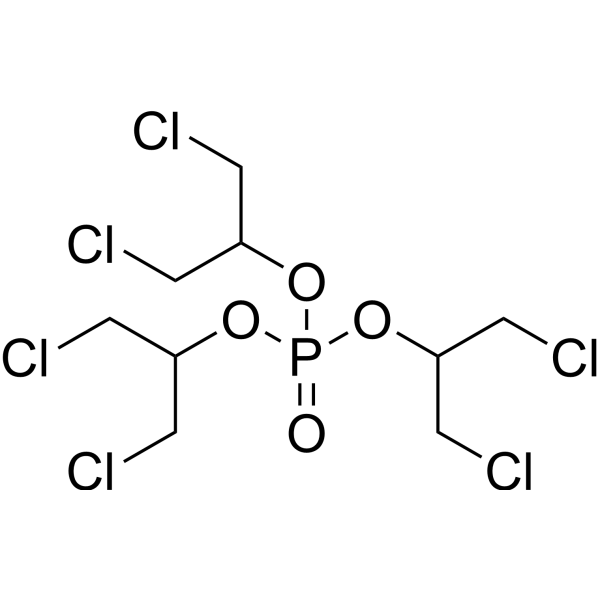
TDCPPFlame Retardant -
HY-108309
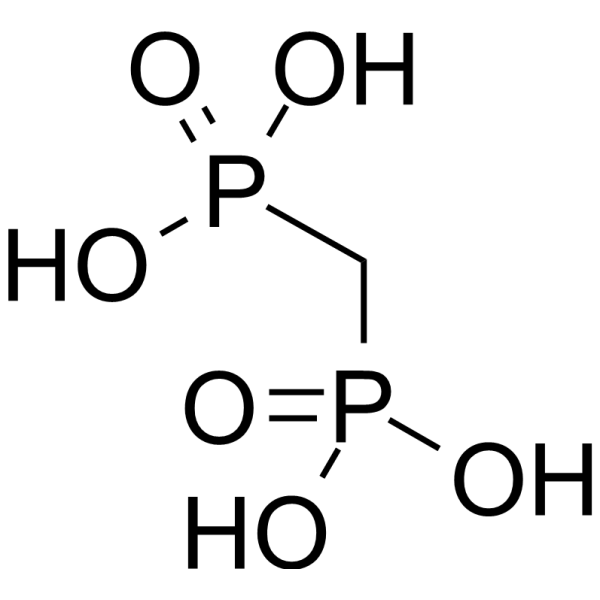
Medronic acidImaging Agent -

HY-107859
Tris(2-chloroethyl) phosphateFlame-retardant Plasticizer -
HY-W009162
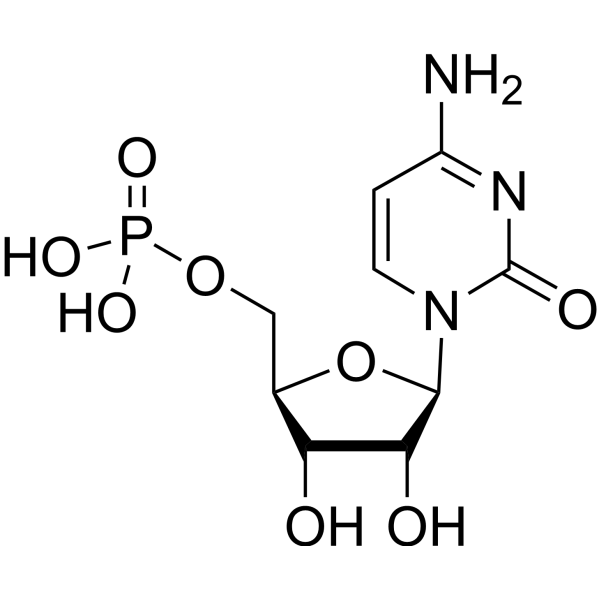
Cytidine 5'-monophosphateEndogenous Metabolite -
HY-101417
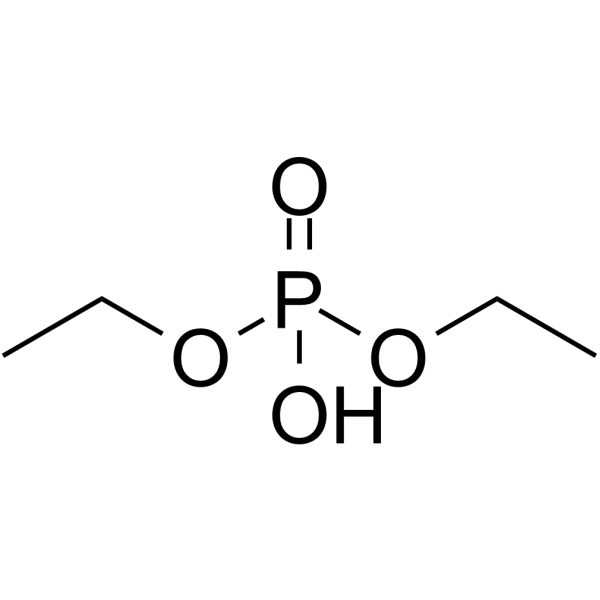
Diethyl phosphateEndogenous Metabolite -

HY-108309R
Medronic acid (Standard)Imaging Agent -

HY-Y1322
Triphenyl phosphateEndocrine Disruptor -

HY-101417R
Diethyl phosphate (Standard)Endogenous Metabolite


Product Information
Information
Application
The compound is the grade of analytical standard, which is the reference standard supplied assay. It is commonly used in qualitative, quantitative and methodological research experiments in HPLC, GC and MS.


Chemical Information
-
CAS No. 838-85-7
-
Appearance Solid
-
Molecular Weight 250.19
-
Formula C12H11O4P
-
Color White to light yellow
-
SMILES
O=P(OC1=CC=CC=C1)(OC2=CC=CC=C2)O
-
Shipping
Room temperature in continental US; may vary elsewhere.
-
Storage
Please store the product under the recommended conditions in the Certificate of Analysis.


Purity & Documentation
-
SDS (394 KB)
- English - EN (394 KB)
- Français - FR (394 KB)
- Deutsch - DE (394 KB)
- Norwegian - NO (394 KB)
- Español - ES (394 KB)
- Swedish - SV (394 KB)
- Italian - IT (394 KB)
- Korean - KR (394 KB)
- Portuguese - PT (394 KB)
-
Handling Instructions (2659 KB)
References
[1]. Chen Q, et al. Life Cycle Exposure to Environmentally Relevant Concentrations of Diphenyl Phosphate (DPhP) Inhibits Growth and Energy Metabolism of Zebrafish in a Sex-Specific Manner. Environ Sci Technol. 2021 Oct 5;55(19):13122-13131. [Content Brief]
[2]. Wang D, et al. Neonatal triphenyl phosphate and its metabolite diphenyl phosphate exposure induce sex- and dose-dependent metabolic disruptions in adult mice. Environ Pollut. 2018 Jun;237:10-17. [Content Brief]

Calculators
Concentration (start) × Volume (start) = Concentration (final) × Volume (final)


Diphenyl Phosphate (Standard) Related Classifications
HY-W008151R Related Classifications
 Powered by Bioz