



DPC-AJ1951 TFA

Based on 1 Customer Validation
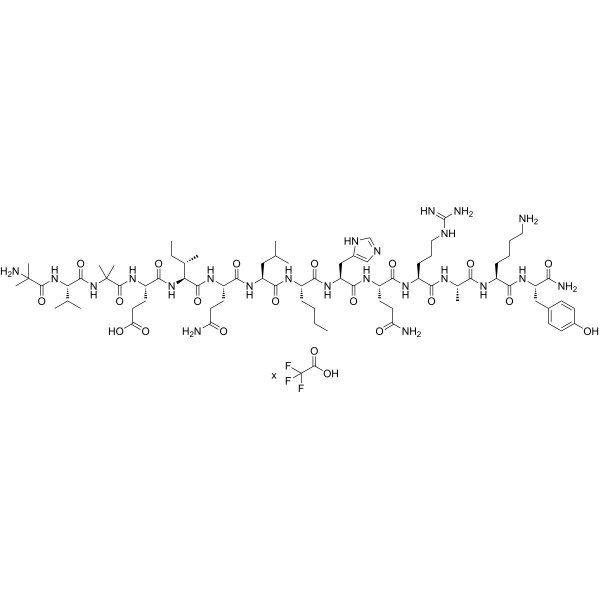
DPC-AJ1951 TFA, a 14 amino acid peptide that acts as a potent agonist of the parathyroid hormone (PTH)/PTH-related peptide receptor (PPR). And characterized the activity of DPC-AJ1951 TFA in ex vivo and in vivo assays of bone resorption.
For research use only. We do not sell to patients.
- Purity : 99.38%
- Formula: C76H127N23O19.xC2HF3O2
- Molecular Weight:1666.99 (free base)
-
Storage:
Sealed storage, away from moisture and light, under nitrogen.
Powder -80°C, 2 years , -20°C, 1 year* In solvent : -80°C, 6 months; -20°C, 1 month (sealed storage, away from moisture and light, under nitrogen)

To place orders, for customer services and technical support, please contact: MedChemExpress USA
Tel: 609-228-6898 E-mail: [email protected] [email protected]


-
 Biological Activity
-
Chemical Information
-
Solvent & Solubility
- Protocols
- Purity & Documentation
- References
-
 Help & FAQs


-

HY-P3506
RetatrutideGCGR/GIPR/GLP-1R Agonist -

HY-P0059
TeriparatideParathyroid Hormone Agonist -
HY-P0276
GIP, humanInsulin Secretion Stimulator -
HY-P0252
α-MSHMC4R Agonist -
HY-100856
PCO371PTHR1 Agonist -
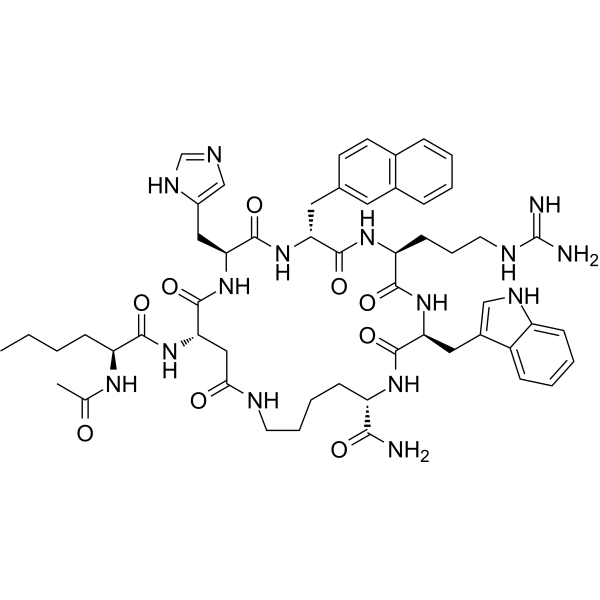
HY-P0227
SHU 9119MC3/4R Antagonist -
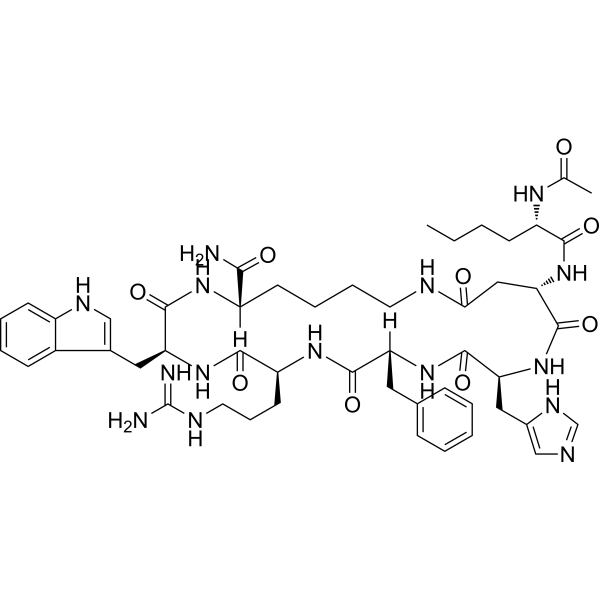
HY-P0267
Melanotan (MT)-IIMelanotropin Receptor Agonist -
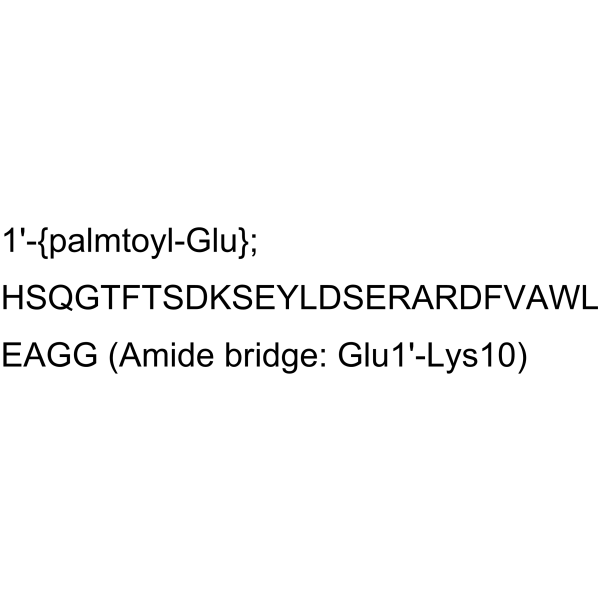
HY-P2231A
Cotadutide acetateGLP-1/GCGR Agonist -
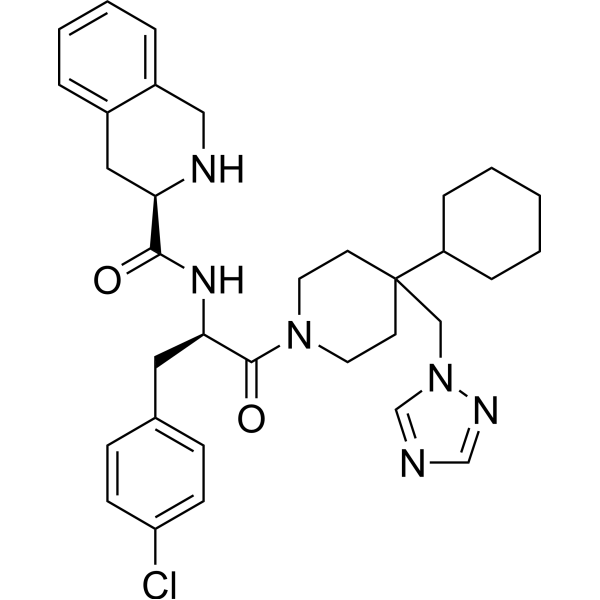
HY-10624
THIQMC4R Agonist -

HY-P10302A
GLP-1R/GIPR agonist-1 (soduim)GLP-1R/GIPR Activator -
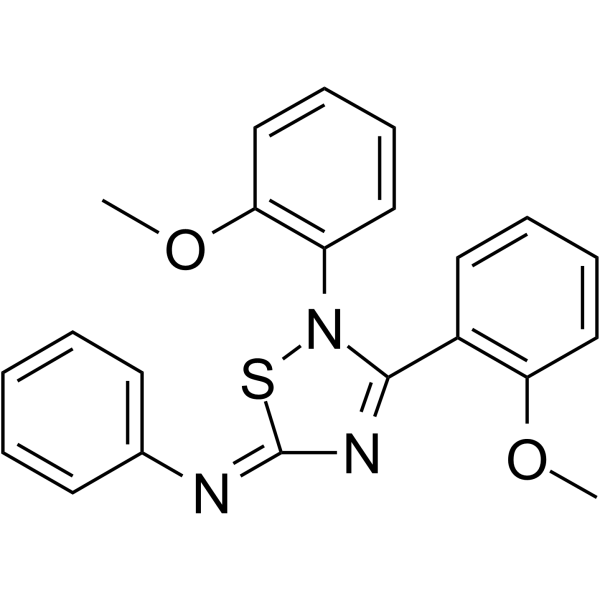
HY-107139
JNJ-10229570Melanocortin Receptor Antagonist -
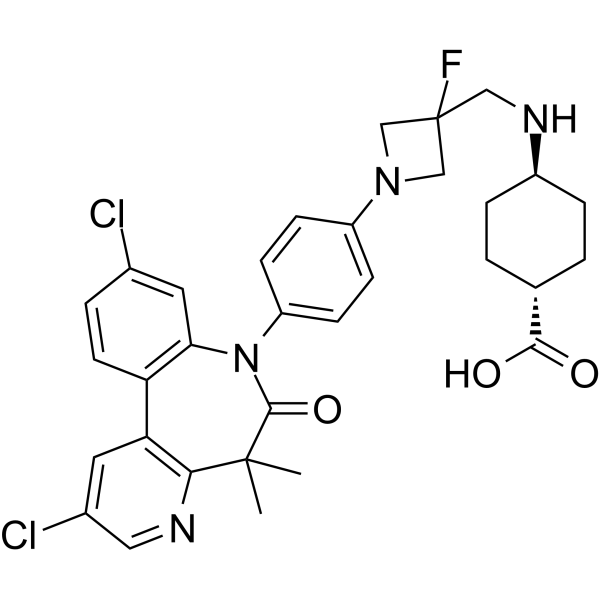
HY-148350
DS69910557hPTHR1 Antagonist


Biological Activity
Description
In Vitro


Chemical Information
-
Appearance Solid
-
Molecular Weight 1666.99 (free base)
-
Formula C76H127N23O19.xC2HF3O2
-
Color White to off-white
-
Sequence
{Aib}-Val-{Aib}-Glu-Ile-Gln-Leu-{Nle}-His-Gln-Arg-Ala-Lys-Tyr-NH2
-
Sequence Shortening
{Aib}V{Aib}EIQL{Nle}HQRAKY-NH2
-
Shipping
Room temperature in continental US; may vary elsewhere.
-
Storage
Sealed storage, away from moisture and light, under nitrogen
Powder -80°C 2 years -20°C 1 year * In solvent : -80°C, 6 months; -20°C, 1 month (sealed storage, away from moisture and light, under nitrogen)


Solvent & Solubility
In Vitro:
H2O : 50 mg/mL (Need ultrasonic and warming)


Purity & Documentation
-
Data Sheet (269 KB)
-
SDS (252 KB)
- English - EN (252 KB)
- Français - FR (252 KB)
- Deutsch - DE (252 KB)
- Norwegian - NO (252 KB)
- Español - ES (252 KB)
- Swedish - SV (252 KB)
- Italian - IT (252 KB)
- Korean - KR (252 KB)
- Portuguese - PT (252 KB)
-
Handling Instructions (2659 KB)
References

Calculators
Concentration (start) × Volume (start) = Concentration (final) × Volume (final)


DPC-AJ1951 TFA Related Classifications
HY-P1418A Related Classifications
 Powered by Bioz