



Cell Staining Analysis
-

Fluorescent Dyes (858)
Classical products, mainly supplied as solid powder
-

FluoroStock & Ready (151)
Easy to use, provided in solution form
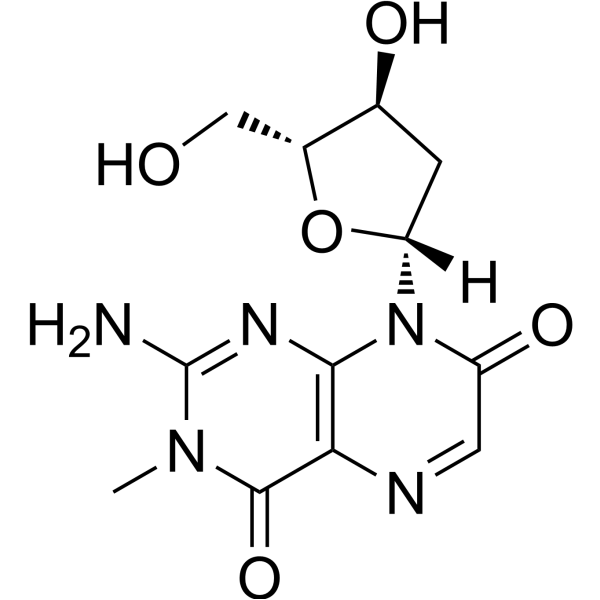
- Formula: C12H15N5O5
- Molecular Weight: 309.28
3-Methyl-8-(2'-deoxy-β-D-ribofuranosyl)isoxanthopterin is a DNA uptake tracer, a pteridine-based fluorescent guanosine analogue. 3-Methyl-8-(2'-deoxy-β-D-ribofuranosyl)isoxanthopterin is widely used in studies of DNA binding and dynamics, with an absorbance maximum at 350 nm and an emission maximum at 430 nm.
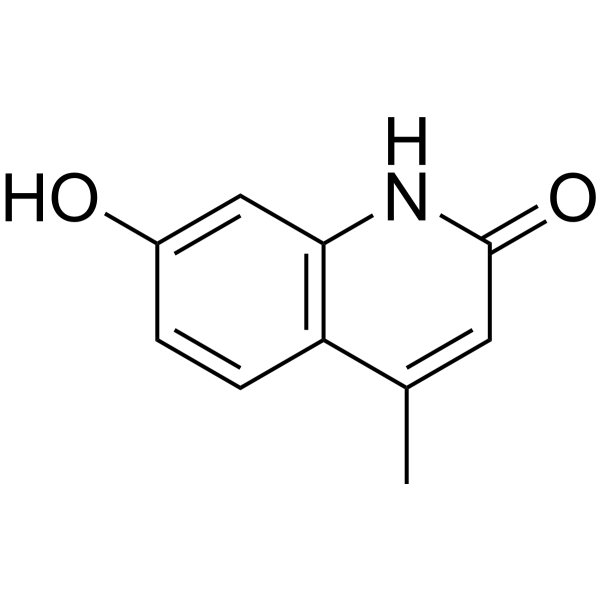
- Formula: C10H9NO2
- Molecular Weight: 175.18
7-Hydroxy-4-methyl-2(1H)-quinolone (compound 2b) is a fluorescent hydroxylated product. 7-Hydroxy-4-methyl-2(1H)-quinolone can be used for detecting hydroxyl radicals of DNA damage.
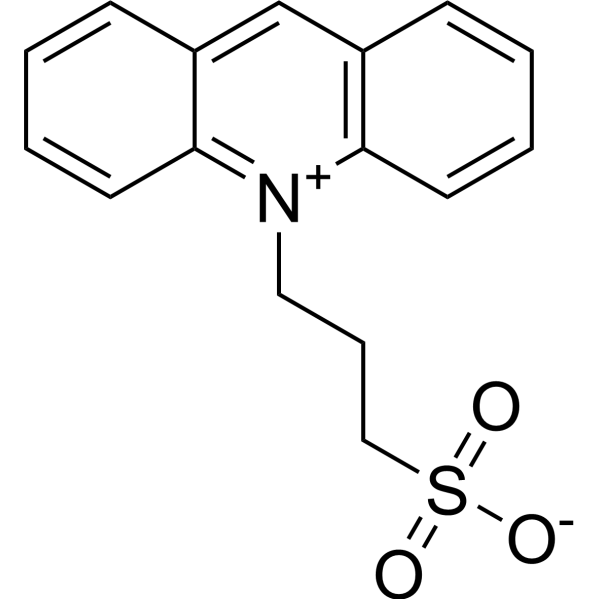
- Formula: C16H15NO3S
- Molecular Weight: 301.36
10-(3-Sulfopropyl)acridinium Betaine is a fluorescent dye with high durability (>3 months).
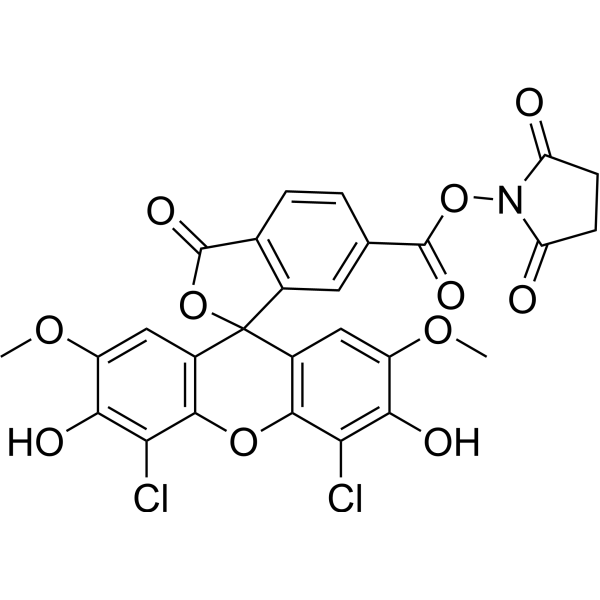
- Formula: C27H17Cl2NO11
- Molecular Weight: 602.33
6-JOE, SE is an amine-reactive fluorescent probe and is suitable for postsynthetic labeling of amino-modified oligonucleotides.
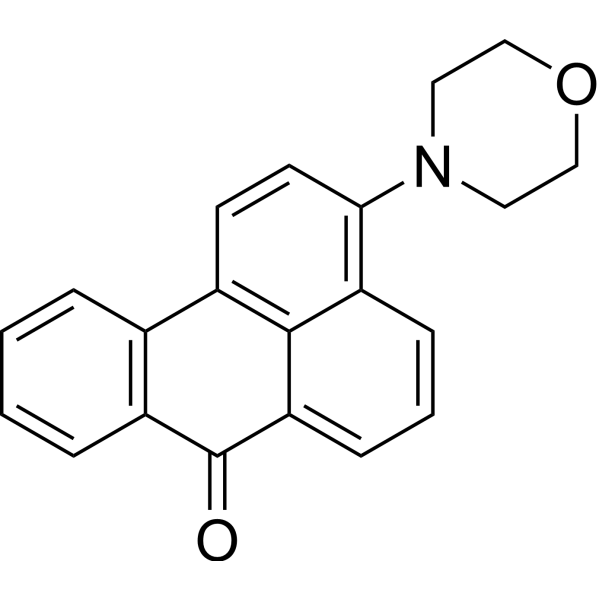
- Formula: C21H17NO2
- Molecular Weight: 315.37
3-Morpholinobenzanthrone is a fluorescent membrane probe, possessing higher dipole moment values in the excited-state than in the ground-state.
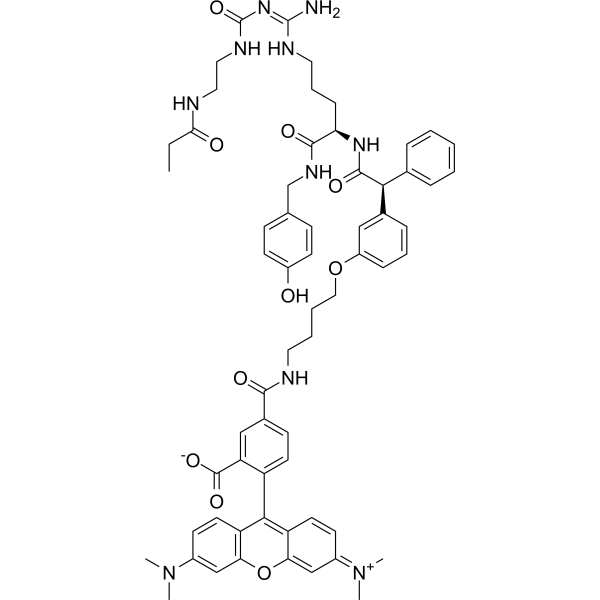
- Formula: C62H70N10O10
- Molecular Weight: 1115.28
Neuropeptide Y Y1 receptor antagonist 1 (compound 39), a fluorescent probe, is a potent antagonist of neuropeptide Y Y1 receptor (Y1R), with a Ki of 0.19 nM.
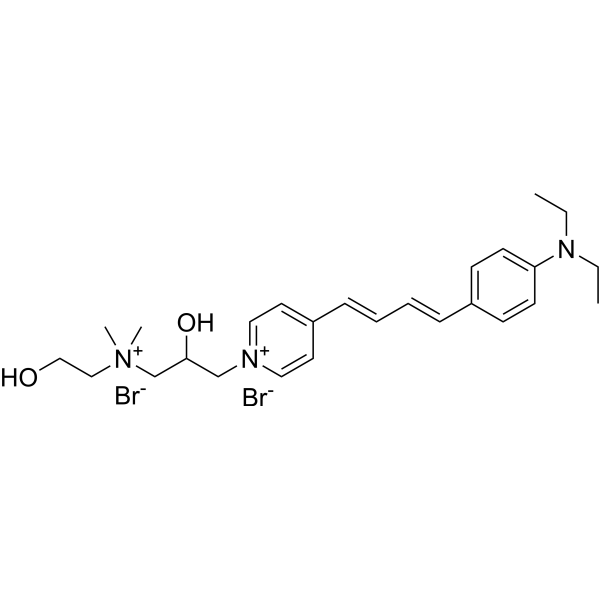
- Formula: C26H39Br2N3O2
- Molecular Weight: 585.41
RH 795 is a lipophilic potentiometric styryl fluorescent dye (Ex/Em = 530 nm/712 nm). RH 795 stains the cell membranes of sensory cells and nerve fibers in living cells that maintain membrane potential, while it shows weak staining effect on supporting cells. RH 795 supports in vivo and in vitro confocal microscopy imaging of intact living inner ear cells and neuronal components. RH 795 can be used in studies related to hearing loss.
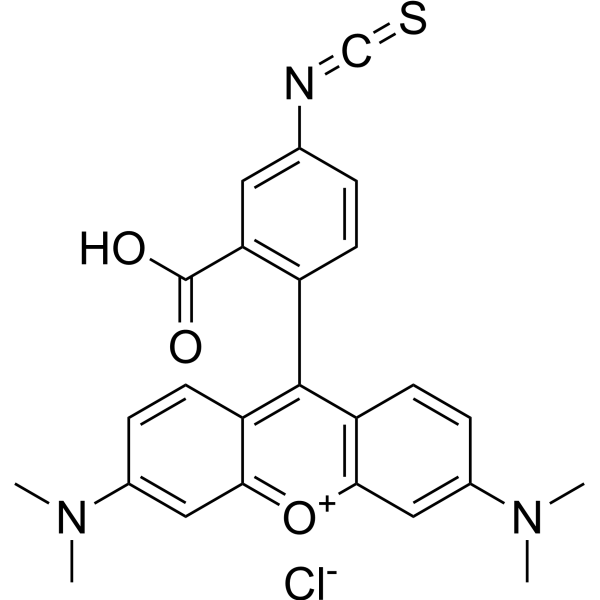
- Formula: C25H22ClN3O3S
- Molecular Weight: 479.98
Rhodamine B, tetramethyl-, isothiocyanate (Tetramethylrhodamine B isothiocyante) is a fluorescent dye. Rhodamine B, tetramethyl-, isothiocyanate has a strong two-photon absorption at about 830 nm.
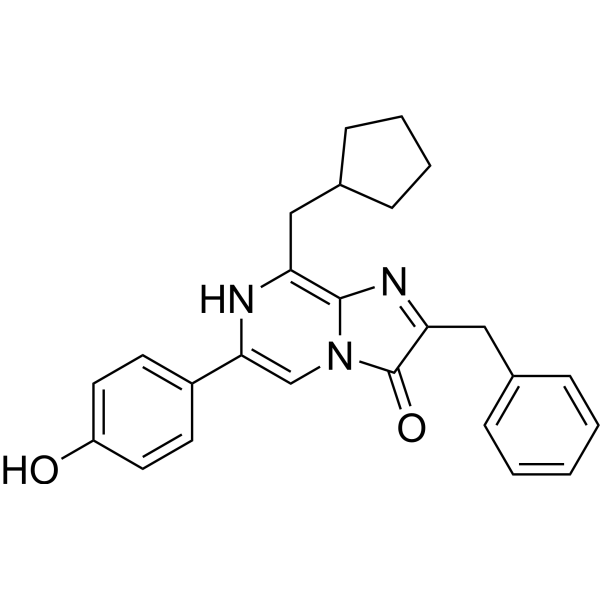
- Formula: C25H25N3O2
- Molecular Weight: 399.48
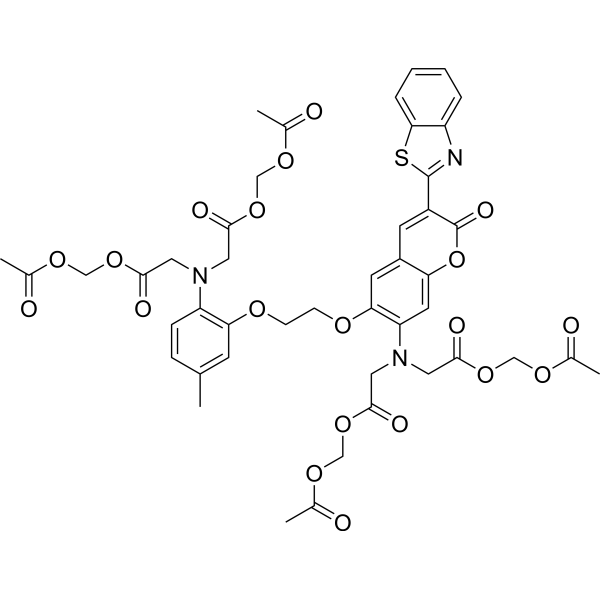
- Formula: C45H45N3O20S
- Molecular Weight: 979.91
BTC-AM is a low affinity calcium indicator. BTC-AM has substantial calcium-independent fluorescence at all excitation wavelengths. BTC-AM is readily loaded into neurons and is rapidly hydrolysed.
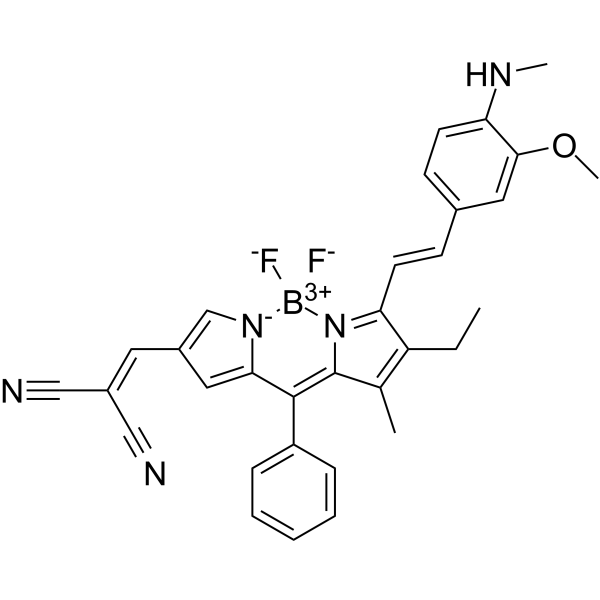
- Formula: C32H28BF2N5O
- Molecular Weight: 547.41
BOD-NH-NP is an activatable fluorescent probe for imaging endogenous nitric oxide via the eNOS enzymatic pathway.
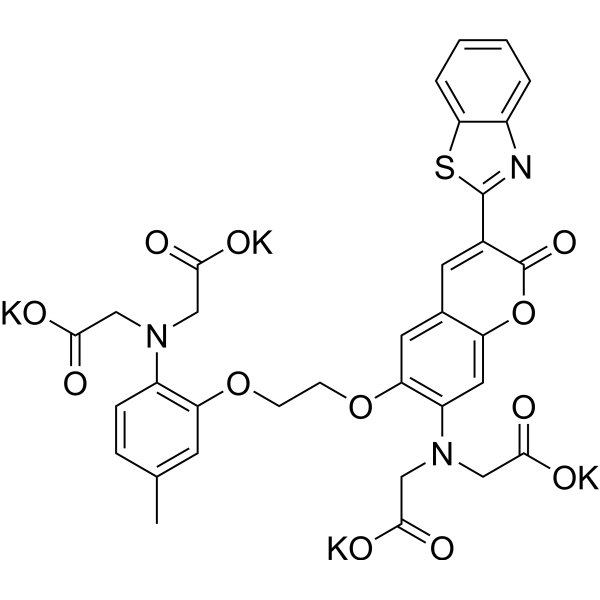
- Formula: C33H25K4N3O12S
- Molecular Weight: 844.02
BTC tetrapotassium is a cell-impermeant calcium indicator (Kd approximately 7-26 µM) featuring many desirable properties for cellular calcium imaging, including long excitation wavelengths (400/485 nm), low sensitivity to Mg2+, and accuracy of ratiometric measurement.
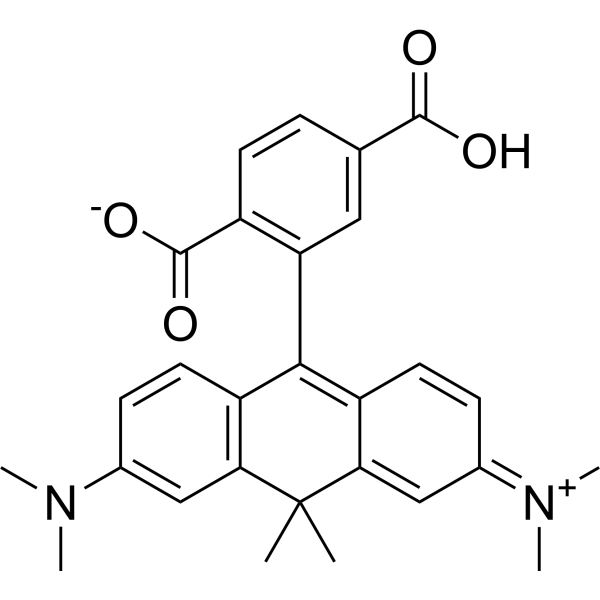
- Formula: C28H28N2O4
- Molecular Weight: 456.53
610CP is a new type of actin labeling dye. It dissolves in organic solvents. In DMSO the 610CP excitation/emission wavelength is between 609 and 634 nm. 610CP is a fluorescent dye that penetrates living cells. Upon cell entry, 610CP binds to Bromo-des-methyl-Jasplakinolide Therefore, 610CP dye can be used to stain actin fluorescence images with low background and high resolution.
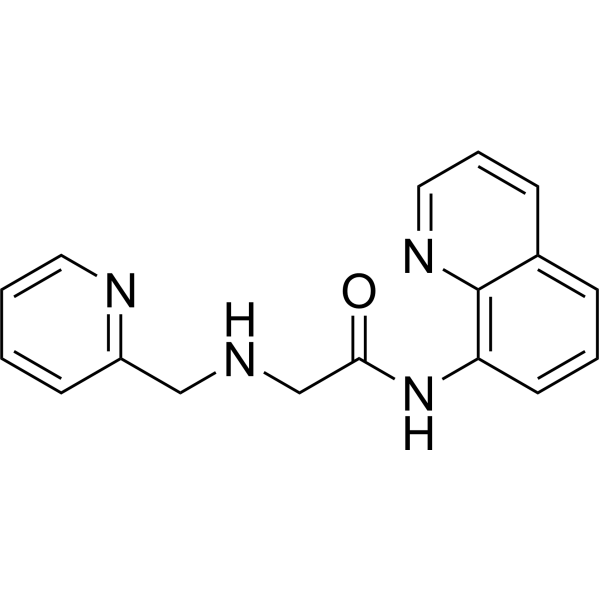
- Formula: C17H16N4O
- Molecular Weight: 292.34
PMQA (Zn-green), an 8-aminoquinoline-based ratiometric fluorescent sensor, demonstrates the Zn2+-induced redshift of emission (85 nm). PMQA (Zn-green) is a cell membrane-permeable probe and suitable for imaging Zn2+ in living cells.
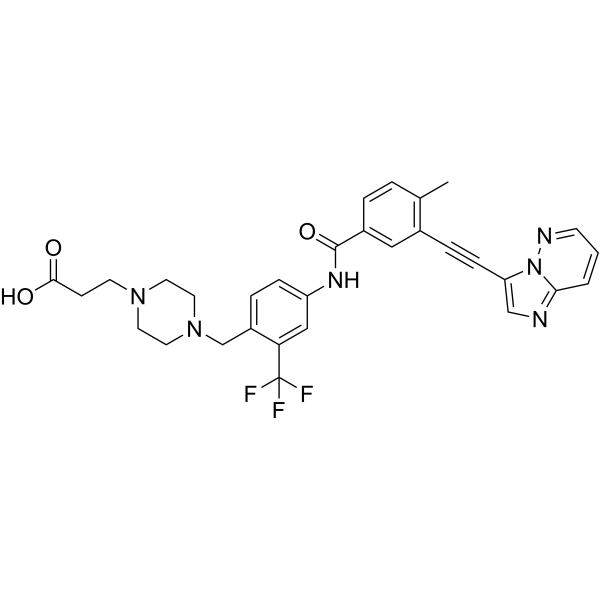
- Formula: C31H29F3N6O3
- Molecular Weight: 590.60
Ponatinib Acid, an analogue of Ponatinib, is usually used as a labeled chemical or fluorescent probe. Ponatinib Acid is a click chemistry reagent, it contains an Alkyne group and can undergo copper-catalyzed azide-alkyne cycloaddition (CuAAc) with molecules containing Azide groups.
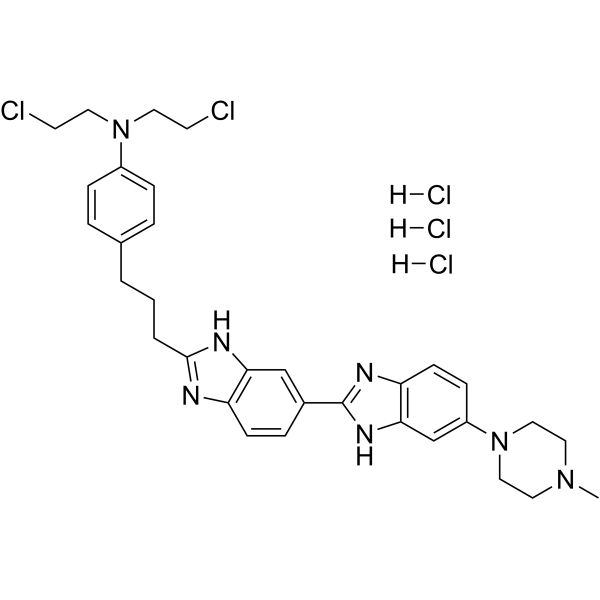
- Formula: C32H40Cl5N7
- Molecular Weight: 699.97
Hoechst 33342 analog trihydrochloride is a marker dye in Hoechst series. Hoechst is A live nuclear marker dye. Hoechst binds to the grooves in the DNA double strand, which tends to be A/ T-rich DNA strand. Although it binds to all nucleic acids, the A/ T-rich double strand DNA significantly enhances fluorescence intensity Therefore,Hoechst dye can be used for living cell labeling. The fluorescence intensity of Hoechst dye increases with the increase of pH of solution. Storage: Keep away from light.
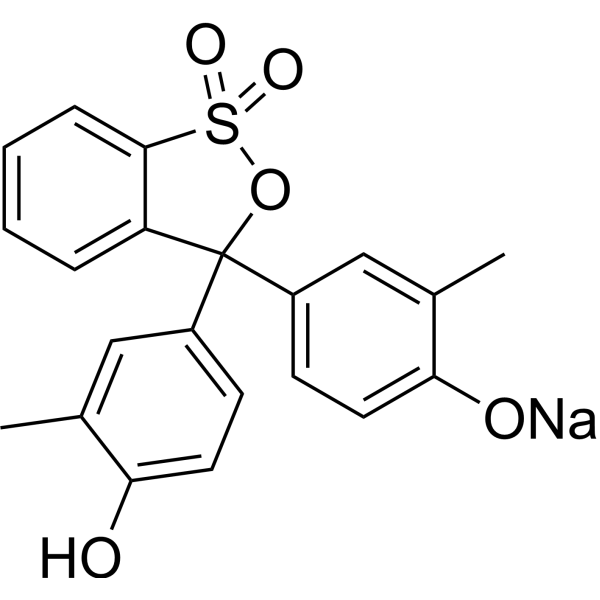
- Formula: C21H17NaO5S
- Molecular Weight: 404.41
Cresol Red sodium is a colorimetric pH indicator. Cresol Red sodium serves as an optical sensor for monitoring carbonic anhydrase-catalyzed reactions and as a colorimetric dye that responds to hydrogen ions generated during DNA synthesis. Cresol Red sodium can be used in the research of hepatitis A and COVID-19.

- Formula: C45H39ClN4O13S3
- Molecular Weight: 975.46
Sulfo-QSY21-NHS is an N-hydroxysuccinimide ester derivative fluorescent quencher that reduces the fluorescence intensity of paired fluorophores via proximity effect and relieves quenching after linker extension induced by mechanical force. Sulfo-QSY21-NHS can label streptavidin through NHS ester bioconjugation and be integrated into fluorescence-based molecular tension sensors to map the mechanical forces of cell surface receptors. Sulfo-QSY21-NHS also serves as a quencher for cysteine cathepsin-targeted quenched fluorescent substrate probes, and is widely used in studies related to breast cancer, colorectal cancer and lung adenocarcinoma.



