



Cell Viability Dyes
- 1
- 2

- Formula: C19H11IN5NaO8S2
- Molecular Weight: 651.34
WST-1 (solution) is a kind of water-soluble tetrazolium salt. WST induces the intracellular mitochondrial dehydrogenase to conduct NADH-dependent enzyme digestion reaction, releasing the water-soluble methyl benzene product. WST-1 can be used for the detection of cell proliferation and cytotoxicity, via the determination of the light absorption value at 450 nm.
Solvent and concentration: ddH2O: 10 mg/mL
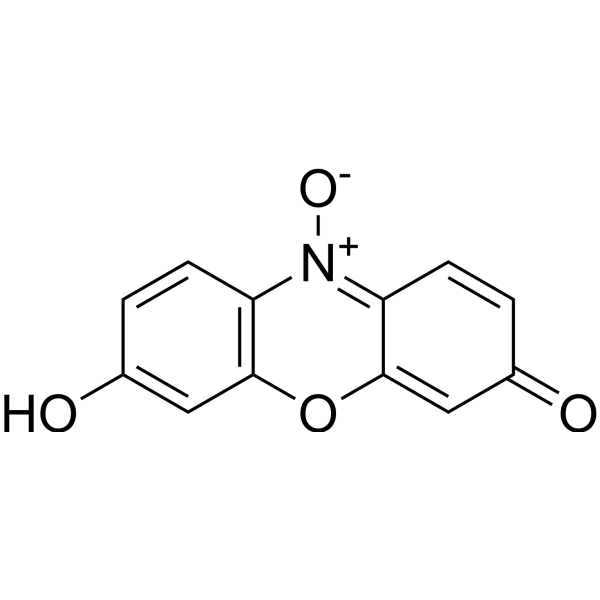
- Formula: C12H7NO4
- Molecular Weight: 229.19
Resazurin (Diazoresorcinol) is a water-soluble, non-toxic, stable, membrane-permeable blue non-fluorescent dye (faintly fluorescent). Resazurin is used as a redox indicator, can be reduced to pink, highly fluorescent Resorufin (Ex=530-560 nm, Em=590 nm) in living cells. Resazurin can be used for the detection of cell viability, toxicity, proliferation, migration and invasion in cells (human, plant and animal, bacterial and fungal).

- Formula: C18H16BrN5S
- Molecular Weight: 414.32
Thiazolyl Blue (solution) (MTT (solution)) is a cell-permeable and positively charged tetrazolium dye that is used to detect reductive metabolism in cells. Thiazolyl Blue is taken up by cells through the plasma membrane and then reduced to formazan by intracellular NAD (P) H-oxidoreductases. Thiazolyl Blue is frequently used in colorimetric assays to measure cell proliferation, cytotoxicity, and apoptosis.
Solvent and concentration: PBS: 5 mg/mL
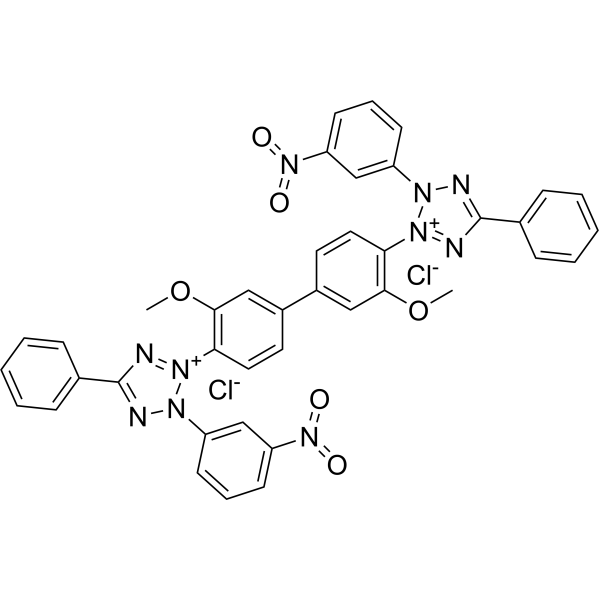
- Formula: C40H30Cl2N10O6
- Molecular Weight: 817.64
3-Nitrotetrazolium blue (chloride) is a multifunctional dye. Dyes are important tools in biological experiments. They can help researchers observe and analyze cell structures, track biomolecules, evaluate cell functions, distinguish cell types, detect biomolecules, study tissue pathology and monitor microorganisms. Their applications range from basic scientific research to clinical A wide range of diagnostics. Dyes are also widely used in traditional fields such as textile dyeing, as well as in emerging fields such as functional textile processing, food pigments and dye-sensitized solar cells.
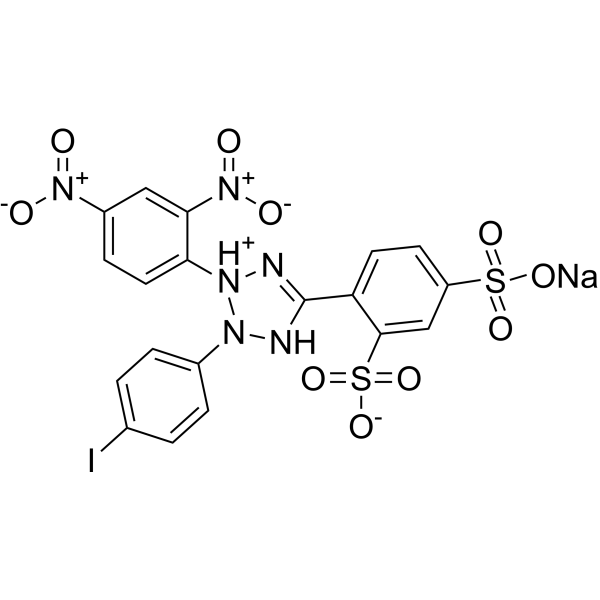
- Formula: C19H12IN6NaO10S2
- Molecular Weight: 698.36
IPB is a multifunctional dye. Dyes are important tools in biological experiments. They can help researchers observe and analyze cell structures, track biomolecules, evaluate cell functions, distinguish cell types, detect biomolecules, study tissue pathology and monitor microorganisms. Their applications range from basic scientific research to clinical A wide range of diagnostics. Dyes are also widely used in traditional fields such as textile dyeing, as well as in emerging fields such as functional textile processing, food pigments and dye-sensitized solar cells.
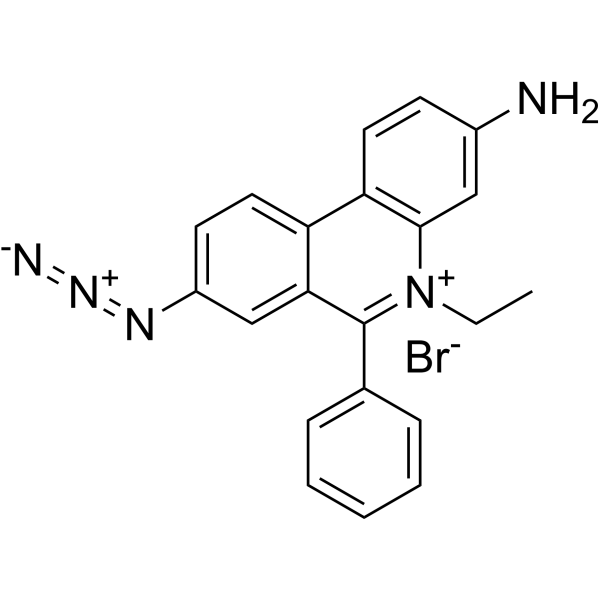
- Formula: C21H18BrN5
- Molecular Weight: 420.31
Ethidium monoazide bromide is a DNA intercalating fluorescent dye that enters bacteria with damaged membranes. Ethidium monoazide bromide can be covalently linked to DNA by photoactivation. Ethidium monoazide bromide stains only dead cells. Ethidium monoazide (bromide) is a click chemistry reagent, it contains an Azide group and can undergo copper-catalyzed azide-alkyne cycloaddition reaction (CuAAc) with molecules containing Alkyne groups. It can also undergo strain-promoted alkyne-azide cycloaddition (SPAAC) reactions with molecules containing DBCO or BCN groups.
- 1
- 2



