



ELND 006

Based on 1 Customer Validation
ELND 006 (Compound 30) is a metabolically stable γ-secretase inhibitor designed to selectively inhibit amyloid beta (Aβ) generation while sparing Notch signaling. It was developed through a synthetic strategy emphasizing diversity and chirality. ELND 006, along with its analog ELND007 (Compound 34), progressed into human clinical trials. In preclinical studies, both compounds demonstrated effective reduction of Aβ levels in vitro and in vivo. Comparisons with other γ-secretase inhibitors like Semagacestat, Begacestat, and Avagacestat underscored their potency and specificity in lowering Aβ levels in cerebrospinal fluid (CSF) of healthy human volunteers, suggesting potential therapeutic efficacy in Alzheimer's disease.
For research use only. We do not sell to patients.
- Purity : 99.7%
- CAS No.: 1333990-84-3
- Formula: C20H14F5N3O2S
- Molecular Weight:455.40
-
Storage:
-20°C, sealed storage, away from moisture
* In solvent : -80°C, 6 months; -20°C, 1 month (sealed storage, away from moisture)


To place orders, for customer services and technical support, please contact: MedChemExpress USA
Tel: 609-228-6898 E-mail: [email protected] [email protected]


-
 Biological Activity
-
Chemical Information
-
Solvent & Solubility
- Protocols
- Purity & Documentation
- References
-
 Help & FAQs


-
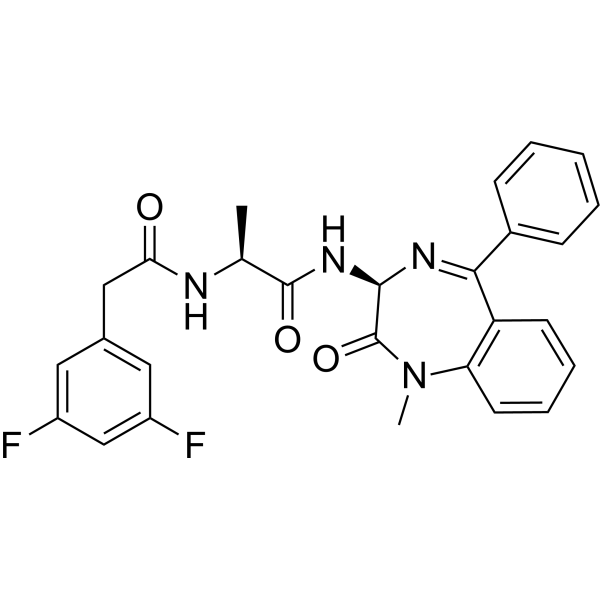
HY-14176
Compound Eγ-secretase Inhibitor -
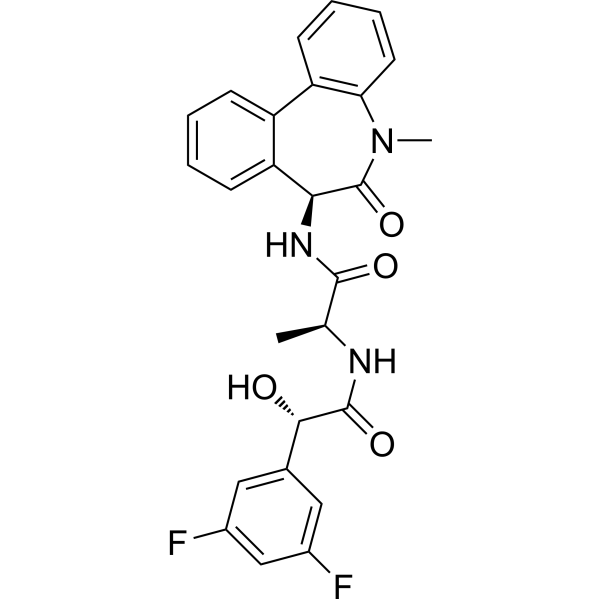
HY-50752
LY-411575γ-secretase Inhibitor -
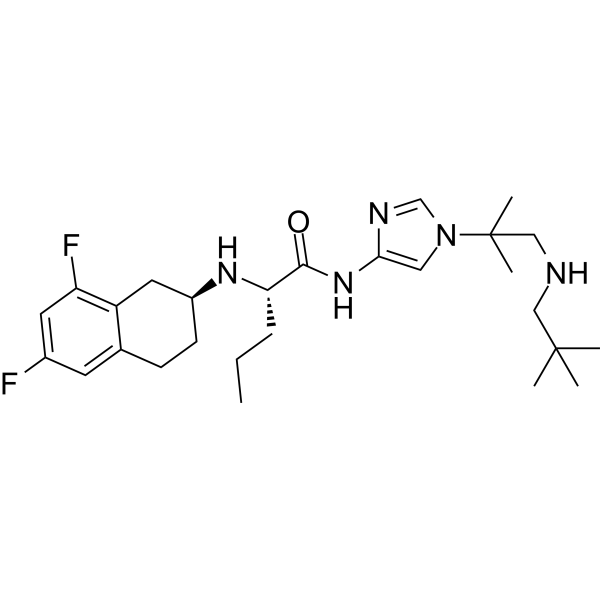
HY-15185
Nirogacestatγ-Secretase Inhibitor -
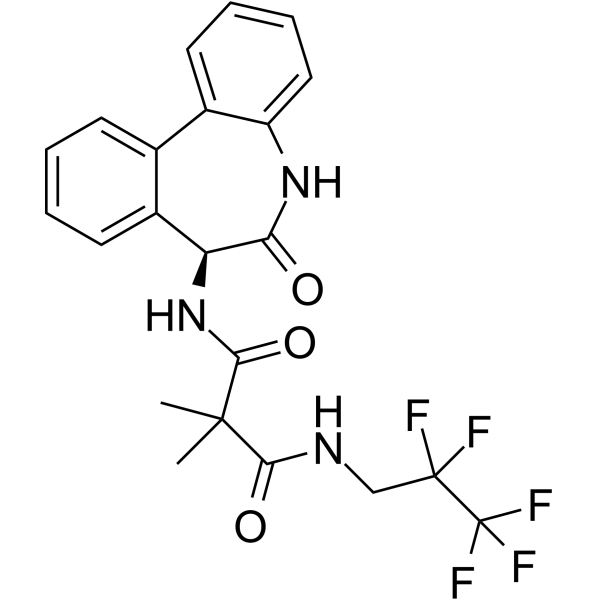
HY-11102
RO4929097γ-secretase Inhibitor -
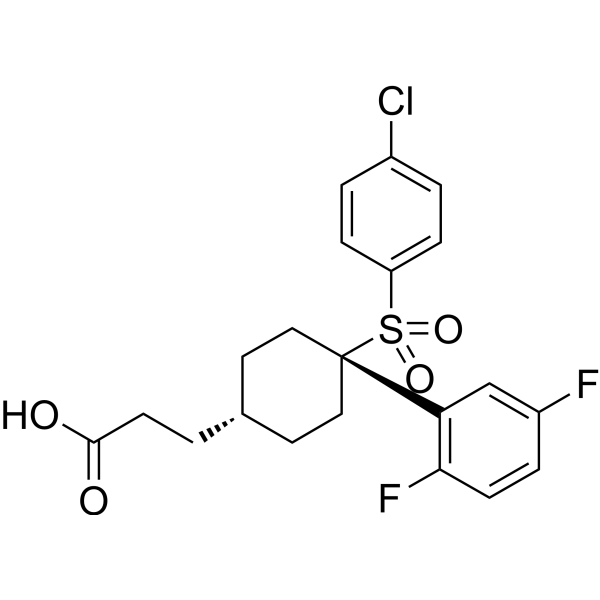
HY-10974
MK-0752 -
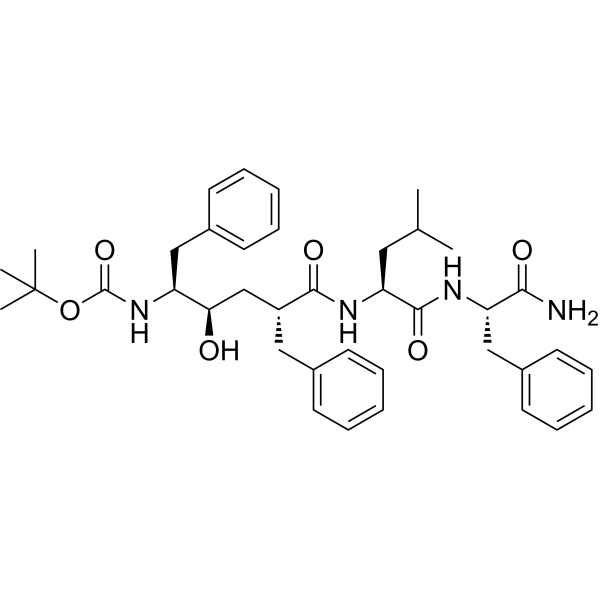
HY-19369
L-685458γ-Secretase Inhibitor -
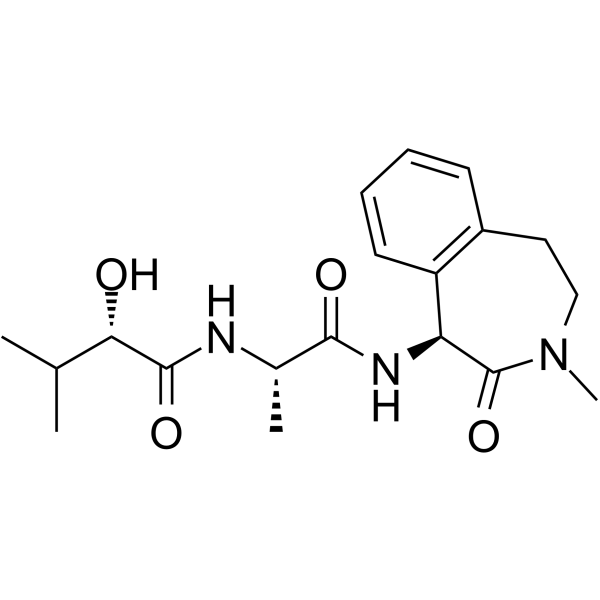
HY-10009
Semagacestatγ-secretase Inhibitor -

HY-15185R
Nirogacestat (Standard)γ-Secretase Inhibitor -
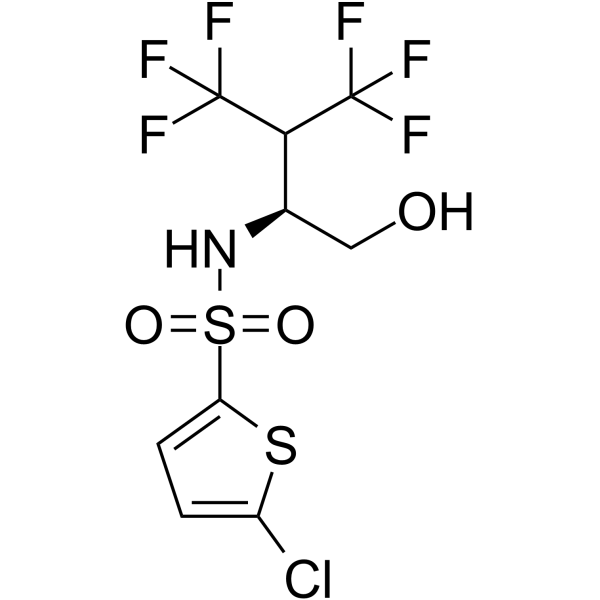
HY-14175
Begacestatγ-secretase Inhibitor -
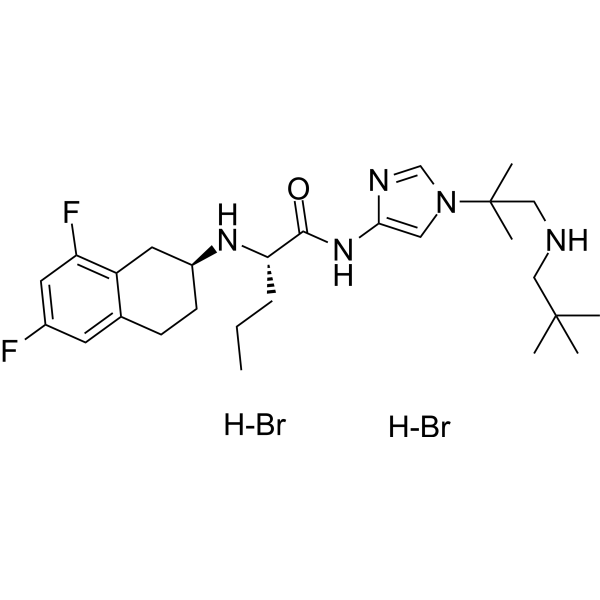
HY-15185B
Nirogacestat dihydrobromideγ-secretase Inhibitor -
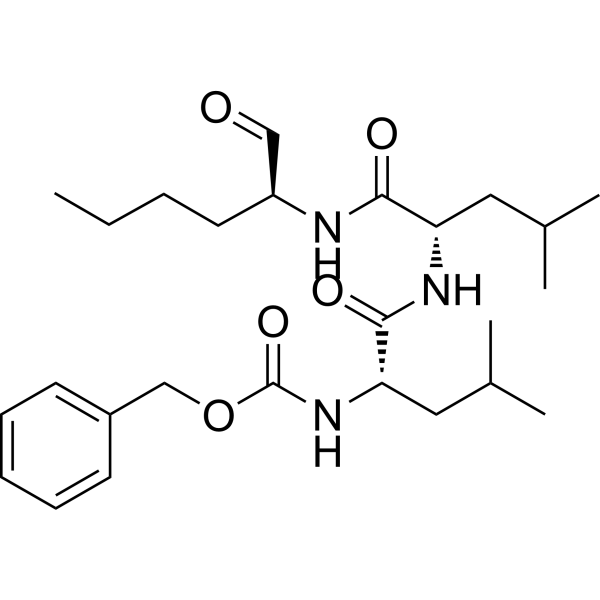
HY-120234
Z-LLNle-CHOγ-Secretase Inhibitor I -
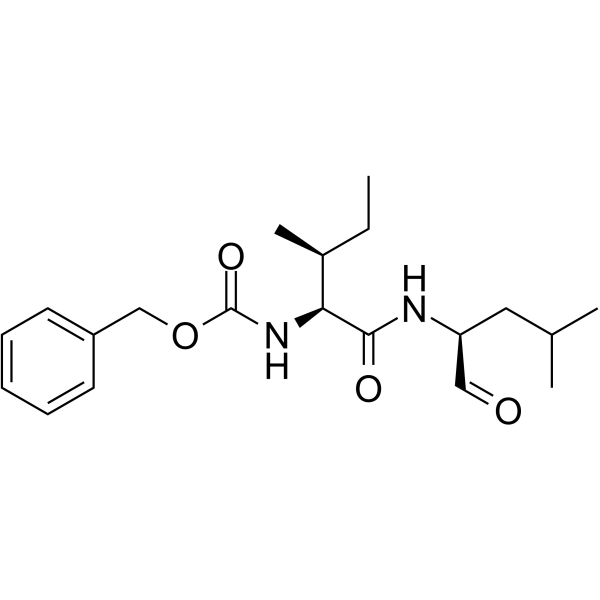
HY-12465
Z-Ile-Leu-aldehydeγ-secretase/Notch Inhibitor


Biological Activity
Description
Cellular Effect
|
Cell Line

|
Type | Value | Description | References |
|---|---|---|---|---|
| CHO | ED50 |
1.1 nM
Compound: 30, ELND006
|
Inhibition of gamma-secretase in CHO cells assessed expressing APPSw assessed as inhibition of amyloid beta(1 to x) secretion after overnight incubation by ELISA
Inhibition of gamma-secretase in CHO cells assessed expressing APPSw assessed as inhibition of amyloid beta(1 to x) secretion after overnight incubation by ELISA
|
[PMID: 23713656] |
| CHO | ED50 |
86 nM
Compound: 30, ELND006
|
Inhibition of gamma-secretase in CHO cells assessed expressing NotchdeltaE assessed as inhibition of notch cleavage after overnight incubation by luciferase reporter gene assay
Inhibition of gamma-secretase in CHO cells assessed expressing NotchdeltaE assessed as inhibition of notch cleavage after overnight incubation by luciferase reporter gene assay
|
[PMID: 23713656] |
| CHO | IC50 |
82 nM
Compound: ELND006
|
Inhibition of gamma-secretase in CHO cells after overnight incubation by luciferase reporter gene assay
Inhibition of gamma-secretase in CHO cells after overnight incubation by luciferase reporter gene assay
|
[PMID: 23312944] |
| HEK293 | ED50 |
1.1 nM
Compound: ELND006
|
Inhibition of gamma-secretase in HEK293 cells after overnight incubation by Western blotting analysis
Inhibition of gamma-secretase in HEK293 cells after overnight incubation by Western blotting analysis
|
[PMID: 23312944] |
| IMR-32 | IC50 |
0.34 nM
Compound: ELND006
|
Inhibition of gamma-secretase in human IMR32 cell membrane using APP as substrate after 2 hrs by ELISA
Inhibition of gamma-secretase in human IMR32 cell membrane using APP as substrate after 2 hrs by ELISA
|
[PMID: 23312944] |
| IMR-32 | IC50 |
5.3 nM
Compound: ELND006
|
Inhibition of gamma-secretase in human IMR32 cell membrane using Notch as substrate after 2 hrs by ELISA
Inhibition of gamma-secretase in human IMR32 cell membrane using Notch as substrate after 2 hrs by ELISA
|
[PMID: 23312944] |


Chemical Information
-
CAS No. 1333990-84-3
-
Appearance Solid
-
Molecular Weight 455.40
-
Formula C20H14F5N3O2S
-
Color White to off-white
-
SMILES
O=S(N1[C@H](C2CC2)C3=C(NN=C3)C4=C1C=C(F)C(F)=C4)(C5=CC=C(C(F)(F)F)C=C5)=O
-
Shipping
Room temperature in continental US; may vary elsewhere.
-
Storage
-20°C, sealed storage, away from moisture
* In solvent : -80°C, 6 months; -20°C, 1 month (sealed storage, away from moisture)


Solvent & Solubility
In Vitro:
DMSO : 50 mg/mL (109.79 mM; Need ultrasonic and warming; Hygroscopic DMSO has a significant impact on the solubility of product, please use newly opened DMSO)
Please refer to the solubility information to select the appropriate solvent. Once prepared, please aliquot and store the solution to prevent product inactivation from repeated freeze-thaw cycles.
Storage method and period of stock solution: -80°C, 6 months; -20°C, 1 month (sealed storage, away from moisture). When stored at -80°C, please use it within 6 months. When stored at -20°C, please use it within 1 month.
Please refer to the solubility information to select the appropriate solvent. Once prepared, please aliquot and store the solution to prevent product inactivation from repeated freeze-thaw cycles.
Storage method and period of stock solution: -80°C, 6 months; -20°C, 1 month (sealed storage, away from moisture). When stored at -80°C, please use it within 6 months. When stored at -20°C, please use it within 1 month.
Concentration (start) × Volume (start) = Concentration (final) × Volume (final)

Protocols
-
Notch Pathway Solutions
The Notch pathway is a contact-dependent signaling pathway that controls cell-fate decisions, differentiation, proliferation, and tissue patterning through interactions between membrane-bound Notch receptors and membrane-bound ligands on neighboring cells. Canonical Notch signaling is activated when ligand engagement triggers proteolytic release of the Notch intracellular domain, which enters the nucleus and regulates transcription together with DNA-binding transcriptional complexes. In the canonical mechanism, ligand-dependent Notch activation leads to release of the intracellular Notch domain, and presenilin-dependent γ-secretase activity is required for production of the active intracellular signaling fragment. The released intracellular domain functions as a nuclear signal that converts Notch receptor activation at the membrane into transcriptional regulation of target programs such as HES/HEY-family genes and other context-dependent downstream targets. The literature links Notch p
-
Amyloid: Congo Red Amyloid Staining
Congo red amyloid staining is a histochemical method used to detect extracellular amyloid deposits in tissue sections based on the affinity of Congo red dye for β-pleated sheet-rich protein aggregates. When bound to amyloid, Congo red produces characteristic apple-green birefringence under polarized light microscopy, which is widely regarded as a diagnostic feature of amyloid deposition in histopathology. The diagnostic principle relies on the combination of dye binding (congophilia) and optical anisotropy under polarized illumination, which distinguishes amyloid from most non-amyloid eosinophilic extracellular deposits in routine histological evaluation. Amyloid identification by Congo red staining remains a cornerstone in diagnostic pathology despite the availability of adjunct methods such as immunohistochemistry and mass spectrometry, particularly because of its ability to localize deposits directly within tissue architecture. The specificity of Congo red-positive deposits is incre
-
Alzheimer’s Disease Modeling
Alzheimer’s Disease (AD) is a neurodegenerative disorder characterized by a progressive decline in cognitive functions and loss of specific types of neurons and synapses. Alzheimer's symptoms can be simulated in mice by injecting drugs (such as Aβ) or genetically modified.


Purity & Documentation
-
Data Sheet (274 KB)
-
SDS (251 KB)
- English - EN (251 KB)
- Français - FR (251 KB)
- Deutsch - DE (251 KB)
- Norwegian - NO (251 KB)
- Español - ES (251 KB)
- Swedish - SV (251 KB)
- Italian - IT (251 KB)
- Korean - KR (251 KB)
- Portuguese - PT (251 KB)
-
Handling Instructions (2659 KB)
References


Complete Stock Solution Preparation Table
Please refer to the solubility information to select the appropriate solvent. Once prepared, please aliquot and store the solution to prevent product inactivation from repeated freeze-thaw cycles.
Storage method and period of stock solution: -80°C, 6 months; -20°C, 1 month (sealed storage, away from moisture). When stored at -80°C, please use it within 6 months. When stored at -20°C, please use it within 1 month.
| Optional Solvent | Concentration Solvent Mass | 1 mg | 5 mg | 10 mg | 25 mg |
|---|---|---|---|---|---|
| DMSO | 1 mM | 2.1959 mL | 10.9794 mL | 21.9587 mL | 54.8968 mL |
| 5 mM | 0.4392 mL | 2.1959 mL | 4.3917 mL | 10.9794 mL | |
| 10 mM | 0.2196 mL | 1.0979 mL | 2.1959 mL | 5.4897 mL | |
| 15 mM | 0.1464 mL | 0.7320 mL | 1.4639 mL | 3.6598 mL | |
| 20 mM | 0.1098 mL | 0.5490 mL | 1.0979 mL | 2.7448 mL | |
| 25 mM | 0.0878 mL | 0.4392 mL | 0.8783 mL | 2.1959 mL | |
| 30 mM | 0.0732 mL | 0.3660 mL | 0.7320 mL | 1.8299 mL | |
| 40 mM | 0.0549 mL | 0.2745 mL | 0.5490 mL | 1.3724 mL | |
| 50 mM | 0.0439 mL | 0.2196 mL | 0.4392 mL | 1.0979 mL | |
| 60 mM | 0.0366 mL | 0.1830 mL | 0.3660 mL | 0.9149 mL | |
| 80 mM | 0.0274 mL | 0.1372 mL | 0.2745 mL | 0.6862 mL | |
| 100 mM | 0.0220 mL | 0.1098 mL | 0.2196 mL | 0.5490 mL |


ELND 006 Related Classifications
HY-16632 Related Classifications
 Powered by Bioz