



Diaveridine

Based on 1 Customer Validation
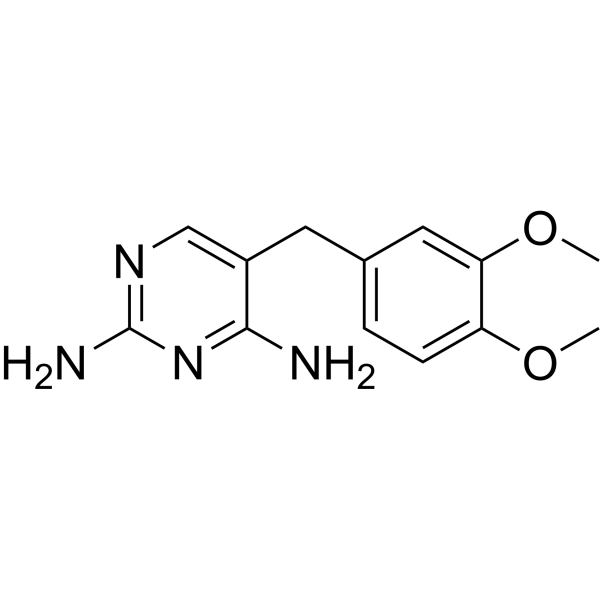
Diaveridine (EGIS-5645) is a dihydrofolate reductase (DHFR) inhibitor with a Ki of 11.5 nM for the wild type DHFR and also an antibacterial agent.
For research use only. We do not sell to patients.
- Purity: 99.69%
- CAS No.: 5355-16-8
- Formula: C13H16N4O2
- Molecular Weight:260.29
-
Storage:Powder -20°C, 3 years , 4°C, 2 years ; In solvent -80°C, 2 years , -20°C, 1 year

To place orders, for customer services and technical support, please contact: MedChemExpress USA
Tel: 609-228-6898 E-mail: [email protected] [email protected]


-
 Biological Activity
-
Chemical Information
-
Solvent & Solubility
- Protocol
- Purity & Documentation
- References
-
 Help & FAQs


-
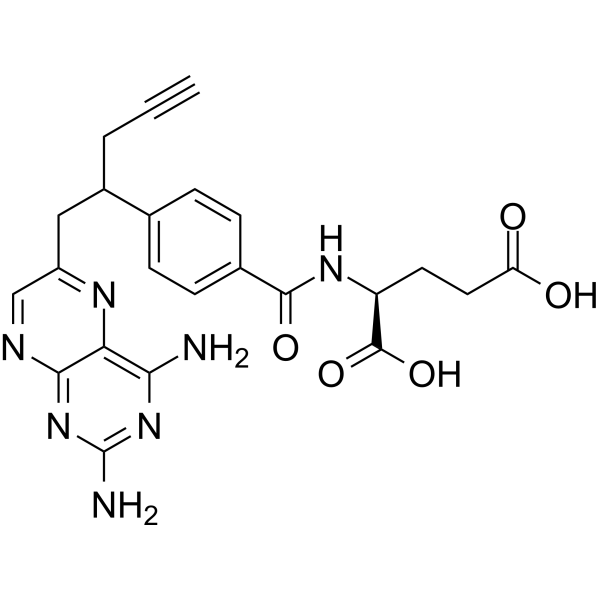
HY-10446
Pralatrexate
-
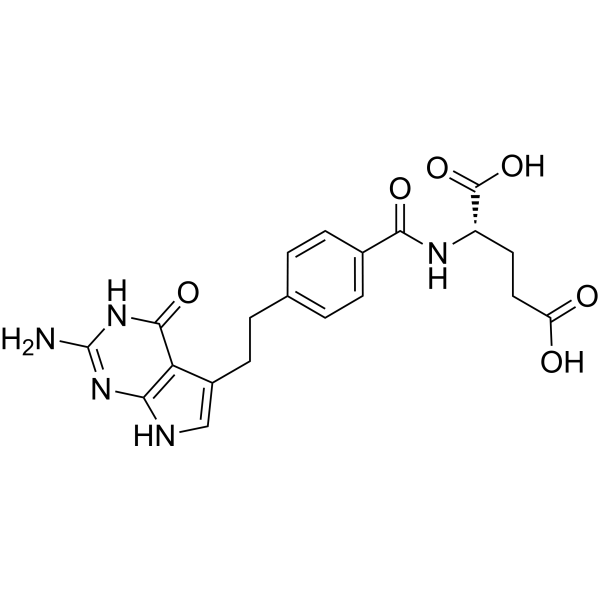
HY-10820
Pemetrexed
-
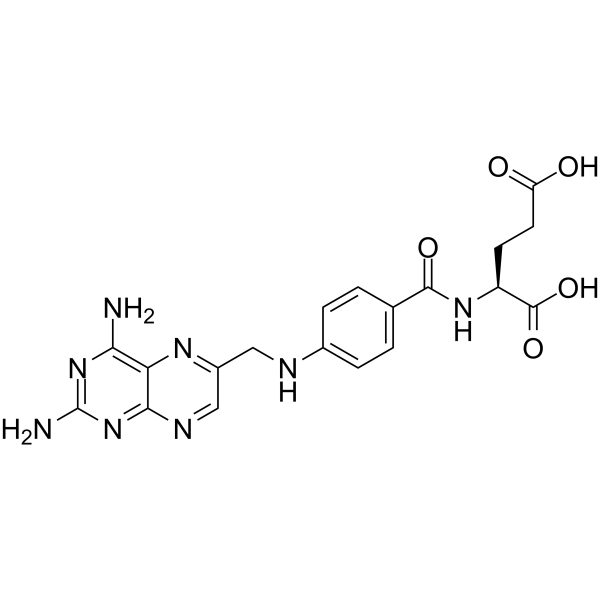
HY-14518
Aminopterin
-

HY-B1902R
Diaveridine (Standard)
-
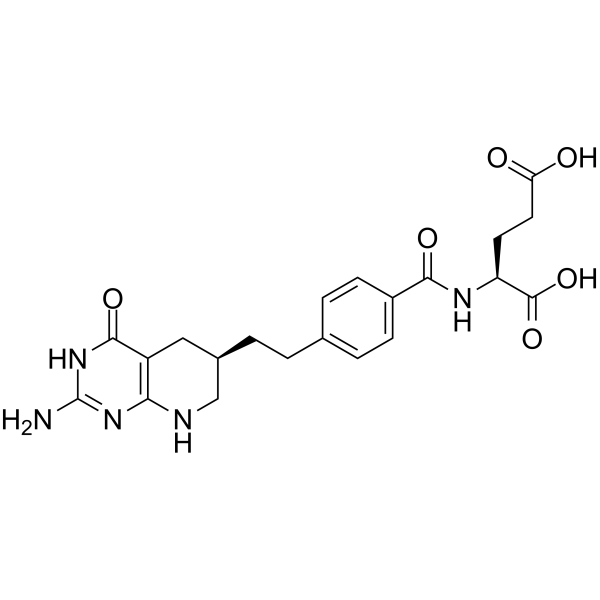
HY-14521
Lometrexol
-
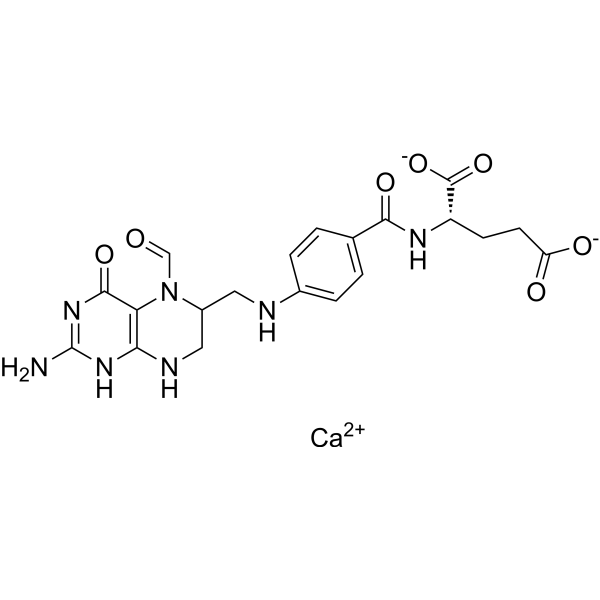
HY-13664
Folinic acid calcium
-

HY-10820R
Pemetrexed (Standard)
-
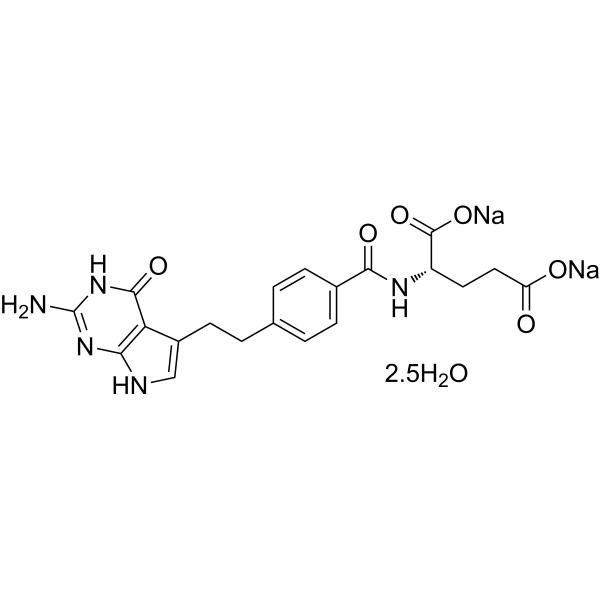
HY-13781
Pemetrexed disodium hemipenta hydrate
-
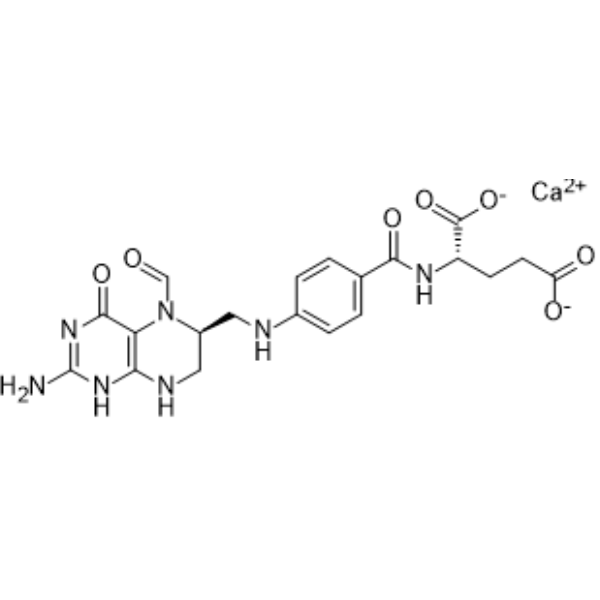
HY-13667
Levoleucovorin Calcium
-
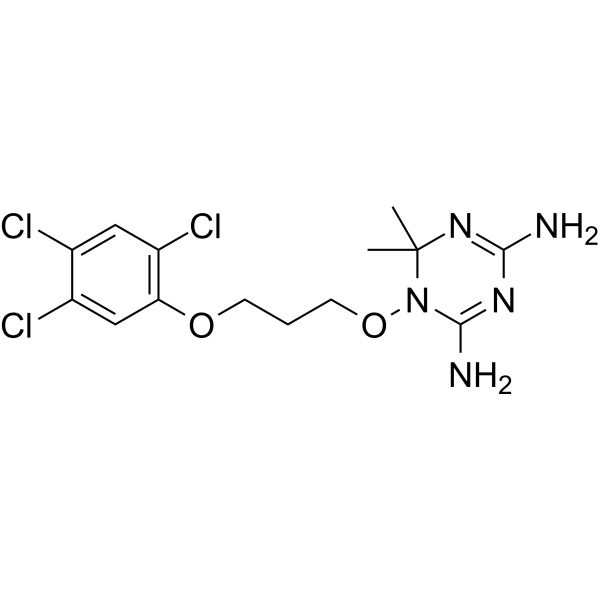
HY-116387
WR99210
-
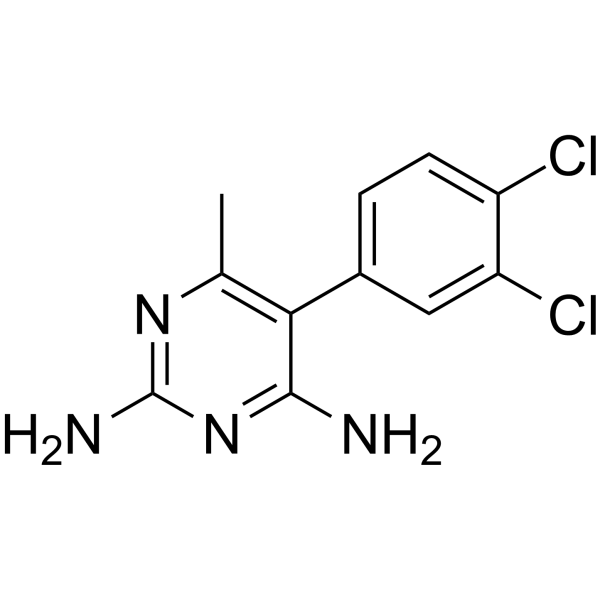
HY-129441
Metoprine
-
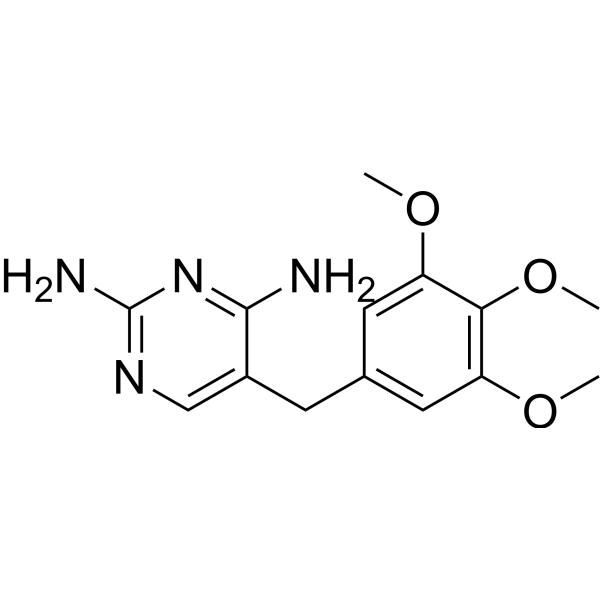
HY-B0510
Trimethoprim


Biological Activity
|
Cell Line

|
Type | Value | Description | References |
|---|---|---|---|---|
| A549 | IC50 |
>1000 μM
Compound: Diaveridine
|
Cytotoxicity against human A549 cells after 24 to 48 hrs by fluorescence-based assay
Cytotoxicity against human A549 cells after 24 to 48 hrs by fluorescence-based assay
|
[PMID: 29784273] |
Diaveridine is a dihydrofolate reductase (DHFR) inhibitor with a Ki of 11.5 nM for the wild type DHFR and also an antibacterial agent[1]. Treatments with Diaveridine for 90 min have a strong bactericidal effect on S. typhimurium TA1535, and no bacterial growth is observed at 10μg/mL or more. Without metabolic activation, treatment with Diaveridine for 48 h, but not 24 h, causes a dose-dependent, significant increase in the frequency of aberrant metaphases. At 100 μg/mL, 60% of the metaphases contain chromosome aberrations[2].
MedChemExpress (MCE) has not independently confirmed the accuracy of these methods. They are for reference only.
MedChemExpress (MCE) has not independently confirmed the accuracy of these methods. They are for reference only.


Chemical Information
-
CAS No. 5355-16-8
-
Appearance Solid
-
Molecular Weight 260.29
-
Formula C13H16N4O2
-
Color White to off-white
-
SMILES
NC1=NC=C(CC2=CC=C(OC)C(OC)=C2)C(N)=N1
-
Synonyms
EGIS-5645
-
Shipping
Room temperature in continental US; may vary elsewhere.
-
Storage
Powder -20°C 3 years 4°C 2 years In solvent -80°C 2 years -20°C 1 year


Solvent & Solubility
DMSO : 33.33 mg/mL (128.05 mM; Need ultrasonic; Hygroscopic DMSO has a significant impact on the solubility of product, please use newly opened DMSO)
Please refer to the solubility information to select the appropriate solvent. Once prepared, please aliquot and store the solution to prevent product inactivation from repeated freeze-thaw cycles.
Storage method and period of stock solution: -80°C, 2 years; -20°C, 1 year. When stored at -80°C, please use it within 2 years. When stored at -20°C, please use it within 1 year.
Please refer to the solubility information to select the appropriate solvent. Once prepared, please aliquot and store the solution to prevent product inactivation from repeated freeze-thaw cycles.
Storage method and period of stock solution: -80°C, 2 years; -20°C, 1 year. When stored at -80°C, please use it within 2 years. When stored at -20°C, please use it within 1 year.
Concentration (start) × Volume (start) = Concentration (final) × Volume (final)
Select the appropriate dissolution method based on your experimental animal and administration route.
- For the following dissolution methods, please ensure to first prepare a clear stock solution using an In Vitro approach and then sequentially add co-solvents:
- To ensure reliable experimental results, the clarified stock solution can be appropriately stored based on storage conditions. As for the working solution for In Vivo experiments, it is recommended to prepare freshly and use it on the same day.
- The percentages shown for the solvents indicate their volumetric ratio in the final prepared solution. If precipitation or phase separation occurs during preparation, heat and/or sonication can be used to aid dissolution.
Add each solvent one by one: 10% DMSO 40% PEG300 5% Tween-80 45% Saline
Solubility: ≥ 2.5 mg/mL (9.60 mM); Clear solution
This protocol yields a clear solution of ≥ 2.5 mg/mL (saturation unknown).
Taking 1 mL working solution as an example, add 100 μL DMSO stock solution (25.0 mg/mL) to 400 μL PEG300, and mix evenly; then add 50 μL Tween-80 and mix evenly; then add 450 μL Saline to adjust the volume to 1 mL.
Preparation of Saline: Dissolve 0.9 g sodium chloride in ddH₂O and dilute to 100 mL to obtain a clear Saline solution.
Add each solvent one by one: 10% DMSO 90% (20% SBE-β-CD in Saline)
Solubility: ≥ 2.5 mg/mL (9.60 mM); Clear solution
This protocol yields a clear solution of ≥ 2.5 mg/mL (saturation unknown).
Taking 1 mL working solution as an example, add 100 μL DMSO stock solution (25.0 mg/mL) to 900 μL 20% SBE-β-CD in Saline, and mix evenly.
Preparation of 20% SBE-β-CD in Saline (4°C, storage for one week): 2 g SBE-β-CD powder is dissolved in 10 mL Saline, completely dissolve until clear.
Please enter the basic information of animal experiments:
-
-
-
-
Recommended: Prepare an additional quantity of animals to account for potential losses during experiments.
Please enter your animal formula composition:
-
%DMSO +
Recommended: Keep the proportion of DMSO in working solution below 2% if your animal is weak.
-
%+
-
+%Tween-80 + +
-
%Saline +
The co-solvents required include: DMSO, . All of co-solvents are available by MedChemExpress (MCE). , Tween 80. All of co-solvents are available by MedChemExpress (MCE).
Working solution concentration: 0.22 mg/mL
Method for preparing stock solution: mg drug dissolved in μL DMSO. Stock solution concentration: mg/mL.
1. Take μL DMSO stock solution;
2. Add μL .
μL , mix evenly;
3. Then add μL Tween 80, mix evenly;
4. Then add μL
Please ensure that the stock solution in the first step is dissolved to a clear state, and add co-solvents in sequence. You can use ultrasonic heating (ultrasonic cleaner, recommended frequency 20-40 kHz), vortexing, etc. to assist dissolution.

Protocol
Cells are cultured at 37°C in a humidified atmosphere of 5% CO2 in air. The growth medium is Eagle’s MEM supplemented with 10% fetal bovine serum. In the experiment without metabolic activation, the cells are treated for 24 or 48 h continuously without a medium change. In the experiment with metabolic activation, the cells are pulse treated with test compounds (including Diaveridine) at varying doses for 6 h and incubated for 18 h in fresh culture medium. Breakage type chromatid aberrations, exchange type chromatid aberrations, breakage type chromosome aberrations, and exchange type chromosome aberrations are scored. Gaps are also counted. Mitotic index is determined from scoring 2000 cells[2].
MedChemExpress (MCE) has not independently confirmed the accuracy of these methods. They are for reference only.
3]Fifty male ICR mice, weighing 25 to 35 g, are assigned to five groups randomly with 10 mice in each group. Mice in the experiment groups receive Diaveridine (DVD) via IG at ed 128 mg/kg (low doses), 256 mg/kg (medium doses), and 512 mg/kg (high doses) body weight for 5 consecutive days, respectively. Mice in negative and positive control groups receive IG 1% CMC-Na solvent and 40 mg/kg body weight of cyclophosphamide, respectively. The testing groups are administered 0.2 mL/10 g Diaveridine (mixed with 1% of CMC-Na, to obtain the concentration of 2 mg/mL.) body weight, once a day, for 5 days. The behavioral changes are recorded on the daily basis[3].
MedChemExpress (MCE) has not independently confirmed the accuracy of these methods. They are for reference only.


Purity & Documentation
-
Data Sheet (274 KB)
-
SDS (394 KB)
- English - EN (394 KB)
- Français - FR (394 KB)
- Deutsch - DE (394 KB)
- Norwegian - NO (394 KB)
- Español - ES (394 KB)
- Swedish - SV (394 KB)
- Italian - IT (394 KB)
- Korean - KR (394 KB)
- Portuguese - PT (394 KB)
-
Handling Instructions (2659 KB)
References
[1]. Sirichaiwat C et al. Target guided synthesis of 5-benzyl-2,4-diamonopyrimidines: their antimalarial activities and binding affinities to wild type and mutant dihydrofolate reductases from Plasmodium falciparum. J Med Chem 47:345-54 (2004). [Content Brief]
[2]. Ono T, et al. The genotoxicity of diaveridine and trimethoprim. Environ Toxicol Pharmacol. 1997 Sep;3(4):297-306. [Content Brief]
[3]. Wang J, et al. Acute, mutagenicity, teratogenicity and subchronic oral toxicity studies of diaveridine in rodents. Environ Toxicol Pharmacol. 2015 Sep;40(2):660-70. [Content Brief]


Complete Stock Solution Preparation Table
Please refer to the solubility information to select the appropriate solvent. Once prepared, please aliquot and store the solution to prevent product inactivation from repeated freeze-thaw cycles.
Storage method and period of stock solution: -80°C, 2 years; -20°C, 1 year. When stored at -80°C, please use it within 2 years. When stored at -20°C, please use it within 1 year.
| Optional Solvent | Concentration Solvent Mass | 1 mg | 5 mg | 10 mg | 25 mg |
|---|---|---|---|---|---|
| DMSO | 1 mM | 3.8419 mL | 19.2093 mL | 38.4187 mL | 96.0467 mL |
| 5 mM | 0.7684 mL | 3.8419 mL | 7.6837 mL | 19.2093 mL | |
| 10 mM | 0.3842 mL | 1.9209 mL | 3.8419 mL | 9.6047 mL | |
| 15 mM | 0.2561 mL | 1.2806 mL | 2.5612 mL | 6.4031 mL | |
| 20 mM | 0.1921 mL | 0.9605 mL | 1.9209 mL | 4.8023 mL | |
| 25 mM | 0.1537 mL | 0.7684 mL | 1.5367 mL | 3.8419 mL | |
| 30 mM | 0.1281 mL | 0.6403 mL | 1.2806 mL | 3.2016 mL | |
| 40 mM | 0.0960 mL | 0.4802 mL | 0.9605 mL | 2.4012 mL | |
| 50 mM | 0.0768 mL | 0.3842 mL | 0.7684 mL | 1.9209 mL | |
| 60 mM | 0.0640 mL | 0.3202 mL | 0.6403 mL | 1.6008 mL | |
| 80 mM | 0.0480 mL | 0.2401 mL | 0.4802 mL | 1.2006 mL | |
| 100 mM | 0.0384 mL | 0.1921 mL | 0.3842 mL | 0.9605 mL |


Diaveridine Related Classifications
HY-B1902 Related Classifications
 Powered by Bioz