



Phthalocyanine

Based on 1 Customer Validation
Phthalocyanine is a type of pigment and Photosensitizer. Upon irradiation, Phthalocyanine generates ROS or converts light energy into heat, inducing oxidative damage, cytotoxicity, and photodynamic killing of bacterial biofilms. Phthalocyanine produces chemiluminescence when oxidized. It can be used in studies related to cancer, bacterial infections, and photodynamic approaches.
For research use only. We do not sell to patients.
- Purity : 98.0%
- CAS No.: 574-93-6
- Formula: C32H18N8
- Molecular Weight:514.54
-
Storage:
4°C, protect from light, stored under nitrogen
* In solvent : -80°C, 6 months; -20°C, 1 month (protect from light, stored under nitrogen)


To place orders, for customer services and technical support, please contact: MedChemExpress USA
Tel: 609-228-6898 E-mail: [email protected] [email protected]


-
 Biological Activity
-
Chemical Information
-
Solvent & Solubility
- Protocols
- Purity & Documentation
- References
-
 Help & FAQs


-
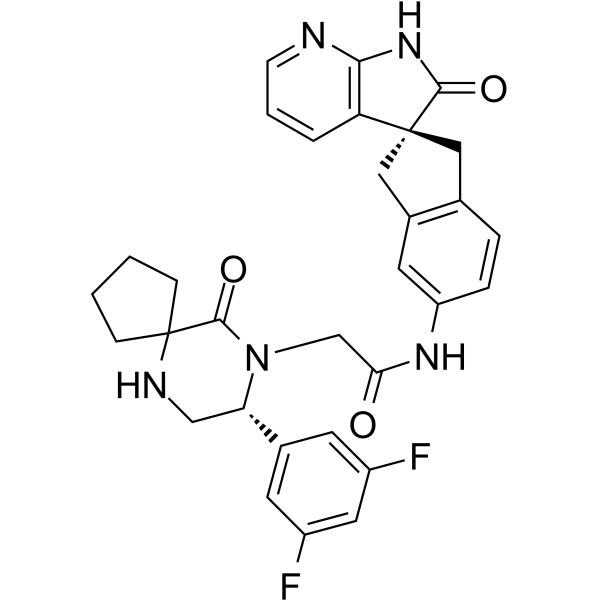
HY-10301
MK-3207CGRP Receptor Antagonist -

HY-D0005
BathocuproineCu(I) Chelating Agent -
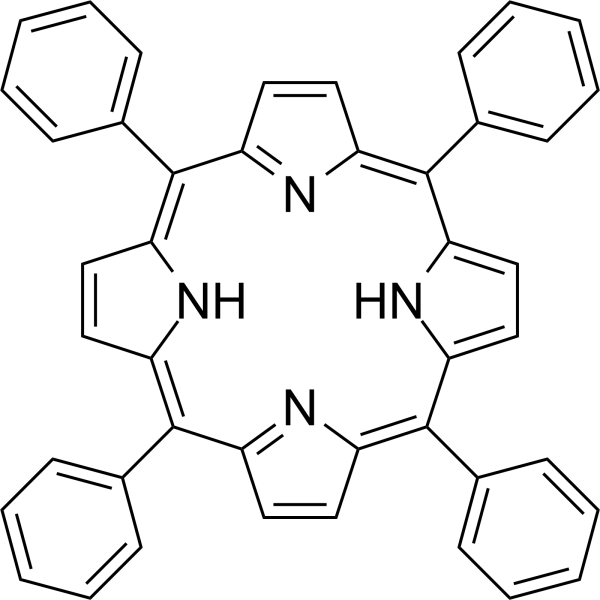
HY-103656
TetraphenylporphyrinPorphyrin-Based Compound -

HY-W007596
Tris(2-phenylpyridinato-C2,N)iridium(III)Biochemical Assay Reagent -
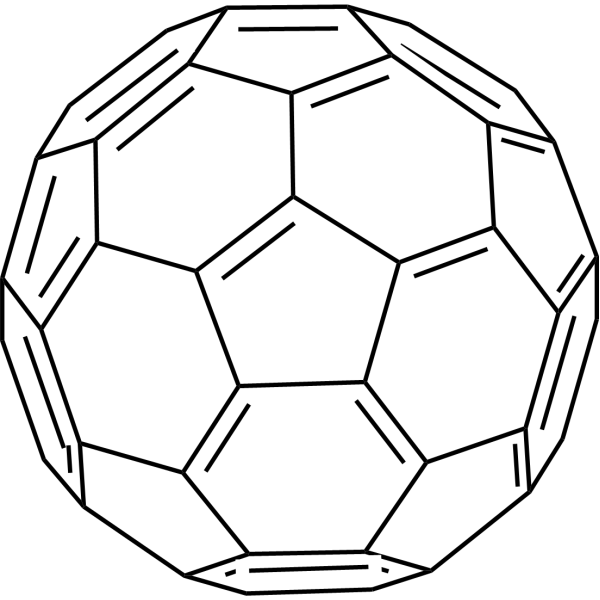
HY-W020768
Fullerene-C60 -
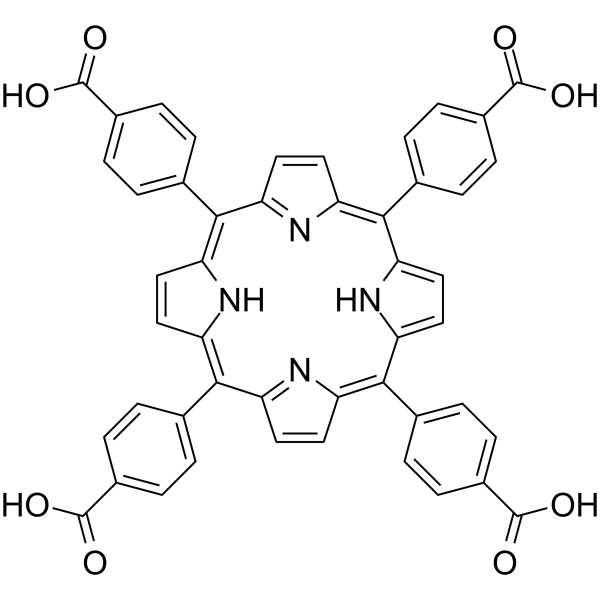
HY-W008852
Tetrakis (4-carboxyphenyl) porphyrinMetal Remover -
HY-B1727
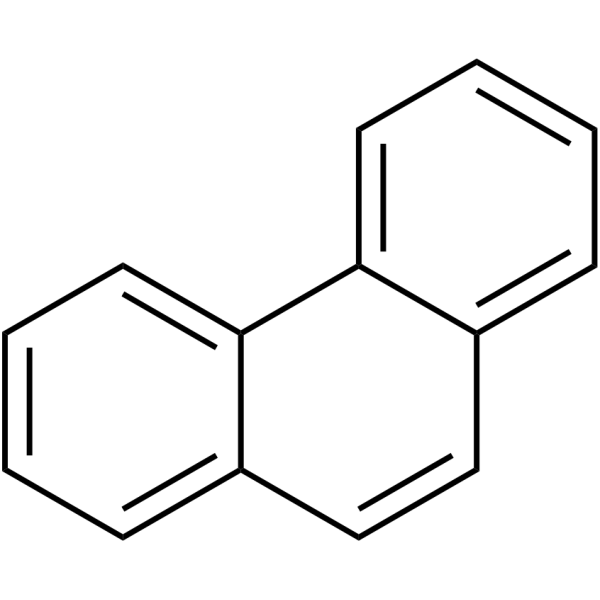
PhenanthrenePolycyclic Aromatic Hydrocarbon -

HY-W008874
meso-Tetra(4-pyridyl)porphineTop1 Inhibitor -

HY-W025445
Spiro-MeOTADHole Transport Layer Material -

HY-W013973
p-TerphenylBiochemical Assay Reagent -
HY-W035140
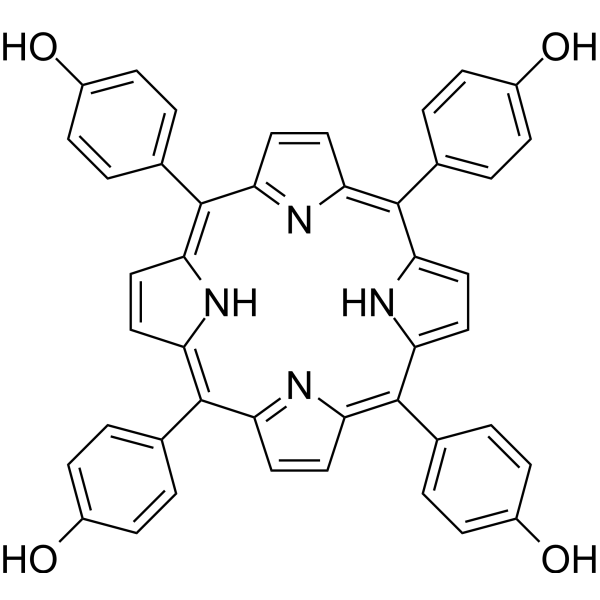
5,10,15,20-Tetrakis(4-hydroxyphenyl)porphyrinBiochemical Assay Reagent -

HY-W008860
5,10,15,20-Tetra(4-methoxyphenyl)-21H,23H-porphyrinIntermediate


Biological Activity
Description
In Vitro
Phthalocyanine exhibits photodynamic cytotoxicity in unspecified cancer cells, with a light IC50 of 0.55 μM, a singlet oxygen quantum yield of 0.57, and extremely low dark cytotoxicity (dark IC50 >100 μM)[1].
Phthalocyanine exerts photodynamic cytotoxicity against HUVEC, breast cancer cell lines MCF-7 and MDA-MB-231, with IC50 values of 45.6 μM, 69.1 μM and 89.3 μM under light exposure[1].
MedChemExpress (MCE) has not independently confirmed the accuracy of these methods. They are for reference only. Further protocols information, click here.
Clinical Trial
| NCT Number | Sponsor | Condition | Start Date |
Phase

|
|---|---|---|---|---|
| NCT01329991 | Plexxikon| | 2011-05 | PHASE1 |


Chemical Information
-
CAS No. 574-93-6
-
Appearance Solid
-
Molecular Weight 514.54
-
Formula C32H18N8
-
Color Dark purple to black
-
SMILES
[H]N1C2=C3C=CC=CC3=C1/N=C4C5=C(C(/N=C6C7=C(/C(N/6[H])=N/C8=N/C(C9=C8C=CC=C9)=N\2)C=CC=C7)=N/4)C=CC=C5
-
Shipping
Room temperature in continental US; may vary elsewhere.
-
Storage
4°C, protect from light, stored under nitrogen
* In solvent : -80°C, 6 months; -20°C, 1 month (protect from light, stored under nitrogen)


Solvent & Solubility
In Vitro:
Acetone : < 1 mg/mL (insoluble)
DMF : < 1 mg/mL (insoluble)

Protocols
-
Cell Cytotoxicity Assay
Cytotoxicity assays are usually based on the assessment of cell membrane damage, which can also be indirectly detected by measuring cell viability. Detection methods include MTT assay, CKK-8 assay, LDH assay and ATP assay, etc.
-
Mammalian live/dead viability and cytotoxicity staining
Live/dead viability and cytotoxicity staining assays are based on the simultaneous detection of intracellular esterase activity in metabolically active (viable) cells and membrane integrity loss in non-viable cells. In commonly used dual-staining approaches, membrane-permeant fluorogenic substrates are converted by intracellular esterases into fluorescent products in live cells, while impermeant DNA-binding dyes selectively enter cells with compromised plasma membranes and label nucleic acids in dead or dying cells, enabling discrimination between viable and non-viable populations by fluorescence microscopy or flow cytometry.
-
ROS/oxidative-stress fluorescent staining
ROS/oxidative-stress fluorescent staining uses cell-permeant fluorogenic probes that become fluorescent after oxidation inside cells or tissues; commonly used examples include DCFH-DA/DCFDA for broad cellular oxidant detection, DHE for superoxide-related signal detection, MitoSOX for mitochondrial superoxide-related signal detection, and CellROX probes for oxidative-stress-associated fluorescence readouts. The assay detects probe oxidation rather than a single ROS species unless the probe and analysis method have been chemically validated for that species. DCFH-DA enters cells, is deacetylated by intracellular esterases to DCFH, and produces fluorescent DCF after oxidation, so the readout is used as an operational measure of total cellular oxidative stress rather than a species-specific ROS measurement. DHE and MitoSOX can report superoxide-related oxidation, but red fluorescence alone can include non-specific ethidium-like oxidation products; HPLC or optimized spectral approaches are
-
Cell Viability Determination by MTT Colorimetric Assay
The following protocol uses the MTT colorimetric assay as a classic literature-established method for assessing cell viability/metabolic activity in cultured mammalian cells. MTT[3-(4,5-dimethylthiazol-2-yl)-2,5-diphenyltetrazolium bromide] is reduced by metabolically active cells to a colored formazan product; the amount of formazan is quantified spectrophotometrically and provides an indirect measure of metabolically active viable cells. Importantly, MTT reduction reflects cellular oxidoreductase/metabolic activity rather than an absolute direct count of living cells, so changes in cellular metabolism can alter the signal independently of cell number.


Purity & Documentation
-
Data Sheet (280 KB)
-
SDS (394 KB)
- English - EN (394 KB)
- Français - FR (394 KB)
- Deutsch - DE (394 KB)
- Norwegian - NO (394 KB)
- Español - ES (394 KB)
- Swedish - SV (394 KB)
- Italian - IT (394 KB)
- Korean - KR (394 KB)
- Portuguese - PT (394 KB)
-
Handling Instructions (2659 KB)
References
[1]. Rennie CC, et al. Targeted cancer phototherapy using phthalocyanine-anticancer drug conjugates. Dalton transactions (Cambridge, England : 2003). 2022 Sep 13;51(35):13157-13175. [Content Brief]
[3]. Spesia MB, et al. Evolution of Phthalocyanine Structures as Photodynamic Agents for Bacteria Inactivation. Chem Rec. 2022 Apr;22(4):e202100292. [Content Brief]
[4]. Jiang Z, et al. Pharmaceutical development, composition and quantitative analysis of phthalocyanine as the photosensitizer for cancer photodynamic therapy. J Pharm Biomed Anal. 2014 Jan;87:98-104. [Content Brief]

Calculators
Concentration (start) × Volume (start) = Concentration (final) × Volume (final)


Phthalocyanine Related Classifications
HY-121310 Related Classifications
 Powered by Bioz
Keywords
- Phthalocyanine
- 574-93-6
- Bacterial
- Photosensitizer
- Reactive Oxygen Species (ROS)
- Biochemical Assay Reagents
- E. coli
- S. aureus
- S. mitis
- MDA-MB-231 human breast adenocarcinoma cells
- P. aeruginosa
- E. seriolicida
- HUVECs
- HepG2 human hepatocellular carcinoma cells
- MCF-7 human breast adenocarcinoma cells
- EMRSA
- Inhibitor
- inhibitor
- inhibit