



VPC-14228

Based on 1 Customer Validation
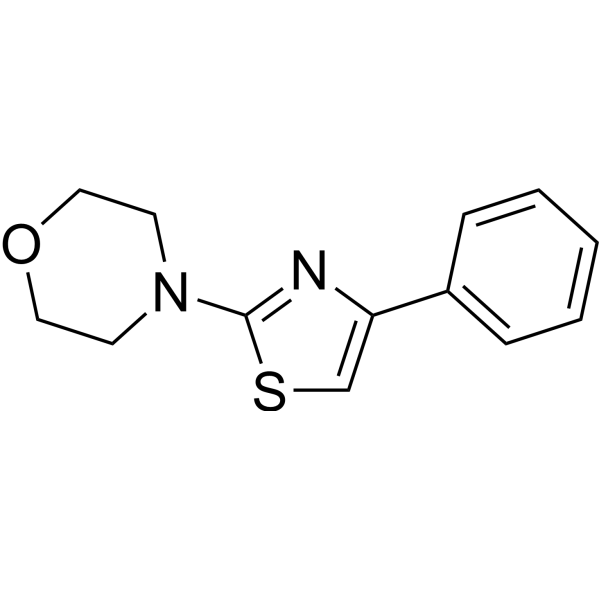
VPC-14228 is an inhibitor that selectively targets androgen receptor DNA binding domain (AR-DBD). VPC-14228 inhibits the interaction between AR and DNA, thereby blocking AR-mediated transcriptional activation. VPC-14228 does not rely on nuclear localization inhibition, but rather inhibits the activity of full-length AR and splice variant AR-V7 by interfering with AR binding to chromatin. And VPC-14228 has high selectivity for other nuclear receptors such as ER and PR. VPC-14228 can be used in the study of prostate cancer
Para uso exclusivo en investigación. No vendemos a pacientes.
- Pureza : 99.36%
- No. CAS: 19983-28-9
- Fòrmula: C13H14N2OS
- Peso molecular:246.33
-
Almacenamiento:Powder -20°C, 3 years , 4°C, 2 years ; In solvent -80°C, 6 months , -20°C, 1 month

To place orders, for customer services and technical support, please contact: MedChemExpress USA
Tel: 609-228-6898 E-mail: [email protected] [email protected]


-
 Actividad biológica
-
Chemical Information
-
Solvente y solubilidad
- Protocolo
- Pureza y Documentación
- Referencias
-
 Help & FAQs


-
HY-116501
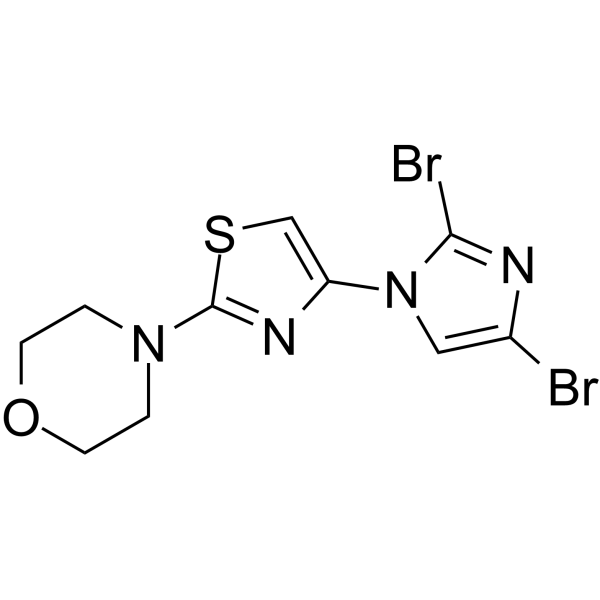
VPC-14449AR-DBD Inhibitor -
HY-138641
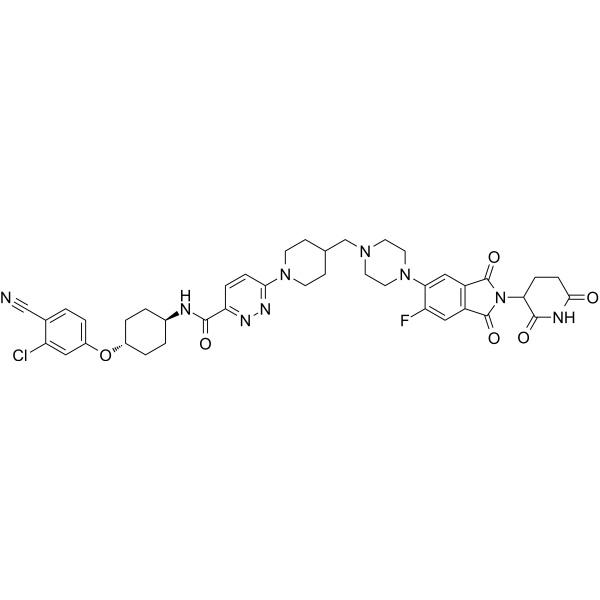
BavdegalutamideAR PROTAC Degrader -
HY-15194
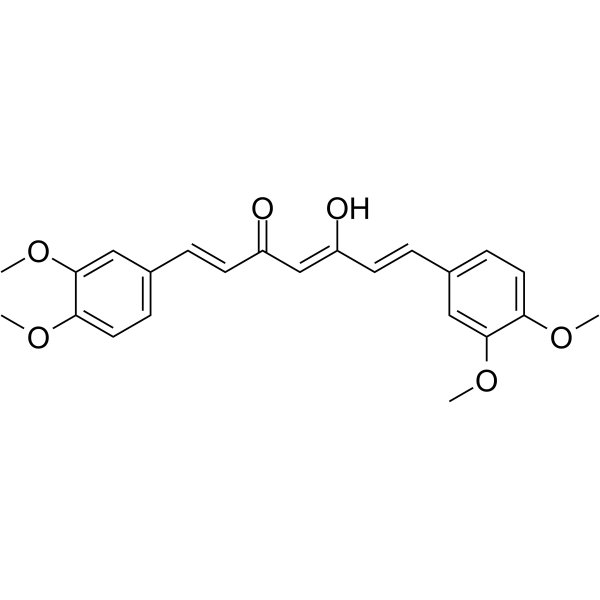
DimethylcurcuminAndrogen Receptor Inhibitor -
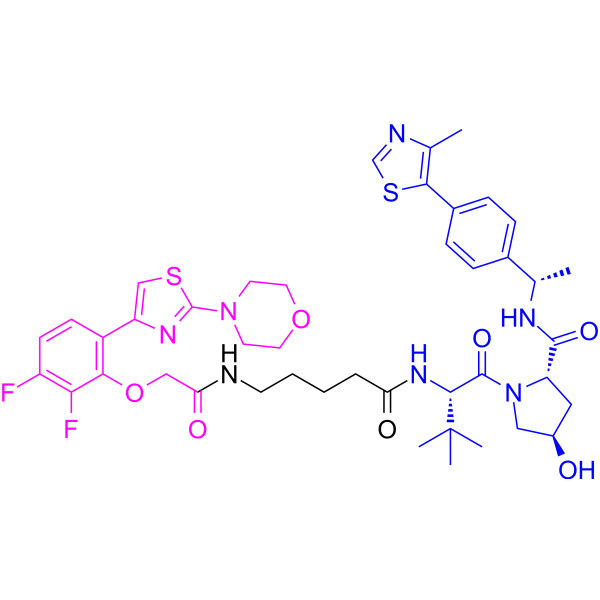
HY-148771
MTX-23PROTAC AR-V7/AR-FL Degrader -
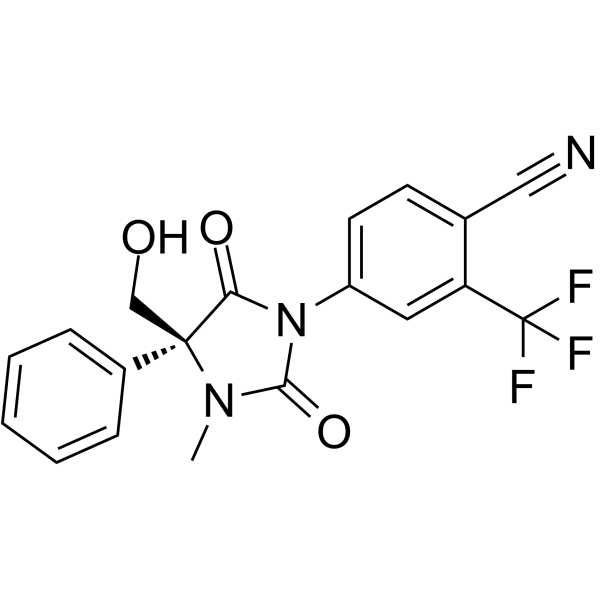
HY-18102
GLPG0492Androgen Receptor Agonist -
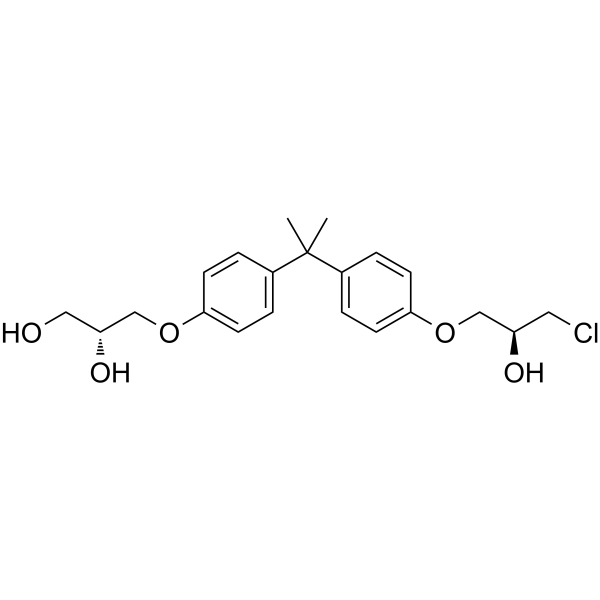
HY-109070
RalanitenAR-NTD Antagonist -
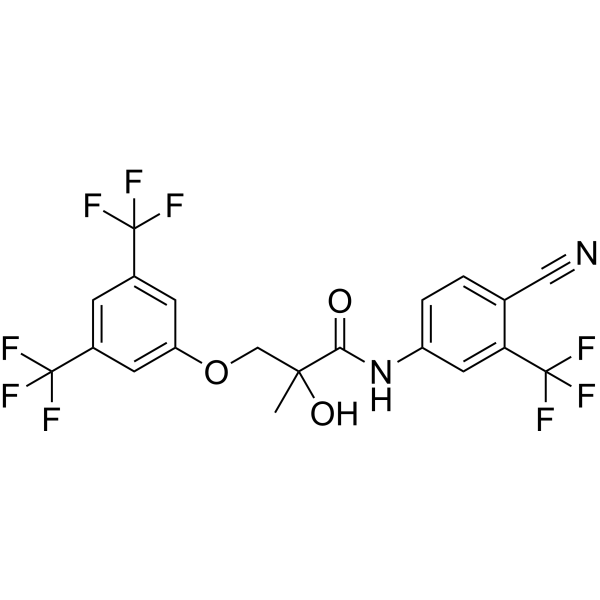
HY-135732
SK33Anti-androgen -
HY-135794
11-KetodihydrotestosteroneAndrogen Receptor Agonist -
HY-N0790
LupeolAndrogen Receptor Inhibitor -
HY-N1943
AilanthoneAndrogen Receptor Inhibitor -
HY-145709
Ar-V7-IN-1Ar-V7 Inhibitor -

HY-N0790R
Lupeol (Standard)Androgen Receptor Inhibitor


Actividad biológica
Descripciòn
IC50 & Target
|
AR-V7 |
Cellular Effect
|
Cell Line

|
Type | Value | Description | References |
|---|---|---|---|---|
| LNCaP | IC50 |
0.28 μM
Compound: 6
|
Inhibition of androgen receptor in human LNCaP cells assessed as inhibition of prostate-specific antigen secretion into media after 3 days
Inhibition of androgen receptor in human LNCaP cells assessed as inhibition of prostate-specific antigen secretion into media after 3 days
|
[PMID: 25062331] |
| LNCaP | IC50 |
0.33 μM
Compound: 6
|
Inhibition of androgen receptor transcriptional activity in human LNCaP cells after 3 days by eGFP assay
Inhibition of androgen receptor transcriptional activity in human LNCaP cells after 3 days by eGFP assay
|
[PMID: 25062331] |
In Vitro
VPC-14228 inhibits hAR transcriptional activity in PC3 cells by targeting AR-DBD, with IC50s of 2.36 μM (hAR-WT), 3.70 μM (hAR-Y594A), and 3.70 μM (hAR-Q592A) for hAR[1].
VPC-14228 (25 μM; 6 h) did not induce apoptosis or affect AR protein expression[1].
VPC-14228 may degrade AR-V7 in 22Rv1 cells via VHL-like PROTACs, but has no effect at 10 μM concentration[2].
MedChemExpress (MCE) has not independently confirmed the accuracy of these methods. They are for reference only.
-
Cell Line:PC3 (human prostate cancer cells)
-
Concentration:0.01-100 μM
-
Incubation Time:24 h
-
Result:Dose-dependently inhibited AR transcriptional activity in PC3 cells transfected with full-length AR, as measured by luciferase reporter assay, and no significant changes in AR protein levels[1].
-
Cell Line:22Rv1 (human castration-resistant prostate cancer cells)
-
Concentration:1-10 μM
-
Incubation Time:24 h
-
Result:Did not induce degradation of AR-V7 in 22Rv1 cells, with a DC50>10 μM.


Chemical Information
-
No. CAS 19983-28-9
-
Appearance Solid
-
Peso molecular 246.33
-
Fòrmula C13H14N2OS
-
Color White to light yellow
-
SMILES
N1(C2=NC(C3=CC=CC=C3)=CS2)CCOCC1
-
Envío
Room temperature in continental US; may vary elsewhere.
-
Almacenamiento
Powder -20°C 3 years 4°C 2 years In solvent -80°C 6 months -20°C 1 month


Solvente y solubilidad
In Vitro:
DMSO : 100 mg/mL (405.96 mM; Need ultrasonic; Hygroscopic DMSO has a significant impact on the solubility of product, please use newly opened DMSO)
Please refer to the solubility information to select the appropriate solvent. Once prepared, please aliquot and store the solution to prevent product inactivation from repeated freeze-thaw cycles.
Storage method and period of stock solution: -80°C, 6 months; -20°C, 1 month. When stored at -80°C, please use it within 6 months. When stored at -20°C, please use it within 1 month.
Please refer to the solubility information to select the appropriate solvent. Once prepared, please aliquot and store the solution to prevent product inactivation from repeated freeze-thaw cycles.
Storage method and period of stock solution: -80°C, 6 months; -20°C, 1 month. When stored at -80°C, please use it within 6 months. When stored at -20°C, please use it within 1 month.
Concentration (start) × Volume (start) = Concentration (final) × Volume (final)
In Vivo:
Select the appropriate dissolution method based on your experimental animal and administration route.
- For the following dissolution methods, please ensure to first prepare a clear stock solution using an In Vitro approach and then sequentially add co-solvents:
- To ensure reliable experimental results, the clarified stock solution can be appropriately stored based on storage conditions. As for the working solution for In Vivo experiments, it is recommended to prepare freshly and use it on the same day.
- The percentages shown for the solvents indicate their volumetric ratio in the final prepared solution. If precipitation or phase separation occurs during preparation, heat and/or sonication can be used to aid dissolution.
Add each solvent one by one: 10% DMSO 40% PEG300 5% Tween-80 45% Saline
Solubility: ≥ 2.5 mg/mL (10.15 mM); Clear solution
This protocol yields a clear solution of ≥ 2.5 mg/mL (saturation unknown).
Taking 1 mL working solution as an example, add 100 μL DMSO stock solution (25.0 mg/mL) to 400 μL PEG300, and mix evenly; then add 50 μL Tween-80 and mix evenly; then add 450 μL Saline to adjust the volume to 1 mL.
Preparation of Saline: Dissolve 0.9 g sodium chloride in ddH₂O and dilute to 100 mL to obtain a clear Saline solution.
Add each solvent one by one: 10% DMSO 90% (20% SBE-β-CD in Saline)
Solubility: ≥ 2.5 mg/mL (10.15 mM); Clear solution
This protocol yields a clear solution of ≥ 2.5 mg/mL (saturation unknown).
Taking 1 mL working solution as an example, add 100 μL DMSO stock solution (25.0 mg/mL) to 900 μL 20% SBE-β-CD in Saline, and mix evenly.
Preparation of 20% SBE-β-CD in Saline (4°C, storage for one week): 2 g SBE-β-CD powder is dissolved in 10 mL Saline, completely dissolve until clear.
In Vivo Dissolution Calculator
Please enter the basic information of animal experiments:
-
-
-
-
Recommended: Prepare an additional quantity of animals to account for potential losses during experiments.
Please enter your animal formula composition:
-
%DMSO +
Recommended: Keep the proportion of DMSO in working solution below 2% if your animal is weak.
-
%+
-
+%Tween-80 + +
-
%Saline +
The co-solvents required include: DMSO, . All of co-solvents are available by MedChemExpress (MCE). , Tween 80. All of co-solvents are available by MedChemExpress (MCE).
Working solution concentration: 0.22 mg/mL
Method for preparing stock solution: mg drug dissolved in μL DMSO. Stock solution concentration: mg/mL.
1. Take μL DMSO stock solution;
2. Add μL .
μL , mix evenly;
3. Then add μL Tween 80, mix evenly;
4. Then add μL
Please ensure that the stock solution in the first step is dissolved to a clear state, and add co-solvents in sequence. You can use ultrasonic heating (ultrasonic cleaner, recommended frequency 20-40 kHz), vortexing, etc. to assist dissolution.


Pureza y Documentación
-
Ficha de datos (275 KB)
-
SDS (393 KB)
- English - EN (393 KB)
- Français - FR (393 KB)
- Deutsch - DE (393 KB)
- Norwegian - NO (393 KB)
- Español - ES (393 KB)
- Swedish - SV (393 KB)
- Italian - IT (393 KB)
- Korean - KR (393 KB)
- Portuguese - PT (393 KB)
-
Instrucciones de manejo (2659 KB)
Referencias
[1]. Kush Dalal, et al. Selectively targeting the DNA-binding domain of the androgen receptor as a prospective therapy for prostate cancer. J Biol Chem. 2014 Sep 19;289(38):26417-26429. [Content Brief]
[2]. Bhumireddy A, et al. Design, synthesis, and biological evaluation of phenyl thiazole-based AR-V7 degraders. Bioorg Med Chem Lett. 2022 Jan 1;55:128448. [Content Brief]


Complete Stock Solution Preparation Table
Please refer to the solubility information to select the appropriate solvent. Once prepared, please aliquot and store the solution to prevent product inactivation from repeated freeze-thaw cycles.
Storage method and period of stock solution: -80°C, 6 months; -20°C, 1 month. When stored at -80°C, please use it within 6 months. When stored at -20°C, please use it within 1 month.
| Optional Solvent | Concentration Solvent Mass | 1 mg | 5 mg | 10 mg | 25 mg |
|---|---|---|---|---|---|
| DMSO | 1 mM | 4.0596 mL | 20.2980 mL | 40.5959 mL | 101.4899 mL |
| 5 mM | 0.8119 mL | 4.0596 mL | 8.1192 mL | 20.2980 mL | |
| 10 mM | 0.4060 mL | 2.0298 mL | 4.0596 mL | 10.1490 mL | |
| 15 mM | 0.2706 mL | 1.3532 mL | 2.7064 mL | 6.7660 mL | |
| 20 mM | 0.2030 mL | 1.0149 mL | 2.0298 mL | 5.0745 mL | |
| 25 mM | 0.1624 mL | 0.8119 mL | 1.6238 mL | 4.0596 mL | |
| 30 mM | 0.1353 mL | 0.6766 mL | 1.3532 mL | 3.3830 mL | |
| 40 mM | 0.1015 mL | 0.5074 mL | 1.0149 mL | 2.5372 mL | |
| 50 mM | 0.0812 mL | 0.4060 mL | 0.8119 mL | 2.0298 mL | |
| 60 mM | 0.0677 mL | 0.3383 mL | 0.6766 mL | 1.6915 mL | |
| 80 mM | 0.0507 mL | 0.2537 mL | 0.5074 mL | 1.2686 mL | |
| 100 mM | 0.0406 mL | 0.2030 mL | 0.4060 mL | 1.0149 mL |


VPC-14228 Related Classifications
HY-117669 Related Classifications
 Powered by Bioz