



ACTH (1-17)
ACTH (1-17), an adrenocorticotropin analogue, is a potent human melanocortin 1 (MC1) receptor agonist with a Ki of 0.21 nM.
Para uso exclusivo en investigación. No vendemos a pacientes.
- No. CAS: 7266-47-9
- Fòrmula: C95H145N29O23S
- Peso molecular:2093.41
-
Almacenamiento:
Please store the product under the recommended conditions in the Certificate of Analysis.


To place orders, for customer services and technical support, please contact: MedChemExpress USA
Tel: 609-228-6898 E-mail: [email protected] [email protected]


-
 Actividad biológica
-
Chemical Information
-
Solvente y solubilidad
- Pureza y Documentación
- Referencias
-
 Help & FAQs


-

HY-P1558
ACTH (11-24)ACTH Receptor Antagonist -
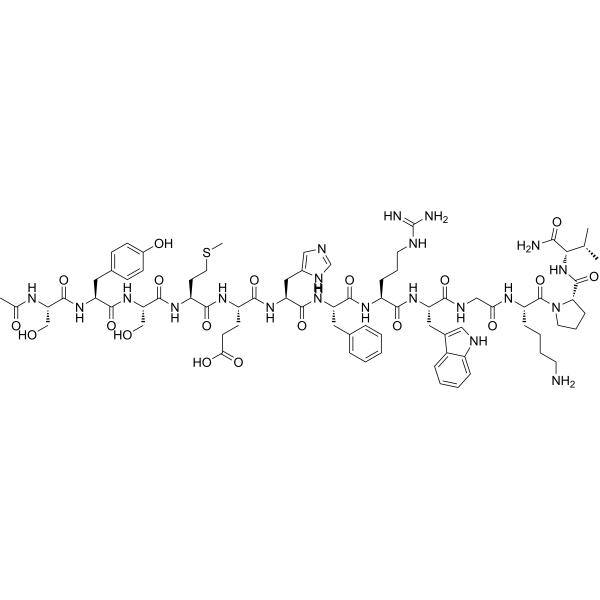
HY-P0252
α-MSHMC4R Agonist -
HY-P1477
Adrenocorticotropic hormone (1-39), ratMelanocortin Receptor Agonist -
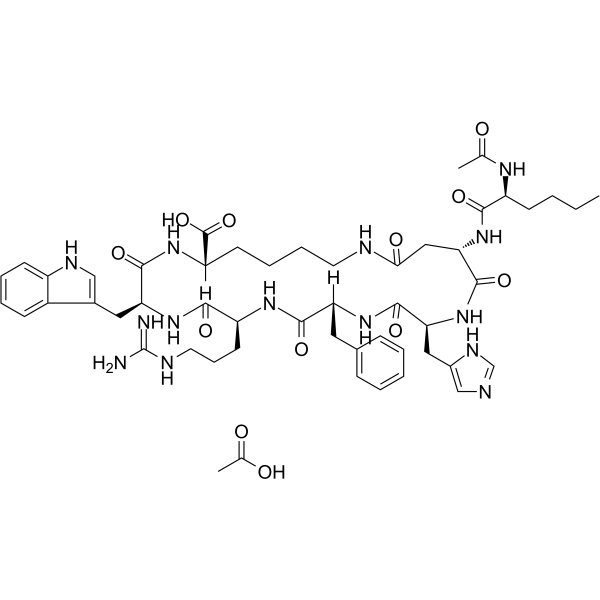
HY-18678A
Bremelanotide AcetateMelanocortin Receptor Agonist -
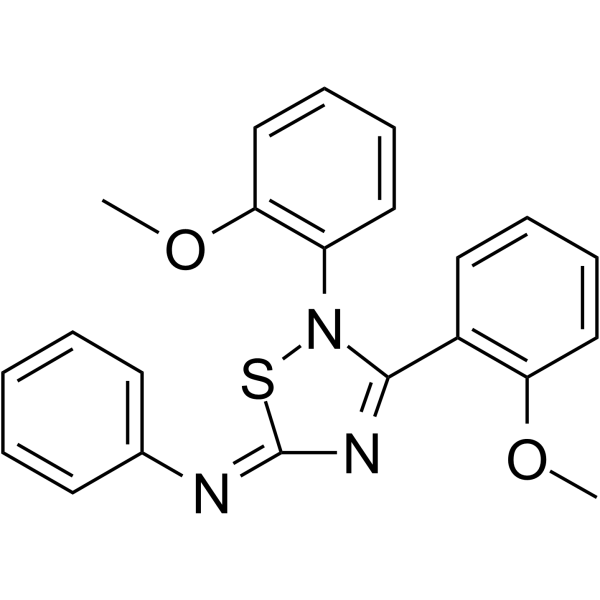
HY-107139
JNJ-10229570Melanocortin Receptor Antagonist -

HY-P1211
Adrenocorticotropic Hormone (ACTH) (1-39), humanMelanocortin Receptor Agonist -
HY-19870
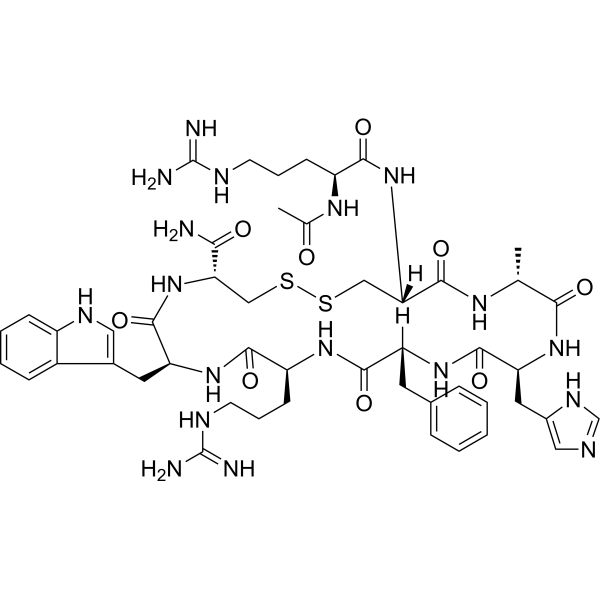
SetmelanotideMC4R Agonist -
HY-N2466
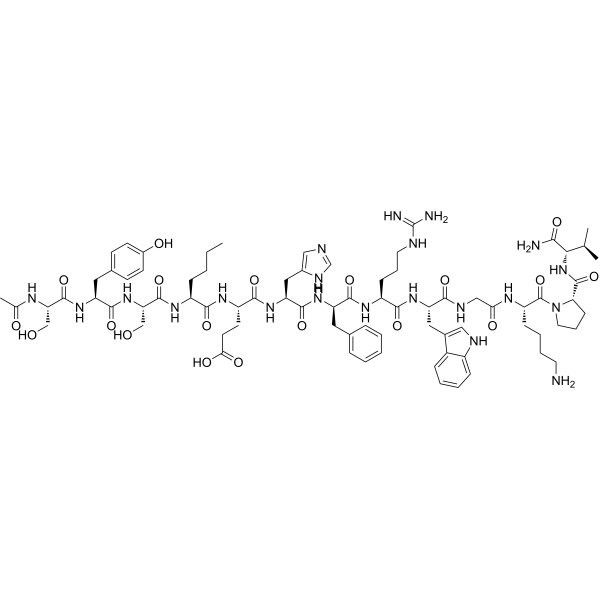
Melanotan IMelanocortin Receptor Activator -
HY-P1504
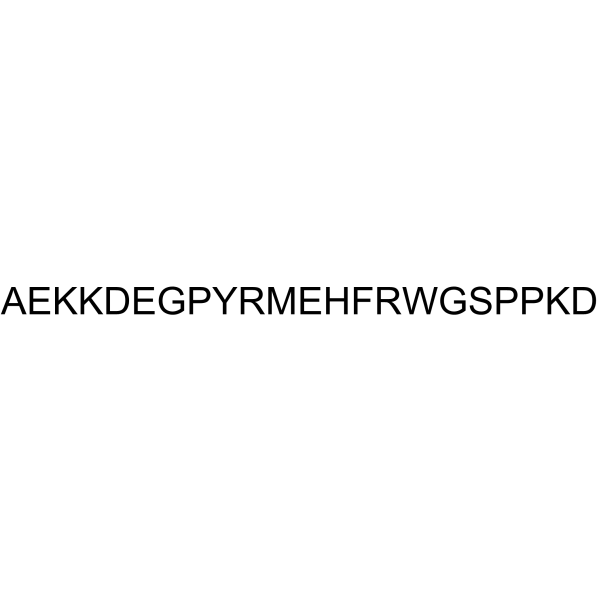
β-Melanocyte Stimulating Hormone (MSH), humanMC4-R Agonist -
HY-P1478
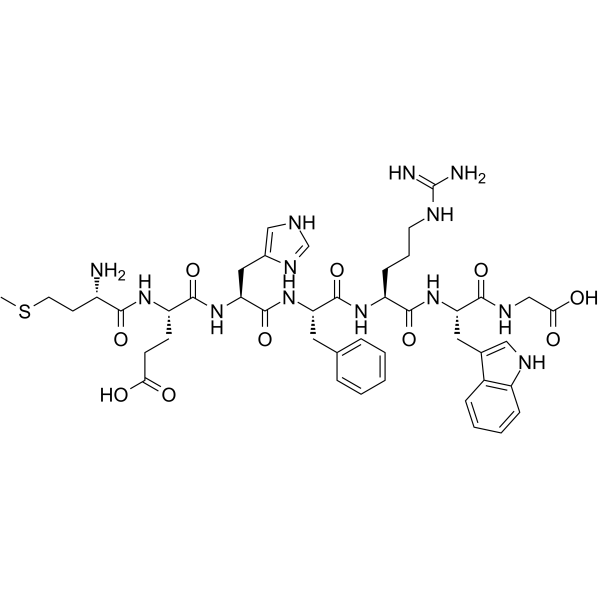
Adrenocorticotropic Hormone (ACTH) (4-10), humanMelanocortin Receptor Agonist -
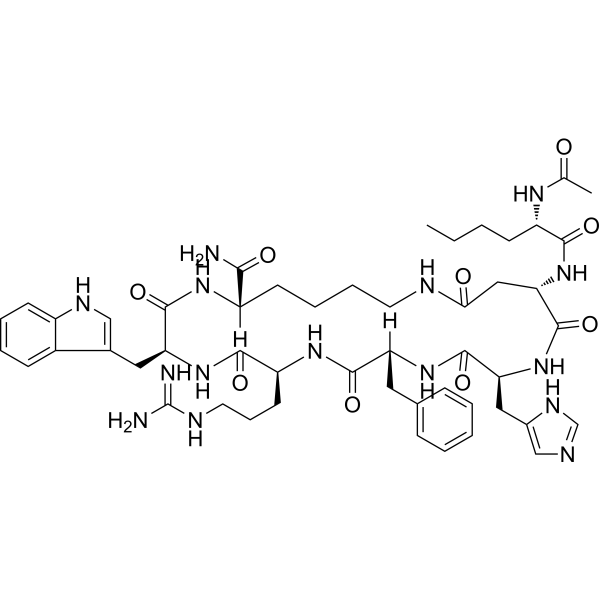
HY-P0267
Melanotan (MT)-IIMelanotropin Receptor Agonist -
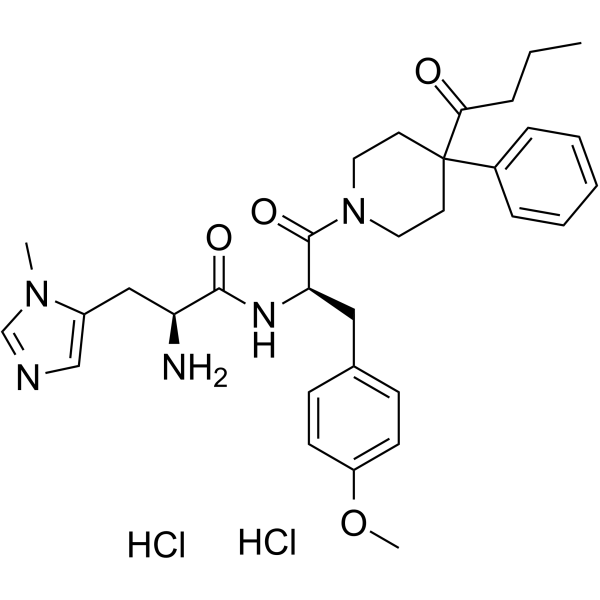
HY-115644
BMS-470539 dihydrochlorideMC-1 Receptor Agonist


Actividad biológica
Descripciòn
IC50 & Target
Ki: 0.21 nM (human MC1 receptor)[1]
In Vitro
ACTH (1-17) is a potent agonist at the hMC1R. ACTH (1-17) shows high affinity for the hMC1R with a Ki value of 0.21±0.03 nM which is slightly higher than that of 0.13±0.005 nM for alpha-MSH[1]. ACTH (1-17) induces a slight and not significant increase in growth hormone secretion even when micromolar concentrations of the peptide are employed in rat pituitary cultures[2].
MedChemExpress (MCE) has not independently confirmed the accuracy of these methods. They are for reference only.
In Vivo
MedChemExpress (MCE) has not independently confirmed the accuracy of these methods. They are for reference only.


Chemical Information
-
No. CAS 7266-47-9
-
Peso molecular 2093.41
-
Fòrmula C95H145N29O23S
-
Synonyms
α1-17-ACTH
-
Sequence
Ser-Tyr-Ser-Met-Glu-His-Phe-Arg-Trp-Gly-Lys-Pro-Val-Gly-Lys-Lys-Arg
-
Sequence Shortening
SYSMEHFRWGKPVGKKR
-
Envío
Room temperature in continental US; may vary elsewhere.
-
Almacenamiento
Please store the product under the recommended conditions in the Certificate of Analysis.


Solvente y solubilidad
In Vitro
H2O
Peptide Solubility and Storage Guidelines:
1. Calculate the length of the peptide.
2. Calculate the overall charge of the entire peptide according to the following table:
| Contents | Assign value | |
|---|---|---|
| Acidic amino acid | Asp (D), Glu (E), and the C-terminal -COOH. | -1 |
| Basic amino acid | Arg (R), Lys (K), His (H), and the N-terminal -NH2 | +1 |
| Neutral amino acid | Gly (G), Ala (A), Leu (L), Ile (I), Val (V), Cys (C), Met (M), Thr (T), Ser (S), Phe (F), Tyr (Y), Trp (W), Pro (P), Asn (N), Gln (Q) | 0 |
3. Recommended solution:
| Overall charge of peptide | Details |
|---|---|
| Negative (<0) |
1. Try to dissolve the peptide in water first. 2. If water fails, add NH4OH (<50 μL). 3. If the peptide still does not dissolve, add DMSO (50-100 μL) to solubilize the peptide. |
| Positive (>0) |
1. Try to dissolve the peptide in water first. 2. If water fails, try dissolving the peptide in a 10%-30% acetic acid solution. 3. If the peptide still does not dissolve, try dissolving the peptide in a small amount of DMSO. |
| Zero (=0) |
1. Try to dissolve the peptide in organic solvent (acetonitrile, methanol, etc.) first. 2. For very hydrophobic peptides, try dissolving the peptide in a small amount of DMSO, and then dilute the solution with water to the desired concentration. |


Pureza y Documentación
Referencias
[1]. Tsatmali M et al. ACTH1-17 is a more potent agonist at the human MC1 receptor than alpha-MSH. Cell Mol Biol (Noisy-le-grand). 1999 Nov;45(7):1029-34. [Content Brief]
[2]. Ceda GP, et al. The effects of ACTH (1-17) on GH secretion in vitro. Horm Metab Res. 1987 Aug;19(8):361-3. [Content Brief]
[3]. Walker WV, et al. Effect of an adrenocorticotropin analogue, ACTH (1-17), on DNA synthesis in murine metaphyseal bone. Biochem Pharmacol. 1985 Apr 15;34(8):1191-6. [Content Brief]

Calculators
Concentration (start) × Volume (start) = Concentration (final) × Volume (final)


ACTH (1-17) Related Classifications
HY-P1545 Related Classifications
 Powered by Bioz