



Alofanib
Based on 4 publication(s) in Google Scholar
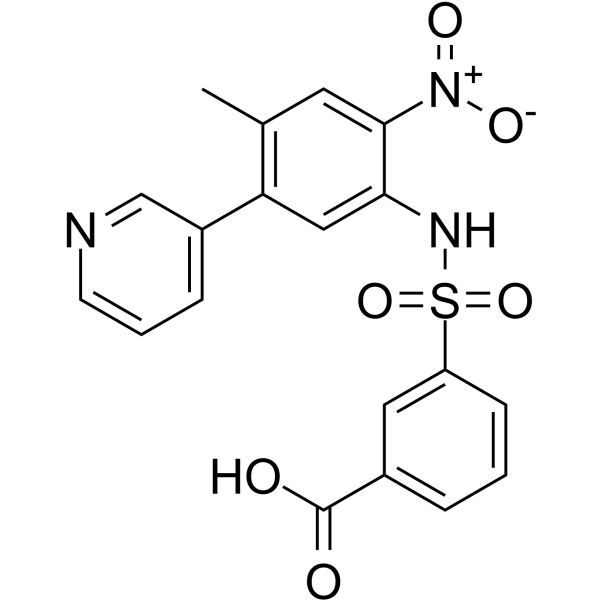
Alofanib (RPT835) is a potent and selective allosteric inhibitor of fibroblast growth factor receptor 2 (FGFR2). Anticancer and antiangiogenic activity.
Para uso exclusivo en investigación. No vendemos a pacientes.
- Pureza : 99.32%
- No. CAS: 1612888-66-0
- Fòrmula: C19H15N3O6S
- Peso molecular:413.40
-
Almacenamiento:Powder -20°C, 3 years , 4°C, 2 years ; In solvent -80°C, 2 years , -20°C, 1 year

To place orders, for customer services and technical support, please contact: MedChemExpress USA
Tel: 609-228-6898 E-mail: [email protected] [email protected]


-
 Actividad biológica
-
Chemical Information
-
Solvente y solubilidad
- Pureza y Documentación
- Referencias
-
 Help & FAQs


-
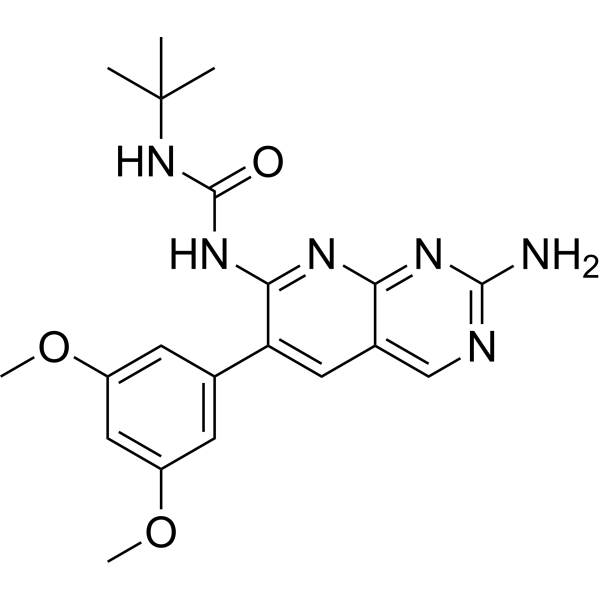
HY-101296
PD-166866FGFR1 Inhibitor -
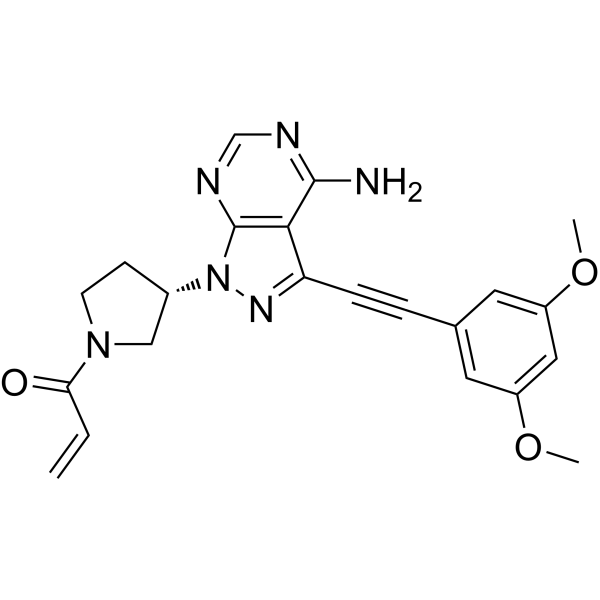
HY-100818
FutibatinibFGFR Inhibitor -
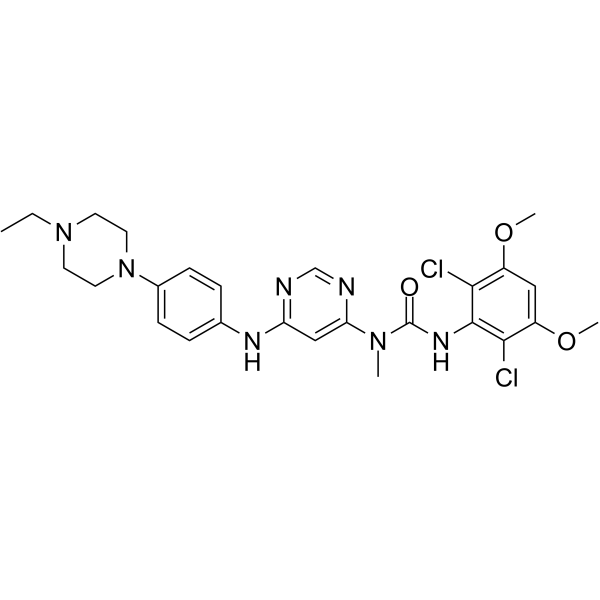
HY-13311
InfigratinibFGFR Inhibitor -
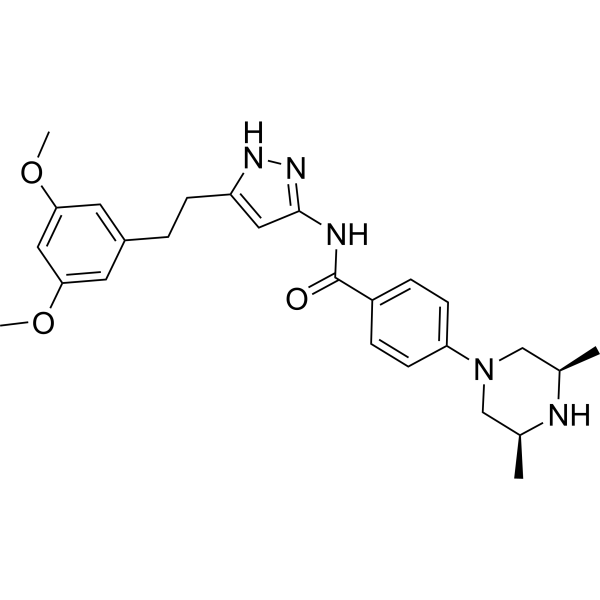
HY-13330
FexagratinibFGFR Inhibitor -
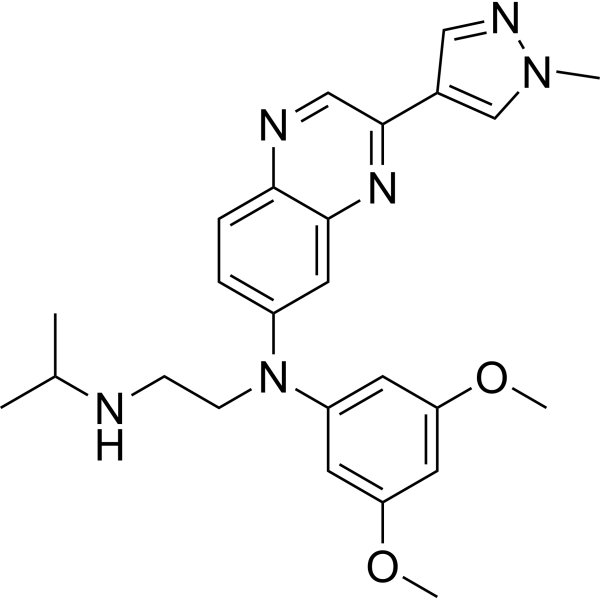
HY-18708
ErdafitinibFGFR Inhibitor -
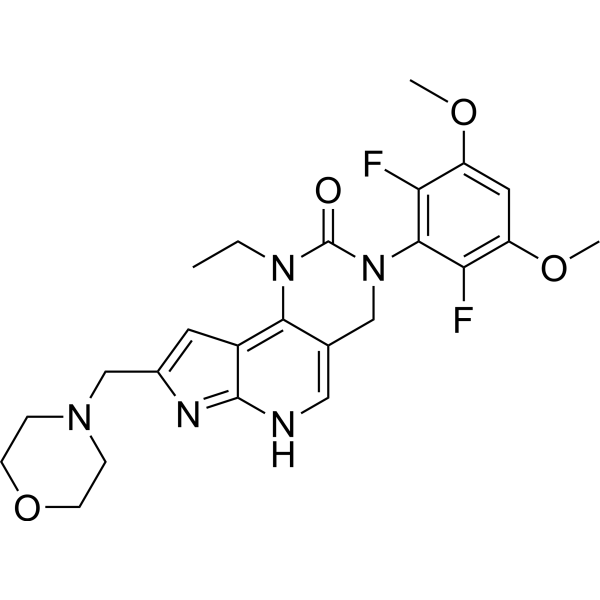
HY-109099
PemigatinibFGFR Inhibitor -
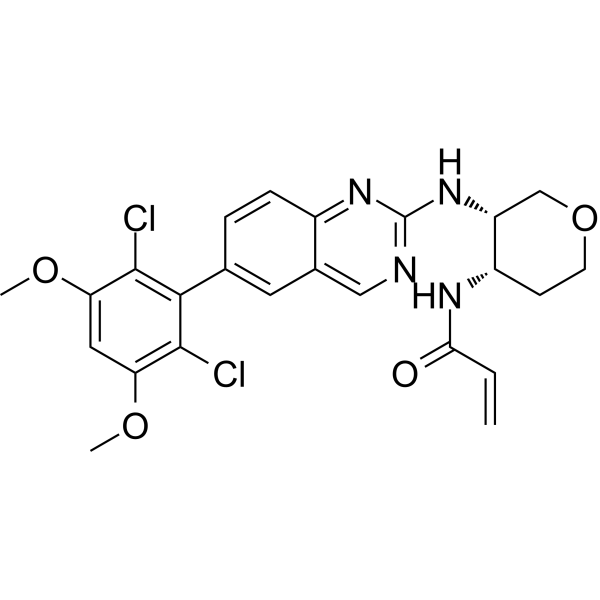
HY-100492
FisogatinibFGFR4 Inhibitor -
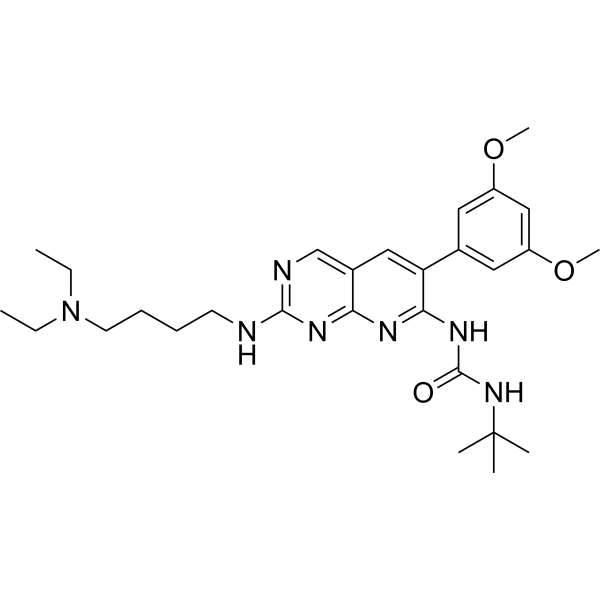
HY-10321
PD173074FGFR1 Inhibitor -
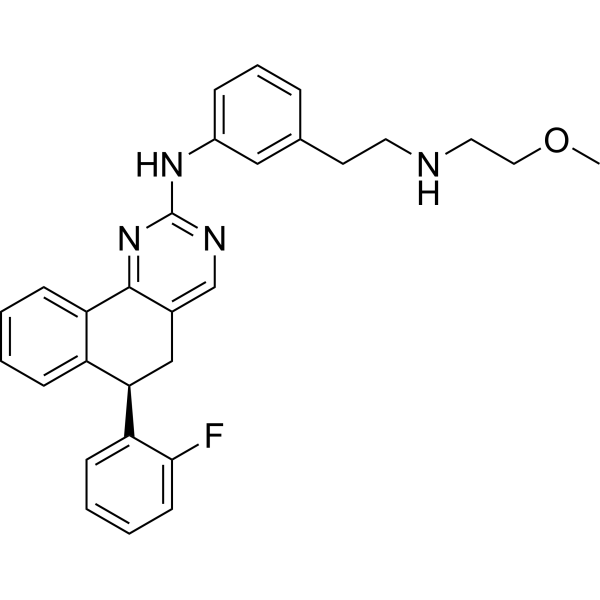
HY-19981
Derazantinib -
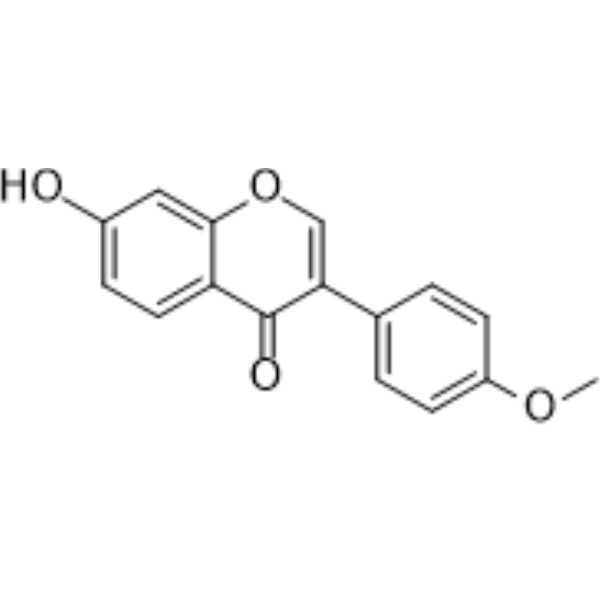
HY-N0183
FormononetinFGFR2 Inhibitor -
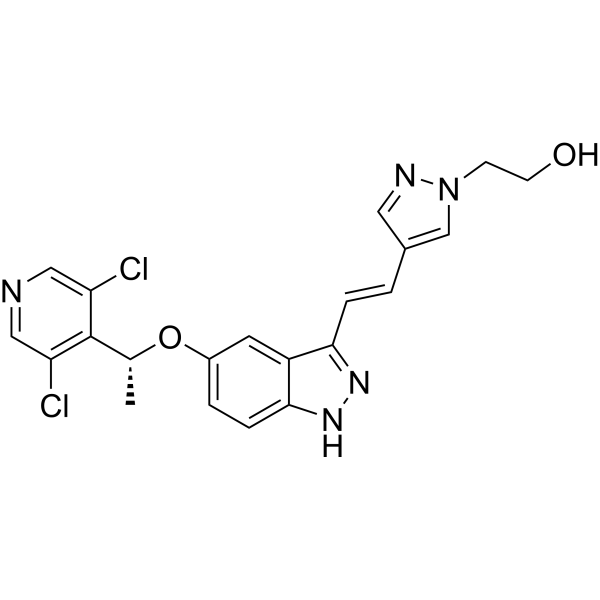
HY-13304
LY2874455FGFR Inhibitor -
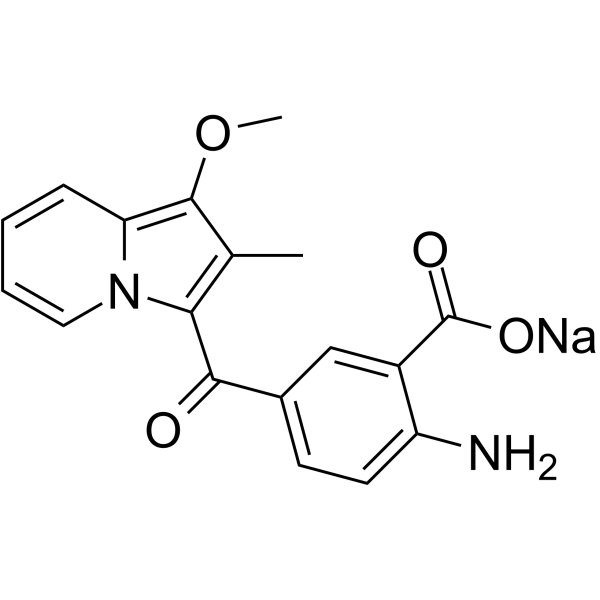
HY-15599
SSR128129EFGFR Inhibitor
Publications Citing Use of MedChemExpress (MCE) Alofanib
More

Actividad biológica
Descripciòn
IC50 & Target
|
FGFR2 |
In Vitro
Alofanib inhibits phosphorylation of FRS2α with IC50s of 7 and 9 nM in hFOB and SUM 52PE cells expressing different FGFR2 isoforms[1].
Alofanib (0.2-0.8 μM, 6 hours) inhibits FGF-mediated proliferation in a panel of four cell lines representing several tumour types (triple-negative breast cancer, melanoma, and ovarian cancer) with GI50s of 16-370 nM[1].
MedChemExpress (MCE) has not independently confirmed the accuracy of these methods. They are for reference only. .
-
Cell Line:SKOV3, HS478T, Mel Kor cells
-
Concentration:0.2, 0.4, 0.8 μM
-
Incubation Time:6 hours after dosing, FGF2 is added at a concentration of 25 ng/ml
-
Result:Inhibited growth of SKOV3 and HS578T cells with GI50s of 0.37 and 0.21 μM. Did not potently inhibit growth of Mel Kor cells that do not contain FGFR2 (GI50>10 μM)[1].
In Vivo
Treatment with alofanib (10 mg/kg/d, 0, 3 and 6 d, intraperitoneally) ablates experimental FGF-induced angiogenesis in vivo[1].
MedChemExpress (MCE) has not independently confirmed the accuracy of these methods. They are for reference only.
-
Animal Model:C57Bl/6 × DBA/2 F1 mice of 22–30 g[1]
-
Dosage:10 mg/kg/d
-
Administration:Intraperitoneally, 0, 3 and 6 d
-
Result:Alofanib inhibits angiogenesis in mouse models[1].
Ensayo clínico
| NCT Number | Sponsor | Condition | Start Date |
Phase

|
|---|---|---|---|---|
| NCT01329991 | Plexxikon| | 2011-05 | PHASE1 |


Chemical Information
-
No. CAS 1612888-66-0
-
Appearance Solid
-
Peso molecular 413.40
-
Fòrmula C19H15N3O6S
-
Color Light yellow to yellow
-
SMILES
O=C(O)C1=CC=CC(S(=O)(NC2=CC(C3=CC=CN=C3)=C(C)C=C2[N+]([O-])=O)=O)=C1
-
Synonyms
RPT835
-
Envío
Room temperature in continental US; may vary elsewhere.
-
Almacenamiento
Powder -20°C 3 years 4°C 2 years In solvent -80°C 2 years -20°C 1 year


Publications (4)
-
Journal Impact Factor
-
Most Recent
-
Stem Cell Res Ther
The angiogenic properties of human amniotic membrane stem cells are enhanced in gestational diabetes and associate with fetal adiposity. [Abstract]2021 Dec 20;12(1):608. PMID: 34930438 -
Cell Rep
IMPDH2 dephosphorylation under FGFR signaling promotes S-phase progression and tumor growth. [Abstract]2024 Dec 30;44(1):115116. PMID: 39739531 -
J Cell Physiol
Identification of YAP1 as a novel downstream effector of the FGF2/STAT3 pathway in the pathogenesis of renal tubulointerstitial fibrosis. [Abstract]2021 Nov;236(11):7655-7671. PMID: 33993470 -
Exp Eye Res
2021 Apr:205:108517. PMID: 33617851


Solvente y solubilidad
In Vitro:
DMSO : ≥ 30.1 mg/mL (72.81 mM; Hygroscopic DMSO has a significant impact on the solubility of product, please use newly opened DMSO)
* "≥" means soluble, but saturation unknown.
Please refer to the solubility information to select the appropriate solvent. Once prepared, please aliquot and store the solution to prevent product inactivation from repeated freeze-thaw cycles.
Storage method and period of stock solution: -80°C, 2 years; -20°C, 1 year. When stored at -80°C, please use it within 2 years. When stored at -20°C, please use it within 1 year.
Please refer to the solubility information to select the appropriate solvent. Once prepared, please aliquot and store the solution to prevent product inactivation from repeated freeze-thaw cycles.
Storage method and period of stock solution: -80°C, 2 years; -20°C, 1 year. When stored at -80°C, please use it within 2 years. When stored at -20°C, please use it within 1 year.
Concentration (start) × Volume (start) = Concentration (final) × Volume (final)
In Vivo:
Select the appropriate dissolution method based on your experimental animal and administration route.
- For the following dissolution methods, please ensure to first prepare a clear stock solution using an In Vitro approach and then sequentially add co-solvents:
- To ensure reliable experimental results, the clarified stock solution can be appropriately stored based on storage conditions. As for the working solution for In Vivo experiments, it is recommended to prepare freshly and use it on the same day.
- The percentages shown for the solvents indicate their volumetric ratio in the final prepared solution. If precipitation or phase separation occurs during preparation, heat and/or sonication can be used to aid dissolution.
Add each solvent one by one: 10% DMSO 40% PEG300 5% Tween-80 45% Saline
Solubility: ≥ 2.08 mg/mL (5.03 mM); Clear solution
This protocol yields a clear solution of ≥ 2.08 mg/mL (saturation unknown).
Taking 1 mL working solution as an example, add 100 μL DMSO stock solution (20.8 mg/mL) to 400 μL PEG300, and mix evenly; then add 50 μL Tween-80 and mix evenly; then add 450 μL Saline to adjust the volume to 1 mL.
Preparation of Saline: Dissolve 0.9 g sodium chloride in ddH₂O and dilute to 100 mL to obtain a clear Saline solution.
In Vivo Dissolution Calculator
Please enter the basic information of animal experiments:
-
-
-
-
Recommended: Prepare an additional quantity of animals to account for potential losses during experiments.
Please enter your animal formula composition:
-
%DMSO +
Recommended: Keep the proportion of DMSO in working solution below 2% if your animal is weak.
-
%+
-
+%Tween-80 + +
-
%Saline +
The co-solvents required include: DMSO, . All of co-solvents are available by MedChemExpress (MCE). , Tween 80. All of co-solvents are available by MedChemExpress (MCE).
Working solution concentration: 0.22 mg/mL
Method for preparing stock solution: mg drug dissolved in μL DMSO. Stock solution concentration: mg/mL.
1. Take μL DMSO stock solution;
2. Add μL .
μL , mix evenly;
3. Then add μL Tween 80, mix evenly;
4. Then add μL
Please ensure that the stock solution in the first step is dissolved to a clear state, and add co-solvents in sequence. You can use ultrasonic heating (ultrasonic cleaner, recommended frequency 20-40 kHz), vortexing, etc. to assist dissolution.


Pureza y Documentación
-
Ficha de datos (280 KB)
-
SDS (393 KB)
- English - EN (393 KB)
- Français - FR (393 KB)
- Deutsch - DE (393 KB)
- Norwegian - NO (393 KB)
- Español - ES (393 KB)
- Swedish - SV (393 KB)
- Italian - IT (393 KB)
- Korean - KR (393 KB)
- Portuguese - PT (393 KB)
-
Instrucciones de manejo (2659 KB)
Referencias
[1]. Tsimafeyeu I, et al. Targeting FGFR2 with alofanib (RPT835) shows potent activity in tumour models. Eur J Cancer. 2016 Jul;61:20-8. [Content Brief]
[2]. Khochenkov DA, et al. Antiangiogenic Activity of Alofanib, an Allosteric Inhibitor of Fibroblast Growth Factor Receptor 2. Bull Exp Biol Med. 2015 Nov;160(1):84-7. [Content Brief]


Complete Stock Solution Preparation Table
Please refer to the solubility information to select the appropriate solvent. Once prepared, please aliquot and store the solution to prevent product inactivation from repeated freeze-thaw cycles.
Storage method and period of stock solution: -80°C, 2 years; -20°C, 1 year. When stored at -80°C, please use it within 2 years. When stored at -20°C, please use it within 1 year.
| Optional Solvent | Concentration Solvent Mass | 1 mg | 5 mg | 10 mg | 25 mg |
|---|---|---|---|---|---|
| DMSO | 1 mM | 2.4190 mL | 12.0948 mL | 24.1896 mL | 60.4741 mL |
| 5 mM | 0.4838 mL | 2.4190 mL | 4.8379 mL | 12.0948 mL | |
| 10 mM | 0.2419 mL | 1.2095 mL | 2.4190 mL | 6.0474 mL | |
| 15 mM | 0.1613 mL | 0.8063 mL | 1.6126 mL | 4.0316 mL | |
| 20 mM | 0.1209 mL | 0.6047 mL | 1.2095 mL | 3.0237 mL | |
| 25 mM | 0.0968 mL | 0.4838 mL | 0.9676 mL | 2.4190 mL | |
| 30 mM | 0.0806 mL | 0.4032 mL | 0.8063 mL | 2.0158 mL | |
| 40 mM | 0.0605 mL | 0.3024 mL | 0.6047 mL | 1.5119 mL | |
| 50 mM | 0.0484 mL | 0.2419 mL | 0.4838 mL | 1.2095 mL | |
| 60 mM | 0.0403 mL | 0.2016 mL | 0.4032 mL | 1.0079 mL |


Alofanib Related Classifications
HY-17601 Related Classifications
 Powered by Bioz