



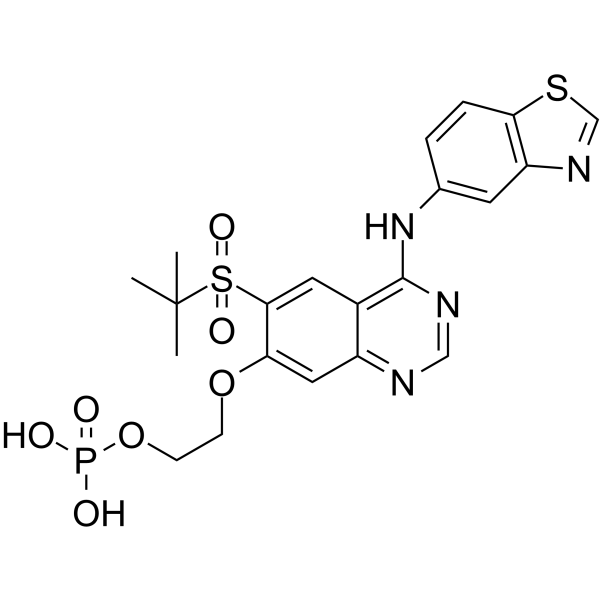
GSK2983559 free acid
Based on 2 publication(s) in Google Scholar
GSK2983559 free acid (compound 3) is an orally active and potent receptor interacting protein 2 (RIP2) kinase inhibitor. GSK2983559 free acid can block many proinflammatory cytokine responses in vivo and in human inflammatory bowel disease explant samples.
For research use only. We do not sell to patients.
- Purity : 99.49%
- CAS No.: 1579965-12-0
- Formula: C21H23N4O7PS2
- Molecular Weight:538.53
-
Storage:Powder -20°C, 3 years , 4°C, 2 years ; In solvent -80°C, 2 years , -20°C, 1 year

To place orders, for customer services and technical support, please contact: MedChemExpress USA
Tel: 609-228-6898 E-mail: [email protected] [email protected]


-
 Biological Activity
-
Chemical Information
-
Solvent & Solubility
- Protocols
- Purity & Documentation
- References
-
 Help & FAQs


-
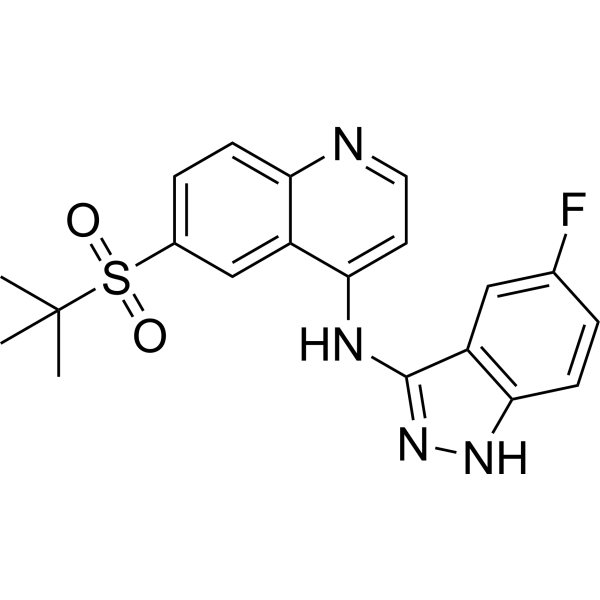
HY-100339
GSK583RIPK2 Inhibitor -
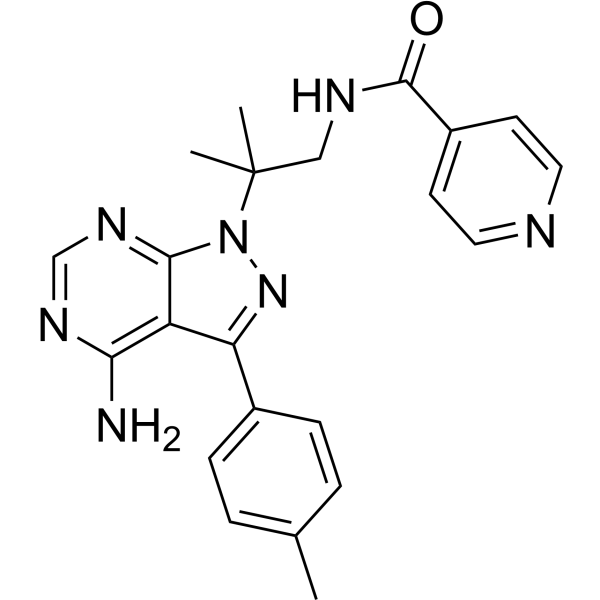
HY-18937
WEHI-345RIPK2 Inhibitor -
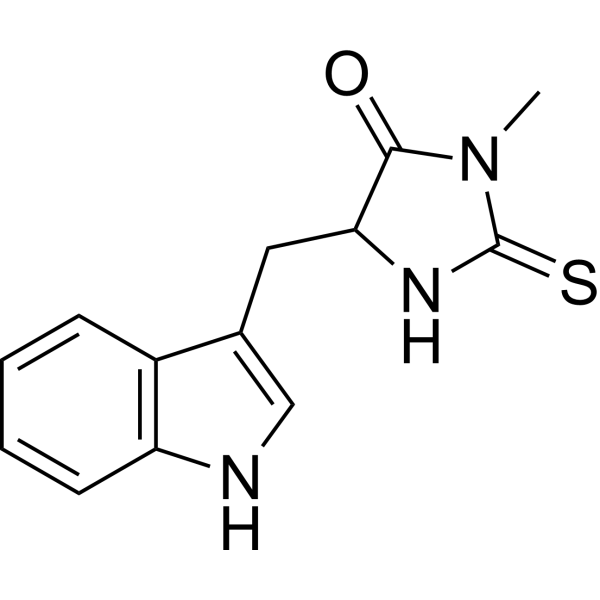
HY-15760
Necrostatin-1RIPK1 Inhibitor -
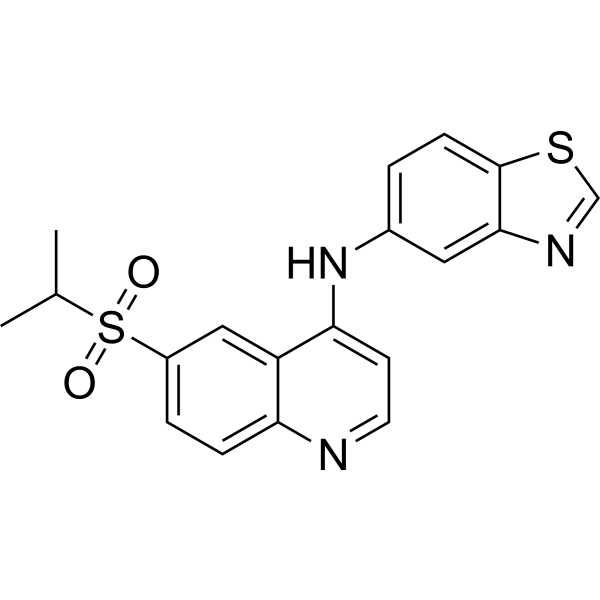
HY-101872
GSK-872RIPK3 Inhibitor -
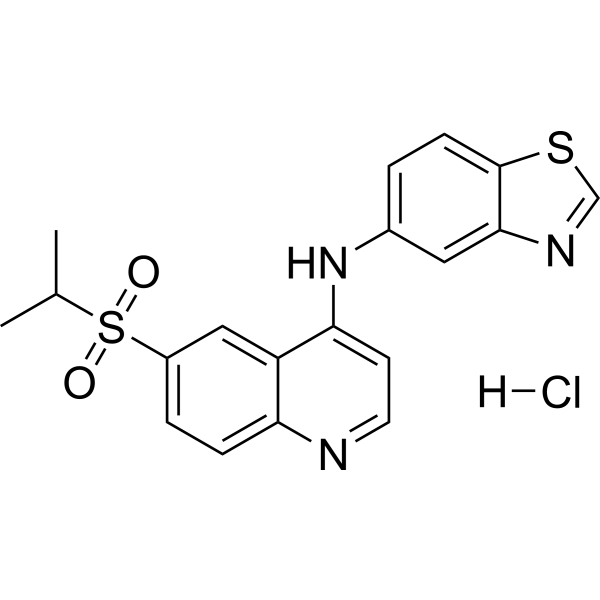
HY-101872A
GSK-872 hydrochlorideRIPK3 Inhibitor -
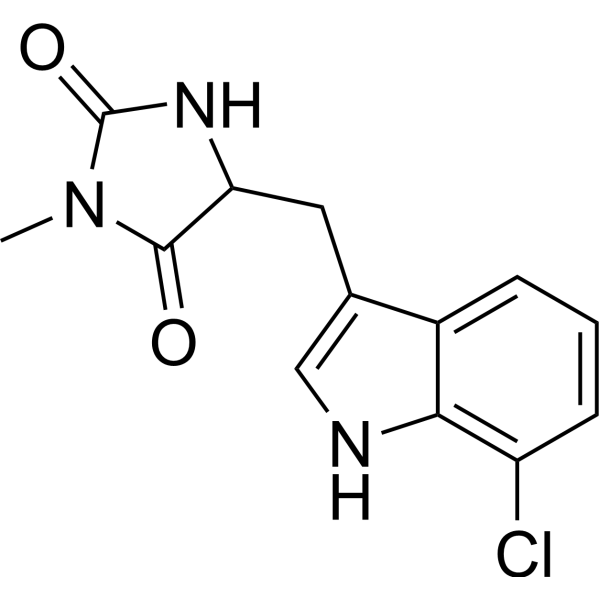
HY-14622A
Necrostatin 2 racemateRIPK1 Inhibitor -
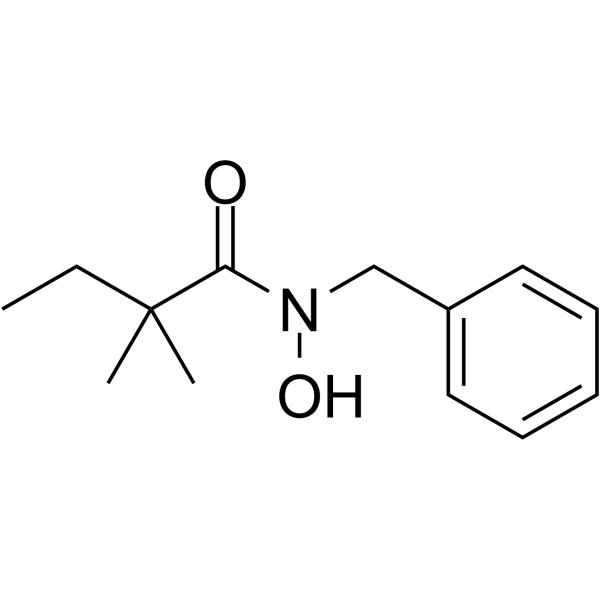
HY-101032
RIPA-56RIP1 Inhibitor -
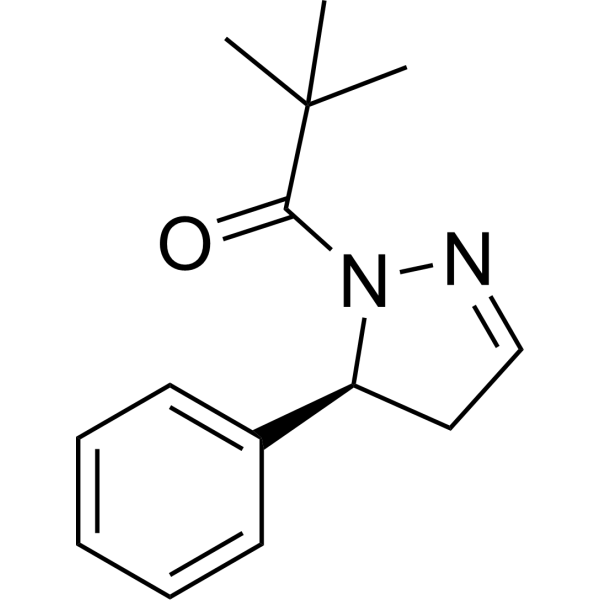
HY-103028A
GSK963RIP1 Kinase Inhibitor -
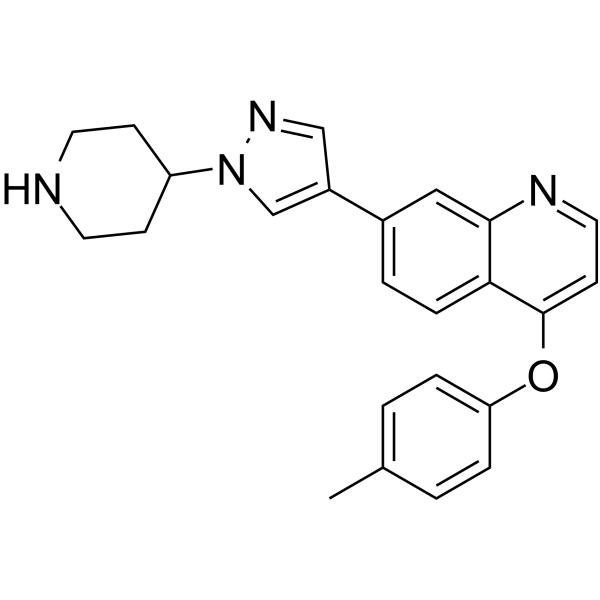
HY-114349
HS-1371RIP kinase Inhibitor -

HY-15760R
Necrostatin-1 (Standard)RIPK1 Inhibitor -
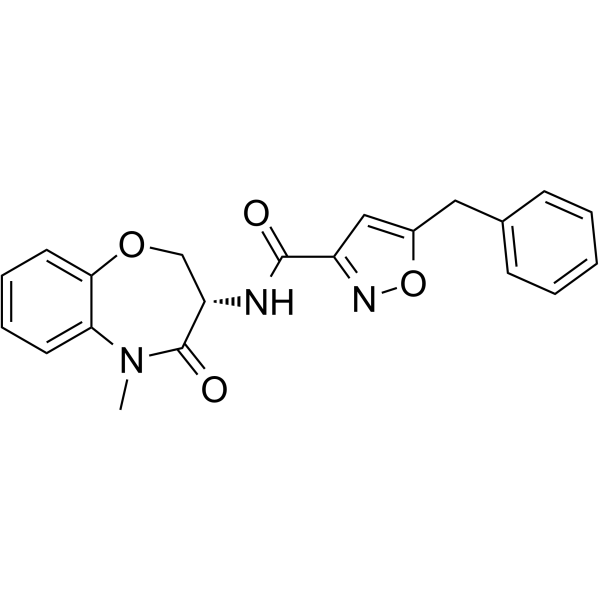
HY-100131
GSK481RIP1 Kinase Inhibitor -
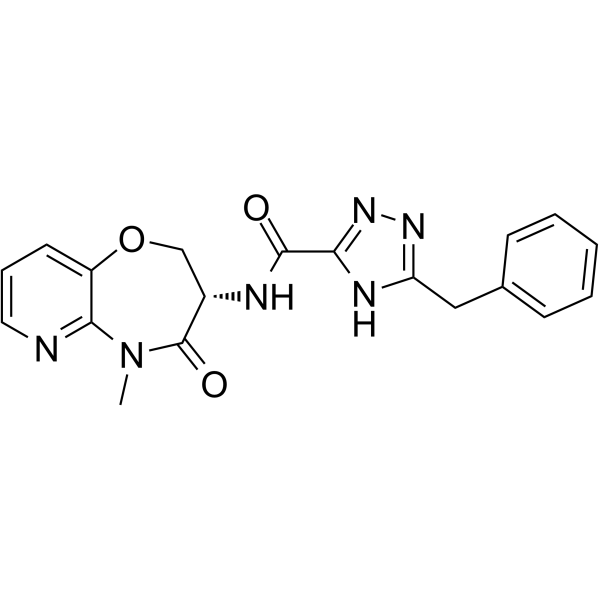
HY-114371
EclitasertibRIPK1 Inhibitor
Publications Citing Use of MedChemExpress (MCE) GSK2983559 free acid
More

Biological Activity
Description
IC50 & Target
[1]|
RIPK2 |
Cellular Effect
|
Cell Line

|
Type | Value | Description | References |
|---|---|---|---|---|
| THP-1 | IC50 |
1.34 nM
Compound: 5; GSK2983559
|
Antiinflammatory activity in MDP-stimulated IL-8 production in human THP-1 cells pretreated for 2 hrs followed by MDP stimulation for 6 hrs
Antiinflammatory activity in MDP-stimulated IL-8 production in human THP-1 cells pretreated for 2 hrs followed by MDP stimulation for 6 hrs
|
[PMID: 36058467] |
In Vitro
GSK2983559 (1-1024 nM; 2 h) blocks MDP-induced IL-8 in THP-1 cells[2].
MedChemExpress (MCE) has not independently confirmed the accuracy of these methods. They are for reference only. Further protocols information, click here.
-
Cell Line:THP-1 cells
-
Concentration:1-1024 nM
-
Incubation Time:2 hours
-
Result:Inhibited IL-8 production with an IC50 of 1.34 nM.
In Vivo
MedChemExpress (MCE) has not independently confirmed the accuracy of these methods. They are for reference only.
-
Animal Model:C57BL/6 mice (female) injected with MDP (100 μg)[2]
-
Dosage:3 and 10 mg/kg
-
Administration:Oral gavage; 3 and 10 mg/kg; once
-
Result:Suppressed serum IL-6 levels in a dose-dependent manner.
Clinical Trial
| NCT Number | Sponsor | Condition | Start Date |
Phase
|
|---|---|---|---|---|
| NCT01329991 | Plexxikon| | 2011-05 | PHASE1 |


Chemical Information
-
CAS No. 1579965-12-0
-
Appearance Solid
-
Molecular Weight 538.53
-
Formula C21H23N4O7PS2
-
Color Light yellow to yellow
-
SMILES
CC(C)(C)S(C(C(OCCOP(O)(O)=O)=CC1=NC=N2)=CC1=C2NC3=CC(N=CS4)=C4C=C3)(=O)=O
-
Shipping
Room temperature in continental US; may vary elsewhere.
-
Storage
Powder -20°C 3 years 4°C 2 years In solvent -80°C 2 years -20°C 1 year


Publications (2)


Solvent & Solubility
In Vitro:
DMSO : 5 mg/mL (9.28 mM; ultrasonic and warming and heat to 80°C; Hygroscopic DMSO has a significant impact on the solubility of product, please use newly opened DMSO)
Please refer to the solubility information to select the appropriate solvent. Once prepared, please aliquot and store the solution to prevent product inactivation from repeated freeze-thaw cycles.
Storage method and period of stock solution: -80°C, 2 years; -20°C, 1 year. When stored at -80°C, please use it within 2 years. When stored at -20°C, please use it within 1 year.
Please refer to the solubility information to select the appropriate solvent. Once prepared, please aliquot and store the solution to prevent product inactivation from repeated freeze-thaw cycles.
Storage method and period of stock solution: -80°C, 2 years; -20°C, 1 year. When stored at -80°C, please use it within 2 years. When stored at -20°C, please use it within 1 year.
Concentration (start) × Volume (start) = Concentration (final) × Volume (final)

Protocols
-
DSS-Induced Colitis
Dextran sulfate sodium (DSS)-induced colitis is generated by administering DSS in mouse drinking water, producing epithelial injury, barrier disruption, weight loss, diarrhea, fecal blood, colon shortening, histologic mucosal damage, and inflammatory mediator changes; the model is mainly used to study acute or chronic intestinal inflammation resembling selected features of ulcerative colitis. DSS injury is interpreted through clinical and tissue readouts rather than a single molecular endpoint: daily body weight, stool consistency, and bleeding are combined into a disease activity index, while colon length, histology, cytokines, myeloperoxidase activity, intestinal permeability, and tight-junction markers provide complementary measures of inflammation and barrier damage.
-
TNBS-Induced Colitis
TNBS-induced colitis is produced by intrarectal delivery of 2,4,6-trinitrobenzene sulfonic acid in ethanol, where ethanol disrupts the mucosal barrier and TNBS haptenates colonic proteins, generating immune-mediated colonic inflammation with weight loss, diarrhea, ulceration, transmural injury, inflammatory-cell infiltration, and cytokine responses. The model is used as an experimental intestinal inflammation model with Crohn’s disease–like features, especially when Th1-type responses, IL-12–dependent inflammation, chronic relapsing inflammation, or fibrosis-related endpoints are studied.
-
Research Protocol for Inflammation-related Diseases
The NLRP3 inflammasome is a cytosolic innate immune signaling platform that integrates priming signals and danger-signal activation to promote caspase-1 activation, maturation of IL-1β and IL-18, and gasdermin D-mediated pyroptotic cell death. The core experimental logic is to determine whether inflammatory disease phenotypes are driven by increased NLRP3 expression, ASC-containing inflammasome assembly, caspase-1 cleavage, GSDMD cleavage, and extracellular release of IL-1β/IL-18 rather than by nonspecific cell injury alone. The pathway is strongly linked to inflammation-related disease phenotypes because monosodium urate crystals activate NALP3/NLRP3 inflammasome signaling in gout-like crystal inflammation, cholesterol crystals activate NLRP3 inflammasomes in atherogenesis models, and DSS-induced intestinal inflammation has been reported to involve NLRP3 inflammasome activity. However, experimental colitis studies also show context-dependent protective effects of NLRP3 inflammasome co


Purity & Documentation
-
Data Sheet (278 KB)
-
SDS (393 KB)
- English - EN (393 KB)
- Français - FR (393 KB)
- Deutsch - DE (393 KB)
- Norwegian - NO (393 KB)
- Español - ES (393 KB)
- Swedish - SV (393 KB)
- Italian - IT (393 KB)
- Korean - KR (393 KB)
- Portuguese - PT (393 KB)
-
Handling Instructions (2659 KB)
References
[1]. Haile PA, et al. Discovery of a First-in-Class Receptor Interacting Protein 2 (RIP2) Kinase Specific Clinical Candidate, 2-((4-(Benzo[d]thiazol-5-ylamino)-6-(tert-butylsulfonyl)quinazolin-7-yl)oxy)ethyl Dihydrogen Phosphate, for the Treatment of Inflammatory Diseases. J Med Chem. 2019 Jul 25;62(14):6482-6494. [Content Brief]
[2]. Shuwei Wu, et al. Design, synthesis, and structure-activity relationship of novel RIPK2 inhibitors. Bioorg Med Chem Lett. 2022 Sep 2;75:128968. [Content Brief]


Complete Stock Solution Preparation Table
Please refer to the solubility information to select the appropriate solvent. Once prepared, please aliquot and store the solution to prevent product inactivation from repeated freeze-thaw cycles.
Storage method and period of stock solution: -80°C, 2 years; -20°C, 1 year. When stored at -80°C, please use it within 2 years. When stored at -20°C, please use it within 1 year.
| Optional Solvent | Concentration Solvent Mass | 1 mg | 5 mg | 10 mg | 25 mg |
|---|---|---|---|---|---|
| DMSO | 1 mM | 1.8569 mL | 9.2845 mL | 18.5691 mL | 46.4227 mL |
| 5 mM | 0.3714 mL | 1.8569 mL | 3.7138 mL | 9.2845 mL |


GSK2983559 free acid Related Classifications
HY-112038 Related Classifications
 Powered by Bioz