



NB-360

Based on 1 Customer Validation
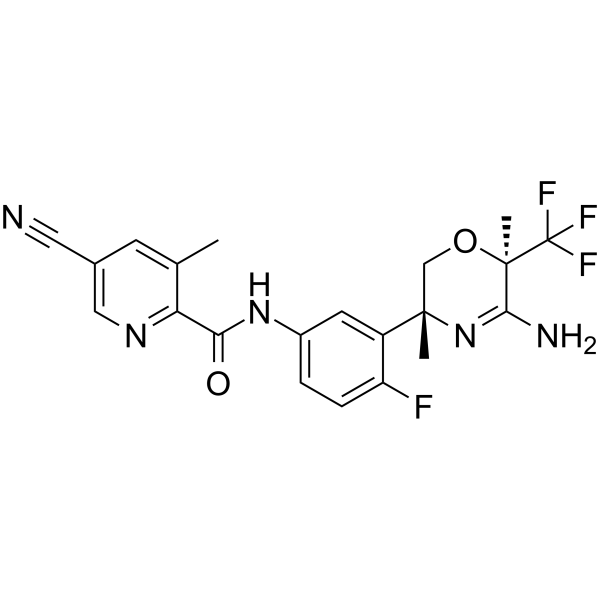
NB-360 is a potent, brain penetrable and orally active β‐secretase 1/2 (BACE1/BACE2) dual inhibitor with IC50 values of 5 and 6 nM. NB-360 can inhibit amyloid-β protein accumulation. NB-360 can be used for the researches of inflammation and neurological disease, such as Alzheimer's disease.
For research use only. We do not sell to patients.
- Purity : 99.08%
- CAS No.: 1262857-73-7
- Formula: C21H19F4N5O2
- Molecular Weight:449.40
-
Storage:Powder -20°C, 3 years , 4°C, 2 years ; In solvent -80°C, 6 months , -20°C, 1 month

To place orders, for customer services and technical support, please contact: MedChemExpress USA
Tel: 609-228-6898 E-mail: [email protected] [email protected]


-
 Biological Activity
-
Chemical Information
-
Solvent & Solubility
- Protocols
- Purity & Documentation
- References
-
 Help & FAQs


-
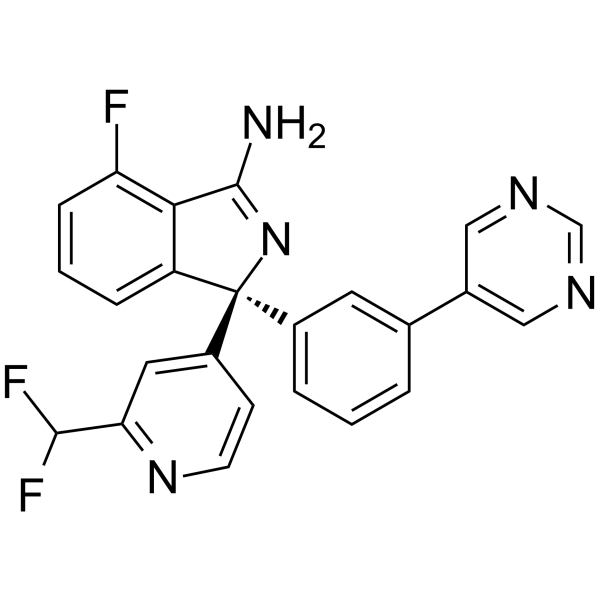
HY-13438
AZD3839 free baseBACE1 Iinhibitor -
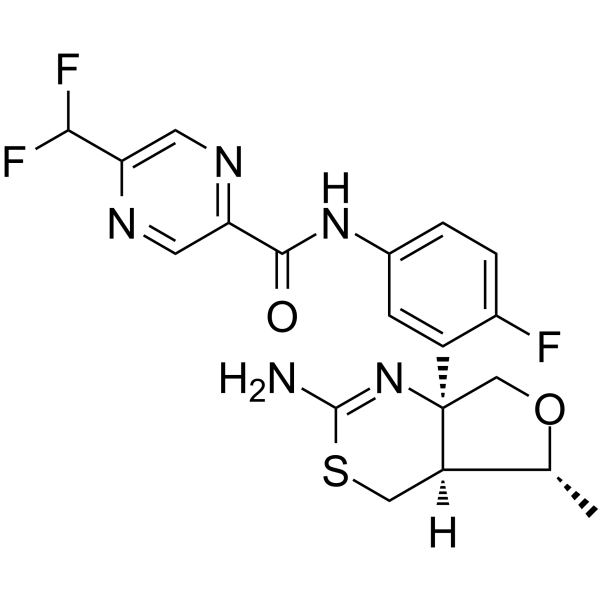
HY-109055
ElenbecestatBACE-1 Inhibitor -
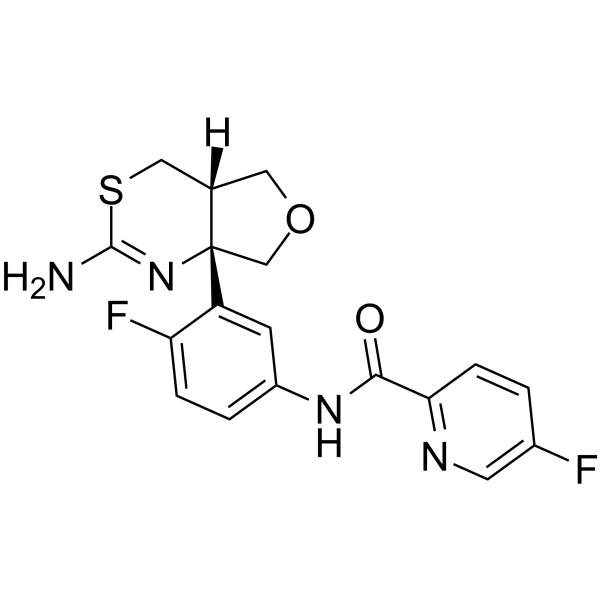
HY-13240
LY2886721BACE1 Inhibitor -
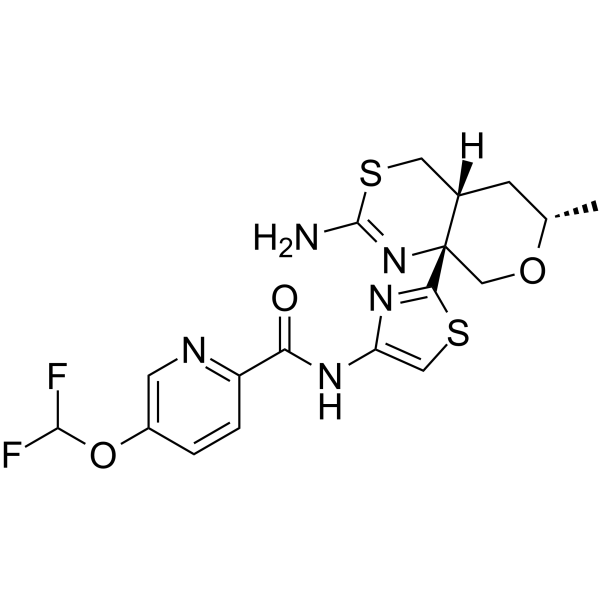
HY-112157
PF-06751979BACE1 Inhibitor -
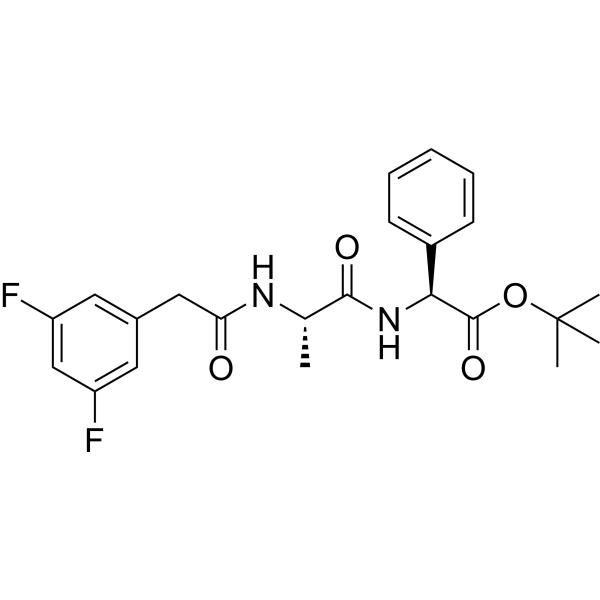
HY-13027
DAPTγ-secretase Inhibitor -
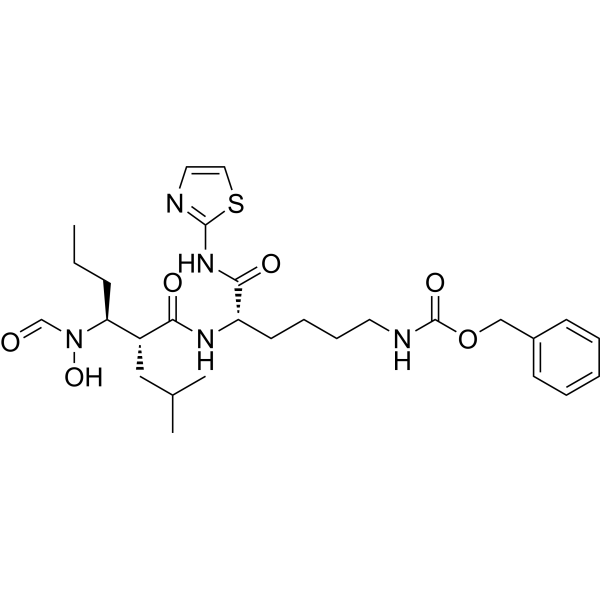
HY-115670
GW280264XADAM10/17 Inhibitor -
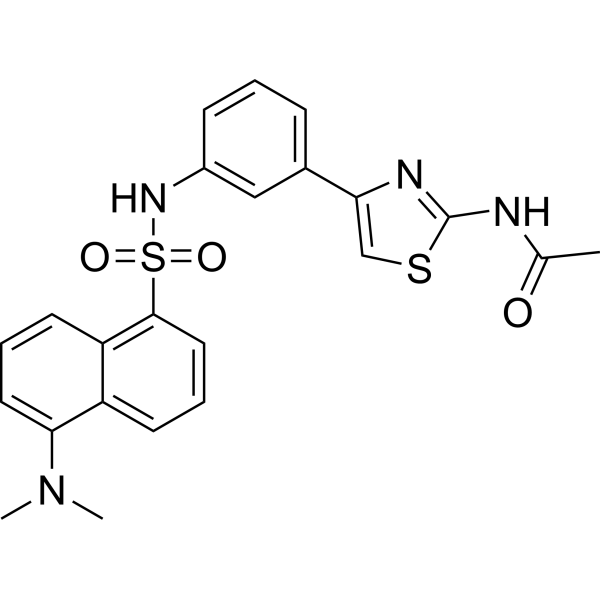
HY-100437
HA15BiP/GRP78/HSPA5 Inhibitor -
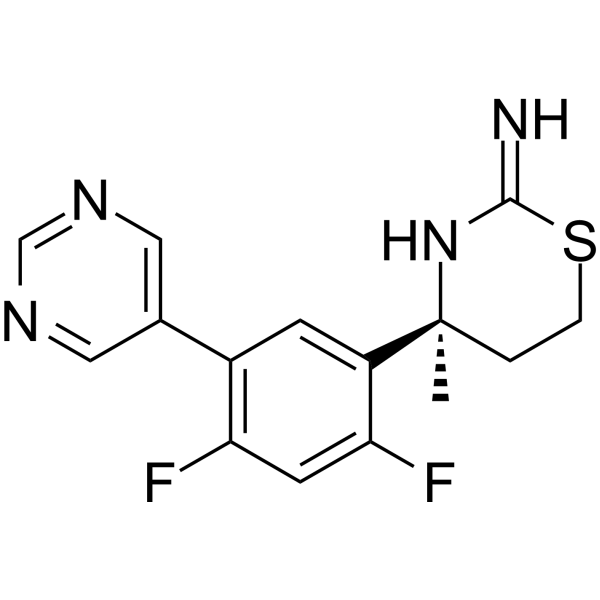
HY-10472
LY2811376BACE1 Inhibitor -
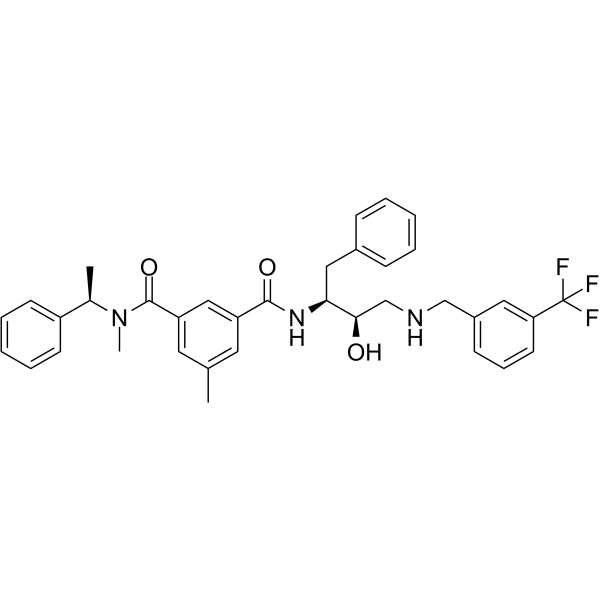
HY-136742
BACE2-IN-1BACE2 Inhibitor -
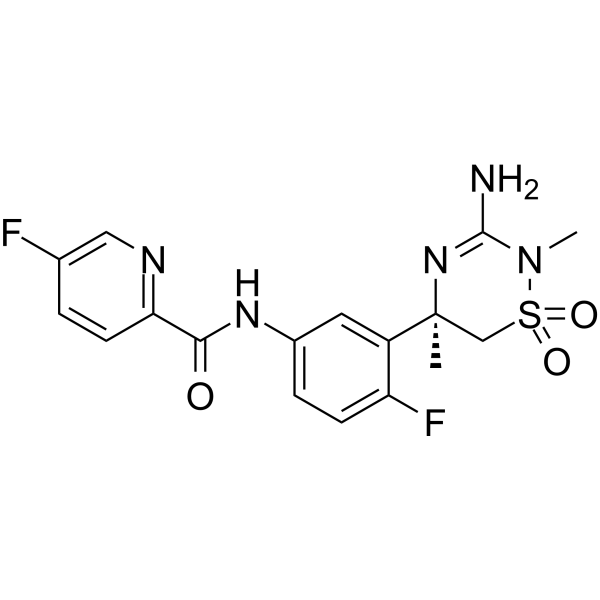
HY-16759
VerubecestatBACE1/2 Inhibitor -
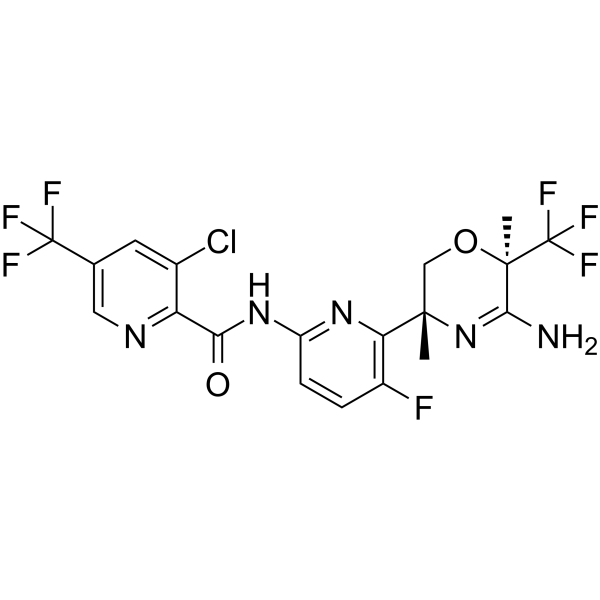
HY-119689
UmibecestatBACE-1/2 Inhibitor -
HY-100740
LanabecestatBACE1 Inhibitor


Biological Activity
Description
IC50 & Target
[1]|
BACE1 5 nM (IC50) |
BACE2 6 nM (IC50) |
In Vitro
NB-360 inhibits Aβ40 release in APP-overexpressing CHO cells, with an IC50 of 3 nM in wtAPP CHO cells and 33 nM in SweAPP CHO cells[1].
MedChemExpress (MCE) has not independently confirmed the accuracy of these methods. They are for reference only.
Parmacokinetics
In Vivo
NB-360 (1.5-14.5 mg/kg, p.o.) reduces Aβ production in rats[2].
NB-360 (45 mg/kg, p.o., daily for 6 weeks) reduces Aβ40 levels in C57/BL6 mice[2].
NB-360 (30 μmol/kg, p.o., a single dose) reduces Aβ40 levels in young APP51/16 mice[2].
MedChemExpress (MCE) has not independently confirmed the accuracy of these methods. They are for reference only.
-
Animal Model:APP transgenic mice models[1]
-
Dosage:100 μmol/kg
-
Administration:Orally gavage, daily for 6 weeks
-
Result:Reduced Aβ levels in brain.
Stopped accumulation of activated inflammatory cells in brain.


Chemical Information
-
CAS No. 1262857-73-7
-
Appearance Solid
-
Molecular Weight 449.40
-
Formula C21H19F4N5O2
-
Color White to off-white
-
SMILES
O=C(C1=NC=C(C#N)C=C1C)NC2=CC=C(F)C([C@]3(C)CO[C@](C(F)(F)F)(C)C(N)=N3)=C2
-
Shipping
Room temperature in continental US; may vary elsewhere.
-
Storage
Powder -20°C 3 years 4°C 2 years In solvent -80°C 6 months -20°C 1 month


Solvent & Solubility
In Vitro:
DMSO : 250 mg/mL (556.30 mM; Need ultrasonic; Hygroscopic DMSO has a significant impact on the solubility of product, please use newly opened DMSO)
Please refer to the solubility information to select the appropriate solvent. Once prepared, please aliquot and store the solution to prevent product inactivation from repeated freeze-thaw cycles.
Storage method and period of stock solution: -80°C, 6 months; -20°C, 1 month. When stored at -80°C, please use it within 6 months. When stored at -20°C, please use it within 1 month.
Please refer to the solubility information to select the appropriate solvent. Once prepared, please aliquot and store the solution to prevent product inactivation from repeated freeze-thaw cycles.
Storage method and period of stock solution: -80°C, 6 months; -20°C, 1 month. When stored at -80°C, please use it within 6 months. When stored at -20°C, please use it within 1 month.
Concentration (start) × Volume (start) = Concentration (final) × Volume (final)


Purity & Documentation
-
Data Sheet (273 KB)
-
SDS (251 KB)
- English - EN (251 KB)
- Français - FR (251 KB)
- Deutsch - DE (251 KB)
- Norwegian - NO (251 KB)
- Español - ES (251 KB)
- Swedish - SV (251 KB)
- Italian - IT (251 KB)
- Korean - KR (251 KB)
- Portuguese - PT (251 KB)
-
Handling Instructions (2659 KB)
References


Complete Stock Solution Preparation Table
Please refer to the solubility information to select the appropriate solvent. Once prepared, please aliquot and store the solution to prevent product inactivation from repeated freeze-thaw cycles.
Storage method and period of stock solution: -80°C, 6 months; -20°C, 1 month. When stored at -80°C, please use it within 6 months. When stored at -20°C, please use it within 1 month.
| Optional Solvent | Concentration Solvent Mass | 1 mg | 5 mg | 10 mg | 25 mg |
|---|---|---|---|---|---|
| DMSO | 1 mM | 2.2252 mL | 11.1259 mL | 22.2519 mL | 55.6297 mL |
| 5 mM | 0.4450 mL | 2.2252 mL | 4.4504 mL | 11.1259 mL | |
| 10 mM | 0.2225 mL | 1.1126 mL | 2.2252 mL | 5.5630 mL | |
| 15 mM | 0.1483 mL | 0.7417 mL | 1.4835 mL | 3.7086 mL | |
| 20 mM | 0.1113 mL | 0.5563 mL | 1.1126 mL | 2.7815 mL | |
| 25 mM | 0.0890 mL | 0.4450 mL | 0.8901 mL | 2.2252 mL | |
| 30 mM | 0.0742 mL | 0.3709 mL | 0.7417 mL | 1.8543 mL | |
| 40 mM | 0.0556 mL | 0.2781 mL | 0.5563 mL | 1.3907 mL | |
| 50 mM | 0.0445 mL | 0.2225 mL | 0.4450 mL | 1.1126 mL | |
| 60 mM | 0.0371 mL | 0.1854 mL | 0.3709 mL | 0.9272 mL | |
| 80 mM | 0.0278 mL | 0.1391 mL | 0.2781 mL | 0.6954 mL | |
| 100 mM | 0.0223 mL | 0.1113 mL | 0.2225 mL | 0.5563 mL |


NB-360 Related Classifications
HY-124322 Related Classifications
 Powered by Bioz