



human GIP(3-30), amide TFA
Based on 3 publication(s) in Google Scholar
Human GIP(3-30), amide TFA is the TFA salt form of human GIP(3-30), amide (HY-P10138). Human GIP(3-30), amide TFA is a high affinity antagonist of the human GIP receptor in vitro. Human GIP(3-30), amide TFA has potential anti-obesity and anti-diabetic effects.
For research use only. We do not sell to patients.
- Purity : 96.90%
- Formula: C150H226N38O44S.xC2HF3O2
- Molecular Weight:3297.69 (free base)
-
Storage:
Sealed storage, away from moisture and light.
Powder -80°C, 2 years , -20°C, 1 year* In solvent : -80°C, 6 months; -20°C, 1 month (sealed storage, away from moisture and light)

To place orders, for customer services and technical support, please contact: MedChemExpress USA
Tel: 609-228-6898 E-mail: [email protected] [email protected]


-
 Biological Activity
-
Chemical Information
-
Solvent & Solubility
- Protocols
- Purity & Documentation
- References
-
 Help & FAQs


-

HY-P2542
GIP (3-42), humanGIP Receptor Agonist -

HY-P0264
Exendin(9-39) amideGLP-1R Antagonist -

HY-P0059
TeriparatideParathyroid Hormone Agonist -

HY-P0276
GIP, humanInsulin Secretion Stimulator -

HY-P0221
PACAP (1-38), human, ovine, ratPACAP Agonist -

HY-P0276A
GIP, human TFAInsulin Secretion Stimulator -
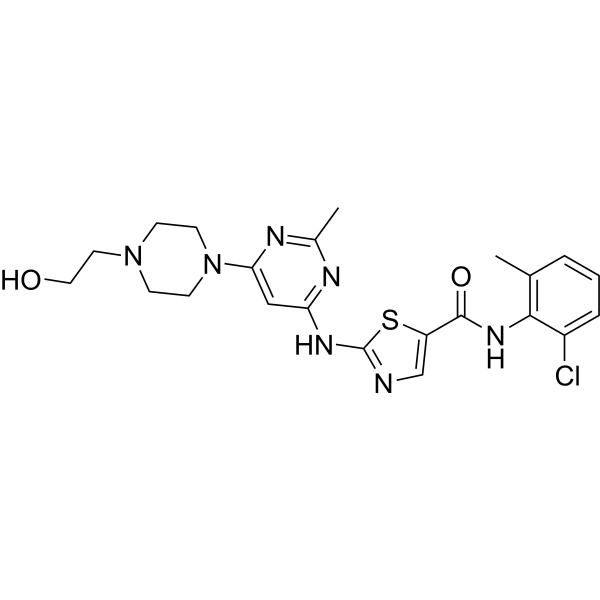
HY-10181
DasatinibSrc/Bcr-Abl Inhibitor -
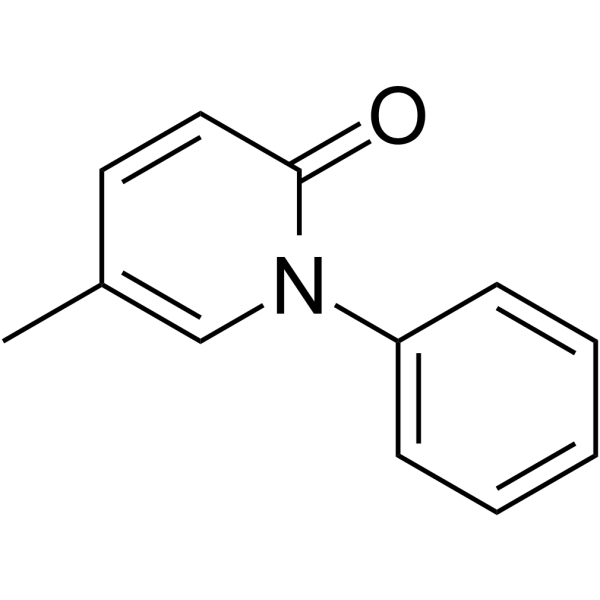
HY-B0673
PirfenidoneAntifibrotic Agent -
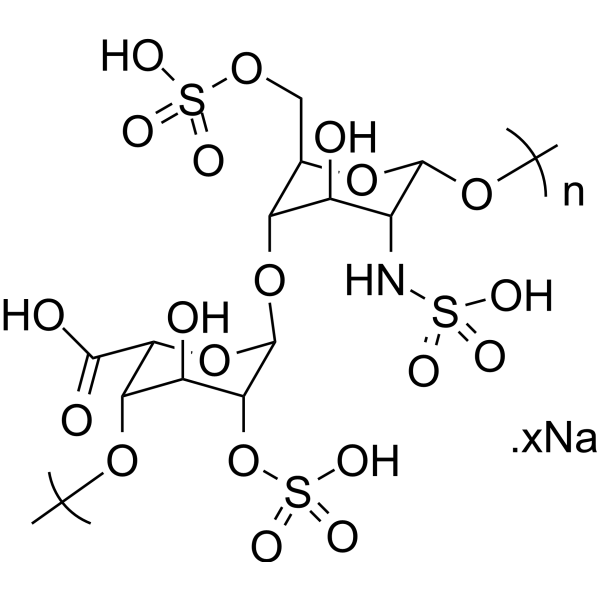
HY-17567A
Heparin sodium saltAnticoagulant -
![[Pro3]-GIP (mouse)](https://file.medchemexpress.com/product_pic/hy-p1434.gif)
HY-P1434
[Pro3]-GIP (mouse)GIP Receptor Antagonist -

HY-P1295
Urocortin, humanCRF Receptor Agonist -
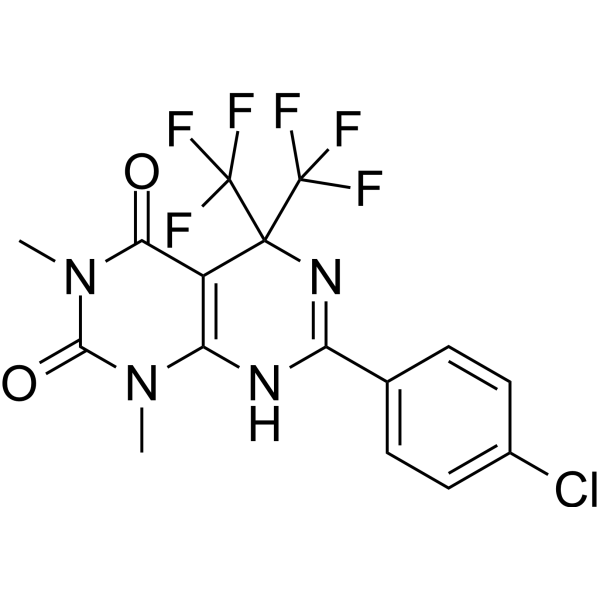
HY-101116
GLP-1R Antagonist 1GLP-1R Antagonist
Publications Citing Use of MedChemExpress (MCE) human GIP(3-30), amide TFA
More

Biological Activity
Description
In Vitro
Human GIP(3-30), amide TFA (0.01-10 µM, 20 min) competitively binds to GIP receptor (GIPR), blocking GIP-mediated cAMP accumulation (Ki=16.8 nM), β-arrestin recruitment (Ki for β-arrestin-1/2 recruitment is 10.6 nM and 10.2 nM) and receptor internalization[2].
Human GIP(3-30), amide TFA (0.01-10 µM, 30 min) inhibits GIP mediated insulin secretion and signal transduction in adipocytes[2].
MedChemExpress (MCE) has not independently confirmed the accuracy of these methods. They are for reference only. Further protocols information, click here.


Chemical Information
-
Appearance Solid
-
Molecular Weight 3297.69 (free base)
-
Formula C150H226N38O44S.xC2HF3O2
-
Color White to off-white
-
Sequence
Glu-Gly-Thr-Phe-Ile-Ser-Asp-Tyr-Ser-Ile-Ala-Met-Asp-Lys-Ile-His-Gln-Gln-Asp-Phe-Val-Asn-Trp-Leu-Leu-Ala-Gln-Lys-NH2
-
Sequence Shortening
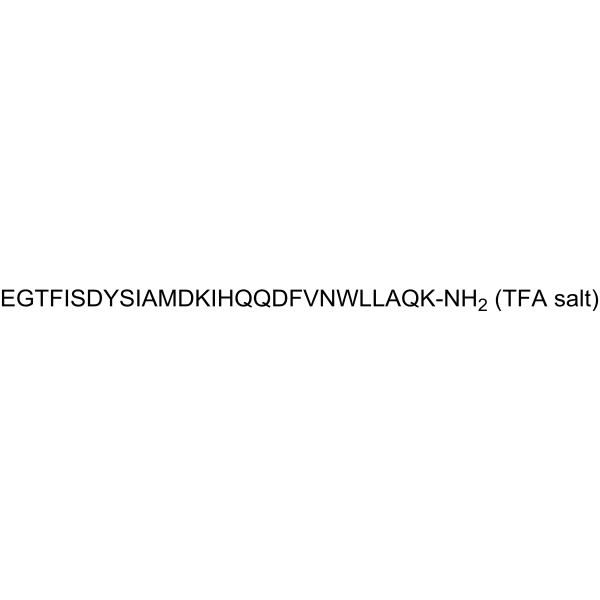
EGTFISDYSIAMDKIHQQDFVNWLLAQK-NH2
-
Shipping
Room temperature in continental US; may vary elsewhere.
-
Storage
Sealed storage, away from moisture and light
Powder -80°C 2 years -20°C 1 year * In solvent : -80°C, 6 months; -20°C, 1 month (sealed storage, away from moisture and light)


Publications (3)
-
Journal Impact Factor
-
Most Recent
-
Pharmacol Res
Tirzepatide, a dual GIP/GLP-1 receptor agonist, attenuates endothelial dysfunction and angiotensin II-induced abdominal aortic aneurysm in ApoE-/- mice. [Abstract]2026 Jun 24:230:108321. PMID: 42342001 -
J Med Chem
Discovery and Preclinical Evaluation of TPM003: A Novel GLP-1/GIP/Glucagon Triple Hormone Receptor Agonist with Robust Efficacy in Obesity and NASH. [Abstract]2026 Feb 26;69(4):4984-5001. PMID: 41640214 -


Solvent & Solubility
In Vitro:
DMSO : 100 mg/mL (Need ultrasonic; Hygroscopic DMSO has a significant impact on the solubility of product, please use newly opened DMSO)

Protocols
-
Research Protocol for Metabolic Diseases
AMP-activated protein kinase, AMPK, is a conserved cellular energy sensor that responds to reduced cellular energy status and coordinates metabolism by increasing ATP-generating catabolic pathways while suppressing ATP-consuming anabolic processes. In metabolic disease research, the AMPK pathway is experimentally relevant because it regulates hepatic lipid synthesis, fatty acid oxidation, glucose production, skeletal-muscle glucose disposal, mTORC1-linked biosynthesis, autophagy, mitochondrial homeostasis, and whole-body energy balance. The central pathway logic is that energy stress, metformin, exercise-like stimulation, or direct AMPK activators increase AMPKα Thr172 phosphorylation and downstream substrate phosphorylation, including ACC and RAPTOR. Phosphorylation of ACC suppresses lipogenesis and supports fatty acid oxidation, whereas phosphorylation of RAPTOR suppresses mTORC1 signaling and links cellular energy status to growth and protein synthesis control. The pathway is linked


Purity & Documentation
-
Data Sheet (280 KB)
-
SDS (252 KB)
- English - EN (252 KB)
- Français - FR (252 KB)
- Deutsch - DE (252 KB)
- Norwegian - NO (252 KB)
- Español - ES (252 KB)
- Swedish - SV (252 KB)
- Italian - IT (252 KB)
- Korean - KR (252 KB)
- Portuguese - PT (252 KB)
-
Handling Instructions (2659 KB)
References

Calculators
Concentration (start) × Volume (start) = Concentration (final) × Volume (final)


human GIP(3-30), amide TFA Related Classifications
HY-P10138A Related Classifications
 Powered by Bioz