



Carbamazepine
Based on 18 publication(s) in Google Scholar
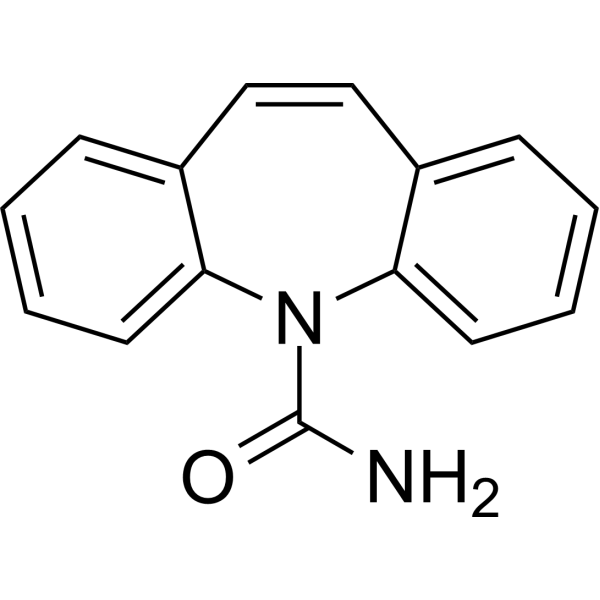
Carbamazepine is an orally active pressure-sensitive sodium ion channel blocker with an IC50 of 131 μM. Carbamazepine blocks voltage gated Na+, Ca2+, and K+ channels, and is also a HDAC inhibitor (IC50: 2 μM). Carbamazepine is an anticonvulsant and can be used for research of epilepsy and neuropathic pain.
For research use only. We do not sell to patients.
- Purity: 99.90%
- CAS No.: 298-46-4
- Formula: C15H12N2O
- Molecular Weight:236.27
-
Storage:
Store at room temperature 3 years.
In solvent -80°C, 2 years , -20°C, 1 year

To place orders, for customer services and technical support, please contact: MedChemExpress USA
Tel: 609-228-6898 E-mail: [email protected] [email protected]


-
 Biological Activity
-
Chemical Information
-
Solvent & Solubility
- Purity & Documentation
- References
-
 Help & FAQs
-

Bioactive Compound Library Max
HY-L181
-
Bioactive Compound Library
HY-L001
-
Anti-Infection Compound Library
HY-L002
-
Cell Cycle/DNA Damage Compound Library
HY-L004
-
Epigenetics Compound Library
HY-L005
-
Membrane Transporter/Ion Channel Compound Library
HY-L011
-
Neuronal Signaling Compound Library
HY-L013
-
FDA-Approved Drug Library
HY-L022
-
Histone Modification Research Compound Library
HY-L024
-
CNS-Penetrant Compound Library
HY-L028
-
Autophagy Compound Library
HY-L029
-
Anti-Aging Compound Library
HY-L034
-
Drug Repurposing Compound Library
HY-L035
-
Reprogramming Compound Library
HY-L039
-
Oxygen Sensing Compound Library
HY-L045
-
Anti-COVID-19 Compound Library
HY-L052
-
NMPA-Approved Drug Library
HY-L053
-
Orally Active Compound Library
HY-L061
-
FDA Approved & Pharmacopeial Drug Library
HY-L066
-
Anti-Alzheimer's Disease Compound Library
HY-L069
-
Neuroprotective Compound Library
HY-L070
-
Anti-Breast Cancer Compound Library
HY-L074
-
Drug-Induced Liver Injury (DILI) Compound Library
HY-L076
-
Anti-Pancreatic Cancer Compound Library
HY-L077
-
Anti-Blood Cancer Compound Library
HY-L079
-
Neurodegenerative Disease-related Compound Library
HY-L086
-
Mitochondria-Targeted Compound Library
HY-L089
-
Targeted Diversity Library
HY-L099
-
Anti-Liver Cancer Compound Library
HY-L101
-
Rare Diseases Drug Library
HY-L102
-
Pediatric Drug Library
HY-L104
-
Calcium Channel Blocker Library
HY-L117
-
Sodium Channel Blocker Library
HY-L118
-
Potassium Channel Compound Library
HY-L119
-
Human Metabolite Library
HY-L123
-
Osteogenesis Compound Library
HY-L131
-
Off-patent Drug Library
HY-L141
-
Mitochondrial Protection Compound Library
HY-L144
-
Antihypertensive Compound Library
HY-L145
-
Membrane Protein-targeted Compound Library
HY-L149
-
Membrane Receptor-targeted Compound Library
HY-L150
-
Cell Death Library
HY-L162
-
Ion Channel Compound Library
HY-L166
-
Anti-Hematopathy Compound Library
HY-L171
-
Multi-Target Compound Library
HY-L176
-
Mitophagy Compound Library
HY-L180
-
MCE Bioactive Compound Library
HY-L001V
-
Drug Repurposing Compound Library Plus
HY-L035P
-
FDA-Approved Drug Library Plus
HY-L022P
-
FDA-Approved Drug Library Mini
HY-L022M
-
Anti-Brain Cancer Compound Library
HY-L188
-
Non-Alcoholic Fatty Liver Disease (NAFLD) Compound Library
HY-L199
-
High-Throughput Bioactive Compound Library
HY-L205
-
Mass Spectrometry Human Metabolite Library
HY-L215
-
Cardiotoxic Compound Library
HY-L225
-
Nephrotoxicity Compound Library
HY-L229
-
High-Efficiency Gene Editing Compound Library
HY-L244
-
Lactylation Compound Library
HY-L249


Publications Citing Use of MedChemExpress (MCE) Carbamazepine
More- Adv Funct Mater. 2025 Nov 3.
- Autophagy. 2023 Jan;19(1):324-337. [Abstract]
- Nat Commun. 2023 Jun 3;14(1):3224. [Abstract]
- Theranostics. 2019 Aug 14;9(21):6334-6353. [Abstract]
- J Pharm Anal. 2025 Jan;15(1):101132. [Abstract]
- Emerg Contam. 2026 Feb 23.
- Chin Med. 2025 Aug 19;20(1):127. [Abstract]
- Commun Biol. 2025 Nov 24;8(1):1644. [Abstract]
- Cell Rep Methods. 2023 Oct 23;3(10):100599. [Abstract]
- Int Immunopharmacol. 2023 Feb:115:109706. [Abstract]
- Biotechnol Bioeng. 2021 Dec;118(12):4687-4698. [Abstract]
- J Integr Neurosci. 2026 May 9;25(5):49777. [Abstract]
- Pharmacol Res Perspect. 2021 Oct;9(5):e00879. [Abstract]
- Pharmacol Res Perspect. 2020 Apr;8(2):e00575. [Abstract]
- World J Methodol. 2025 Jun 20;15(2):99580. [Abstract]
- University of Glasgow. 2023.
- Biomed Pharmacother. 2023 Jan:157:114037. [Abstract]
- Chemosphere. 2019 Jun:225:378-387. [Abstract]
 Customer Validation & Images

-
Cell Proliferation/Viability Assay
-
Bio/Physico-chemical Assay
-
In Vivo Efficacy Study
-
In Vivo Efficacy Study
-
PK/PD Analysis
All Calcium Channel Isoforms
More

Biological Activity
|
Cell Line

|
Type | Value | Description | References |
|---|---|---|---|---|
| HEK293 | IC50 |
22 μM
Compound: 2, carbamazepine
|
Blockade of human Nav1.7 channel expressed in HEK293 cells by FRET assay
Blockade of human Nav1.7 channel expressed in HEK293 cells by FRET assay
|
[PMID: 18243692] |
| Hepatocyte | EC50 |
145 μM
Compound: Carbamazepine
|
Induction of CYP2B6 activity in human donor hepatocytes assessed as hydroxybupropion formation after 48 hrs by LC/MS method
Induction of CYP2B6 activity in human donor hepatocytes assessed as hydroxybupropion formation after 48 hrs by LC/MS method
|
[PMID: 22815312] |
| Hepatocyte | EC50 |
26 μM
Compound: Carbamazepine
|
Induction of CYP2B6 mRNA expression in human donor hepatocytes after 48 hrs by real-time PCR method
Induction of CYP2B6 mRNA expression in human donor hepatocytes after 48 hrs by real-time PCR method
|
[PMID: 22815312] |
| ScN2a | EC50 |
>10 μM
Compound: Carbamazepine
|
Half maximal inhibition of Prion protein PrPsc formation was assayed in ScN2a cells
Half maximal inhibition of Prion protein PrPsc formation was assayed in ScN2a cells
|
[PMID: 12904059] |
| Sf21 | IC50 |
>1000 μM
Compound: Carbamazepine
|
Inhibition of human BSEP expressed in plasma membrane vesicles of Sf21 cells assessed as inhibition of ATP-dependent [3H]taurocholate uptake
Inhibition of human BSEP expressed in plasma membrane vesicles of Sf21 cells assessed as inhibition of ATP-dependent [3H]taurocholate uptake
|
[PMID: 21965623] |
| Sf21 | IC50 |
>1000 μM
Compound: Carbamazepine
|
Inhibition of Sprague-Dawley rat Bsep expressed in plasma membrane vesicles of Sf21 cells assessed as inhibition of ATP-dependent [3H]taurocholate uptake
Inhibition of Sprague-Dawley rat Bsep expressed in plasma membrane vesicles of Sf21 cells assessed as inhibition of ATP-dependent [3H]taurocholate uptake
|
[PMID: 21965623] |
Carbamazepine (0-500 μM, 10 days) inhibits pre-adipocyte differentiation (10 days) and triglyceride accumulation (7 days) in 3T3-L1, 3T3-F442A and T37i cells[4].
Carbamazepine (5-20 μM, 15 min before LPS) inhibits LPS-induced production of NO and iNOS protein, and phosphorylation of Akt in microglial (BV-2) cells[5].
Carbamazepine (20 μM, 15 min before LPS) inhibits LPS-induced COX-2 expression and TNF-α production in microglial (BV-2) cells[5].
MedChemExpress (MCE) has not independently confirmed the accuracy of these methods. They are for reference only.
-
Cell Line:3T3-L1 pre-adipocytes
-
Concentration:0-500 μM
-
Incubation Time:10 days
-
Result:Decreased PPAR-γ and C/EPB-α protein levels.
Increased ERK 1/2 phosphorylation after a 10 min exposure, and also increased p38 MAPK phosphorylation.
Carbamazepine (0.25%-0.75% for ICR mice, 0.5% and 0.75% for C57bl/6 mice with, in food (w/w)) shows mood-stabilising effects in mice[7].
MedChemExpress (MCE) has not independently confirmed the accuracy of these methods. They are for reference only.
-
Animal Model:70% Partial hepatectomy treated mice[6]
-
Dosage:250 mg/kg
-
Administration:p.o.
-
Result:Recoverd liver to body weight ratio.
Increased the number of BrdU-positive nuclei, Increased PCNA protein.
Increased mRNA levels of ccne2 and ccna2.
| NCT Number | Sponsor | Condition | Start Date |
Phase
|
|---|---|---|---|---|
| NCT01329991 | Plexxikon| | 2011-05 | PHASE1 |


Chemical Information
-
CAS No. 298-46-4
-
Appearance Solid
-
Molecular Weight 236.27
-
Formula C15H12N2O
-
Color White to off-white
-
SMILES
O=C(N1C2=CC=CC=C2C=CC3=CC=CC=C31)N
-
Synonyms
CBZ; NSC 169864
-
Shipping
Room temperature in continental US; may vary elsewhere.
-
Storage
Store at room temperature 3 years
In solvent -80°C 2 years -20°C 1 year


Publications (18)
-
Journal Impact Factor
-
Most Recent
-
Carbamazepine purchased from MedChemExpress. Usage Cited in: Adv Funct Mater. 2025 Nov 3.
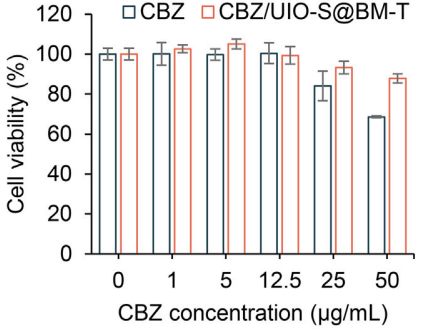
Carbamazepine (CBZ; 1–50 µg/mL; 24 h) exhibited extremely low cytotoxicity in SH-SY5Y cells at concentrations below 12.5 µg/mL. However, at a concentration of 50 µg/mL, cell viability decreased significantly to below 80%.
-
Autophagy
Stimulating the autophagic-lysosomal axis enhances host defense against fungal infection in a zebrafish model of invasive Aspergillosis. [Abstract]2023 Jan;19(1):324-337. PMID: 35775203
Carbamazepine purchased from MedChemExpress. Usage Cited in: Autophagy. 2023 Jan;19(1):324-337. [Abstract]
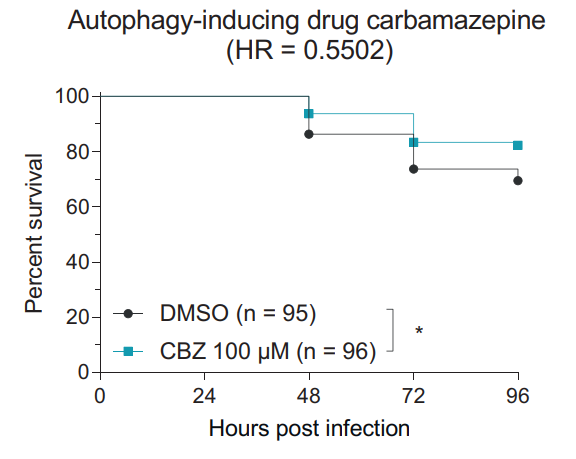
Survival curves of zebrafish embryos infected with A. fumigatus ∆Ku80 and exposed via waterborne treatment to 100 μM Carbamazepine (Mtor-independent induction of autophagy via the inositol pathway), or DMSO as a vehicle control at the same v:v. The results showed that the autophagy-inducing treatment (Carbamazepine) consistently enhanced host survival during A. fumigatus infection compared to the DMSO control.
-
Nat Commun
2023 Jun 3;14(1):3224. PMID: 37270609 -
Theranostics
ATF4 destabilizes RET through nonclassical GRP78 inhibition to enhance chemosensitivity to bortezomib in human osteosarcoma. [Abstract]2019 Aug 14;9(21):6334-6353. PMID: 31534554 -
J Pharm Anal
Discovery of E0199: A novel compound targeting both peripheral NaV and KV7 channels to alleviate neuropathic pain. [Abstract]2025 Jan;15(1):101132. PMID: 39906690
Carbamazepine purchased from MedChemExpress. Usage Cited in: J Pharm Anal. 2025 Jan;15(1):101132. [Abstract]
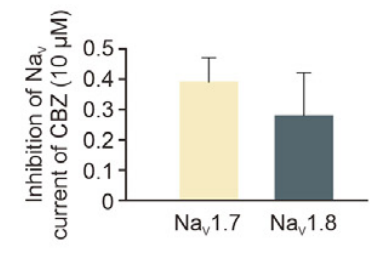
Carbamazepine (CBZ, 10 μM) exhibited an inhibition rate of 39.00% on NaV1.7 channels and 28.02% on NaV1.8 channels.
-
-
Chin Med
Identification of anti-fibrotic compounds from Piper longum L via hollow fiber cell fishing and high-performance liquid chromatography with in vivo and in vitro validation. [Abstract]2025 Aug 19;20(1):127. PMID: 40830877 -
Commun Biol
Permethrin induces epileptic susceptibility via activation of Na+ channels and rise in glutamate. [Abstract]2025 Nov 24;8(1):1644. PMID: 41286411 -
Cell Rep Methods
RECOVER identifies synergistic drug combinations in vitro through sequential model optimization. [Abstract]2023 Oct 23;3(10):100599. PMID: 37797618 -
Int Immunopharmacol
Lidocaine inhibits influenza a virus replication by up-regulating IFNα4 via TBK1-IRF7 and JNK-AP1 signaling pathways. [Abstract]2023 Feb:115:109706. PMID: 36638664 -
Biotechnol Bioeng
An integrated biomimetic array chip for establishment of collagen-based 3D primary human hepatocyte model for prediction of clinical drug-induced liver injury. [Abstract]2021 Dec;118(12):4687-4698. PMID: 34478150 -
J Integr Neurosci
The Neuroprotective Role of a Caspase-1 Inhibitor Against Apoptosis via Inhibition of Glial Hyperactivation in a Mouse Model of Epilepsy. [Abstract]2026 May 9;25(5):49777. PMID: 42216646 -
Pharmacol Res Perspect
Effects of membrane transport activity and cell metabolism on the unbound drug concentrations in the skeletal muscle and liver of drugs: A microdialysis study in rats. [Abstract]2021 Oct;9(5):e00879. PMID: 34628723
Carbamazepine purchased from MedChemExpress. Usage Cited in: Pharmacol Res Perspect. 2021 Oct;9(5):e00879. [Abstract]
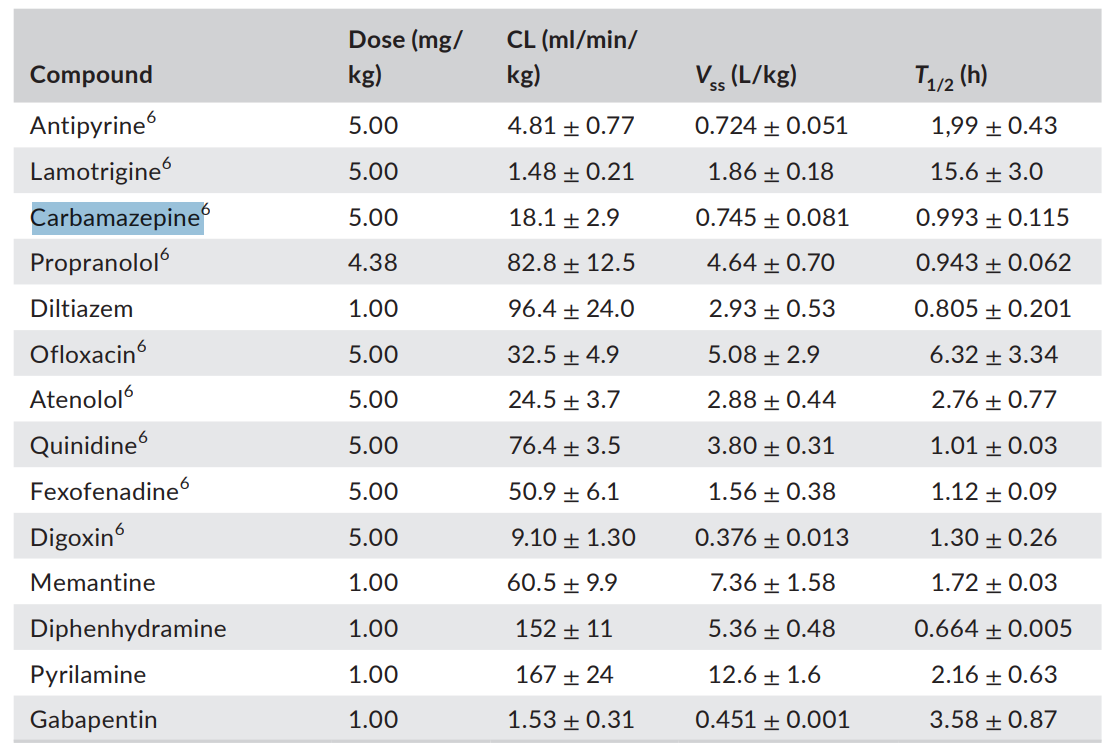
Pharmacokinetic parameters of the 14 compounds following an IV single bolus (n = 3; mean ± SD) (n = 3, mean ± SD).
-
Pharmacol Res Perspect
Applicability of free drug hypothesis to drugs with good membrane permeability that are not efflux transporter substrates: A microdialysis study in rats. [Abstract]2020 Apr;8(2):e00575. PMID: 32266794 -
World J Methodol
Anticonvulsant potential of rosuvastatin in combination with carbamazepine and valproate in animal models of epilepsy. [Abstract]2025 Jun 20;15(2):99580. PMID: 40548212
Carbamazepine purchased from MedChemExpress. Usage Cited in: World J Methodol. 2025 Jun 20;15(2):99580. [Abstract]
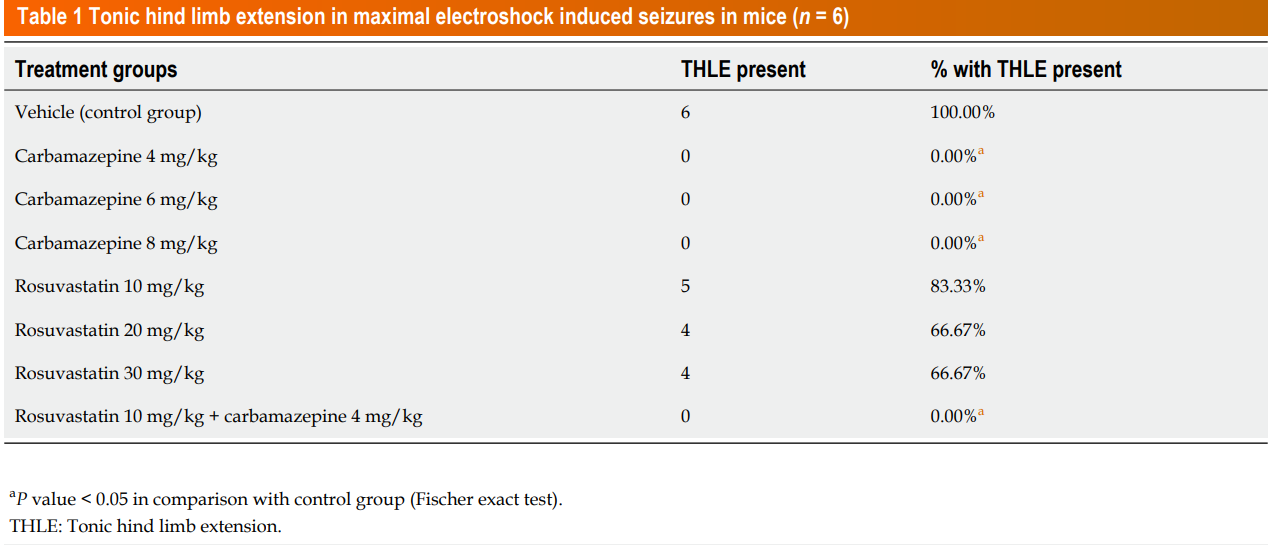
Carbamazepine (4–8 mg/kg) inhibited tonic hindlimb extension (THLE) in mice, demonstrating a significant anticonvulsant protective effect.
-
-
Biomed Pharmacother
Remdesivir inhibits the progression of glioblastoma by enhancing endoplasmic reticulum stress. [Abstract]2023 Jan:157:114037. PMID: 36427388 -
Chemosphere
Mass-balance-model-based evaluation of sewage treatment plant contribution to residual pharmaceuticals in environmental waters. [Abstract]2019 Jun:225:378-387. PMID: 30884299


Solvent & Solubility
DMSO : 50 mg/mL (211.62 mM; Need ultrasonic; Hygroscopic DMSO has a significant impact on the solubility of product, please use newly opened DMSO)
H2O : < 0.1 mg/mL (insoluble)
Please refer to the solubility information to select the appropriate solvent. Once prepared, please aliquot and store the solution to prevent product inactivation from repeated freeze-thaw cycles.
Storage method and period of stock solution: -80°C, 2 years; -20°C, 1 year. When stored at -80°C, please use it within 2 years. When stored at -20°C, please use it within 1 year.
Please refer to the solubility information to select the appropriate solvent. Once prepared, please aliquot and store the solution to prevent product inactivation from repeated freeze-thaw cycles.
Storage method and period of stock solution: -80°C, 2 years; -20°C, 1 year. When stored at -80°C, please use it within 2 years. When stored at -20°C, please use it within 1 year.
Concentration (start) × Volume (start) = Concentration (final) × Volume (final)
Select the appropriate dissolution method based on your experimental animal and administration route.
- For the following dissolution methods, please ensure to first prepare a clear stock solution using an In Vitro approach and then sequentially add co-solvents:
- To ensure reliable experimental results, the clarified stock solution can be appropriately stored based on storage conditions. As for the working solution for In Vivo experiments, it is recommended to prepare freshly and use it on the same day.
- The percentages shown for the solvents indicate their volumetric ratio in the final prepared solution. If precipitation or phase separation occurs during preparation, heat and/or sonication can be used to aid dissolution.
Add each solvent one by one: 10% DMSO 40% PEG300 5% Tween-80 45% Saline
Solubility: ≥ 2.5 mg/mL (10.58 mM); Clear solution
This protocol yields a clear solution of ≥ 2.5 mg/mL (saturation unknown).
Taking 1 mL working solution as an example, add 100 μL DMSO stock solution (25.0 mg/mL) to 400 μL PEG300, and mix evenly; then add 50 μL Tween-80 and mix evenly; then add 450 μL Saline to adjust the volume to 1 mL.
Preparation of Saline: Dissolve 0.9 g sodium chloride in ddH₂O and dilute to 100 mL to obtain a clear Saline solution.
Add each solvent one by one: 10% DMSO 90% (20% SBE-β-CD in Saline)
Solubility: ≥ 2.5 mg/mL (10.58 mM); Clear solution
This protocol yields a clear solution of ≥ 2.5 mg/mL (saturation unknown).
Taking 1 mL working solution as an example, add 100 μL DMSO stock solution (25.0 mg/mL) to 900 μL 20% SBE-β-CD in Saline, and mix evenly.
Preparation of 20% SBE-β-CD in Saline (4°C, storage for one week): 2 g SBE-β-CD powder is dissolved in 10 mL Saline, completely dissolve until clear.
For the following dissolution methods, please prepare the working solution directly:
It is recommended to prepare fresh solutions and use them promptly within a short period of time.
The percentages shown for the solvents indicate their volumetric ratio in the final prepared solution. If precipitation or phase separation occurs during preparation, heat and/or sonication can be used to aid dissolution.
Add each solvent one by one: 50% PEG300 50% Saline
Solubility: 25 mg/mL (105.81 mM); Clear solution; Need ultrasonic
Please enter the basic information of animal experiments:
-
-
-
-
Recommended: Prepare an additional quantity of animals to account for potential losses during experiments.
Please enter your animal formula composition:
-
%DMSO +
Recommended: Keep the proportion of DMSO in working solution below 2% if your animal is weak.
-
%+
-
+%Tween-80 + +
-
%Saline +
The co-solvents required include: DMSO, . All of co-solvents are available by MedChemExpress (MCE). , Tween 80. All of co-solvents are available by MedChemExpress (MCE).
Working solution concentration: 0.22 mg/mL
Method for preparing stock solution: mg drug dissolved in μL DMSO. Stock solution concentration: mg/mL.
1. Take μL DMSO stock solution;
2. Add μL .
μL , mix evenly;
3. Then add μL Tween 80, mix evenly;
4. Then add μL
Please ensure that the stock solution in the first step is dissolved to a clear state, and add co-solvents in sequence. You can use ultrasonic heating (ultrasonic cleaner, recommended frequency 20-40 kHz), vortexing, etc. to assist dissolution.


Purity & Documentation
-
Data Sheet (287 KB)
-
SDS (558 KB)
- English - EN (558 KB)
- Français - FR (558 KB)
- Deutsch - DE (558 KB)
- Norwegian - NO (558 KB)
- Español - ES (558 KB)
- Swedish - SV (558 KB)
- Italian - IT (558 KB)
- Korean - KR (558 KB)
- Portuguese - PT (558 KB)
-
Handling Instructions (2659 KB)
References
[1]. Willow, M. and W.A. Catterall, Inhibition of binding of [3H]batrachotoxinin A 20-alpha-benzoate to sodium channels by the anticonvulsant drugs diphenylhydantoin and carbamazepine. Mol Pharmacol, 1982. 22(3): p. 627-35. [Content Brief]
[2]. Okada, M., et al., Biphasic effects of carbamazepine on the dopaminergic system in rat striatum and hippocampus. Epilepsy Res, 1997. 28(2): p. 143-53. [Content Brief]
[3]. Beutler AS, et al. Carbamazepine is an inhibitor of histone deacetylases. Life Sci. 2005 May 13;76(26):3107-15. [Content Brief]
[4]. Turpin E, et al. Carbamazepine directly inhibits adipocyte differentiation through activation of the ERK 1/2 pathway. Br J Pharmacol. 2013 Jan;168(1):139-50. [Content Brief]
[5]. Wang CH, et al. Carbamazepine attenuates inducible nitric oxide synthase expression through Akt inhibition in activated microglial cells. Pharm Biol. 2014 Nov;52(11):1451-9. [Content Brief]
[6]. Kawaguchi T, et al. Carbamazepine promotes liver regeneration and survival in mice. J Hepatol. 2013 Dec;59(6):1239-45. [Content Brief]
[7]. Kara NZ, et al. Chronic oral carbamazepine treatment elicits mood-stabilising effects in mice. Acta Neuropsychiatr. 2014 Feb;26(1):29-34. [Content Brief]


Complete Stock Solution Preparation Table
Please refer to the solubility information to select the appropriate solvent. Once prepared, please aliquot and store the solution to prevent product inactivation from repeated freeze-thaw cycles.
Storage method and period of stock solution: -80°C, 2 years; -20°C, 1 year. When stored at -80°C, please use it within 2 years. When stored at -20°C, please use it within 1 year.
| Optional Solvent | Concentration Solvent Mass | 1 mg | 5 mg | 10 mg | 25 mg |
|---|---|---|---|---|---|
| DMSO | 1 mM | 4.2324 mL | 21.1622 mL | 42.3245 mL | 105.8111 mL |
| 5 mM | 0.8465 mL | 4.2324 mL | 8.4649 mL | 21.1622 mL | |
| 10 mM | 0.4232 mL | 2.1162 mL | 4.2324 mL | 10.5811 mL | |
| 15 mM | 0.2822 mL | 1.4108 mL | 2.8216 mL | 7.0541 mL | |
| 20 mM | 0.2116 mL | 1.0581 mL | 2.1162 mL | 5.2906 mL | |
| 25 mM | 0.1693 mL | 0.8465 mL | 1.6930 mL | 4.2324 mL | |
| 30 mM | 0.1411 mL | 0.7054 mL | 1.4108 mL | 3.5270 mL | |
| 40 mM | 0.1058 mL | 0.5291 mL | 1.0581 mL | 2.6453 mL | |
| 50 mM | 0.0846 mL | 0.4232 mL | 0.8465 mL | 2.1162 mL | |
| 60 mM | 0.0705 mL | 0.3527 mL | 0.7054 mL | 1.7635 mL | |
| 80 mM | 0.0529 mL | 0.2645 mL | 0.5291 mL | 1.3226 mL | |
| 100 mM | 0.0423 mL | 0.2116 mL | 0.4232 mL | 1.0581 mL |


Carbamazepine Related Classifications
HY-B0246 Related Classifications
 Powered by Bioz