



Compstatin
Based on 3 publication(s) in Google Scholar
Compstatin, a 13-residue cyclic peptide, is a potent inhibitor of the complement system C3 with species specificity. Compstatin binds to baboon C3 and is resistant to proteolytic cleavage in baboon blood (similar to humans). Compstatin inhibits only the activation of primates’ complement system. Compstatin exhibits IC50 values of 63 μM and 12 μM for classical and alterative complement pathway, respectively.
For research use only. We do not sell to patients.
- Purity : 99.83%
- CAS No.: 206645-99-0
- Formula: C66H99N23O17S2
- Molecular Weight:1550.77
-
Storage:
Sealed storage, away from moisture and light.
Powder -80°C, 2 years , -20°C, 1 year* In solvent : -80°C, 6 months; -20°C, 1 month (sealed storage, away from moisture and light)

To place orders, for customer services and technical support, please contact: MedChemExpress USA
Tel: 609-228-6898 E-mail: [email protected] [email protected]


-
 Biological Activity
-
Chemical Information
-
Solvent & Solubility
- Protocols
- Purity & Documentation
- References
-
 Help & FAQs


-
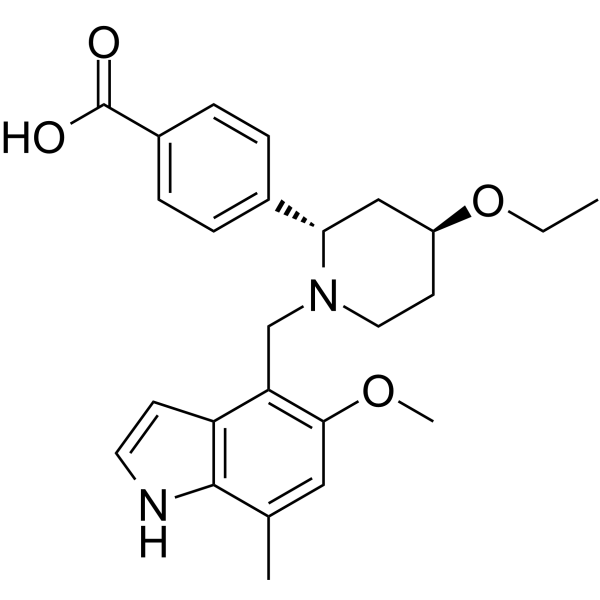
HY-127105
IptacopanFactor B Inhibitor -
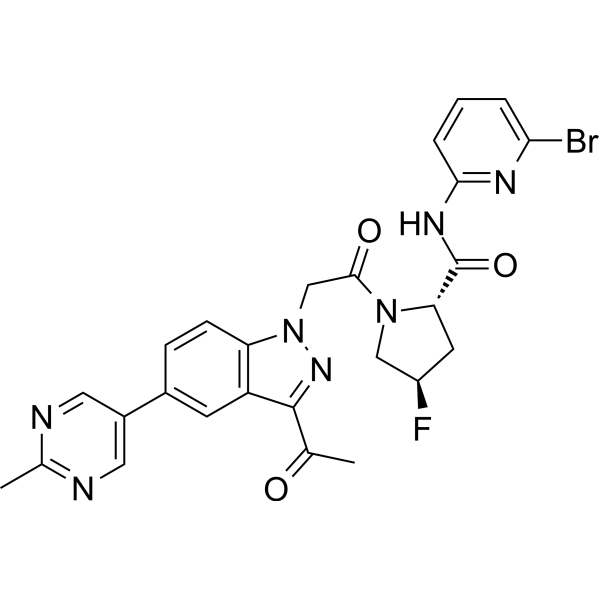
HY-117930
DanicopanFactor D Inhibitor -

HY-P9914
EculizumabComplement C5 Antibody -

HY-P99365
RavulizumabAnti-C5 Antibody -
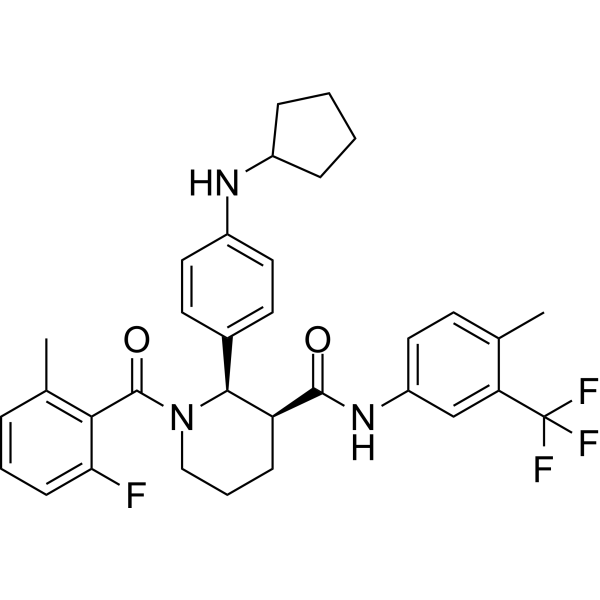
HY-17627
AvacopanC5aR Inhibitor -

HY-101502AR
SB290157 trifluoroacetate (Standard)C3aR Antagonist -
HY-16561
ResveratrolPolyphenolic Phytoalexin -
HY-B0015
PaclitaxelAntitumor Agent -
HY-P3204
POT-4C3 Receptor Inhibitor -
HY-101502A
SB290157 trifluoroacetateC3aR Antagonist -
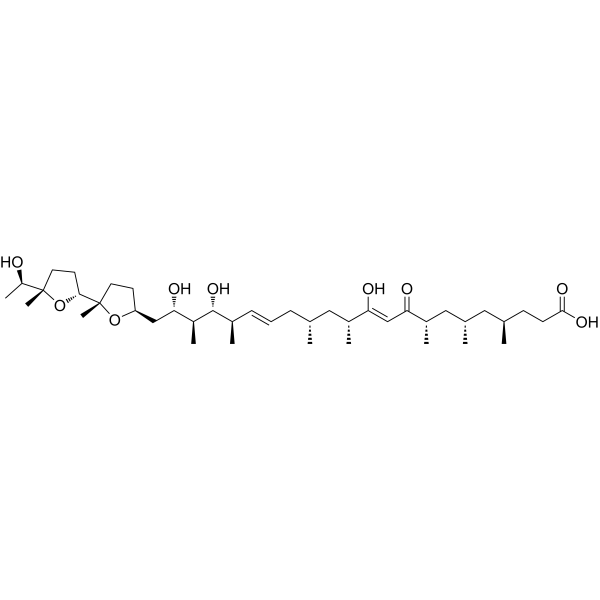
HY-13434
IonomycinCalcium Ionophore -
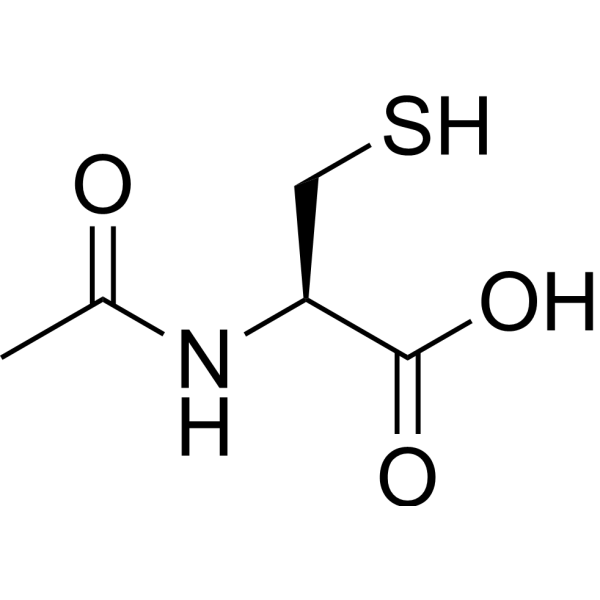
HY-B0215
AcetylcysteineMucolytic Agent
Publications Citing Use of MedChemExpress (MCE) Compstatin
More Customer Validation & Images

-
RT-PCR
-
Flow Cytometry
-
IF
-
IF


Biological Activity
Description
In Vitro
Compstatin exhibits an in vitro half-life in human blood of about2 hr[2].
In solution, compstatin forms a β-turn at residues Gln-5–Gly-8 with the disulfide bridge Cys-2–Cys12, residues Ile-1–Val-4, and Thr-13, forming a hydrophobic cluster[3].
MedChemExpress (MCE) has not independently confirmed the accuracy of these methods. They are for reference only. Further protocols information, click here.
In Vivo
Compstatin is stable in baboon plasma for more than 24 h[1].
Pig xenografts survival is significantly longer in the Compstatin perfused group than in the control group[2].
MedChemExpress (MCE) has not independently confirmed the accuracy of these methods. They are for reference only.
-
Animal Model:Juvenile baboons (P. Anubis) weighing 10.5-28.8 kg[1].
-
Dosage:50, 25 mg/kg 60 min after heparin and 2 min before protamine.
-
Administration:A bolus injection.
-
Result:Completely inhibited complement activation induced by heparin–protamine complexes.


Chemical Information
-
CAS No. 206645-99-0
-
Appearance Solid
-
Molecular Weight 1550.77
-
Formula C66H99N23O17S2
-
Color White to off-white
-
Sequence
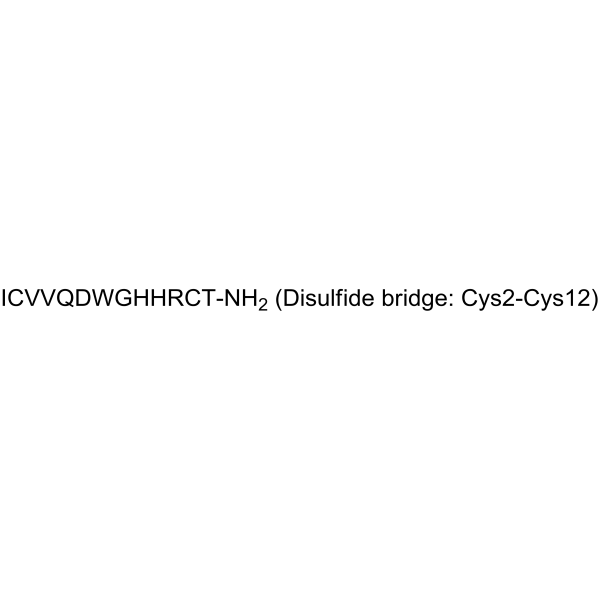
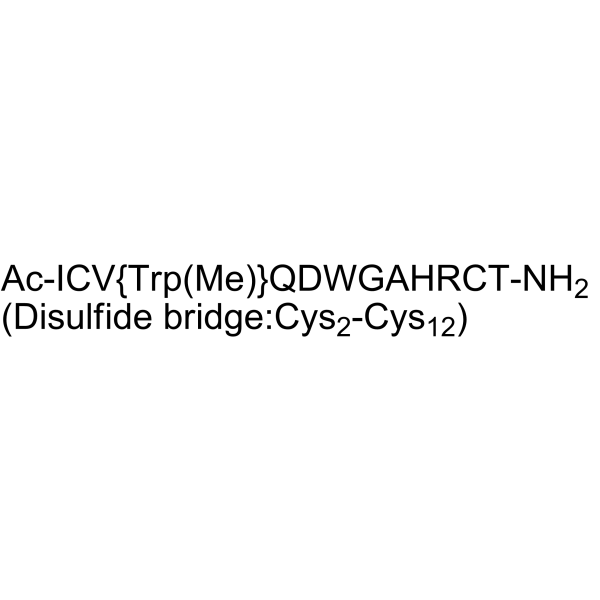
Ile-Cys-Val-Val-Gln-Asp-Trp-Gly-His-His-Arg-Cys-Thr-NH2 (Disulfide bridge: Cys2-Cys12)
-
Sequence Shortening
ICVVQDWGHHRCT-NH2 (Disulfide bridge: Cys2-Cys12)
-
Shipping
Room temperature in continental US; may vary elsewhere.
-
Storage
Sealed storage, away from moisture and light
Powder -80°C 2 years -20°C 1 year * In solvent : -80°C, 6 months; -20°C, 1 month (sealed storage, away from moisture and light)


Publications (3)
-
Journal Impact Factor
-
Most Recent
-
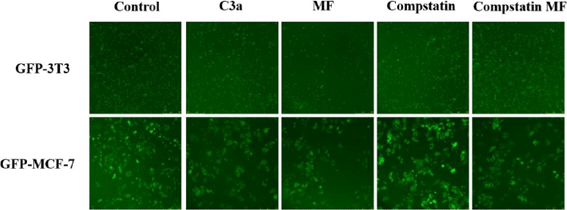
Compstatin purchased from MedChemExpress. Usage Cited in: J Mater Chem B. 2019, 7, 4207-4216.
The transfection characterized by inverted fluorescence microscope. GFP-3T3 cells and GFP-MCF-7 cells cultured with 10% FBS were transfected with the addition of C3a or Compstatin (25 μM; 4 h) under the influence of magnetic fields or not.
-
Eur J Immunol
Differences in Phage Recognition and Immunogenicity Contribute to Divergent Human Immune Responses to Escherichia coli and Klebsiella pneumoniae Phages. [Abstract]2025 Mar;55(3):e202451543. PMID: 40071703
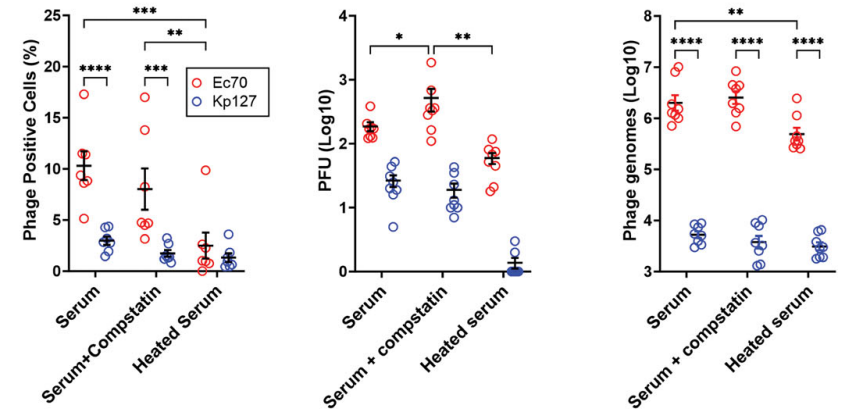
Compstatin purchased from MedChemExpress. Usage Cited in: Eur J Immunol. 2025 Mar;55(3):e202451543. [Abstract]
Ec70 and Kp127 phage internalization following inhibition of complement using Compstatin (C3 inhibitor, 50 µM; 15 min) or heat inactivation. Intracellular phage was measured by flow cytometry (SYBR labeling), plaque‐forming units (viable phage), and qPCR (intracellular genomes) (n = 8).
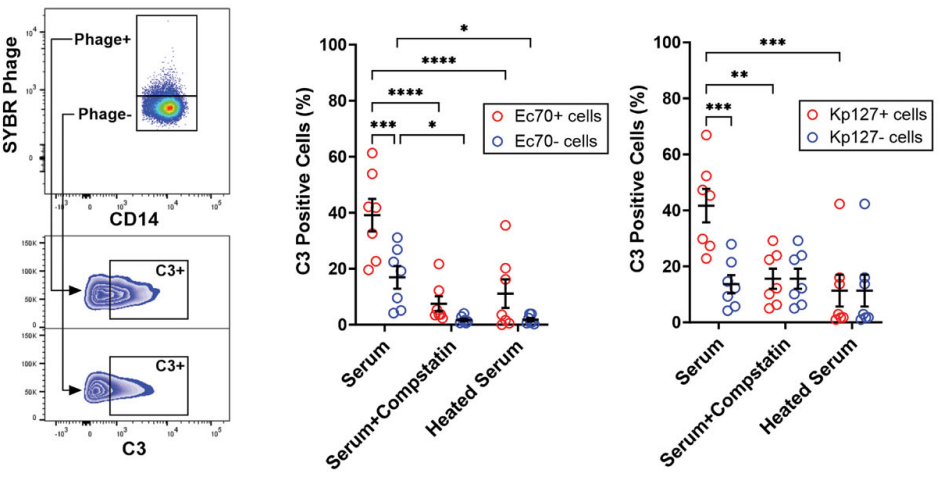
Compstatin purchased from MedChemExpress. Usage Cited in: Eur J Immunol. 2025 Mar;55(3):e202451543. [Abstract]
C3 internalization was quantified by flow cytometry in phage+ and phage‐monocytes following complement inactivation using Compstatin (50 µM; 15 min) and heat inactivation (n = 7).
Compstatin purchased from MedChemExpress. Usage Cited in: Eur J Immunol. 2025 Mar;55(3):e202451543. [Abstract]
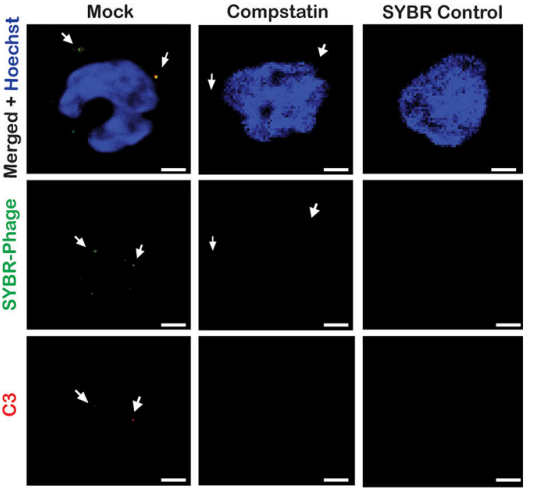
Immunofluorescent imaging of monocytes treated with SYBR‐labelled phages (green) ± C3 inhibitor Compstatin (50 µM). Internalized C3 was labelled in red and cell nucleus in blue. Detected phages and C3 marked with a white arrow, scale bar = 2 µm.
-
Glycobiology
Sialidases derived from Gardnerella vaginalis and Prevotella timonensis remodel the sperm glycocalyx and impair sperm function. [Abstract]2025 Nov 6;35(11):cwaf067. PMID: 41165775


Solvent & Solubility
In Vitro:
H2O : 100 mg/mL (64.48 mM; Need ultrasonic)
Please refer to the solubility information to select the appropriate solvent. Once prepared, please aliquot and store the solution to prevent product inactivation from repeated freeze-thaw cycles.
Storage method and period of stock solution: -80°C, 6 months; -20°C, 1 month (sealed storage, away from moisture and light). When stored at -80°C, please use it within 6 months. When stored at -20°C, please use it within 1 month.
* Note: If you choose water as the stock solution, please dilute it to the working solution, then filter and sterilize it with a 0.22 μm filter before use.
Please refer to the solubility information to select the appropriate solvent. Once prepared, please aliquot and store the solution to prevent product inactivation from repeated freeze-thaw cycles.
Storage method and period of stock solution: -80°C, 6 months; -20°C, 1 month (sealed storage, away from moisture and light). When stored at -80°C, please use it within 6 months. When stored at -20°C, please use it within 1 month.
* Note: If you choose water as the stock solution, please dilute it to the working solution, then filter and sterilize it with a 0.22 μm filter before use.
Concentration (start) × Volume (start) = Concentration (final) × Volume (final)
In Vivo:
For the following dissolution methods, please prepare the working solution directly:
It is recommended to prepare fresh solutions and use them promptly within a short period of time.
The percentages shown for the solvents indicate their volumetric ratio in the final prepared solution. If precipitation or phase separation occurs during preparation, heat and/or sonication can be used to aid dissolution.
Add each solvent one by one: PBS
Solubility: 100 mg/mL (64.48 mM); Clear solution; Need ultrasonic

Protocols
-
Cell Cytotoxicity Assay
Cytotoxicity assays are usually based on the assessment of cell membrane damage, which can also be indirectly detected by measuring cell viability. Detection methods include MTT assay, CKK-8 assay, LDH assay and ATP assay, etc.


Purity & Documentation
-
Data Sheet (289 KB)
-
SDS (396 KB)
- English - EN (396 KB)
- Français - FR (396 KB)
- Deutsch - DE (396 KB)
- Norwegian - NO (396 KB)
- Español - ES (396 KB)
- Swedish - SV (396 KB)
- Italian - IT (396 KB)
- Korean - KR (396 KB)
- Portuguese - PT (396 KB)
-
Handling Instructions (2659 KB)
References
[1]. Soulika AM, et al. Inhibition of heparin/protamine complex-induced complement activation by Compstatin in baboons. Clin Immunol. 2000 Sep;96(3):212-21. [Content Brief]
[2]. Fiane AE, et al. Compstatin, a peptide inhibitor of C3, prolongs survival of ex vivo perfused pig xenografts. Xenotransplantation. 1999 Feb;6(1):52-65. [Content Brief]
[3]. Bert J C Janssen, et al. Structure of compstatin in complex with complement component C3c reveals a new mechanism of complement inhibition. J Biol Chem. 2007 Oct 5;282(40):29241-7. [Content Brief]
[4]. A Sahu, et al. Inhibition of human complement by a C3-binding peptide isolated from a phage-displayed random peptide library. J Immunol. 1996 Jul 15;157(2):884-91. [Content Brief]


Complete Stock Solution Preparation Table
Please refer to the solubility information to select the appropriate solvent. Once prepared, please aliquot and store the solution to prevent product inactivation from repeated freeze-thaw cycles.
Storage method and period of stock solution: -80°C, 6 months; -20°C, 1 month (sealed storage, away from moisture and light). When stored at -80°C, please use it within 6 months. When stored at -20°C, please use it within 1 month.
| Optional Solvent | Concentration Solvent Mass | 1 mg | 5 mg | 10 mg | 25 mg |
|---|---|---|---|---|---|
| H2O | 1 mM | 0.6448 mL | 3.2242 mL | 6.4484 mL | 16.1210 mL |
| 5 mM | 0.1290 mL | 0.6448 mL | 1.2897 mL | 3.2242 mL | |
| 10 mM | 0.0645 mL | 0.3224 mL | 0.6448 mL | 1.6121 mL | |
| 15 mM | 0.0430 mL | 0.2149 mL | 0.4299 mL | 1.0747 mL | |
| 20 mM | 0.0322 mL | 0.1612 mL | 0.3224 mL | 0.8061 mL | |
| 25 mM | 0.0258 mL | 0.1290 mL | 0.2579 mL | 0.6448 mL | |
| 30 mM | 0.0215 mL | 0.1075 mL | 0.2149 mL | 0.5374 mL | |
| 40 mM | 0.0161 mL | 0.0806 mL | 0.1612 mL | 0.4030 mL | |
| 50 mM | 0.0129 mL | 0.0645 mL | 0.1290 mL | 0.3224 mL | |
| 60 mM | 0.0107 mL | 0.0537 mL | 0.1075 mL | 0.2687 mL |
* Note: If you choose water as the stock solution, please dilute it to the working solution, then filter and sterilize it with a 0.22 μm filter before use.


Compstatin Related Classifications
HY-P1036 Related Classifications
 Powered by Bioz