



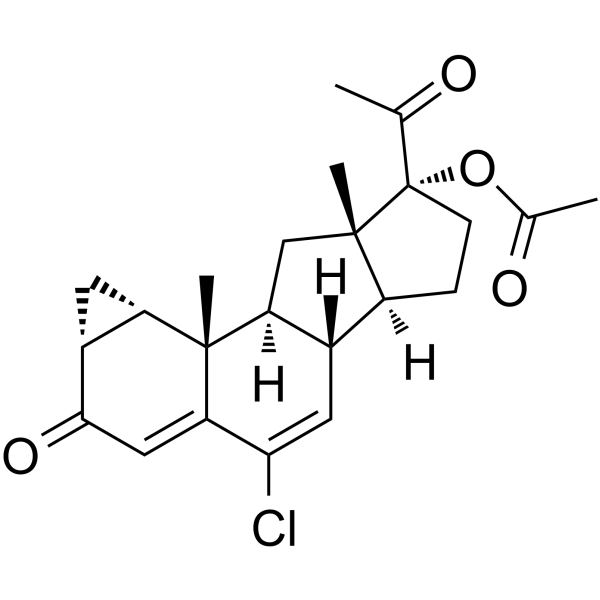
Cyproterone acetate
Based on 3 publication(s) in Google Scholar
Cyproterone acetate is an anti-androgen (IC50=7.1 nM) and progestogen synthetic steroid. Cyproterone acetate has affinity with progesteron and with glucocorticoidal receptors.
For research use only. We do not sell to patients.
- Purity : 99.90%
- CAS No.: 427-51-0
- Formula: C24H29ClO4
- Molecular Weight:416.94
-
Storage:Powder -20°C, 3 years , 4°C, 2 years ; In solvent -80°C, 2 years , -20°C, 1 year

To place orders, for customer services and technical support, please contact: MedChemExpress USA
Tel: 609-228-6898 E-mail: [email protected] [email protected]


-
 Biological Activity
-
Chemical Information
-
Solvent & Solubility
- Protocols
- Purity & Documentation
- References
-
 Help & FAQs


-
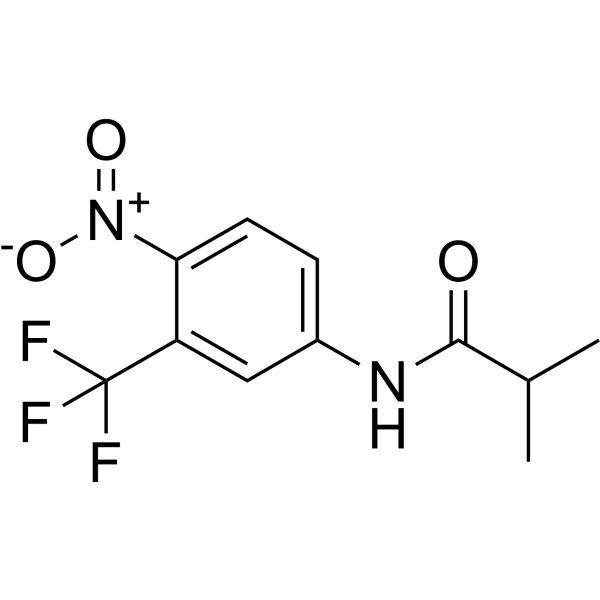
HY-B0022
FlutamideAntiandrogen Agent -
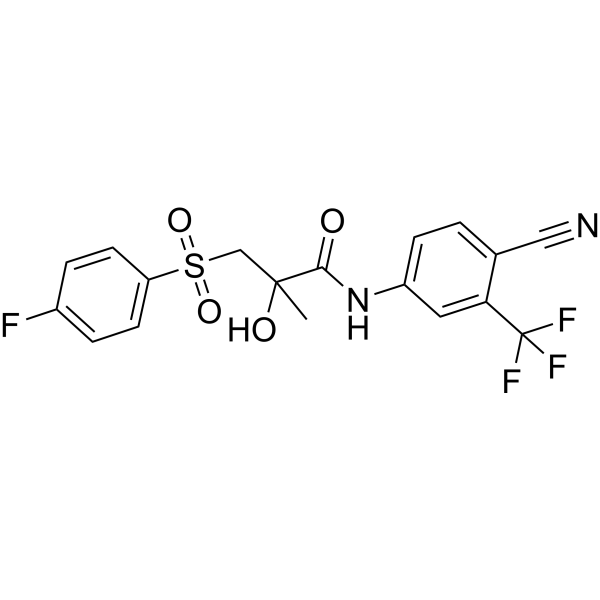
HY-14249
BicalutamideAndrogen Receptor Inhibitor -
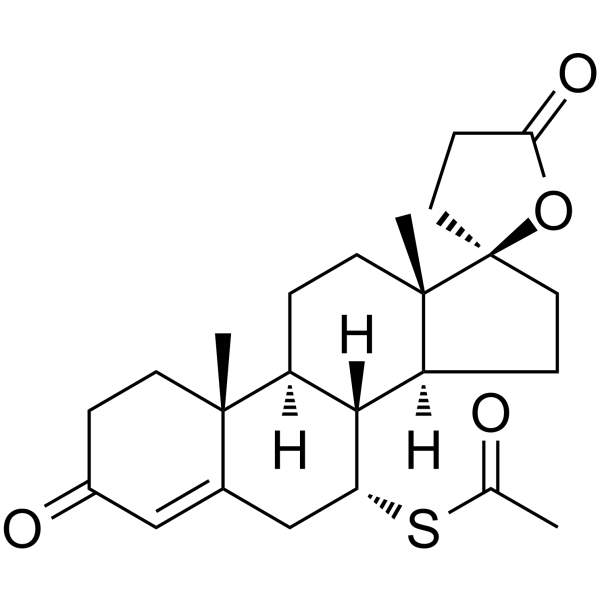
HY-B0561
SpironolactoneAldosterone/Corticoid Receptor/Androgen Antagonists -
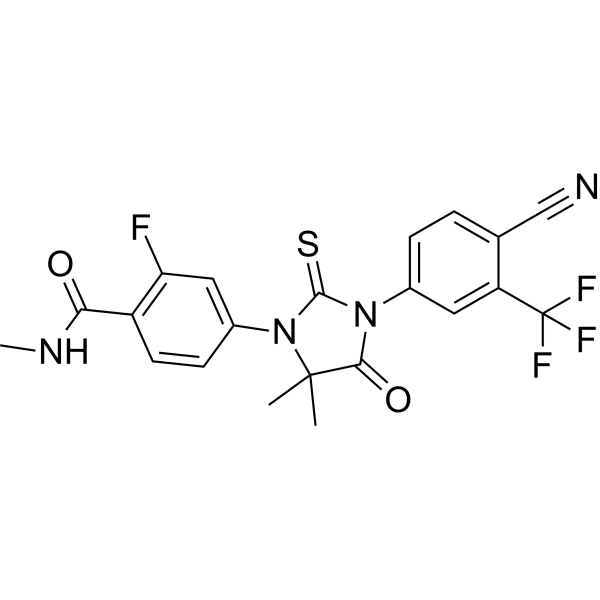
HY-70002
EnzalutamideAndrogen Receptor Antagonist -
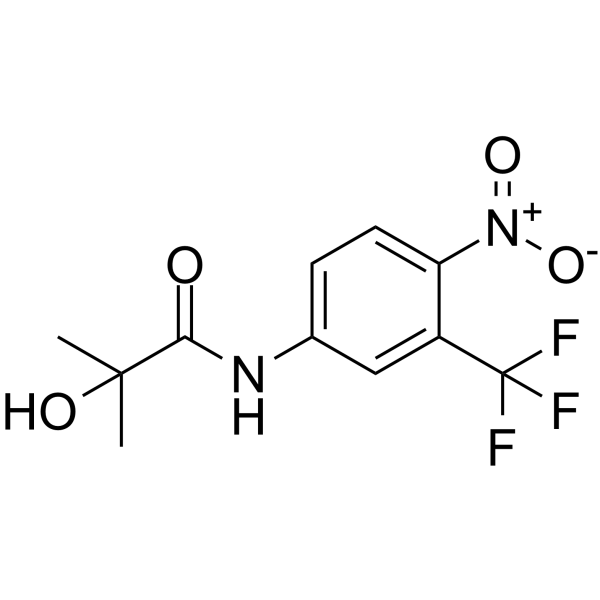
HY-W013272
HydroxyflutamideAndrogen Receptor Antagonist -
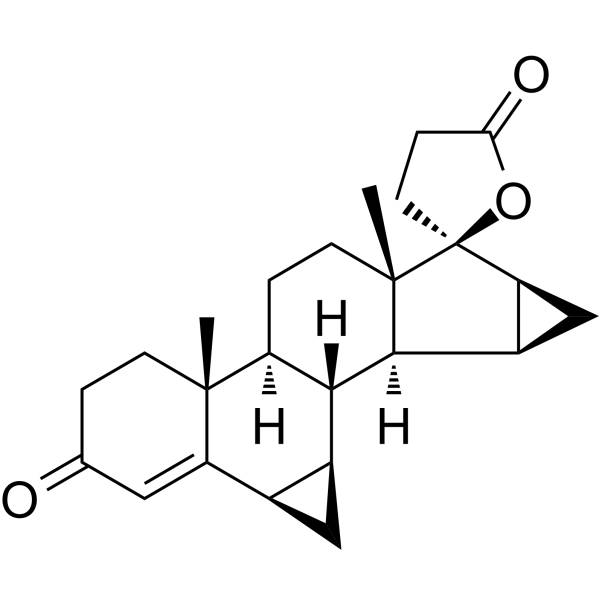
HY-B0111
DrospirenoneProgesterone Receptor Agonist -
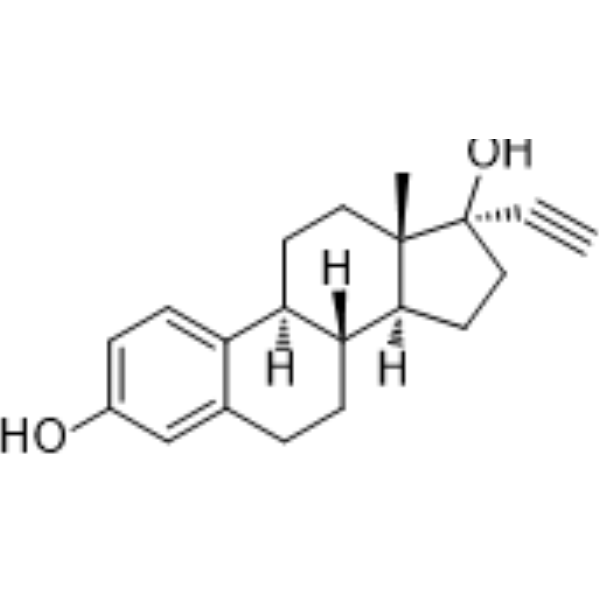
HY-B0216
EthinylestradiolEndogenous Metabolite -
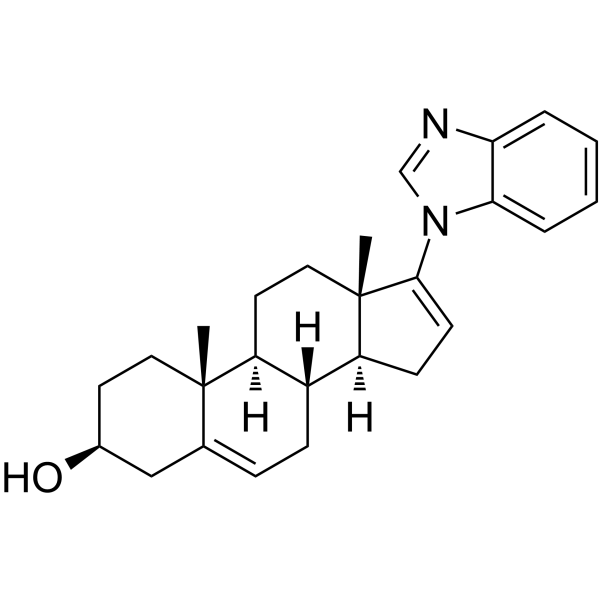
HY-70006
GaleteroneMolecular Glue Degrader -
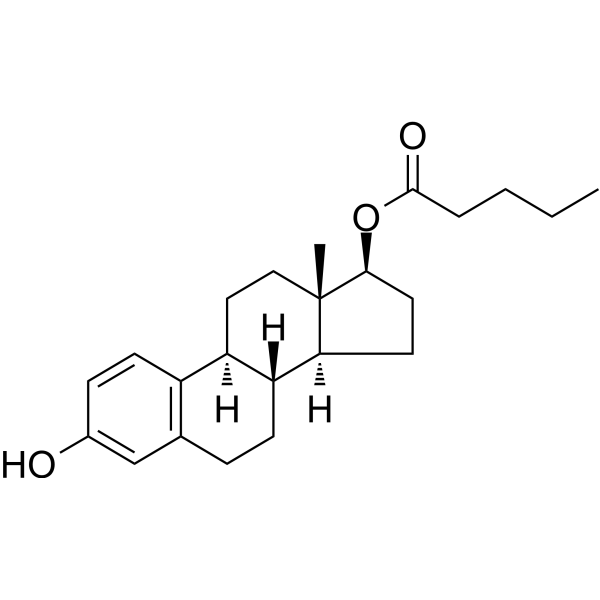
HY-B0672
Estradiol valerateEstrogen Receptor/ERR Agonist -
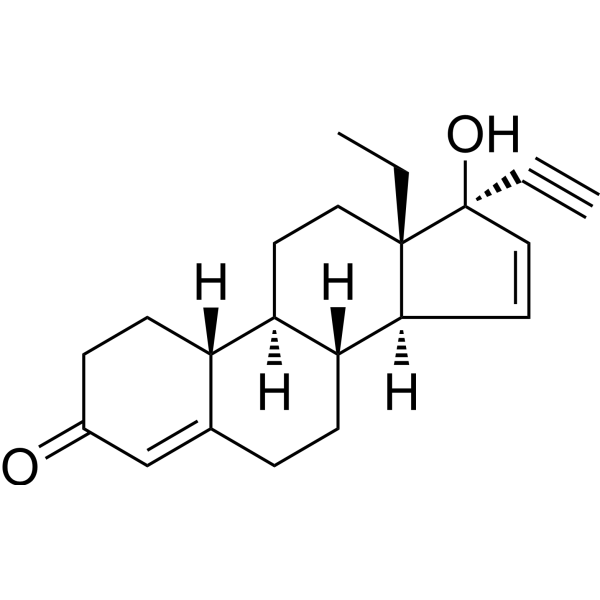
HY-B0110
GestodeneSynthetic Progestogen -
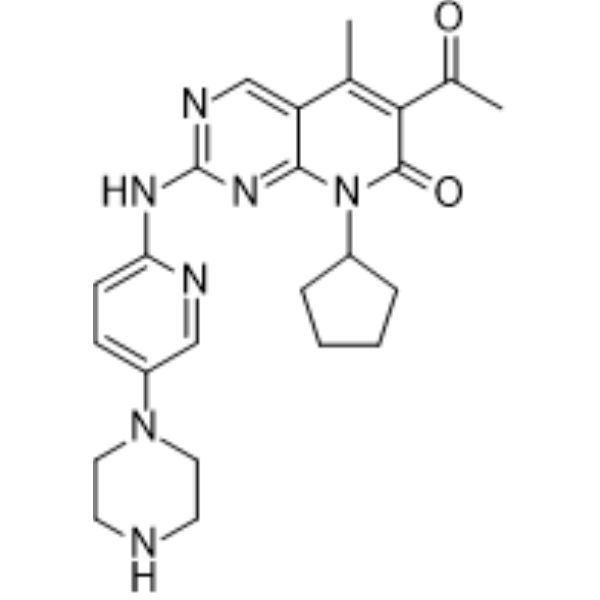
HY-50767
PalbociclibCDK4/6 Inhibitor -
HY-B0257
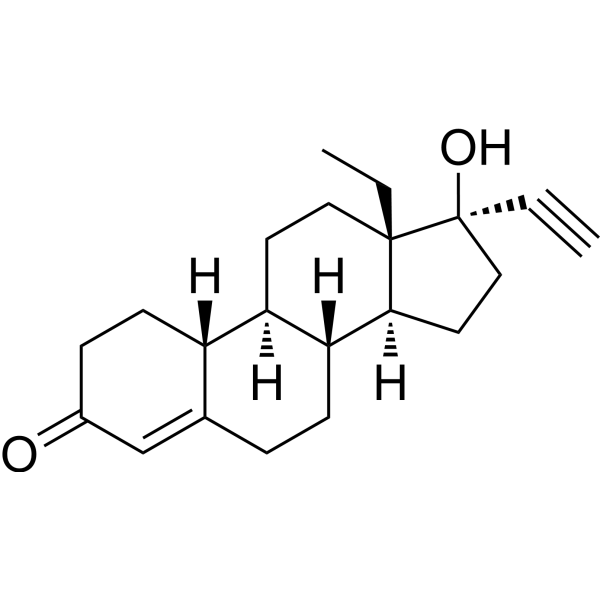
LevonorgestrelProgesterone Inhibitor
Publications Citing Use of MedChemExpress (MCE) Cyproterone acetate
More

Biological Activity
Description
Cellular Effect
|
Cell Line

|
Type | Value | Description | References |
|---|---|---|---|---|
| CV-1 | IC50 |
23 nM
Compound: 1
|
Antagonistic activity against human androgen receptor (hAR) in co-transfected CV-1 cells.
Antagonistic activity against human androgen receptor (hAR) in co-transfected CV-1 cells.
|
[PMID: 9484511] |
| CV-1 | IC50 |
>1000 nM
Compound: 1
|
Antagonistic activity against human progesterone receptor B (hPR-B) in co-transfected CV-1 cells.
Antagonistic activity against human progesterone receptor B (hPR-B) in co-transfected CV-1 cells.
|
[PMID: 9484511] |
| DU-145 | IC50 |
50.7 μM
Compound: CPA
|
Antiproliferative activity against androgen-insensitive human DU-145 cells assessed as inhibition of cell growth incubated for 48 hrs by MTT assay
Antiproliferative activity against androgen-insensitive human DU-145 cells assessed as inhibition of cell growth incubated for 48 hrs by MTT assay
|
[PMID: 33933755] |
| LNCaP | IC50 |
43 μM
Compound: Cyproterone acetate
|
Cytotoxicity against human androgen receptor positive LNCAP cells after 72 hrs by MTT assay
Cytotoxicity against human androgen receptor positive LNCAP cells after 72 hrs by MTT assay
|
[PMID: 20226660] |
| LNCaP | IC50 |
43 μM
Compound: CPA
|
Cytotoxicity against human LNCAP cells expressing androgen receptor after 72 hrs by MTT assay
Cytotoxicity against human LNCAP cells expressing androgen receptor after 72 hrs by MTT assay
|
[PMID: 23665800] |
| LNCaP | IC50 |
59.6 μM
Compound: CPA
|
Antiproliferative activity against androgen-sensitive human LNCaP cells assessed as inhibition of cell growth incubated for 48 hrs by MTT assay
Antiproliferative activity against androgen-sensitive human LNCaP cells assessed as inhibition of cell growth incubated for 48 hrs by MTT assay
|
[PMID: 33933755] |
| PC-3 | IC50 |
32.3 μM
Compound: Cyproterone acetate
|
Cytotoxicity against human androgen receptor negative PC3 cells after 72 hrs by MTT assay
Cytotoxicity against human androgen receptor negative PC3 cells after 72 hrs by MTT assay
|
[PMID: 20226660] |
| PC-3 | IC50 |
32.3 μM
Compound: CPA
|
Cytotoxicity against androgen receptor deficient human PC3 cells after 72 hrs by MTT assay
Cytotoxicity against androgen receptor deficient human PC3 cells after 72 hrs by MTT assay
|
[PMID: 23665800] |
| PC-3 | IC50 |
56.9 μM
Compound: CPA
|
Antiproliferative activity against androgen-insensitive human PC-3 cells assessed as inhibition of cell growth incubated for 48 hrs by MTT assay
Antiproliferative activity against androgen-insensitive human PC-3 cells assessed as inhibition of cell growth incubated for 48 hrs by MTT assay
|
[PMID: 33933755] |
In Vitro
Cyproterone acetate is a partial agonist, showing agonism for the AR, with EC50 of 4.0 μM, at relatively high concentrations[1].
Cyproterone acetate enhances TRAIL-induced androgen-independent prostate cancer cell apoptosis via up-regulation of death receptor 5[3].
Cyproterone acetate pretreatment (0,1,10, or 50 μM; 24 hours; subsequently exposed to cadmium for an additional 24 hours) resulted in a clear decrease in the sensitivity to cadmium in rat liver epithelial cell line[4].
MedChemExpress (MCE) has not independently confirmed the accuracy of these methods. They are for reference only. Further protocols information, click here.
In Vivo
MedChemExpress (MCE) has not independently confirmed the accuracy of these methods. They are for reference only.
Clinical Trial
| NCT Number | Sponsor | Condition | Start Date |
Phase
|
|---|---|---|---|---|
| NCT01329991 | Plexxikon| | 2011-05 | PHASE1 |


Chemical Information
-
CAS No. 427-51-0
-
Appearance Solid
-
Molecular Weight 416.94
-
Formula C24H29ClO4
-
Color White to off-white
-
SMILES
C[C@]12[C@]3([H])[C@@](C(C=C1C(Cl)=C[C@]4([H])[C@]2([H])CC[C@]5([C@@]4([H])CC[C@@]5(C(C)=O)OC(C)=O)C)=O)([H])C3
-
Shipping
Room temperature in continental US; may vary elsewhere.
-
Storage
Powder -20°C 3 years 4°C 2 years In solvent -80°C 2 years -20°C 1 year


Publications (3)
-
Journal Impact Factor
-
Most Recent
-
Int J Mol Sci
Metformin Enhances Nomegestrol Acetate Suppressing Growth of Endometrial Cancer Cells and May Correlate to Downregulating mTOR Activity In Vitro and In Vivo. [Abstract]2019 Jul 5;20(13):3308. PMID: 31284427 -
-


Solvent & Solubility
In Vitro:
DMSO : ≥ 100 mg/mL (239.84 mM; Hygroscopic DMSO has a significant impact on the solubility of product, please use newly opened DMSO)
Ethanol : 20 mg/mL (47.97 mM; Need ultrasonic)
H2O : < 0.1 mg/mL (insoluble)
* "≥" means soluble, but saturation unknown.
Please refer to the solubility information to select the appropriate solvent. Once prepared, please aliquot and store the solution to prevent product inactivation from repeated freeze-thaw cycles.
Storage method and period of stock solution: -80°C, 2 years; -20°C, 1 year. When stored at -80°C, please use it within 2 years. When stored at -20°C, please use it within 1 year.
Please refer to the solubility information to select the appropriate solvent. Once prepared, please aliquot and store the solution to prevent product inactivation from repeated freeze-thaw cycles.
Storage method and period of stock solution: -80°C, 2 years; -20°C, 1 year. When stored at -80°C, please use it within 2 years. When stored at -20°C, please use it within 1 year.
Concentration (start) × Volume (start) = Concentration (final) × Volume (final)
In Vivo:
Select the appropriate dissolution method based on your experimental animal and administration route.
- For the following dissolution methods, please ensure to first prepare a clear stock solution using an In Vitro approach and then sequentially add co-solvents:
- To ensure reliable experimental results, the clarified stock solution can be appropriately stored based on storage conditions. As for the working solution for In Vivo experiments, it is recommended to prepare freshly and use it on the same day.
- The percentages shown for the solvents indicate their volumetric ratio in the final prepared solution. If precipitation or phase separation occurs during preparation, heat and/or sonication can be used to aid dissolution.
Add each solvent one by one: 10% DMSO 40% PEG300 5% Tween-80 45% Saline
Solubility: ≥ 2.5 mg/mL (6.00 mM); Clear solution
This protocol yields a clear solution of ≥ 2.5 mg/mL (saturation unknown).
Taking 1 mL working solution as an example, add 100 μL DMSO stock solution (25.0 mg/mL) to 400 μL PEG300, and mix evenly; then add 50 μL Tween-80 and mix evenly; then add 450 μL Saline to adjust the volume to 1 mL.
Preparation of Saline: Dissolve 0.9 g sodium chloride in ddH₂O and dilute to 100 mL to obtain a clear Saline solution.
Add each solvent one by one: 10% DMSO 90% (20% SBE-β-CD in Saline)
Solubility: ≥ 2.5 mg/mL (6.00 mM); Clear solution
This protocol yields a clear solution of ≥ 2.5 mg/mL (saturation unknown).
Taking 1 mL working solution as an example, add 100 μL DMSO stock solution (25.0 mg/mL) to 900 μL 20% SBE-β-CD in Saline, and mix evenly.
Preparation of 20% SBE-β-CD in Saline (4°C, storage for one week): 2 g SBE-β-CD powder is dissolved in 10 mL Saline, completely dissolve until clear.
Add each solvent one by one: 10% EtOH 40% PEG300 5% Tween-80 45% Saline
Solubility: 2 mg/mL (4.80 mM); Suspended solution; Need ultrasonic
This protocol yields a suspended solution of 2 mg/mL. Suspended solution can be used for oral and intraperitoneal injection.
Taking 1 mL working solution as an example, add 100 μL EtOH stock solution (20.0 mg/mL) to 400 μL PEG300, and mix evenly; then add 50 μL Tween-80 and mix evenly; then add 450 μL Saline to adjust the volume to 1 mL.
Preparation of Saline: Dissolve 0.9 g sodium chloride in ddH₂O and dilute to 100 mL to obtain a clear Saline solution.
Add each solvent one by one: 10% EtOH 90% (20% SBE-β-CD in Saline)
Solubility: ≥ 2 mg/mL (4.80 mM); Clear solution
This protocol yields a clear solution of ≥ 2 mg/mL (saturation unknown).
Taking 1 mL working solution as an example, add 100 μL EtOH stock solution (20.0 mg/mL) to 900 μL 20% SBE-β-CD in Saline, and mix evenly.
Preparation of 20% SBE-β-CD in Saline (4°C, storage for one week): 2 g SBE-β-CD powder is dissolved in 10 mL Saline, completely dissolve until clear.
Add each solvent one by one: 10% EtOH 90% Corn Oil
Solubility: ≥ 2 mg/mL (4.80 mM); Clear solution
This protocol yields a clear solution of ≥ 2 mg/mL (saturation unknown). If the continuous dosing period exceeds half a month, please choose this protocol carefully.
Taking 1 mL working solution as an example, add 100 μL EtOH stock solution (20.0 mg/mL) to 900 μL Corn oil, and mix evenly.
In Vivo Dissolution Calculator
Please enter the basic information of animal experiments:
-
-
-
-
Recommended: Prepare an additional quantity of animals to account for potential losses during experiments.
Please enter your animal formula composition:
-
%DMSO +
Recommended: Keep the proportion of DMSO in working solution below 2% if your animal is weak.
-
%+
-
+%Tween-80 + +
-
%Saline +
The co-solvents required include: DMSO, . All of co-solvents are available by MedChemExpress (MCE). , Tween 80. All of co-solvents are available by MedChemExpress (MCE).
Working solution concentration: 0.22 mg/mL
Method for preparing stock solution: mg drug dissolved in μL DMSO. Stock solution concentration: mg/mL.
1. Take μL DMSO stock solution;
2. Add μL .
μL , mix evenly;
3. Then add μL Tween 80, mix evenly;
4. Then add μL
Please ensure that the stock solution in the first step is dissolved to a clear state, and add co-solvents in sequence. You can use ultrasonic heating (ultrasonic cleaner, recommended frequency 20-40 kHz), vortexing, etc. to assist dissolution.

Protocols
-
Cell Cytotoxicity Assay
Cytotoxicity assays are usually based on the assessment of cell membrane damage, which can also be indirectly detected by measuring cell viability. Detection methods include MTT assay, CKK-8 assay, LDH assay and ATP assay, etc.
-
Research Protocol for Endocrine Diseases
Endocrine diseases often arise from disrupted hormone production, hormone signaling, or target-tissue responsiveness; for diabetes-focused endocrine disease models, insulin signaling regulates glucose uptake, hepatic glucose output, lipid metabolism, and β-cell compensation. Type 2 diabetes develops through interacting defects in insulin resistance, β-cell dysfunction, adipose inflammation, hepatic glucose overproduction, altered incretin signaling, and ectopic lipid metabolism. A major unresolved question is whether endocrine dysfunction is driven primarily by target-tissue insulin resistance, intrinsic β-cell failure, immune/inflammatory stress, or combined multi-organ failure that differs by disease stage.


Purity & Documentation
-
Data Sheet (280 KB)
-
SDS (392 KB)
- English - EN (392 KB)
- Français - FR (392 KB)
- Deutsch - DE (392 KB)
- Norwegian - NO (392 KB)
- Español - ES (392 KB)
- Swedish - SV (392 KB)
- Italian - IT (392 KB)
- Korean - KR (392 KB)
- Portuguese - PT (392 KB)
-
Handling Instructions (2659 KB)
References
[1]. Sonneveld, E., et al., Development of androgen- and estrogen-responsive bioassays, members of a panel of human cell line-based highly selective steroid-responsive bioassays. Toxicol Sci, 2005. 83(1): p. 136-48. [Content Brief]
[2]. Torri V,. Cyproterone acetate in the therapy of prostate carcinoma. Arch Ital Urol Androl. 2005;77(3):157-163. [Content Brief]
[3]. Chen L, et al. Cyproterone acetate enhances TRAIL-induced androgen-independent prostate cancer cell apoptosis via up-regulation of death receptor 5. BMC Cancer. 2017;17(1):179. Published 2017 Mar 7. [Content Brief]
[4]. Takiguchi M, et al. Cyproterone acetate induces a cellular tolerance to cadmium in rat liver epithelial cells involving reduced cadmium accumulation. Toxicology. 2001;165(1):13-25. [Content Brief]
[5]. Migally N. Effect of cyproterone acetate on the structure of the adrenal cortex. Arch Androl. 1979;2(2):109-115. [Content Brief]


Complete Stock Solution Preparation Table
Please refer to the solubility information to select the appropriate solvent. Once prepared, please aliquot and store the solution to prevent product inactivation from repeated freeze-thaw cycles.
Storage method and period of stock solution: -80°C, 2 years; -20°C, 1 year. When stored at -80°C, please use it within 2 years. When stored at -20°C, please use it within 1 year.
| Optional Solvent | Concentration Solvent Mass | 1 mg | 5 mg | 10 mg | 25 mg |
|---|---|---|---|---|---|
| Ethanol / DMSO | 1 mM | 2.3984 mL | 11.9921 mL | 23.9843 mL | 59.9607 mL |
| 5 mM | 0.4797 mL | 2.3984 mL | 4.7969 mL | 11.9921 mL | |
| 10 mM | 0.2398 mL | 1.1992 mL | 2.3984 mL | 5.9961 mL | |
| 15 mM | 0.1599 mL | 0.7995 mL | 1.5990 mL | 3.9974 mL | |
| 20 mM | 0.1199 mL | 0.5996 mL | 1.1992 mL | 2.9980 mL | |
| 25 mM | 0.0959 mL | 0.4797 mL | 0.9594 mL | 2.3984 mL | |
| 30 mM | 0.0799 mL | 0.3997 mL | 0.7995 mL | 1.9987 mL | |
| 40 mM | 0.0600 mL | 0.2998 mL | 0.5996 mL | 1.4990 mL | |
| DMSO | 50 mM | 0.0480 mL | 0.2398 mL | 0.4797 mL | 1.1992 mL |
| 60 mM | 0.0400 mL | 0.1999 mL | 0.3997 mL | 0.9993 mL | |
| 80 mM | 0.0300 mL | 0.1499 mL | 0.2998 mL | 0.7495 mL | |
| 100 mM | 0.0240 mL | 0.1199 mL | 0.2398 mL | 0.5996 mL |


Cyproterone acetate Related Classifications
HY-13604 Related Classifications
 Powered by Bioz