



(±)-Epibatidine
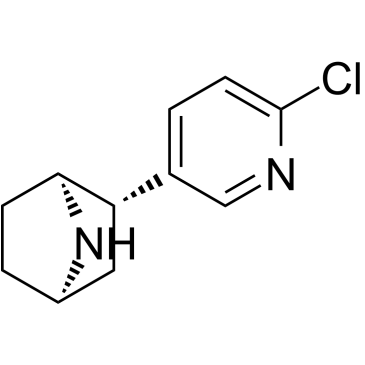
(±)-Epibatidine (CMI 545) is a neuronal nicotinic acetylcholine receptor (nAChR) agonist that targets brain nicotinic receptors, thereby inhibiting afferent micturition pathways and sensory pathways, consequently suppressing the micturition reflex and mediating antihyperalgesic effects. (±)-Epibatidine can be used in the study of trigeminal neuralgia.
For research use only. We do not sell to patients.
- CAS No.: 148152-66-3
- Formula: C11H13ClN2
- Molecular Weight:208.69
-
Storage:
Please store the product under the recommended conditions in the Certificate of Analysis.

To place orders, for customer services and technical support, please contact: MedChemExpress USA
Tel: 609-228-6898 E-mail: [email protected] [email protected]


-
 Biological Activity
-
Chemical Information
- Purity & Documentation
- References
-
 Help & FAQs


-
HY-12560A
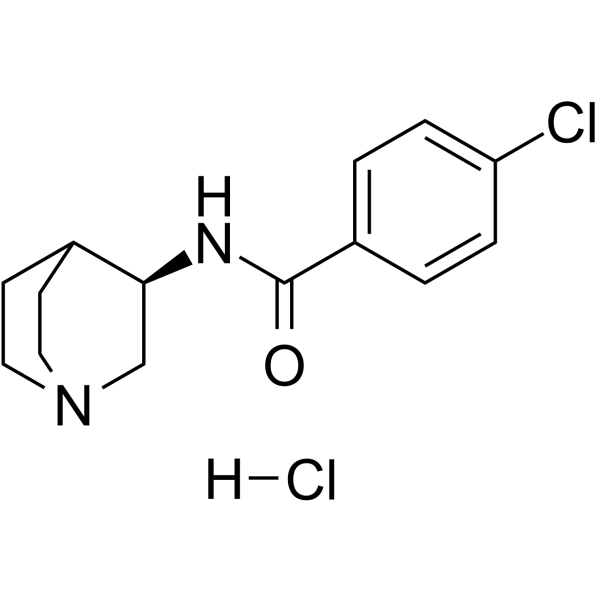
PNU-282987α7 nAChR Agonist/5-HT3 antagonist -
HY-B1395
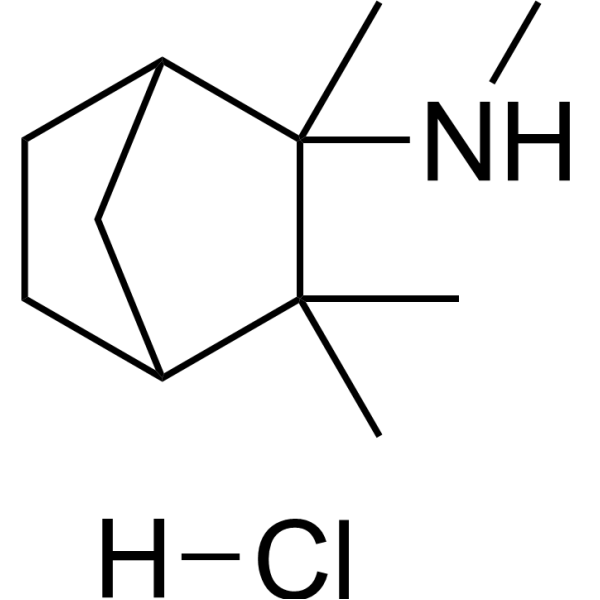
Mecamylamine hydrochloridenAChR Antagonist -
HY-10019
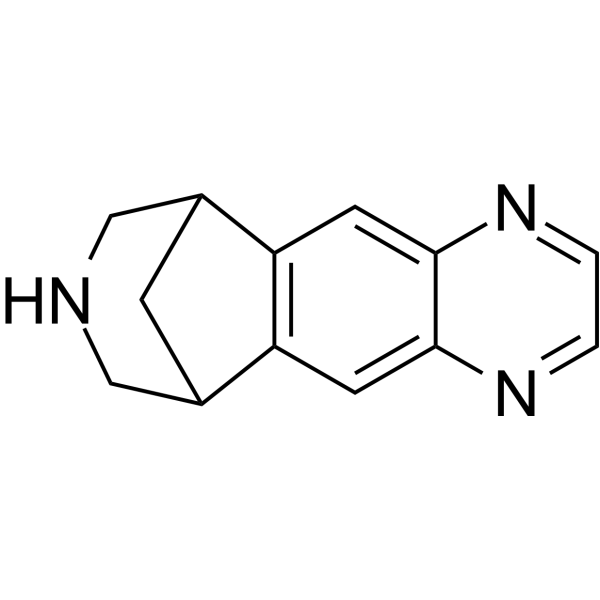
Vareniclineα4β2 nAChR Agonist -
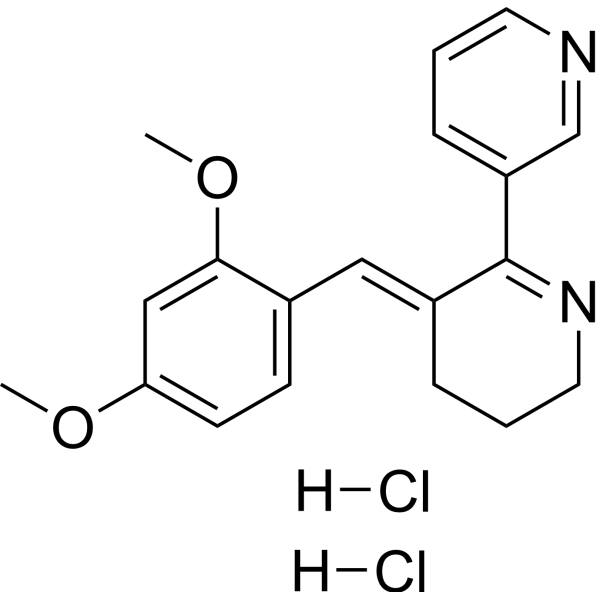
HY-14564A
GTS-21 dihydrochlorideα7-nAChR Agonist -
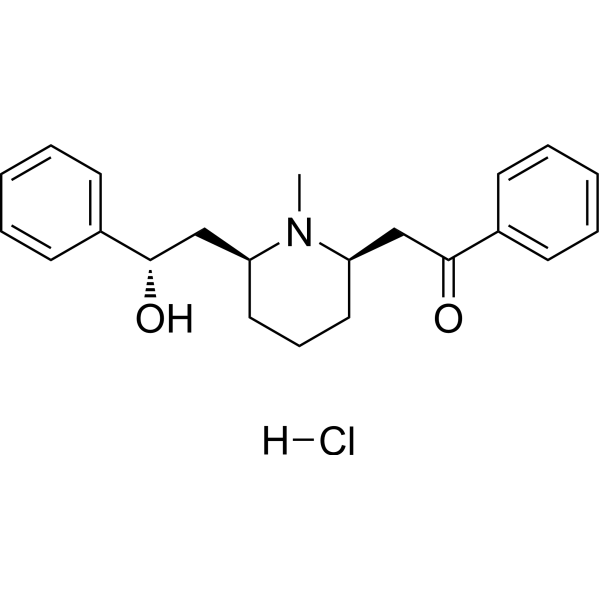
HY-B0979
Lobeline hydrochlorideNicotinic Receptor Agonist -
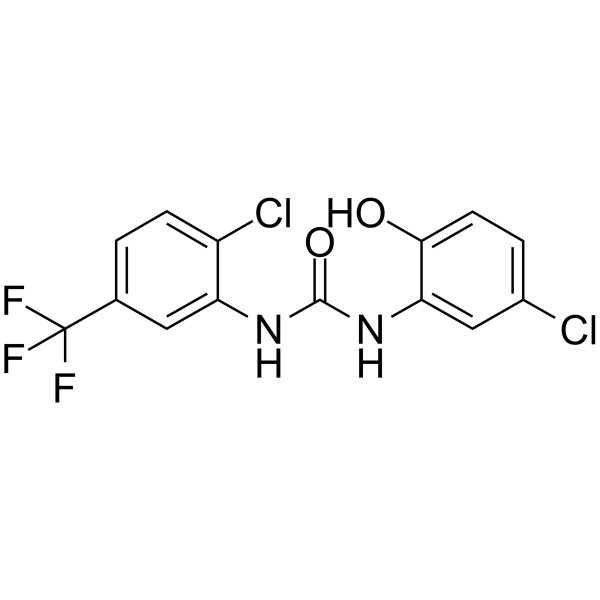
HY-12151
NS 1738nAChR Agonist -
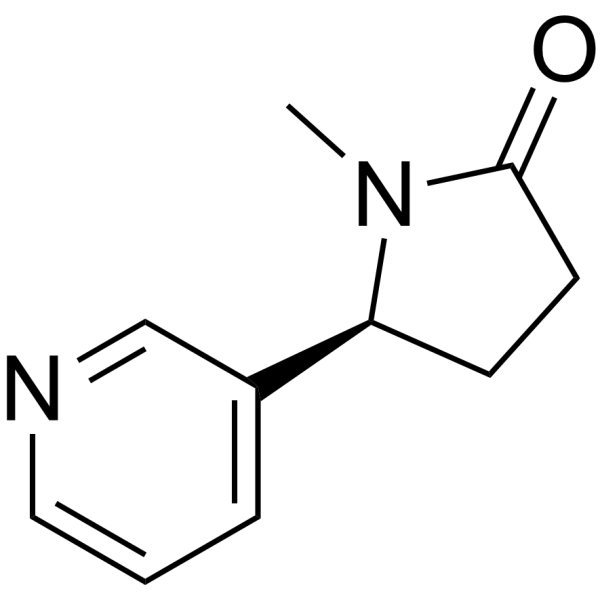
HY-B1178
CotinineEndogenous Metabolite -
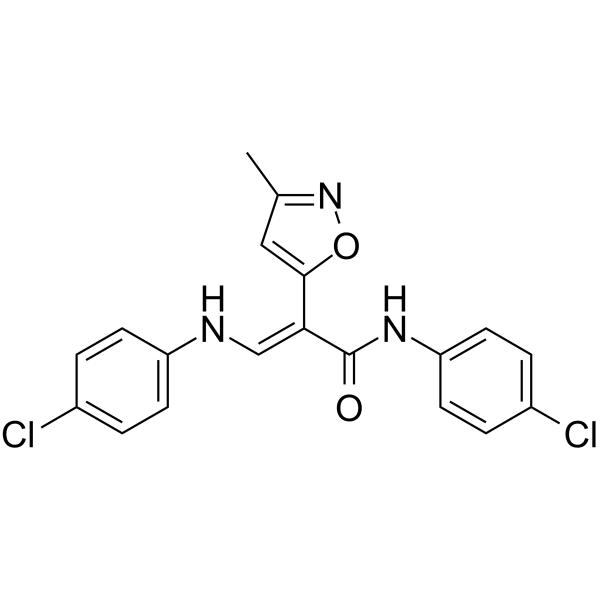
HY-12150
CCMIα7 nAChR PAM -
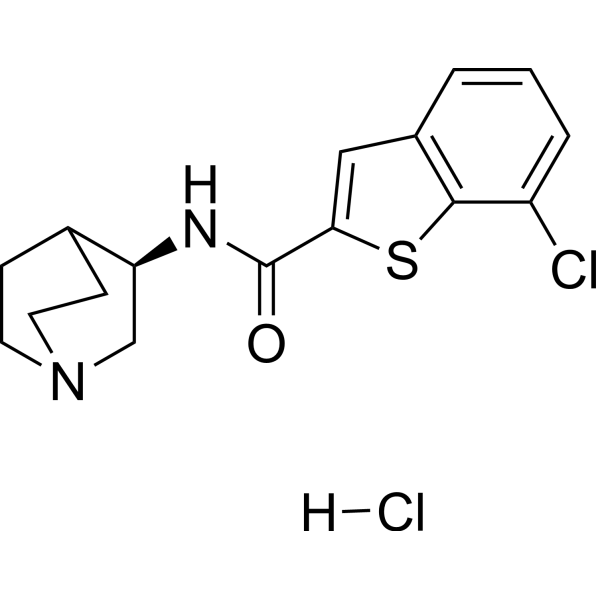
HY-15430A
Encenicline hydrochloridenAChR Agonist -
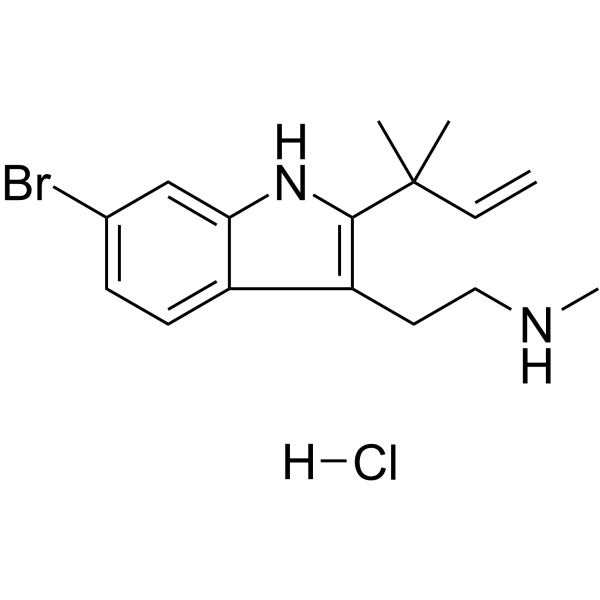
HY-107675
Desformylflustrabromine hydrochloridenAChR Agonist -
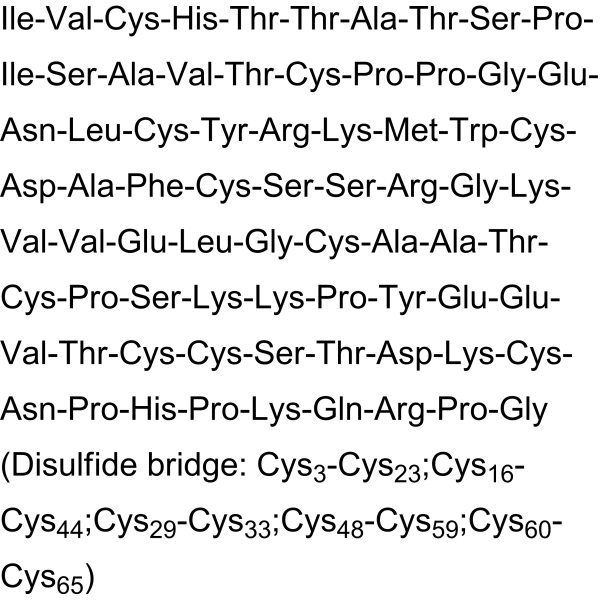
HY-P1264
α-BungarotoxinnAChRs Antagonist


Biological Activity
Description
Cellular Effect
|
Cell Line

|
Type | Value | Description | References |
|---|---|---|---|---|
| HEK293 | EC50 |
0.01 μM
Compound: 2
|
Agonist activity at recombinant human alpha-3-beta-4 nAChR expressed in HEK293 cells assessed as induction of calcium influx by FLIPR assay
Agonist activity at recombinant human alpha-3-beta-4 nAChR expressed in HEK293 cells assessed as induction of calcium influx by FLIPR assay
|
[PMID: 17929796] |
| HEK293 | EC50 |
0.05 μM
Compound: 2
|
Agonist activity at recombinant human alpha-4-beta-2 nAChR expressed in HEK293 cells assessed as induction of calcium influx by FLIPR assay
Agonist activity at recombinant human alpha-4-beta-2 nAChR expressed in HEK293 cells assessed as induction of calcium influx by FLIPR assay
|
[PMID: 17929796] |
| IMR-32 | EC50 |
0.027 μM
Compound: epibatidine
|
Agonist activity at human recombinant alpha3beta4 nAChR expressed in human IMR32 cells assessed as calcium dynamics by FLIPR assay
Agonist activity at human recombinant alpha3beta4 nAChR expressed in human IMR32 cells assessed as calcium dynamics by FLIPR assay
|
[PMID: 19232492] |
| IMR-32 | EC50 |
0.12 μM
Compound: epibatidine
|
Agonist activity at human recombinant alpha4beta2 nAChR expressed in human IMR32 cells assessed as calcium dynamics by FLIPR assay
Agonist activity at human recombinant alpha4beta2 nAChR expressed in human IMR32 cells assessed as calcium dynamics by FLIPR assay
|
[PMID: 19232492] |
| IMR-32 | EC50 |
0.7 μM
Compound: 1a(+)
|
Effective concentration against alpha3-beta4 nicotinic acetylcholine receptor expressed in IMR32 cell
Effective concentration against alpha3-beta4 nicotinic acetylcholine receptor expressed in IMR32 cell
|
[PMID: 16078832] |
| IMR-32 | IC50 |
0.076 nM
Compound: epibatine
|
Displacement of [I125]Epibatidine from nAChR in human IMR32 cells after 60 mins
Displacement of [I125]Epibatidine from nAChR in human IMR32 cells after 60 mins
|
[PMID: 23403082] |
In Vivo
(±)-Epibatidine (0.001-1 µg; i.c.v.; single administration within 1 minute) dihydrochloride at a dose of 0.1 µg increased bladder capacity in Urethane (HY-B1207)-anesthetized rats, significantly prolonging the voiding interval to 191.3% of that in the control group, without significantly altering voiding pressure[1].
(±)-Epibatidine (0.001-1 µg; i.v.; single administration) dihydrochloride shortened the voiding interval to 33.6-45.2% of the control group and increased the maximum voiding pressure to 185.5-190.5% of the control group at a dose of 1 µg in anesthetized and conscious rats, whereas low and moderate doses (0.001-0.1 µg) had no significant effect[1].
(±)-Epibatidine (1.0-5.0 mg/kg; s.c.; single injection; 5 min before formalin) dihydrochloride produced dose-dependent antihyperalgesic effects in both the acute and tonic phases of the facial pain formalin model, with ED50 values of 1.78 and 1.12 mg/kg, respectively[2].
(±)-Epibatidine (2.5 mg/kg; s.c.; single injection; 5, 15, 30, or 60 min before formalin) dihydrochloride mediated a time-dependent antihyperalgesic effect in the facial pain formalin model, with the significant effect disappearing at 15 min in the acute phase and at 30 min in the tonic phase[2].
MedChemExpress (MCE) has not independently confirmed the accuracy of these methods. They are for reference only.
-
Animal Model:Sprague-Dawley (adult, male, 350 g)[2]
-
Dosage:1.0, 2.5, 5.0 mg/kg
-
Administration:s.c.; single injection; 5 min prior to formalin
-
Result:Reduced hyperalgesia by up to 98% in the acute phase and 81% in the tonic phase.
Achieved approximately 100% efficacy at 5.0 mg/kg in the acute phase.
Produced significant effects at 1.0 mg/kg in the tonic phase.
Exhibited ED50 values of 1.78 mg/kg (acute phase) and 1.12 mg/kg (tonic phase).
-
Animal Model:Sprague-Dawley (adult, male, 350 g)[2]
-
Dosage:2.5 mg/kg
-
Administration:s.c.; single injection; at 5, 15, 30 or 60 min prior to formalin
-
Result:Lost significant antihyperalgesia in the acute phase by 15 min.
Lost significant antihyperalgesia in the tonic phase by 30 min.
Displayed grooming behavior equivalent to saline-injected animals when administered 60 min prior to formalin.
-
Animal Model:Sprague-Dawley (adult, male, 350 g)[2]
-
Dosage:5 mg/kg
-
Administration:s.c.; single injection; 5 min prior to formalin, following pretreatment with saline or mecamylamine (2 mg/kg, s.c., 20 min earlier)
-
Result:Produced significant antihyperalgesia in both phases in saline-pretreated animals.
Was without effect in mecamylamine-pretreated animals, displaying a significant reversal of antihyperalgesia in both the acute and tonic phases.


Chemical Information
-
CAS No. 148152-66-3
-
Molecular Weight 208.69
-
Formula C11H13ClN2
-
SMILES
ClC1=CC=C([C@H]2[C@@H](N3)CC[C@@H]3C2)C=N1
-
Synonyms
CMI 545
-
Shipping
Room temperature in continental US; may vary elsewhere.
-
Storage
Please store the product under the recommended conditions in the Certificate of Analysis.


Purity & Documentation
References

Calculators
Concentration (start) × Volume (start) = Concentration (final) × Volume (final)


(±)-Epibatidine Related Classifications
HY-101078 Related Classifications
 Powered by Bioz