



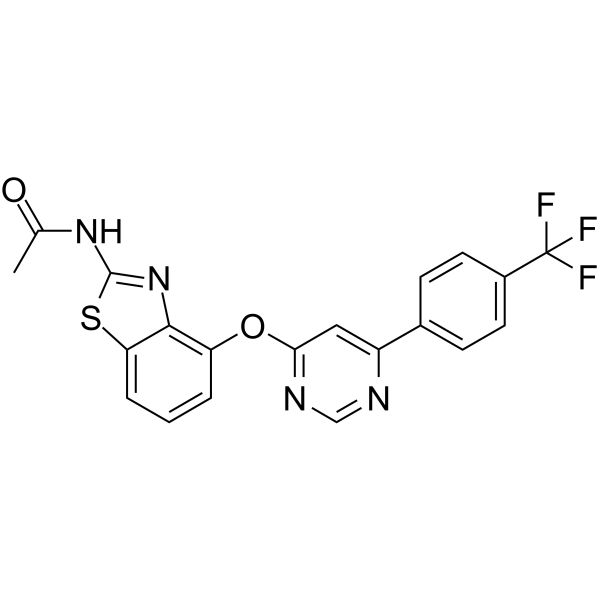
AMG 517
Based on 8 publication(s) in Google Scholar
AMG 517 is a potent and selective vanilloid receptor-1 (TRPV1) antagonist with an IC50 of 0.5 nM.
For research use only. We do not sell to patients.
- Purity: 99.24%
- CAS No.: 659730-32-2
- Formula: C20H13F3N4O2S
- Molecular Weight:430.40
-
Storage:Powder -20°C, 3 years , 4°C, 2 years ; In solvent -80°C, 2 years , -20°C, 1 year

To place orders, for customer services and technical support, please contact: MedChemExpress USA
Tel: 609-228-6898 E-mail: [email protected] [email protected]


-
 Biological Activity
-
Chemical Information
-
Solvent & Solubility
- Protocol
- Purity & Documentation
- References
-
 Help & FAQs




Publications Citing Use of MedChemExpress (MCE) AMG 517
More- Neuron. 2024 Jun 5;112(11):1815-1831.e4. [Abstract]
- Int J Biol Macromol. 2025 Jun:312:144092. [Abstract]
- Stem Cell Res Ther. 2026 Jul 7;17(1):248.
- EMBO Rep. 2016 Oct;17(10):1422-1430. [Abstract]
- Front Pharmacol. 2022 Feb 23;13:816133. [Abstract]
- Biophys J. 2017 Jan 10;112(1):87-98. [Abstract]
- Pain Res Manag. 2024 Jul 24:2024:2437396. [Abstract]
- SSRN. 2026 Jul 1.
 Customer Validation & Images

-
In Vivo Efficacy Study
-
Others
-
Others
-
In Vivo Efficacy Study


Biological Activity
Description
IC50 & Target
IC50: 0.5 nM (TRPV1)[1]
Cellular Effect
|
Cell Line

|
Type | Value | Description | References |
|---|---|---|---|---|
| CHO | IC50 |
0.5 nM
Compound: 1, AMG-517
|
Antagonist activity at rat TRPV1 expressed in CHO cells assessed as inhibition of pH 5 acid-induced 45Ca2+ influx by FLIPR assay
Antagonist activity at rat TRPV1 expressed in CHO cells assessed as inhibition of pH 5 acid-induced 45Ca2+ influx by FLIPR assay
|
[PMID: 18722118] |
| CHO | IC50 |
0.5 nM
Compound: 1
|
Antagonist activity at rat TRPV1 expressed in CHO cells assessed inhibition of acid induced calcium influx
Antagonist activity at rat TRPV1 expressed in CHO cells assessed inhibition of acid induced calcium influx
|
[PMID: 17937985] |
| CHO | IC50 |
0.5 nM
Compound: 1, AMG-517
|
Inhibition of rat TRPV1 expressed in CHO cells assessed as acid-induced Ca2+ influx
Inhibition of rat TRPV1 expressed in CHO cells assessed as acid-induced Ca2+ influx
|
[PMID: 17585751] |
| CHO | IC50 |
0.5 nM
Compound: 23
|
Antagonist activity at rat TRPV1 expressed in CHO cells assessed as inhibition of acid-induced calcium influx
Antagonist activity at rat TRPV1 expressed in CHO cells assessed as inhibition of acid-induced calcium influx
|
[PMID: 17585750] |
| CHO | IC50 |
0.5 nM
Compound: 3, AMG-517
|
Antagonist activity at rat TRPV1 expressed in CHO cells assessed as inhibition of pH 5 acid-induced calcium influx
Antagonist activity at rat TRPV1 expressed in CHO cells assessed as inhibition of pH 5 acid-induced calcium influx
|
[PMID: 18386885] |
| CHO | IC50 |
0.62 nM
Compound: 23
|
Antagonist activity at human TRPV1 expressed in CHO cells assessed as inhibition of acid-induced calcium influx
Antagonist activity at human TRPV1 expressed in CHO cells assessed as inhibition of acid-induced calcium influx
|
[PMID: 17585750] |
| CHO | IC50 |
0.76 nM
Compound: 1
|
Antagonist activity at human TRPV1 expressed in CHO cells assessed as inhibition of capsaicin-induced calcium mobilization
Antagonist activity at human TRPV1 expressed in CHO cells assessed as inhibition of capsaicin-induced calcium mobilization
|
[PMID: 18299195] |
| CHO | IC50 |
0.76 nM
Compound: 23
|
Antagonist activity at human TRPV1 expressed in CHO cells assessed as inhibition of capsaicin-induced calcium influx
Antagonist activity at human TRPV1 expressed in CHO cells assessed as inhibition of capsaicin-induced calcium influx
|
[PMID: 17585750] |
| CHO | IC50 |
0.9 nM
Compound: 1, AMG-517
|
Antagonist activity at rat TRPV1 expressed in CHO cells assessed as inhibition of capsaicin-induced 45Ca2+ influx by FLIPR assay
Antagonist activity at rat TRPV1 expressed in CHO cells assessed as inhibition of capsaicin-induced 45Ca2+ influx by FLIPR assay
|
[PMID: 18722118] |
| CHO | IC50 |
0.9 nM
Compound: 1
|
Antagonist activity at rat TRPV1 expressed in CHO cells assessed inhibition of capsaicin induced calcium influx
Antagonist activity at rat TRPV1 expressed in CHO cells assessed inhibition of capsaicin induced calcium influx
|
[PMID: 17937985] |
| CHO | IC50 |
0.9 nM
Compound: 1
|
Antagonist activity at rat TRPV1 expressed in CHO cells assessed as inhibition of capsaicin-induced calcium mobilization
Antagonist activity at rat TRPV1 expressed in CHO cells assessed as inhibition of capsaicin-induced calcium mobilization
|
[PMID: 18299195] |
| CHO | IC50 |
0.9 nM
Compound: 1, AMG-517
|
Inhibition of rat TRPV1 expressed in CHO cells assessed as capsaicin-induced Ca2+ influx
Inhibition of rat TRPV1 expressed in CHO cells assessed as capsaicin-induced Ca2+ influx
|
[PMID: 17585751] |
| CHO | IC50 |
0.9 nM
Compound: 23
|
Antagonist activity at rat TRPV1 expressed in CHO cells assessed as inhibition of capsaicin-induced calcium influx
Antagonist activity at rat TRPV1 expressed in CHO cells assessed as inhibition of capsaicin-induced calcium influx
|
[PMID: 17585750] |
| CHO | IC50 |
0.9 nM
Compound: 3, AMG-517
|
Antagonist activity at rat TRPV1 expressed in CHO cells assessed as inhibition of capsaicin-induced calcium influx
Antagonist activity at rat TRPV1 expressed in CHO cells assessed as inhibition of capsaicin-induced calcium influx
|
[PMID: 18386885] |
| CHO | IC50 |
1.3 nM
Compound: 23
|
Antagonist activity at human TRPV1 expressed in CHO cells assessed as inhibition of heat-induced calcium influx
Antagonist activity at human TRPV1 expressed in CHO cells assessed as inhibition of heat-induced calcium influx
|
[PMID: 17585750] |
In Vitro
AMG 517 retains potency in the capsaicin- and acid-mediated assays with IC50 values of 0.9 and 0.5 nM[1]. AMG 517 inhibits capsaicin, pH 5, and heat-induced45Ca2+ uptake into cells expressing TRPV1 with IC50 values of 1 to 2 nM. AMG 517 blocks capsaicin-, proton-, and heat-induced inward currents in TRPV1-expressing cells similarly. AMG 517 inhibits native TRPV1 activation by capsaicin in rat dorsal root ganglion neurons with an IC50 value of 0.68 ± 0.2 nM. AMG 517 is a competitive antagonist of both rat and human TRPV1 with dissociation constant (Kb) values of 4.2 and 6.2 nM, respectively[2].
MedChemExpress (MCE) has not independently confirmed the accuracy of these methods. They are for reference only.
In Vivo
MedChemExpress (MCE) has not independently confirmed the accuracy of these methods. They are for reference only.


Chemical Information
-
CAS No. 659730-32-2
-
Appearance Solid
-
Molecular Weight 430.40
-
Formula C20H13F3N4O2S
-
Color White to off-white
-
SMILES
CC(NC1=NC2=C(OC3=NC=NC(C4=CC=C(C(F)(F)F)C=C4)=C3)C=CC=C2S1)=O
-
Shipping
Room temperature in continental US; may vary elsewhere.
-
Storage
Powder -20°C 3 years 4°C 2 years In solvent -80°C 2 years -20°C 1 year


Publications (8)
-
Journal Impact Factor
-
Most Recent
-
Neuron
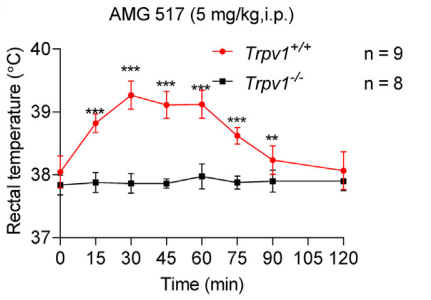
TRPV1 analgesics disturb core body temperature via a biased allosteric mechanism involving conformations distinct from that for nociception. [Abstract]2024 Jun 5;112(11):1815-1831.e4. PMID: 38492574
AMG 517 purchased from MedChemExpress. Usage Cited in: Neuron. 2024 Jun 5;112(11):1815-1831.e4. [Abstract]
Rectal temperature measurements on Trpv1+/+ and Trpv1−/− mice at the specified time points following intraperitoneal injections of 5 mg/kg AMG517.
-
Int J Biol Macromol
Born with Silurian global warming: Defensive role of TRPV1 in caudal neurosecretory system (CNSS) in flounder. [Abstract]2025 Jun:312:144092. PMID: 40350111 -
-
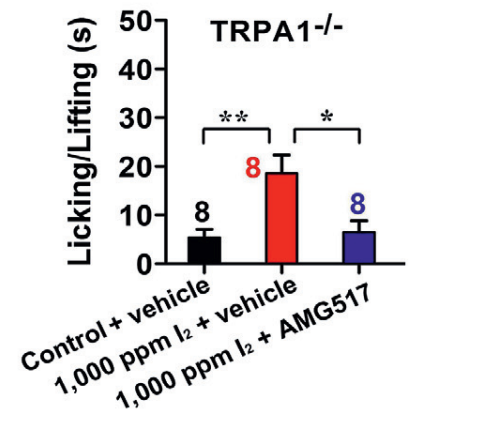
EMBO Rep
2016 Oct;17(10):1422-1430. PMID: 27566753
AMG 517 purchased from MedChemExpress. Usage Cited in: EMBO Rep. 2016 Oct;17(10):1422-1430. [Abstract]
Quantification of the nociceptive responses in TRPA1−/− mice within 5 min after intraplantar injection of control saline or 1,000 ppm iodine, following intraperitoneal injection of AMG517 (3 mg/kg) or vehicle.
-
Front Pharmacol
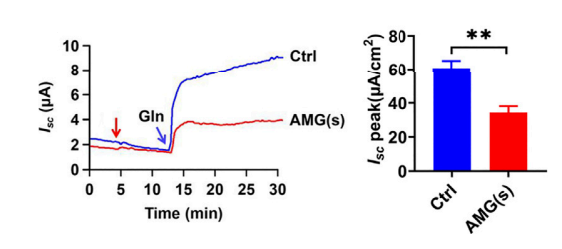
Ca2+-Permeable Channels/Ca2+ Signaling in the Regulation of Ileal Na+/Gln Co-Transport in Mice. [Abstract]2022 Feb 23;13:816133. PMID: 35281933
AMG 517 purchased from MedChemExpress. Usage Cited in: Front Pharmacol. 2022 Feb 23;13:816133. [Abstract]
Serosal application of AMG 517 (100 µM), a selective blocker of TRPV1 channels, significantly attenuated ileal Gln-I sc.
-
Biophys J
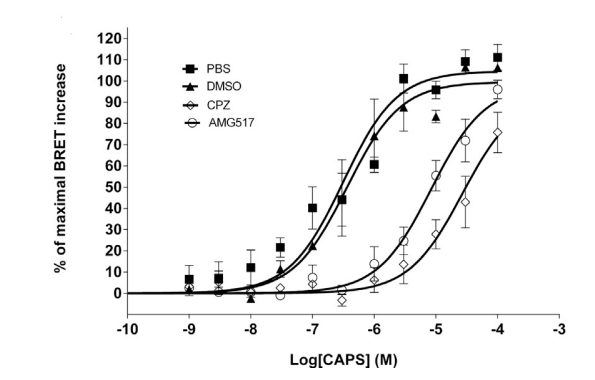
Full-Spectral Multiplexing of Bioluminescence Resonance Energy Transfer in Three TRPV Channels. [Abstract]2017 Jan 10;112(1):87-98. PMID: 28076819
AMG 517 purchased from MedChemExpress. Usage Cited in: Biophys J. 2017 Jan 10;112(1):87-98. [Abstract]
In HEK293T cells expressing the YFP-TRPV1-Luc BRET probe, the dose-response curve of CAPS-induced BRET changes was measured. Cells were pre-incubated with PBS, DMSO (solvent), 1 μM CPZ, or 1 μM AMG517 before CAPS activation.
-
Pain Res Manag
Exploring the Analgesic Initiation Mechanism of Tuina in the Dorsal Root Ganglion of Minor CCI Rats via the TRPV1/TRPA1-cGMP Pathway. [Abstract]2024 Jul 24:2024:2437396. PMID: 39104725 -


Solvent & Solubility
In Vitro:
DMSO : 41.67 mg/mL (96.82 mM; Need ultrasonic; Hygroscopic DMSO has a significant impact on the solubility of product, please use newly opened DMSO)
Please refer to the solubility information to select the appropriate solvent. Once prepared, please aliquot and store the solution to prevent product inactivation from repeated freeze-thaw cycles.
Storage method and period of stock solution: -80°C, 2 years; -20°C, 1 year. When stored at -80°C, please use it within 2 years. When stored at -20°C, please use it within 1 year.
Please refer to the solubility information to select the appropriate solvent. Once prepared, please aliquot and store the solution to prevent product inactivation from repeated freeze-thaw cycles.
Storage method and period of stock solution: -80°C, 2 years; -20°C, 1 year. When stored at -80°C, please use it within 2 years. When stored at -20°C, please use it within 1 year.
Concentration (start) × Volume (start) = Concentration (final) × Volume (final)
In Vivo:
Select the appropriate dissolution method based on your experimental animal and administration route.
- For the following dissolution methods, please ensure to first prepare a clear stock solution using an In Vitro approach and then sequentially add co-solvents:
- To ensure reliable experimental results, the clarified stock solution can be appropriately stored based on storage conditions. As for the working solution for In Vivo experiments, it is recommended to prepare freshly and use it on the same day.
- The percentages shown for the solvents indicate their volumetric ratio in the final prepared solution. If precipitation or phase separation occurs during preparation, heat and/or sonication can be used to aid dissolution.
Add each solvent one by one: 10% DMSO 40% PEG300 5% Tween-80 45% Saline
Solubility: ≥ 2.5 mg/mL (5.81 mM); Clear solution
This protocol yields a clear solution of ≥ 2.5 mg/mL (saturation unknown).
Taking 1 mL working solution as an example, add 100 μL DMSO stock solution (25.0 mg/mL) to 400 μL PEG300, and mix evenly; then add 50 μL Tween-80 and mix evenly; then add 450 μL Saline to adjust the volume to 1 mL.
Preparation of Saline: Dissolve 0.9 g sodium chloride in ddH₂O and dilute to 100 mL to obtain a clear Saline solution.
In Vivo Dissolution Calculator
Please enter the basic information of animal experiments:
-
-
-
-
Recommended: Prepare an additional quantity of animals to account for potential losses during experiments.
Please enter your animal formula composition:
-
%DMSO +
Recommended: Keep the proportion of DMSO in working solution below 2% if your animal is weak.
-
%+
-
+%Tween-80 + +
-
%Saline +
The co-solvents required include: DMSO, . All of co-solvents are available by MedChemExpress (MCE). , Tween 80. All of co-solvents are available by MedChemExpress (MCE).
Working solution concentration: 0.22 mg/mL
Method for preparing stock solution: mg drug dissolved in μL DMSO. Stock solution concentration: mg/mL.
1. Take μL DMSO stock solution;
2. Add μL .
μL , mix evenly;
3. Then add μL Tween 80, mix evenly;
4. Then add μL
Please ensure that the stock solution in the first step is dissolved to a clear state, and add co-solvents in sequence. You can use ultrasonic heating (ultrasonic cleaner, recommended frequency 20-40 kHz), vortexing, etc. to assist dissolution.

Protocol
Animal Administration[2]
Rats: After multiple days of full habituation to the testing equipment and paradigm, CFA-induced thermal hyperalgesia is evaluated by measuring paw withdrawal latencies in male Sprague-Dawley rats. Twenty-one hours after CFA injection (50 μL of 0.1%), animals are dosed (p.o.) with AMG 517 or AMG8163 at a dose range of 0.001 to 30 mg/kg in a volume of 5 mL/kg. Two hours after drug dosing (23 h after CFA injection), paw withdrawal latencies are measured using modified Hargreaves hot boxes by investigators fully blinded to treatment conditions[2].
MedChemExpress (MCE) has not independently confirmed the accuracy of these methods. They are for reference only.


Purity & Documentation
-
Data Sheet (275 KB)
-
SDS (393 KB)
- English - EN (393 KB)
- Français - FR (393 KB)
- Deutsch - DE (393 KB)
- Norwegian - NO (393 KB)
- Español - ES (393 KB)
- Swedish - SV (393 KB)
- Italian - IT (393 KB)
- Korean - KR (393 KB)
- Portuguese - PT (393 KB)
-
Handling Instructions (2659 KB)
References
[1]. Doherty EM, et al. Novel vanilloid receptor-1 antagonists: 2. Structure-activity relationships of 4-oxopyrimidines leading to the selection of a clinical candidate. J Med Chem. 2007 Jul 26;50(15):3515-27. [Content Brief]
[2]. Gavva NR, et al. Repeated administration of vanilloid receptor TRPV1 antagonists attenuates hyperthermia elicited by TRPV1 blockade. J Pharmacol Exp Ther. 2007 Oct;323(1):128-37. [Content Brief]


Complete Stock Solution Preparation Table
Please refer to the solubility information to select the appropriate solvent. Once prepared, please aliquot and store the solution to prevent product inactivation from repeated freeze-thaw cycles.
Storage method and period of stock solution: -80°C, 2 years; -20°C, 1 year. When stored at -80°C, please use it within 2 years. When stored at -20°C, please use it within 1 year.
| Optional Solvent | Concentration Solvent Mass | 1 mg | 5 mg | 10 mg | 25 mg |
|---|---|---|---|---|---|
| DMSO | 1 mM | 2.3234 mL | 11.6171 mL | 23.2342 mL | 58.0855 mL |
| 5 mM | 0.4647 mL | 2.3234 mL | 4.6468 mL | 11.6171 mL | |
| 10 mM | 0.2323 mL | 1.1617 mL | 2.3234 mL | 5.8086 mL | |
| 15 mM | 0.1549 mL | 0.7745 mL | 1.5489 mL | 3.8724 mL | |
| 20 mM | 0.1162 mL | 0.5809 mL | 1.1617 mL | 2.9043 mL | |
| 25 mM | 0.0929 mL | 0.4647 mL | 0.9294 mL | 2.3234 mL | |
| 30 mM | 0.0774 mL | 0.3872 mL | 0.7745 mL | 1.9362 mL | |
| 40 mM | 0.0581 mL | 0.2904 mL | 0.5809 mL | 1.4521 mL | |
| 50 mM | 0.0465 mL | 0.2323 mL | 0.4647 mL | 1.1617 mL | |
| 60 mM | 0.0387 mL | 0.1936 mL | 0.3872 mL | 0.9681 mL | |
| 80 mM | 0.0290 mL | 0.1452 mL | 0.2904 mL | 0.7261 mL |


AMG 517 Related Classifications
HY-10634 Related Classifications
 Powered by Bioz